
REVIEW · OSAKA SAMURAI, NINJA & KENDO EXPERIENCES
Samurai Calligraphy:Final brushstrokes of a lifetime before a War
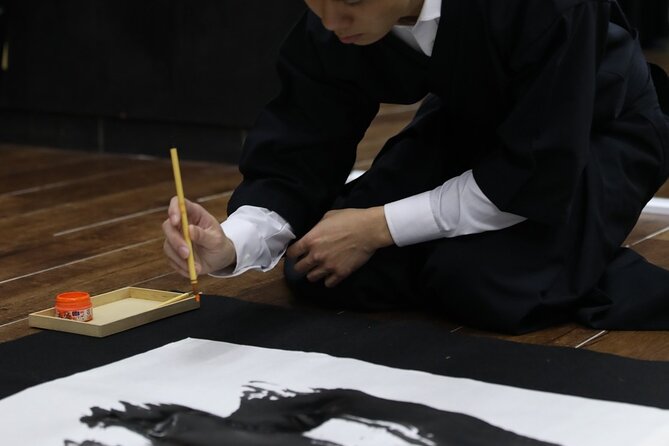
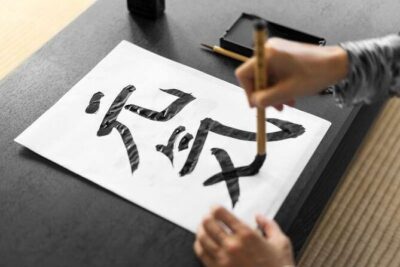
One character, painted like a farewell. This Osaka workshop turns Japanese shodo into a samurai story, where you choose a kanji of resignation and write it with real emotion. I especially love the chance to decide your own last character, then practice the exact stroke order until it feels right, and I also love the drama of an oversized brush made for big, controlled movement. One consideration: the included outfit is a samurai look with hakama and kimono pieces, but it is not a full kimono set.
If you like hands-on culture, this one fits. You get 90 minutes total, split into Japanese shodo (about 60 minutes) and Samurai calligraphy (about 30 minutes), in a small group capped at 8. The sessions end where you start, and you’ll use a mobile ticket so your day stays smooth.
Key highlights you will actually notice
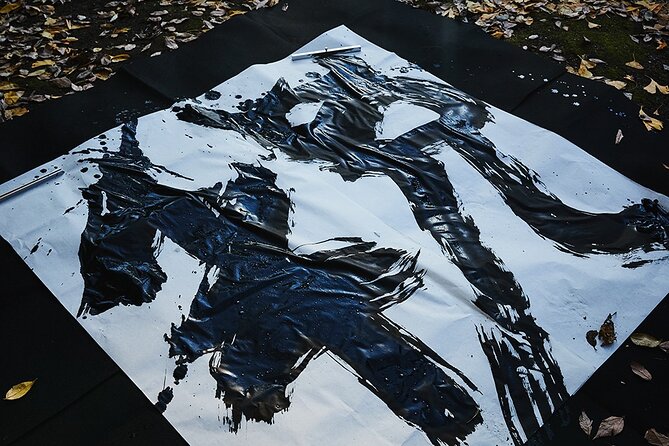
- Pick your own resignation kanji, then shape it based on meaning and feelings, not copying a random example
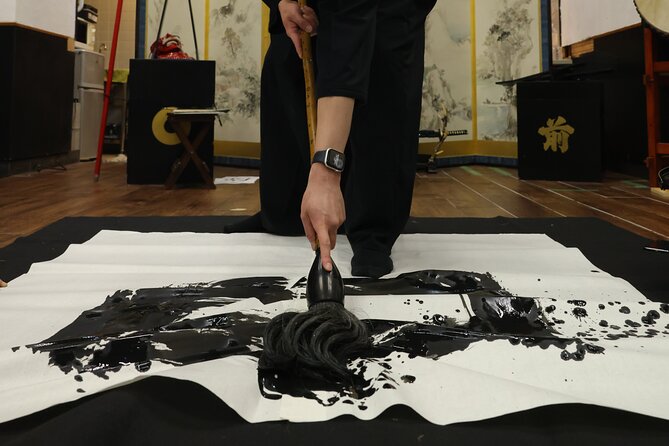
- Oversized brush technique on about 150cm x 150cm paper, with body movement part of the method
- Shodo basics first, including fundamental brush strokes and stroke order for your chosen character
- Taiko-drums energy for the bold writing moment, especially the circle symbol ◯
- Kaori-style guidance from the instructor and a language assistant (English or Chinese) for clarity
Osaka Samurai Calligraphy: one character, big meaning, clean technique
Osaka can be loud in the best way, but this experience slows everything down. You sit with a brush, then you stand with a huge one. That change matters. Japanese calligraphy is not just pretty writing. It is a way of training your hands, your attention, and your breathing into something deliberate.
What makes this workshop stand out is the theme. You are not learning calligraphy as a craft project with a generic sample. You are learning it through a story from Japan’s Warring States Period, with a focus on resignation, meaning the words someone writes as a farewell before going to war. It turns a typical one-off art class into a guided reflection. And reflection is what most people actually remember after the ink dries.
The teaching also feels practical. You start with basics, then you apply those skills to your own chosen kanji. You are not just staring at a finished artwork, hoping to copy it. You practice strokes. You follow order. You try again until the character feels like it belongs to you.
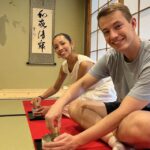
More time in the dojo
Entering the mindset of shodo and the idea of resignation
The word resignation here is bigger than the English meaning. It’s described as a samurai’s last words, written down when death feels close. In other words, this is a calligraphy lesson that treats one finished character as a kind of statement.
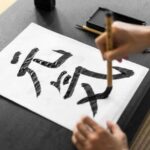
Before you touch the brush, you decide on the last character. Each kanji has its own meaning, so the workshop asks you to reflect on your life and think carefully about what you want that last character to represent. Then you practice the basic strokes and the stroke order of that exact character.
This is where you’ll likely feel the biggest difference from typical souvenir workshops. You are not just learning how to form lines. You are learning how meaning influences form. When you choose a character that fits your personal story, your hand tends to slow down. Your choices become less random. Even if your final calligraphy is not perfect, it reads as intentional.
One of the most interesting ideas you will encounter is the Japanese sense of beauty tied to space. The lesson points to blank spaces, and also something called the beauty of the margins. That means the space around the character is part of the artwork. A page is not only the strokes, it is also the quiet around them.
If you tend to overfill notebooks or try to cram in extra details, this concept helps you relax. It gives you permission to leave room.
The first hour: Shodo fundamentals that make your character look right
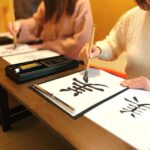
The shodo portion runs about 60 minutes. This is the part you should pay attention to, even if you think you already know how to write. Brush calligraphy is not handwriting. It is weight, pressure, and timing.
You’ll practice basic brush strokes and stroke order for the chosen kanji. Stroke order matters because every stroke sets up the next one. In calligraphy, the end of a stroke is not the moment you lift the brush. It’s the moment you control where the ink thins, where the line fades, and how you transition into the next movement.
If you get nervous about getting it wrong, you can use the workshop’s structure as a guide. Practice comes first. The big dramatic part comes after. That order helps you build confidence instead of trying to jump straight into performance.
This section is also where the assistant is useful. The session includes an English or Chinese speaking assistant, so if you want clarification about stroke order or technique, you have support beyond just the instructor demonstrating.
The heart of the workshop: choosing your single resignation character
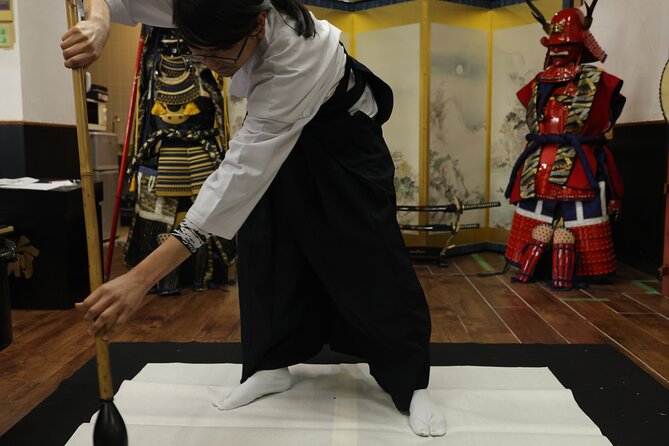
After shodo basics, you focus on one character for resignation. This is the heart of the theme. You reflect on your life so far. Then you imagine the story of whom and what feelings you would like to leave behind.
Then comes the part that feels almost like design work. You consider the composition and design of your last character in this world. That does not mean you’re doing modern graphic layout. It means you’re thinking about balance. Where does the character carry weight? Where should it feel steady? Where should it breathe?
The workshop pushes you toward the idea that nothing is beautiful precisely because there is nothing. That sounds philosophical, but the takeaway is practical. You cannot force beauty by adding more. You create beauty by controlling what you leave out, and by making your ink lines feel placed with purpose.
Also, you get to pick the symbol and meaning, so your final piece will feel personal. That is a huge value because you are taking home something tied to your choices, not a generic template.
Samurai Calligraphy: the oversized brush and why it changes everything
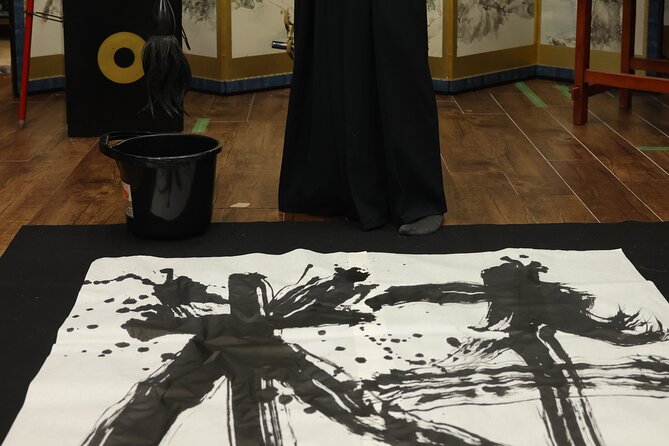
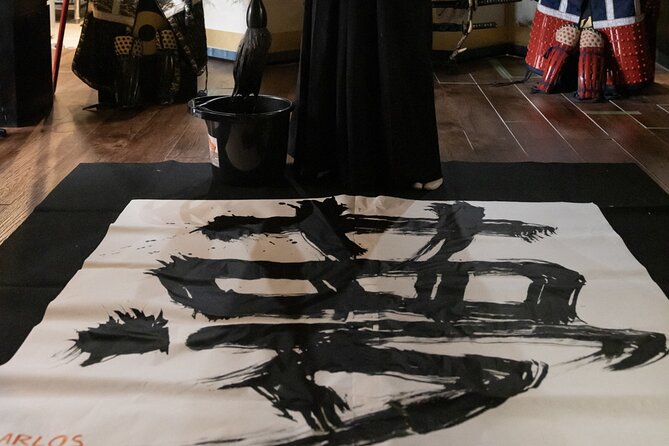
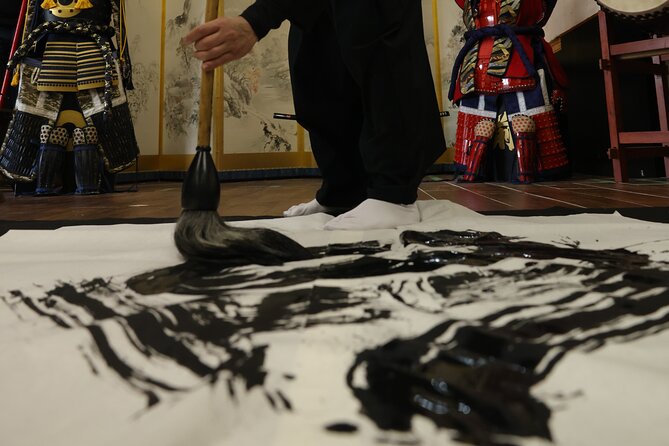
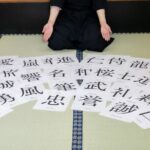
The Samurai calligraphy portion runs about 30 minutes, and it’s built for physical expression. You use an oversized brush, more than five times larger than usual, and you work on a sheet that is about 150cm x 150cm.
That scale matters because it changes technique. With a small pen, you can correct by micro-movements. With a giant brush, you correct by movement control. Your body becomes part of the tool.
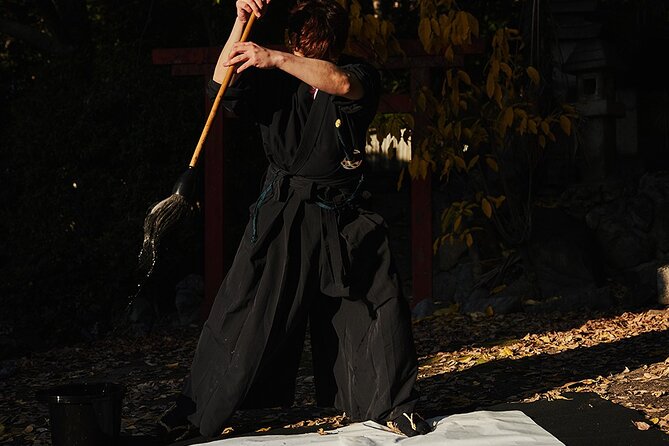
The instructor puts heart and soul into creating a powerful but fragile and beautiful character on the big paper. You get to follow the method, and you get to see the difference between “making marks” and creating a character that holds energy.
The workshop also includes a drum-led moment. The circle symbol ◯ is written boldly to the beat of taiko drums. This is not just a cool soundtrack. The rhythm helps you time pressure and release. It guides how long you stay on the paper and when you commit to the line.
One other detail you’ll appreciate: the instructor demonstrates with the idea that the oversized brush can be manipulated freely by expressing the whole body dynamically. That’s a clear instruction. It means you should not treat this like careful desktop drawing. It’s closer to calligraphy as movement.
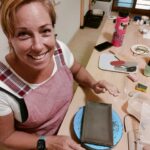
More ink, more craft benches
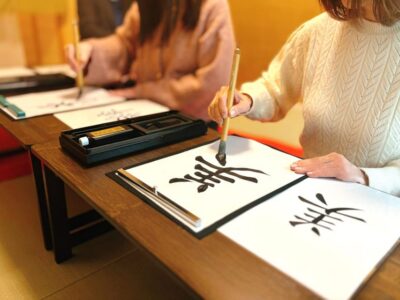
Outfit, photos, and the small choices that affect your experience
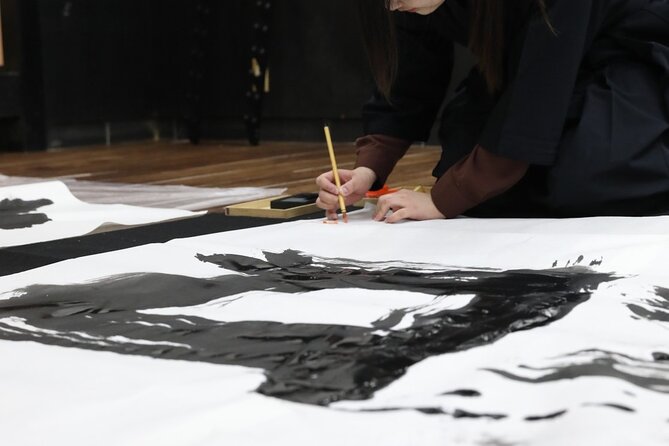
You’ll receive a samurai outfit experience, including hakama and kimono pieces. It is not described as a full set of kimono, so if you are expecting a completely dressed-up, full traditional look, you should plan around the fact that the set is partial.
Included also are shodo tools, plus a professional photographer. That’s a big deal for most people because you do not always think to document your hands when you are focused on technique. With a photographer involved, you are more likely to get usable photos without awkward guesswork.
You can also add optional upgrades. There is a paid option for movie shooting at ¥11,000 per person. There is also Wagami, which is collected hair plus Kanzashi, at ¥3,300 per person. If you are the type who likes to turn an activity into a full themed memory, these add-ons might make sense. If you just want the main art experience, they are optional, not required.
Language support is another practical win. The assistant is English or Chinese speaking, so you can ask questions without guessing. Even small clarifications can save you from frustration on stroke order or composition.
Price and value: is $64.38 worth it?
At $64.38 per person for about 90 minutes, the value comes from three things that most cheap workshops skip.
First, you are not paying for a single generic character demo. You are paying for a guided process that starts with fundamentals, then moves into your personalized resignation character.
Second, the scale is real. Oversized brush work on about 150cm x 150cm paper is not typical for low-cost classes. Handling that kind of material takes setup, tools, and instructor care.
Third, you are getting professional photography included, plus a small group size capped at 8. Small groups matter because brush work is technical. When the group is larger, instructors can only correct so much. Here, you are more likely to get attention when you need it.
If you want a souvenir, you can probably find cheaper options. But if you want something you can feel in your own hand, and something tied to meaning, the pricing starts to look fair.
Timing, group size, and what to wear
The workshop runs about 1 hour 30 minutes. With that tight window, you should plan your day so you are not rushing afterward. You’ll spend time choosing and practicing, then you’ll switch into the bigger brush experience. That rhythm is the whole point, so build breathing room.
Group size is capped at 8. That’s small enough to keep the energy focused and make instruction more possible.
As for what to wear, the only strict advice supported by the information is comfort, since you’ll be using a brush and wearing a hakama and kimono pieces. Wear something that lets you move. You don’t want restricted sleeves or shoes that make standing awkward. You’re not walking all day, but you are doing enough upright movement that clothing matters.
Also, you’ll get a mobile ticket. That’s helpful if you like minimizing paper. It also helps you avoid arriving at the wrong spot with the wrong slip.
Where it happens in Osaka, and why location matters less than you think
The meeting point is in Osaka, Joto Ward, Shiginonishi area, with the provided address at 2-chome3-19 at エクセレンス高山. The experience ends back at the same meeting point, so you are not stuck figuring out a second drop-off location.
The lesson being close to public transportation is useful, because you can plan your Osaka day without arranging private transport just for this.
And since transportation is not included, you’ll want to confirm your route ahead. Bring your normal city strategy: check the nearest rail or bus stop, then give yourself a little buffer to arrive calmly.
Who should book this Osaka workshop
This experience is a strong fit if you want more than a photo op. You’ll enjoy it most if you like the idea of choosing one character that carries meaning, then building it through technique.
You’ll also like it if you appreciate philosophy mixed with craft. The lesson’s focus on margins and blank spaces is a nice mental reset, especially if you are used to filling every inch of paper.
It can also work well as a couples or friend activity because the group is small and the theme gives you something shared to discuss afterward, even if you pick different kanji.
If you want a full traditional kimono session, note that the included outfit is not described as a complete kimono set. You might still enjoy it, but it will feel more like a samurai outfit experience than a full costume day.
Should you book Samurai Calligraphy in Osaka?
Book it if you want a hands-on culture experience with technique, meaning, and a real sense of performance. The oversized brush on large paper, the resignation theme, and the shodo fundamentals create a workshop you can actually feel, not just watch.
Skip it or think twice if you are mainly shopping for a quick souvenir or if you strongly prefer a full kimono set. Also, if you dislike reflective activities, the resignation prompt may feel too personal. But if you can enjoy a calm, focused hour, this is a memorable way to learn shodo in Osaka.
FAQ
How long is Samurai Calligraphy in Osaka?
The total experience time is about 1 hour 30 minutes. It includes Japanese shodo for about 60 minutes and Samurai calligraphy for about 30 minutes.
What is the group size?
The activity has a maximum of 8 travelers.
What languages are supported during the workshop?
An English or Chinese speaking assistant is included to help you during the session.
What is included in the price?
Included items are a professional photographer, a samurai outfit (with hakama and kimono pieces, not a full set of kimono), shodo tools, and an English or Chinese speaking assistant. A mobile ticket is used.
Is transportation included?
No. Private transportation and public transportation are not included.
Can I get a refund if my plans change?
Yes, you can cancel for free up to 24 hours in advance for a full refund. If you cancel less than 24 hours before the start time, the amount paid is not refunded.
More Tour Reviews in Osaka

Brush, Ink and Workbench
More Hours in the Dojo


Latest out of Osaka


Osaka Samurai, Ninja & Kendo Experiences, side by side.
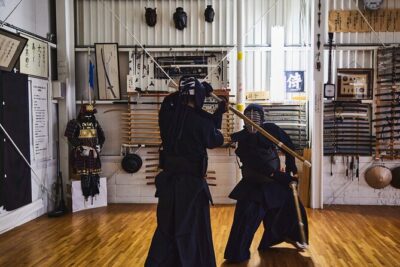 ★ 5.0Samurai Training Experience KENDO in OsakaFrom $131515 reviews
 ★ 4.8OSAKA NIGHT FUSION Japanese Taiko Kabuki Samurai Dance ShowFrom $40155 reviews
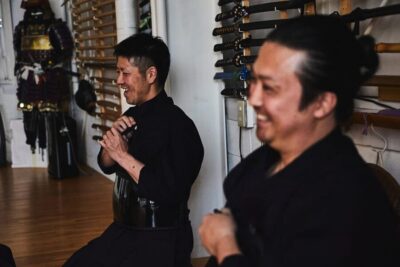 ★ 5.0Osaka: Samurai Training Experience KENDO in OsakaFrom $127111 reviews
 ★ 4.5Osaka: A Modern Samurai, Kabuki, Taiko, & Dance ShowFrom $1966 reviews
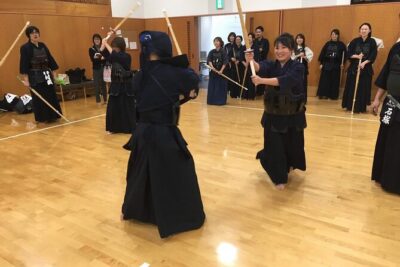 ★ 5.0Osaka 2-Hour Genuine Kendo / Samurai Experience In JapanFrom $11865 reviews
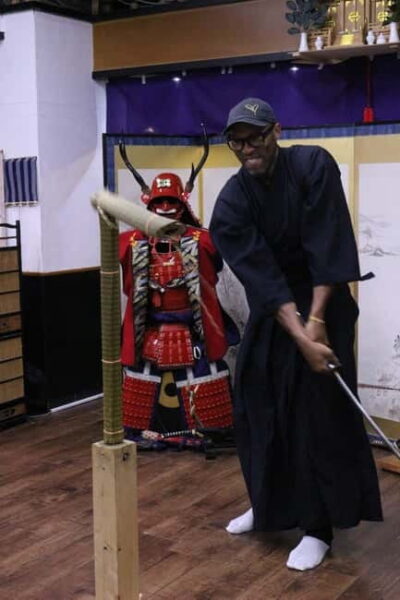 ★ 4.9Osaka: Learn Bushido – Trial Slashing with Samurai SwordFrom $9259 reviews
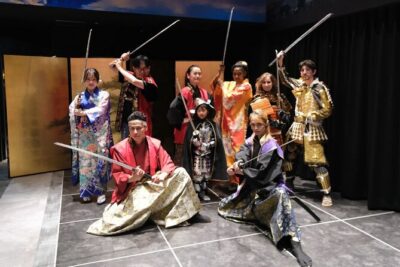 ★ 5.0Samurai Show, Tea Ceremony, Japanese Traditional ActivitiesFrom $4456 reviews
 ★ 5.0Osaka: Private Samurai Experience – Train with Sword MasterFrom $15836 reviews