
REVIEW · OSAKA SAMURAI, NINJA & KENDO EXPERIENCES
Samurai Training Experience KENDO in Osaka
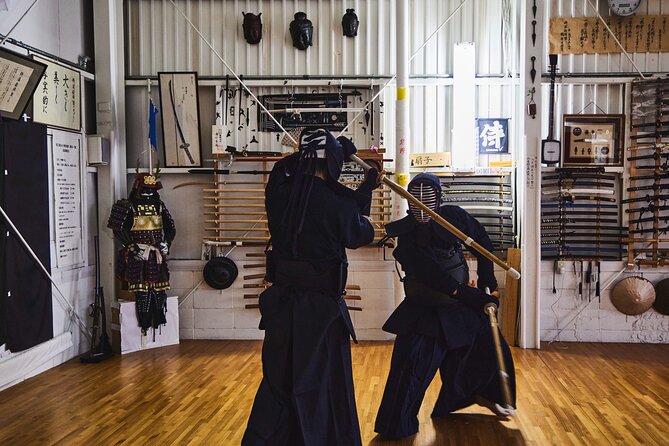
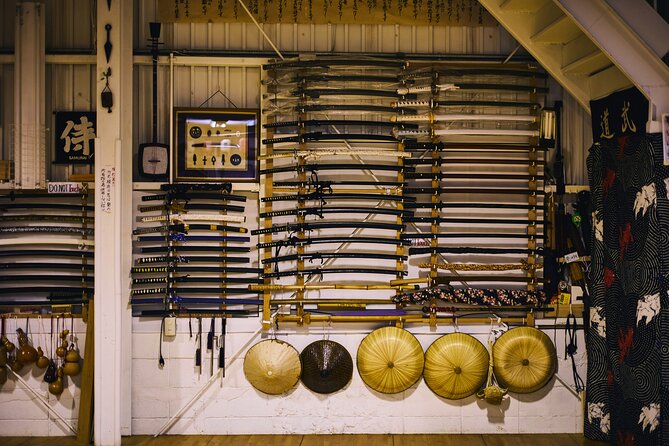
If you’ve ever wanted to try Kendo in Japan, this is it. You practice traditional Kendo in a real Osaka dojo that also feels like a small samurai museum, so the training has context, not just choreography.
I especially love how the class is built for first-timers, with clear instruction in English and a lot of hands-on coaching. I also like the comfort side of it, with changing rooms and showers after you get suited up and sweat a bit.
The main thing to consider is that it is physical. You’ll be in protective gear and doing repetitive strikes and footwork for about 2 hours, so plan for effort, not a gentle photo-op.
Key points before you go
- Real dojo, museum-style atmosphere with samurai artifacts on display
- Beginner-friendly English instruction, no prior Kendo needed
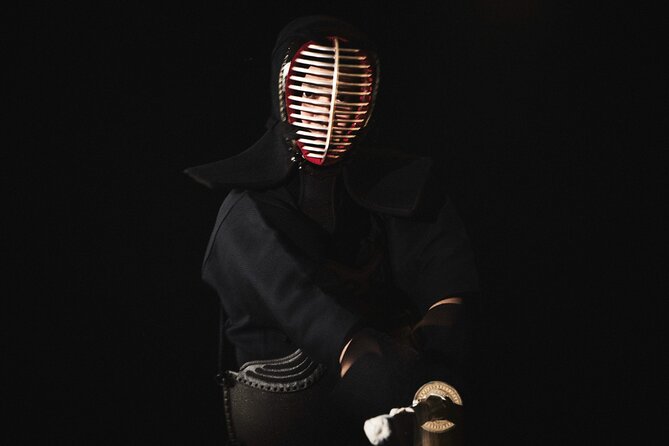
- Authentic uniform and protective armor plus practice with a shinai (bamboo sword)
- Small class size, max 12, so you get feedback
- Digital photo and video souvenirs from your session
- Comfort included, with showers and changing rooms plus climate control
Kendo Training in a Real Osaka Dojo, Not a Costume Show
Osaka is full of fun, and you can fill days with sights and food. But Kendo gives you something different. It’s not about watching, it’s about doing, with rules, manners, and real gear that changes how you move.
What makes this experience feel authentic is the setting. You’re not training in a random studio. You’re in a maintained dojo environment that also doubles as a place to look at samurai artifacts and memorabilia. That matters because Kendo is more than hitting a partner. It’s also a way of studying discipline and form, and the museum-like backdrop helps the lesson land faster in your brain.
Two names show up again and again in the experience, which tells me the teaching style is consistent. Toshi is the main instructor, and Kumiko is part of the teaching team. In many sessions, an assistant who supports English communication is also involved, sometimes referenced as Nao.
More time in the dojo
A good fit for most people, with one clear reality check
Most travelers can participate, including beginners. Still, you should go in knowing you’ll be wearing armor, learning stance and strikes, and then doing match-style practice. If you want something totally relaxed, this is probably not your pick.
Your 2-Hour Flow: From Samurai Basics to Match-Style Practice
The session runs about 2 hours, which is just enough time to get the basics into your body without turning it into a long boot camp. The structure is typically: history and context first, then getting dressed, then technique training, then sparring practice.
It starts with an introduction to Kendo and the world around it, including samurai culture and Bushidō. That short theory piece is useful even if you think you already know the basics. It frames what you’re about to do, including why form, spacing, and timing matter.
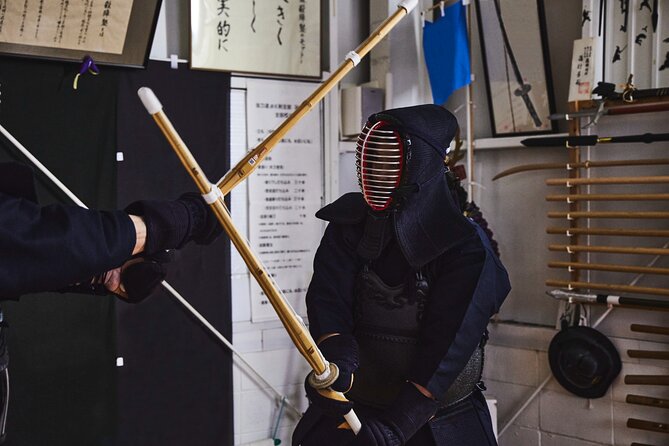
Next, you change into authentic Kendo uniforms and protective armor. Then you move into the practical training: core techniques with the shinai, plus footwork and defensive movements. The goal is to get you from feeling awkward to feeling in control.
By the end, you’ll shift into a safe, match-style rhythm under professional guidance. Many people come away surprised by how quickly they go from learning the basics to trading controlled bouts with someone else in class, and sometimes even challenging the sensei depending on the session pace.
Gear Up: Authentic Uniform, Protective Armor, and the Shinai
This is one of the biggest reasons the experience gets such strong marks. You’re not handed a plastic sword. You wear an authentic uniform and protective gear, and then you practice with a shinai, the bamboo sword used in Kendo training.
That gear does two things for you:
- It protects you while you learn.
- It forces correct distance and movement, because the armor changes how you carry yourself.
You’ll also get support figuring out the fit and how to move comfortably. This matters because armor can make beginners feel clumsy at first. The teaching team handles that by slowing things down early, then building intensity as your form improves.
If you’re thinking about taking photos, it’s also worth knowing the experience is set up for that. You step into full gear and then capture pictures and video as part of the moment.
For families: kids 3 to 5 have a specific focus
There’s a child note in the experience plan. For children aged 3–5, the focus is on safely wearing uniforms and protective gear and taking photos. The aim is fun and participation without pushing kids into full sparring.
Learning Kendo Basics That Actually Transfer to Sparring
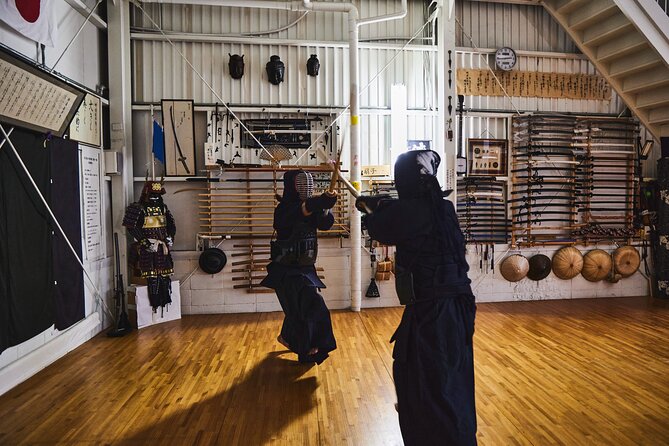
Kendo can look intimidating from the outside. Up close, it’s more learnable than people expect, especially when the lesson is designed for beginners.
In your training, you’ll work on:
- Stances and basic posture
- Foundational strikes and how to aim
- Footwork that supports the technique
- Combinations or counters, introduced at a level that fits the group
A big theme in the feedback is patience and encouragement. People describe feeling like the instructors coach you step by step, including helping you get your bearings in the gear. That’s crucial for beginners. If the class is too fast, you spend the whole time just trying not to fall over. Here, the pacing is designed so you can actually learn.
Then comes the match-style session. This is where you test what you just learned, usually in a controlled, guided way. You’ll practice dueling basics and safe engagement, so you can feel what Kendo timing feels like without turning it into chaos.
Photos and Videos: A Souvenir That Doesn’t Feel Like a Sell
A lot of activities in Japan offer photos. Few include digital media in a way that feels genuinely useful later. Here, you receive digital photos and videos as souvenirs from the experience.
That’s more than a nice-to-have. When you’re in armor and moving fast, it’s hard to remember what you did correctly. Having video helps you replay the moment later, and photos capture the transformation from regular traveler to Kendo student in full gear.
Many people note that the team records parts of the session, then sends the media after. If you want proof for your camera roll that you really did something active and cultural, this is the kind of add-on that pays off.
Comfort, Showers, and Osaka Location: Easy to Fit Into a Day
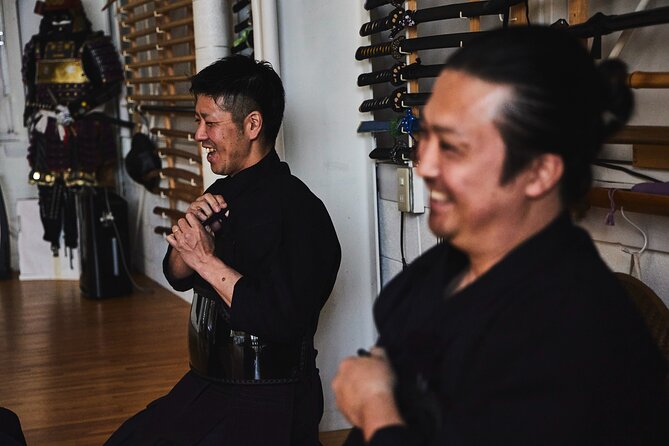
Practical comfort is a real advantage here. You’re not just learning in a classroom corner. The dojo has facilities like changing rooms and showers, plus air conditioning and heating. That means you can make this work in any season and not feel trapped.
The location is also described as central Osaka and near public transportation. That matters because Kendo trains your body and your schedule. You don’t want to burn half a day getting there and back, especially when you only have around 2 hours of training time.
You’ll also meet at an exact address:
1-chōme-18-2 Honjōhigashi, Kita Ward, Osaka, 531-0074, Japan
Also, service animals are allowed, which is good to know if you travel with one.
What I’d pack (based on what you’ll actually experience)
The experience details don’t list a strict dress code for normal clothing, so plan for typical dojo readiness. I’d wear comfortable clothes you can change out of easily. After training, you’ll likely appreciate being able to shower, so bring basics for that.
If you bruise easily or have sensitivities, mention it. The class is guided and designed for safety, but your own comfort matters.
Price and Value: Is $131.32 Worth It?
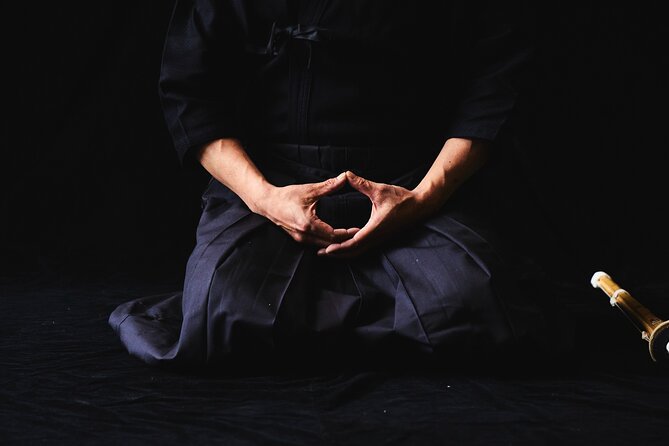
At $131.32 per person for about 2 hours, you’re paying for more than a basic demo. You’re paying for equipment access, instructor time, and a structured beginner lesson that ends with hands-on match-style practice. That’s a key value point.
Here’s why it can feel worth it:
- You get in authentic uniform and protective armor, which adds real training authenticity.
- Instruction is in English, with small group size, max 12, which usually means better coaching and less waiting.
- You leave with digital photo and video souvenirs, not just a memory.
- The dojo setting adds context via samurai artifacts and memorabilia, so you learn the art with cultural grounding.
If you’re the kind of traveler who likes experiences that don’t just let you look, this price starts making sense. If you’re hoping for something passive, or you want maximum time in a quiet museum, you might compare this with a different style of cultural visit.
Still, if you want one active cultural activity in Osaka that feels genuinely Japanese and hands-on, this is strongly positioned for value.
Who Should Book This Kendo Experience in Osaka?
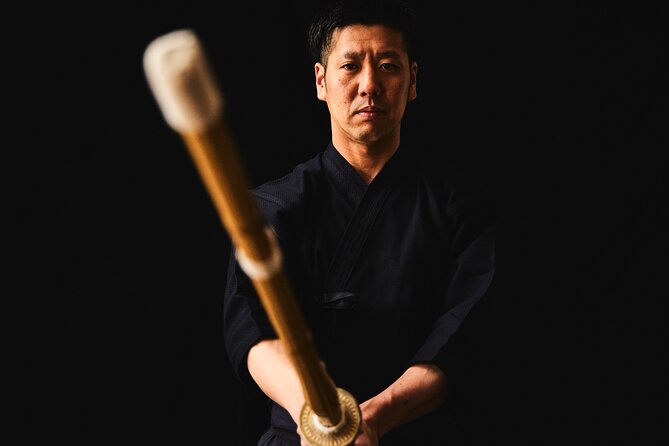
This is best for you if:
- You’re a beginner who wants instruction, not intimidation
- You like hands-on learning and don’t mind a physical workout
- You care about the connection between samurai culture and modern Japanese martial arts
- You want a memorable souvenir, especially video and photos
It’s also a solid option for couples and families. Many families mention kids enjoying the training and the gear moment. For younger children, the experience is set up with a safe focus on uniforms, armor, and photos.
If you’re a solo traveler, it can feel even more personal because small group sizes and one-on-one help are easier to arrange.
Quick check: what could be annoying
Even with all the positives, there’s one practical reality. You’ll be wearing protective armor and practicing strikes and footwork. That means:
- You’ll likely feel it in your legs and shoulders
- You need comfortable readiness for movement, not just standing around
If that fits your travel style, you’ll probably love it. If you’re nursing injuries or want a totally low-energy day, consider a different activity.
Should You Book Samurai Training Experience Kendo in Osaka?
I think you should book it if you want an Osaka experience that feels authentic and not staged, and you’re willing to do real training in real gear. The small class size, the beginner-friendly English instruction, and the combination of technique training plus match-style practice make it one of the more “do something in Japan” experiences you can pick.
One more practical reason to lean yes: the format is only about 2 hours. It’s easy to place between sightseeing and dinner without wrecking the rest of your day. And with showers and changing rooms on site, you won’t end your night feeling gross.
If you want a hands-on cultural activity in Osaka that gives you both training and a samurai context, this is an easy recommendation.
FAQ
Is this Kendo training beginner-friendly?
Yes. The experience is designed for beginners with English instruction, and you do not need prior Kendo experience.
How long is the Samurai Training Experience KENDO in Osaka?
It lasts about 2 hours.
Is the class taught in English?
Yes, the experience is conducted in English.
What do I wear and do I get protective gear?
You change into an authentic Kendo uniform and protective armor as part of the lesson, and you practice using a shinai (bamboo sword).
Do I receive photos or videos from the experience?
Yes. You receive digital photos and videos of your experience as a souvenir.
What is the group size limit?
The class has a maximum of 12 travelers.
Are there showers and changing rooms?
Yes. The facility includes changing rooms and showers, along with air conditioning (and heating).
Can young children participate?
Children ages 3–5 can take part with a focus on safely wearing uniforms and armor and taking photos. The overall experience is described as suitable for most travelers.
Where is the meeting point?
You start at 1-chōme-18-2 Honjōhigashi, Kita Ward, Osaka, 531-0074, Japan, and the activity ends back at the meeting point.
More Tour Reviews in Osaka

More Hours in the Dojo


Latest out of Osaka


Osaka Samurai, Ninja & Kendo Experiences, side by side.
 ★ 4.8OSAKA NIGHT FUSION Japanese Taiko Kabuki Samurai Dance ShowFrom $40155 reviews
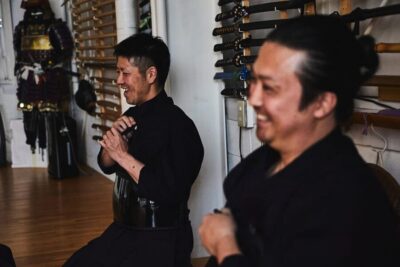 ★ 5.0Osaka: Samurai Training Experience KENDO in OsakaFrom $127111 reviews
 ★ 4.5Osaka: A Modern Samurai, Kabuki, Taiko, & Dance ShowFrom $1966 reviews
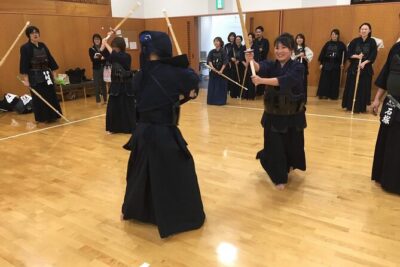 ★ 5.0Osaka 2-Hour Genuine Kendo / Samurai Experience In JapanFrom $11865 reviews
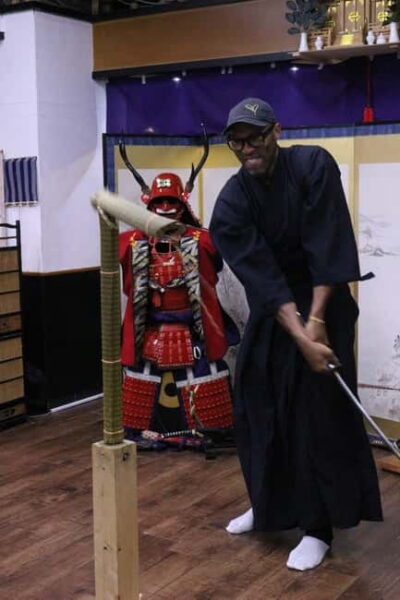 ★ 4.9Osaka: Learn Bushido – Trial Slashing with Samurai SwordFrom $9259 reviews
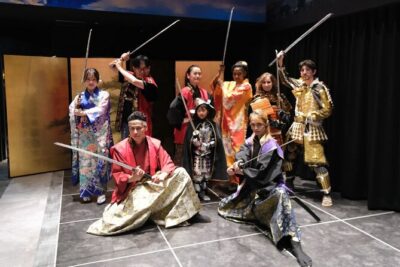 ★ 5.0Samurai Show, Tea Ceremony, Japanese Traditional ActivitiesFrom $4456 reviews
 ★ 5.0Osaka: Private Samurai Experience – Train with Sword MasterFrom $15836 reviews
 ★ 5.0Honor – Experience Samurai & traditional Culture to the fullestFrom $18132 reviews
Also worth a look in