
REVIEW · OSAKA CASTLE PARK TOURS
Learning Zen of Japanese Calligraphy in kimono near Osaka Castle
A kimono and calligraphy is a great combo. This small-group class pairs traditional clothing with a hands-on kanji lesson that actually teaches how Japanese shodo works, not just how to copy a character. I especially like the calm, patient instruction and the fact you leave with your own name translated into kanji characters. One caution: this is an art class that involves sitting, kneeling, and brushwork, so it is not recommended for back problems or heart conditions.
The format is simple: change first, learn the mindset and tools, then practice strokes step by step until you make a final piece. You will also get help navigating language gaps with an English-Japanese or Chinese-Japanese translator, so you are not stuck guessing what the teacher wants. Still, if you need a specific language other than the default English, you should inquire early because the provider may not always be able to accommodate every request.
Key Things That Make This Class Worth Your Time
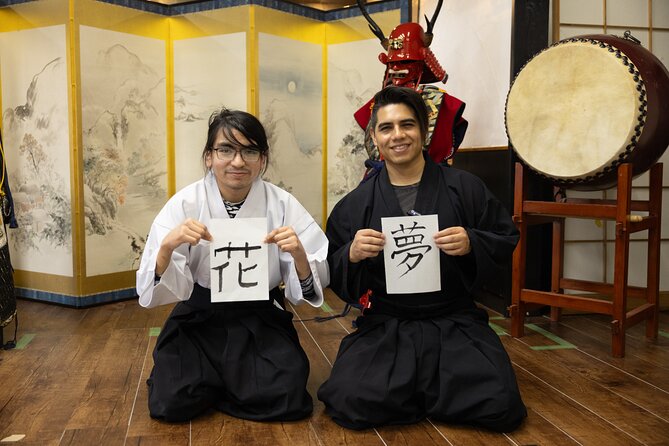
- Kimono first, calligraphy after: you dress in traditional attire before you touch a brush
- Shodo basics, not just a souvenir: you learn brush grip and core movements like tome, hane, and harai
- Pick your own challenge kanji: you choose the character(s) you want to practice, then learn stroke order
- Your name gets translated into kanji: the teacher writes your foreign names on wooden tags using your chosen kanji
- You get usable photos: a photo shoot covers both your kimono look and your artwork, with data sent by email
- Small group size: up to 10 travelers, so you get real attention while practicing
Osaka Castle Area, A Zen Hour of Shodo in Kimono
If your Osaka plan includes Osaka Castle, this class is a smart add-on because it turns a busy sightseeing day into something quieter and hands-on. You spend about 1 hour practicing Japanese calligraphy in traditional clothing, then you end right back at the meeting point.
The vibe is “slow down and do it right.” Shodo is not just decorative writing. The teacher focuses on the way brush movement, posture, and attention change the result. And because the class is open to all skill levels, you do not need prior Japanese ability or calligraphy experience to get something you can be proud of.
Other ways up the keep
Getting Dressed First: Kimono, Hakama, and Comfortable Timing
The flow starts with dressing. Before you pick up the brush, you change into traditional Japanese attire such as kimono, and the class may include items like hakama as well.
A practical tip: use the restroom before dressing. These outfits can be fitted and warm, and you do not want to disrupt the class once you are suited up. Also, arrive dressed appropriately for the activity because you may sweat while wearing hakama and practicing. The class instructions specifically call this out, so treat it as serious guidance, not a throwaway note.
If you want the extra polished look, there is an optional add-on called wagami, described as collected hair plus kanzashi (paid option of ¥3,300 per person). If you want to keep things simple, you can still do the standard experience without it.
Learning the Shodo Basics: Brush Grip and Movements
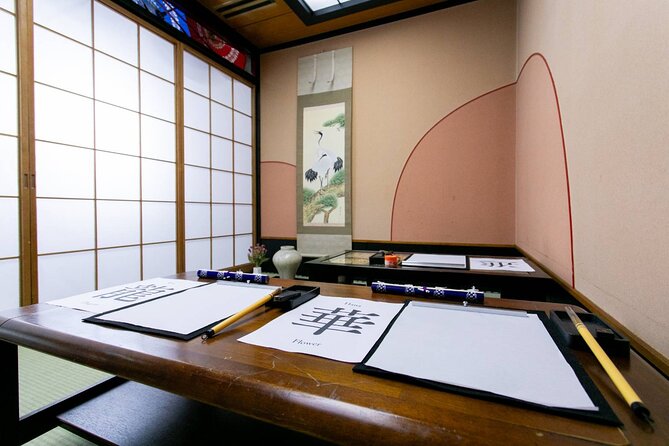
Before you write anything, you get a mindset and tools segment. This is where the teacher explains the differences between calligraphy as people sometimes see it overseas and Japanese shodo as a discipline.
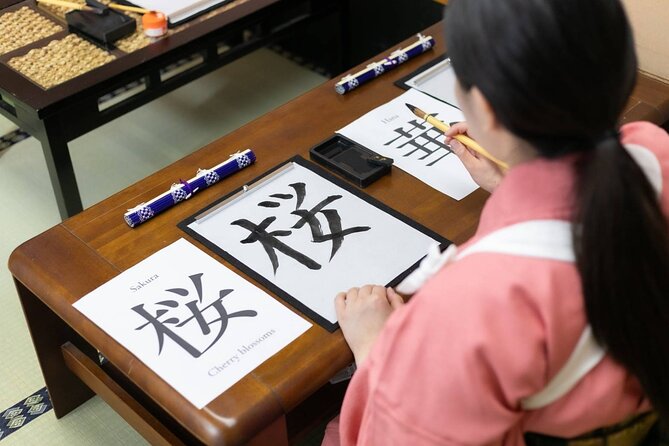
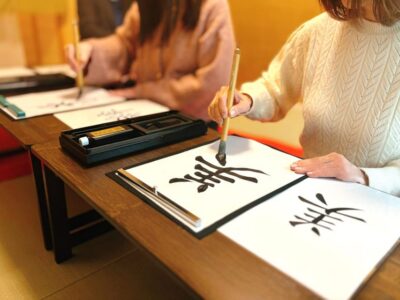
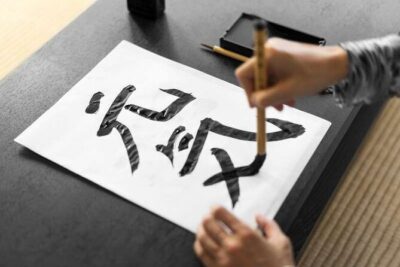
Then comes the part you will feel immediately: learning how to hold the brush and use the tools. The class covers basic brush technique, with the most basic brush movements called tome, hane, and harai. These are the building blocks behind the character shapes. Once you understand the strokes in terms of brush behavior, your characters stop looking like random symbols and start looking intentional.
One nice detail is that you practice. You are not just shown once and handed a worksheet. The teaching sequence is set up to help you do the motions, then repeat them until your hand can follow the instructions.
Pick Your Kanji Name: Meanings, Stroke Order, and Wooden Tags
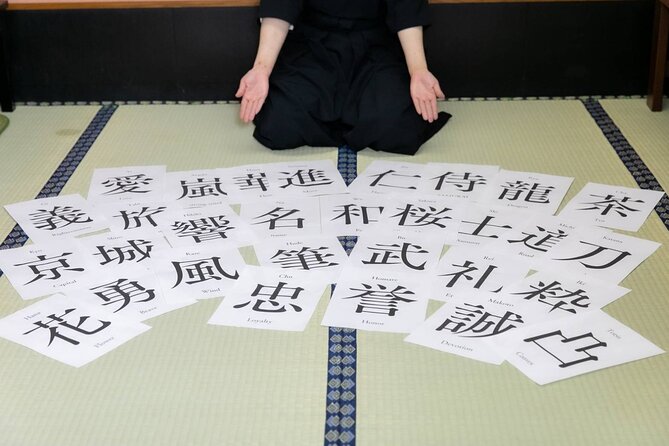
This is the most fun, personal part of the class. You choose your favorite Japanese kanji to challenge yourself. The class notes that kanji characters have multiple meanings depending on context, and that kanji is widely described as one of the most difficult languages to learn.
You also get the structure that makes kanji feel less mysterious: the teacher teaches stroke order for the kanji you selected. Stroke order is not just tradition. It is the difference between a character that looks off and one that looks correct.
Then comes the surprise. The teacher writes the foreign names of participants on wooden tags using the kanji characters you have chosen. This means the class does not end at generic practice sheets. You get something customized, tied to your chosen kanji and your own name.
And if you are the kind of person who enjoys learning tiny culture details, this part delivers. You are not only drawing lines. You are tying meaning to your identity in kanji.
Your Final Draft and the Photo Shoot You Can Actually Use
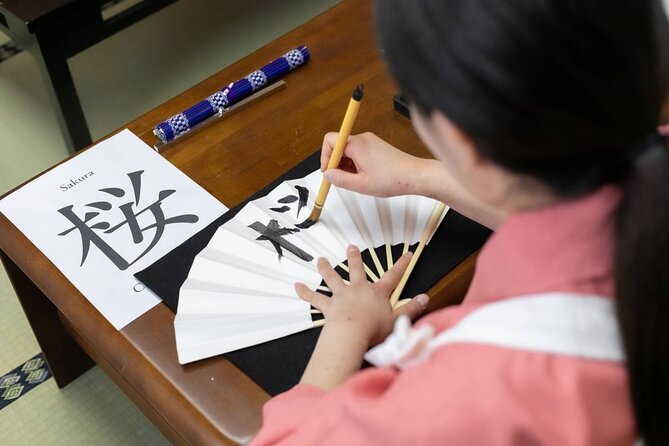
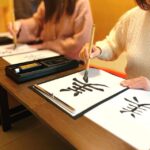
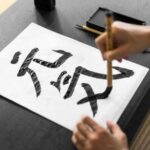
After practicing techniques and stroke order, you move to the final stage: writing a final draft while keeping what you learned in mind. This is where you stop “doing exercises” and start making a finished piece.
Right after that, you shift into photos. The class includes a photo shoot where you capture your kimono outfit and your artwork. Smartphone photography for personal use is permitted as long as you follow the rules: no selfies and no photos of other guests. Recording videos is discouraged, and fixed tripods are not allowed.
What you will like here is that the class provides photo coverage, and the photography data is sent to a designated email address. That matters because it saves you from trying to wrestle your phone while still kneeling and writing. You get photos that feel like part of the experience, not a rushed attempt to document it.
More ink, more craft benches
Language Help and the Small-Group Advantage
Communication is set up to be friendly. The default language is English, and the class includes an English-Japanese or Chinese-Japanese translator to help you navigate language barriers during the lesson.
If you want a language other than the default English, you can inquire. The info lists potential languages including Italian, Spanish, French, Chinese, Thai, and Indonesian, but it also notes staffing can be limited. So if language support is important to you, ask before you lock anything in.
The class keeps the group small, with a maximum of 10 travelers. That size is ideal for something like shodo. You get time to practice, and you are not stuck waiting for the teacher to notice your brush grip. It also keeps the atmosphere calm, which matches the whole “zen” angle of the experience.
Value Check on a $43.59 Class: What You Get for the Time
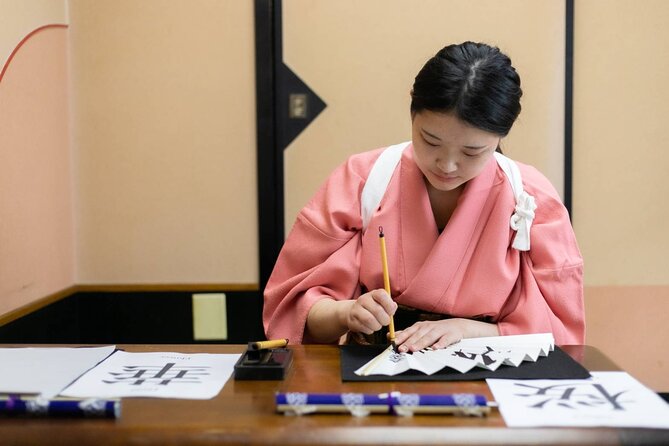
At $43.59 per person for about 1 hour, the value is mainly about what is bundled. You are paying for instruction, traditional attire, writing guidance (including stroke order), and photo deliverables.
Here is what you get beyond the basics:
- Traditional clothing like kimono, and possibly hakama
- Guided shodo instruction from an actual shodo teacher
- A customized element tied to your name, via kanji written onto wooden tags
- Photo shoot coverage and digital delivery by email
If you try to DIY this in Osaka, you would quickly spend similar money on just renting a kimono and paying for a photographer. This class adds the real craft instruction and turns it into a short “make something” experience instead of only a costume moment.
If you want a low time investment but high “I did something real” satisfaction, it is a strong fit.
Location Clues and Practical Tips Near Osaka Castle
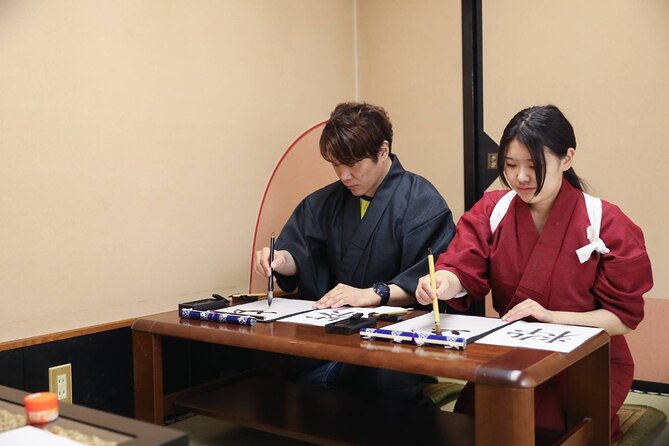
The meeting point is in Osaka, Joto Ward, Shiginonishi, with the address listed as:
536-0014 Osaka, Joto Ward, Shiginonishi, 2-chōme319 エクセレンス高山
The class ends back at the meeting point, so you can plan the rest of your day around that.
Two logistics tips that help:
- Allow time to find the place. The experience location is described as a small store front in at least one account, and people can walk past it when following navigation.
- Take the “near public transportation” note seriously. Use transit for reliability, then arrive early enough that you are not rushing.
Also, the class has a late-arrival rule: if you are more than 30 minutes late for your reservation, entry may be refused, even if you contact the provider. In a place this small and time-based, punctuality really matters.
Who This Works For, and Who Should Skip It
This class is designed for broad skill levels. That includes first timers and also kids, since the class is explicitly open to all skill levels and mentions that kids can participate too.
It also works well if you want a peaceful break from more active Osaka plans. The lesson includes a mindset section and focuses on calm practice, so it feels different from typical “walk and shop” sightseeing.
Who should think twice:
- The instructions say it is not recommended for people with back problems.
- It is also not recommended for people with heart conditions.
- It is not stroller accessible.
If you travel with pets, the class says it is not suitable for pets. Service animals are allowed, though.
Should You Book It for Your Osaka Trip?
Yes, I think you should book this class if you want one hour that feels personal, creative, and culturally specific. The sweet spot is when you want more than a photo op, but you do not want a full multi-hour workshop.
Book it confidently if you:
- Like structured instruction and step-by-step practice
- Want to write your name in kanji and take photos you can share
- Plan to spend time around Osaka Castle and want something calmer afterward
Be cautious if:
- You need a specific non-English language and the timing matters
- You might struggle with sitting or kneeling for a while
- You prefer very large, easy-to-find venues (this one is small, and the storefront may not look obvious)
If you do decide to go, give yourself extra time to locate the shop, arrive without rushing, and treat the brushwork like a workout for attention. You will come away with something you made, plus photos that actually capture it.
FAQ
How long is the Japanese calligraphy class?
The class is about 1 hour.
What language support is available during the lesson?
English is the default. The class includes an English-Japanese or Chinese-Japanese translator to help with language barriers. Other languages may be available if you inquire, but staffing is limited.
Is this class suitable for beginners and kids?
Yes. The class is open to all skill levels, and kids can participate.
What do I receive after the class?
You will create a final draft of your calligraphy. You also get a photo shoot, with the photography data sent to a designated email address. The experience also includes a souvenir from the teacher.
Can I take photos with my smartphone?
Yes, smartphone photography is permitted for personal use as long as you do not take selfies and you do not photograph other guests. Fixed tripods and recording videos are discouraged because they may disturb others.
Is there anything I should know about physical limitations or accessibility?
It is not recommended for people with back problems or heart conditions. It is also not stroller accessible, and you are asked to sign a liability waiver before the experience.
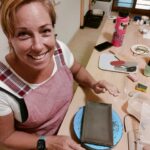
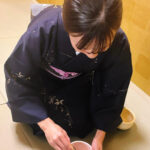
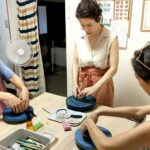
Dressed for the Photographs




Brush, Ink and Workbench
Around the Moat: More Castle Days




Latest out of Osaka


Osaka Castle Park Tours, side by side.
 ★ 4.5Osaka Castle: Museum and Tower Entry TicketFrom $72,380 reviews
 ★ 5.0Osaka Castle Walking Tour and Castle Tower AdmissionFrom $23561 reviews
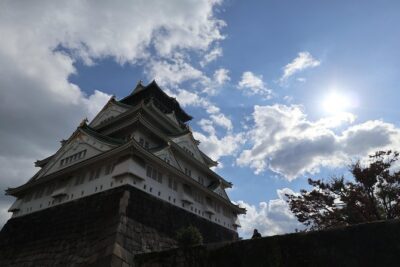 ★ 5.05-Hour Osaka Bike Tour to the Neighborhood of Osaka CastleFrom $87319 reviews
 ★ 4.7Osaka Castle Guided TourFrom $43249 reviews
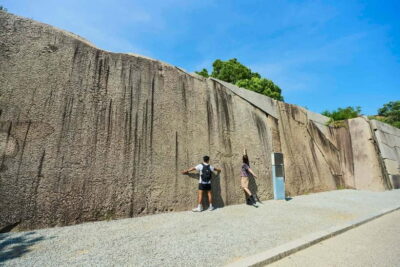 ★ 4.9Osaka: Castle History Walking Tour / Castle Tower AdmissionFrom $33230 reviews
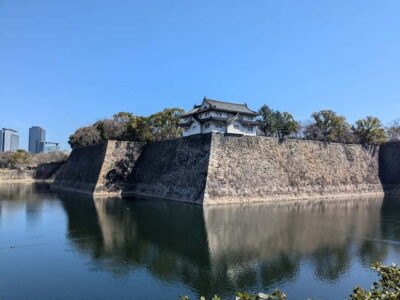 ★ 4.7Osaka: Osaka Castle Guided Tour with Local GuideFrom $4878 reviews
 ★ 5.0PRIVATE 6hr, Food tour from Osaka Castle, Kuromon, Dotonbori.From $15568 reviews
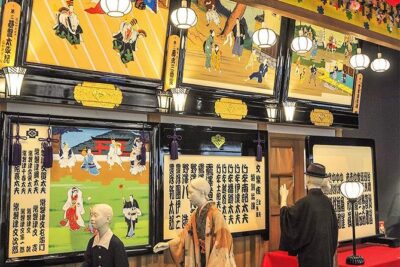 ★ 4.5A Tour to Explore the Symbol of Osaka: Osaka CastleFrom $8356 reviews