
REVIEW · OSAKA SAMURAI, NINJA & KENDO EXPERIENCES
Learning Shodo with a kimono and Trying Samurai Calligraphy
Kanji magic in a kimono takes practice. I like that you dress in a kimono and get a guided kanji stroke-order lesson you can follow step by step. One possible drawback is that the workshop can be noisy, with trains passing nearby, so sound-sensitive people may want earplugs.
I also like the family-friendly setup, with a pace that works even when kids are trying to copy strokes and stay focused. The main thing to plan for is costume time and getting photographed, not just a quick demo, so arrive ready to change clothes and sit up straight for your calligraphy.
Quick hits for Shodo and Samurai Calligraphy at Samurai Honor
- Kimono and photo time: You get dressed, then you get photographed with your artwork in the background.
- Kanji strokes you can repeat later: You practice the stroke order of the kanji you chose, not just one copied line.
- Name surprise in kanji: The calligraphy master writes participants’ foreign names using kanji they’ve chosen.
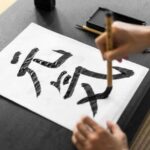
- A giant brush samurai moment: You paint one powerful character using an oversized brush on a huge sheet.
- A keepsake gift you cannot buy: The master writes your character on a Samurai Honor bag as a souvenir.
Arriving at Samurai Honor in Osaka, and spotting the landmark
This experience happens at Samurai Honor, also known as Bushi no Homare, in Osaka-shi. The address is Excellence Takayama 1F, 2-3-19 Shiginonishi, Joto-ku, Osaka 536-0014. The easiest meeting point is a wooden sign rack that reads Honor of the Samurai. It sits in front of the store, and you may also notice kimonos and hakama hanging to dry nearby.
Plan to arrive about 30 minutes before your reserved time. That buffer matters because you’ll need instructions and time to change into your costume. If you’re trying to connect this with other Osaka plans, give yourself a little extra room. You’re not just walking in and starting, you’re switching into a very specific look.
One heads-up based on the experience itself: the studio location can feel a bit rough around the edges from the street, and trains can pass close by. The teacher experience can still be excellent, but if you hate noise, build that into your expectations.
More time in the dojo
First step: costume changing, mindset, and meeting the tools
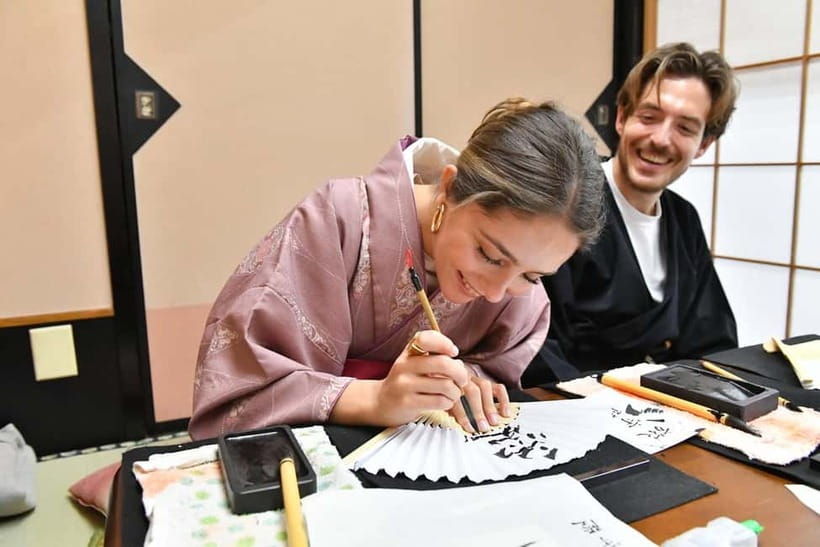
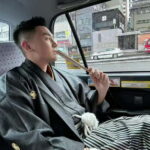
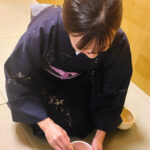
The lesson starts with you changing into traditional clothing like a kimono. If you’re used to travel photos in Japan, this is the part that turns the visit from watching to doing. You’re physically in the culture, and the routine of dressing helps you slow down and take the lesson seriously.
Once you’re changed, you move into the mindset and tools part. You learn how to hold the brush and how to use the materials properly. This matters more than most people expect. Shodo is not about perfect handwriting on day one. It’s about controlling movement, pressure, and timing, and the session is built to teach the basics without making you feel rushed.
After that comes brush movement, the technique section where the instructor guides you on how strokes should flow. You’ll practice while paying attention to how the brush moves, not just what it should look like when it’s done.
Choosing your kanji, then learning stroke order for real
This is the core shodo portion, and it’s the main reason the experience feels worth your time. Before you write your final piece, you practice the stroke order for the kanji you selected earlier.
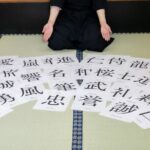
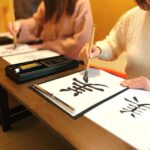
Then the calligraphy master demonstrates the character, showing you how to write it with a brush while you follow the stroke order. This is where I think most people get the best value. When you understand the order, your hand starts to do what the brush needs to do. Without that order, the same character turns into a random smear of attempts.
There’s also a nice surprise built into the flow. The teacher writes the foreign names of the participants using the kanji characters they chose. It’s a fun, social moment, and it also reinforces the idea that kanji can be read as both sound and meaning, not just decoration.
Tip for getting good results fast: keep your focus on the direction of each stroke, even if it doesn’t look perfect. Perfection happens later. Your goal in this lesson is controlling the brush long enough to produce the correct sequence.
Final draft: paper, keeping your work, and making it a souvenir
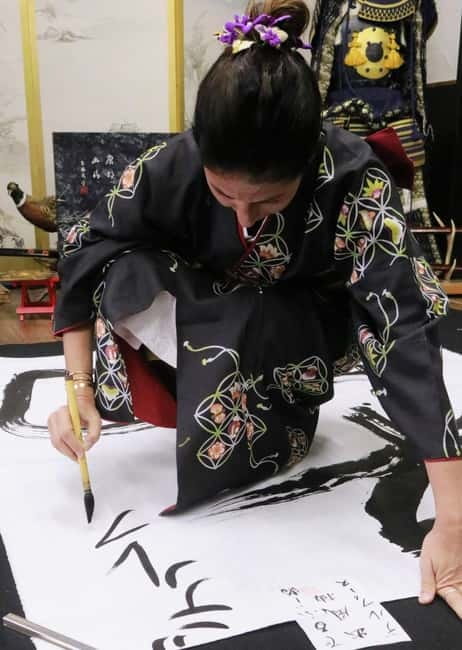
After the technique and practice, you create a final draft. The session uses calligraphy paper, and there may be options like a fan or a hanging scroll depending on what’s included or selected for your experience. Your final work is yours to keep.
You can treat it as a simple souvenir, or frame it later and display it. Either way, it’s more satisfying than a photo alone, because you participated in something tactile. You’re taking home a physical object made with your own strokes, not just a skill you watched once.
Also, there’s an emotional payoff to seeing your name written in kanji style. It’s not the same as typing your name into an app. The brush adds personality to every line, and you can usually feel the difference between a careful stroke and a rushed one.
And yes, you’ll be surrounded by people in costume mode. That helps. It makes the whole thing feel ceremonial without turning it into a stiff museum lecture.
Trying Samurai Calligraphy: one character with whole-body energy
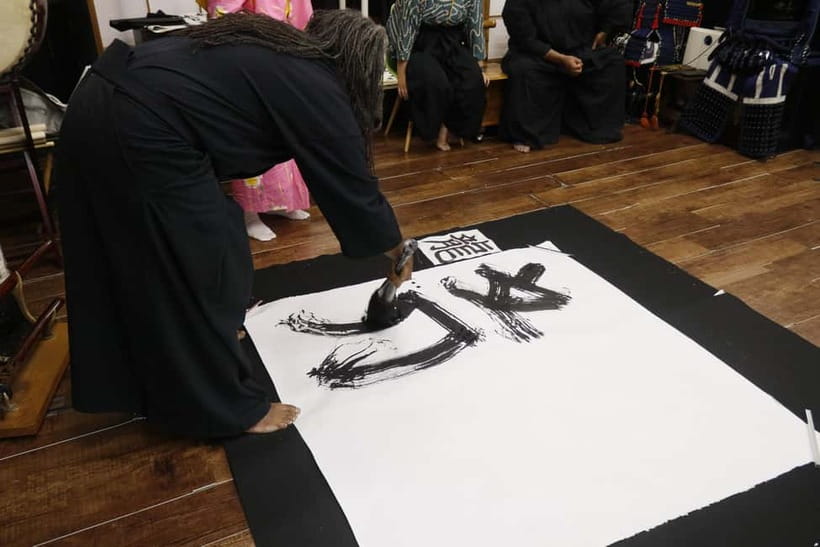
This is where the experience shifts gears. After the shodo lesson, you move into Trying Samurai Calligraphy, which includes a single-character piece with a more dramatic approach.
You start with a concept called one character for resignation. The prompt is reflective, almost like a mini storytelling exercise. You imagine a story about who and what kind of feelings you want to leave behind. Then you consider the design, composition, and how that final character should look as your signature piece.
Next comes the aesthetic idea of blank spaces, and something the Japanese call the beauty of the margins. In plain terms, this is the reminder that empty space is part of the artwork. The brushstroke matters, but so does how you choose where not to put ink.
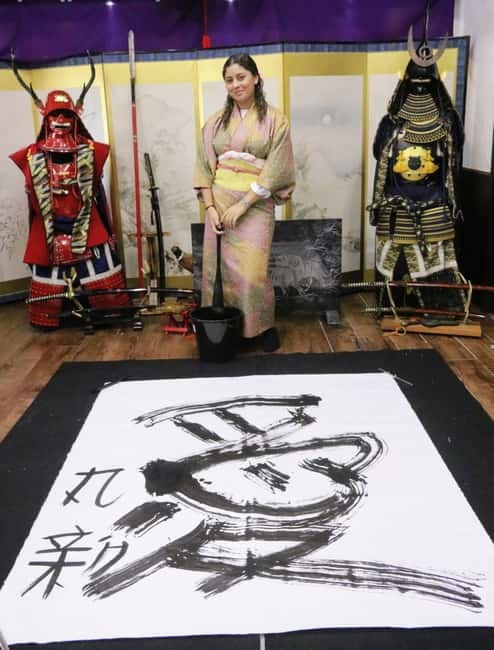
Then comes the physical wow moment. The artist uses an oversized brush, more than five times larger than usual, and paints a single character on a 150cm x 150cm sheet of paper. The teacher’s full-body movement is the point. You’re watching how a large brush changes the whole relationship between intention and execution.
Even if your own stroke isn’t as strong as the master’s, you’ll feel the difference. A big brush forces you to commit. Your arm can’t micro-control the way it does with a normal writing tool. That change is part of why this segment feels so memorable.
Finally, you sign the work so your piece stays connected to your identity. The session includes signing that indicates ownership of the piece.
More ink, more craft benches
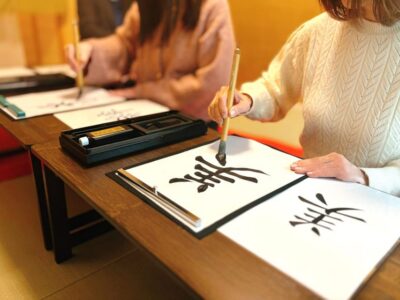
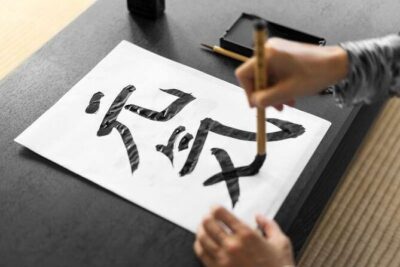
Photo shoot time: Yamato Nadeshiko or samurai mode
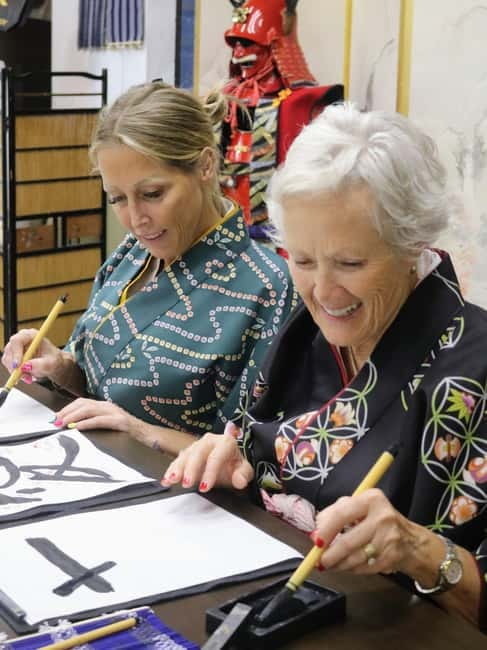
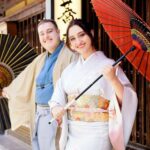
After the calligraphy part, you get a photo shoot with your kimono and your artwork. The experience uses two theme styles, Yamato Nadeshiko for a graceful look, or brave samurai for a stronger, warrior vibe.
This matters even if you’re not obsessed with photos. The costume and the art together tell a story in a way that a standard souvenir picture won’t. And since the session includes photographing you with what you made, your photos feel like part of the craft, not an awkward last-minute setup.
Photography is included as data delivery. The photos are sent to your designated email address after the activity. Bring that into your planning, because you won’t necessarily get everything instantly while you’re still in costume.
Price and value: what $42 actually buys you
$42 for around an hour sounds simple until you list what’s included. You get kimono and samurai costumes, a professional instructor, and taxes and tips are included. You also get the photo set, delivered by email, plus the materials and your own calligraphy keepsakes.
On top of that, you receive a Samurai Honor original bag as a gift. The calligraphy master writes the kanji character you attempted today on the bag surface. The bag is described as not available for sale anywhere else, which is exactly the kind of value add that makes a souvenir feel special instead of generic.
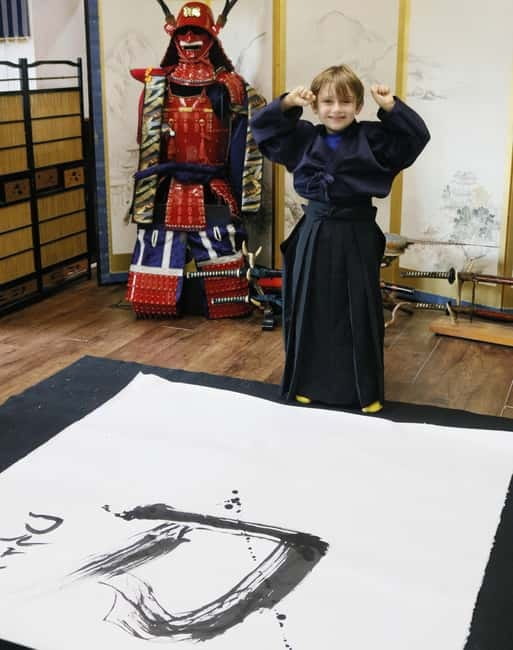
If you’re traveling with kids, the value goes up. This is one of those activities where a child can participate meaningfully, not just sit and watch. In Japan, children around 6 to 8 are often the age when calligraphy begins, and the pace here is built to match that kind of learning curve.
Where the value can drop slightly is if you’re hoping for a highly polished venue and a quiet, scenic studio. One review described the location as less than attractive, with trains rattling by nearby. If you need silence and comfort more than anything, adjust your expectations.
Who this is best for, and who should think twice

This fits best if you want a hands-on cultural experience with strong photo payoff. It also works well for families. You participate together with your child, which helps the lesson feel shared instead of like a drop-off activity.
It’s also a good fit if you like crafts that use discipline rather than just entertainment. Shodo rewards calm attention, and the structure of mindset, tools, technique, stroke order, and final draft gives you a clear learning path.
It may not fit if you’re bringing someone under 5, if anyone in your group has altitude sickness, or if you’re expecting a stroller-friendly environment. The experience also notes limitations for very elderly participants (over 95 years).
Also check rules before you go. Pets are not allowed, and baby strollers or baby carriages are not allowed. Alcohol and drugs are not allowed, and nudity is not allowed.
Should you book this Shodo and Samurai Calligraphy experience?
I’d book it if you want an authentic craft lesson in kanji style, plus a real costume experience, plus photos that match what you made. The stroke-order practice is the kind of learning that sticks, and the giant-brush samurai segment gives you a memorable finale.
I’d think twice if noise drives you crazy, or if you’re only interested in quiet, scenic sightseeing. The teaching quality can still be strong, but the setting can have passing-train sound.
If you’re flexible and ready to change into a kimono and focus for an hour-plus of craft, this is a fun, meaningful add-on to an Osaka trip.
FAQ
How long is the experience?
The booking lists a duration of 1 hour, and the lesson flow includes 60 minutes of Japanese Shodo plus a 30-minute Samurai Calligraphy segment. Plan for a bit over an hour based on how the session is run.
What’s included in the price?
Kimono and samurai costumes, a certified professional instructor, interpreter support in the default language, taxes and tips, and photography with data sent to your email. You also take home your calligraphy work and receive a Samurai Honor original bag with a character written on it.
What should I bring with me?
Bring a t-shirt. You will also need to arrive early enough for changing clothes.
What languages are available for the instructor?
The interpreter default language is English. Other languages are available by inquiry, including Italian, Spanish, French, Chinese, Thai, and Indonesian, depending on staff availability.
Can my child participate?
Children are included in the experience flow. The activity is not suitable for children under 5 years old. The program notes that 6 to 8-year-olds are a common age to start calligraphy learning in Japan.
Do I get photos and a souvenir at the end?
Yes. You get a photo shoot while dressed and with your artwork, and photography data is sent to your designated email address. You also receive a gift bag with the kanji character written on it.
What is the cancellation policy?
You can cancel up to 24 hours in advance for a full refund. There is also a reserve now, pay later option to keep your plans flexible.
Dressed for the Photographs

Brush, Ink and Workbench
More Hours in the Dojo


Latest out of Osaka


Osaka Samurai, Ninja & Kendo Experiences, side by side.
 ★ 5.0Samurai Training Experience KENDO in OsakaFrom $131515 reviews
 ★ 4.8OSAKA NIGHT FUSION Japanese Taiko Kabuki Samurai Dance ShowFrom $40155 reviews
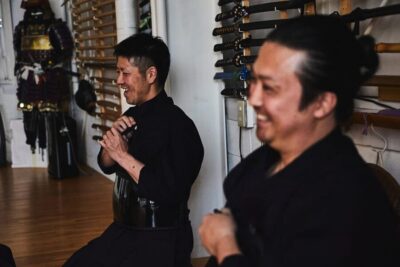 ★ 5.0Osaka: Samurai Training Experience KENDO in OsakaFrom $127111 reviews
 ★ 4.5Osaka: A Modern Samurai, Kabuki, Taiko, & Dance ShowFrom $1966 reviews
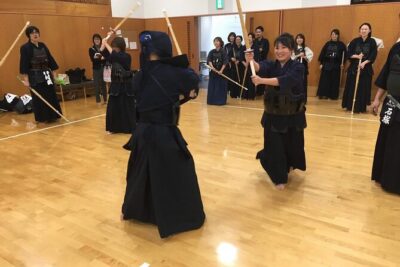 ★ 5.0Osaka 2-Hour Genuine Kendo / Samurai Experience In JapanFrom $11865 reviews
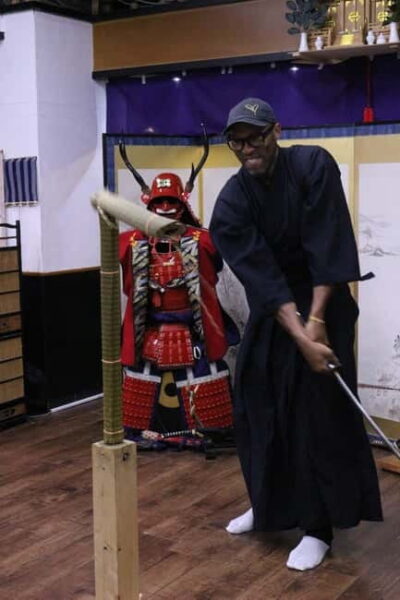 ★ 4.9Osaka: Learn Bushido – Trial Slashing with Samurai SwordFrom $9259 reviews
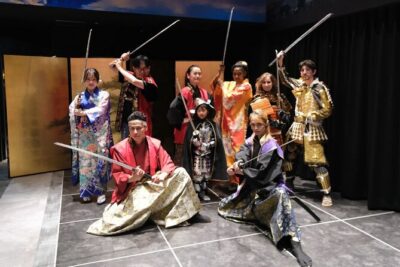 ★ 5.0Samurai Show, Tea Ceremony, Japanese Traditional ActivitiesFrom $4456 reviews
 ★ 5.0Osaka: Private Samurai Experience – Train with Sword MasterFrom $15836 reviews