Osaka: Half-day Ultimate Highlights Guided Walking Tour

REVIEW · OSAKA HIGHLIGHTS & MUST-SEE TOURS

Osaka: Half-day Ultimate Highlights Guided Walking Tour

5.0 · 59 reviews 5 - 7 hours From $61 Operated by Hungry Osaka Tours · Bookable on GetYourGuide
BOOK ON GETYOURGUIDE →

Neon and history work together in Osaka. This Osaka highlights walking tour stitches together Osaka Castle grounds, Dotonbori, and the city’s older merchant streets with markets and retro neighborhoods, all in a tight 5 to 7 hour route.

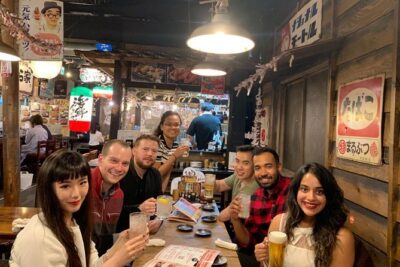
I especially like the bilingual expat guide angle, because guides such as Scott, Tim, Anna, and Andy are praised for humor, smart explanations, and real local tips. I also like that lunch is included, typically Osaka-style street food with a drink, so you are not burning time hunting for a good meal.

One watch-out: the day is mostly on foot, it runs rain or shine, and there is no Osaka Castle entrance on group tours, only a guided walk through the grounds. If you have mobility limits, this one is not the best fit.

Key takeaways before you go

Osaka: Half-day Ultimate Highlights Guided Walking Tour - Key takeaways before you go

  • Bilingual expat guides with 20 plus years in Japan, plus a pace that keeps the walk fun
  • Osaka Castle grounds first, with history you can actually place in context
  • Dotonbori and Hozenji Yokocho for neon energy plus a quiet temple pocket
  • Kuromon Ichiba Market as a fast, practical intro to Osaka food culture
  • Shinsekai for retro street vibes near Tsutenkaku

How a 5 to 7 Hour Osaka Route Gives You Real Direction

Osaka: Half-day Ultimate Highlights Guided Walking Tour - How a 5 to 7 Hour Osaka Route Gives You Real Direction
Osaka is a city where neighborhoods feel like different worlds. This tour’s strength is that it moves you across the biggest “storylines” of the city without turning your day into a logistics puzzle. You start with the samurai era at Osaka Castle, then you slide into the merchant and food culture that made the city famous, and you finish in Shinsekai, where the past still sets the mood.

The duration also matters. You are out long enough to see more than the postcard stops, but it is still designed to avoid that travel feeling of chasing one more landmark. Many guides keep the group moving in short sections, with real breaks built in, especially around lunch.

If your goal is to get your bearings fast, this route helps. You’ll learn what to notice, where people actually gather, and how Osaka’s food and entertainment connect to everyday life, not just to tourist photos.

Meeting at JR Osakajokoen Station, Then Moving Like a Local

Osaka: Half-day Ultimate Highlights Guided Walking Tour - Meeting at JR Osakajokoen Station, Then Moving Like a Local
You meet at JR Osakajokoen Station (JR Osaka Loop Line). The meeting spot is in front of the 7-11 kiosk inside the station building, just outside the ticket gates, and the tour asks you to arrive 15 minutes early.

This is a practical detail that pays off. Starting at a station like this makes the first train segment simpler, and you do not waste your energy trying to figure out the local station maze on day one. Also, WhatsApp is mandatory for getting updates, so have it installed before you leave home.

If you are doing a private tour, hotel pickup is optional and meets you in the lobby 15 minutes before the start. For group tours, it is station meet-up only. Either way, the tour design assumes you will use public transportation for two short jumps, so expect the day to feel active but not frantic.

Osaka Castle Grounds: Big History Without the Ticket-Queue Problem

Osaka: Half-day Ultimate Highlights Guided Walking Tour - Osaka Castle Grounds: Big History Without the Ticket-Queue Problem
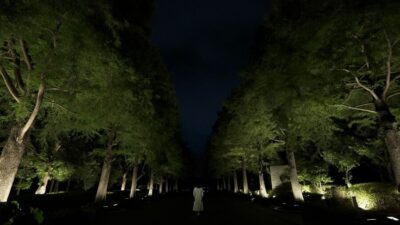
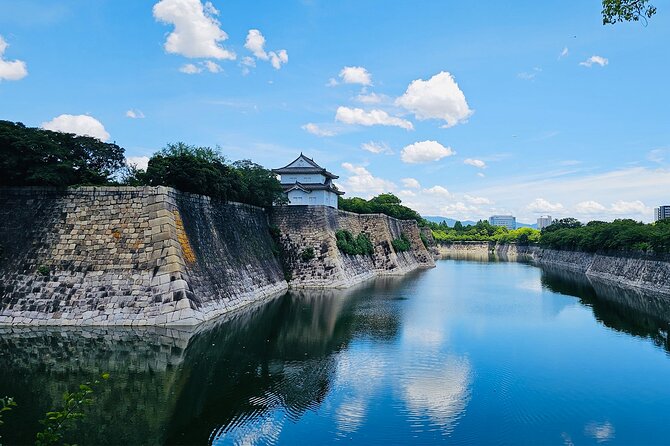
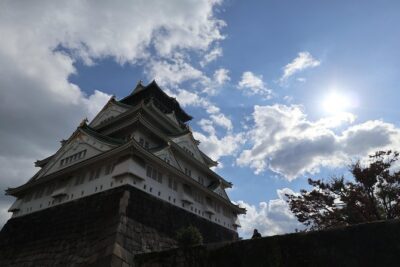
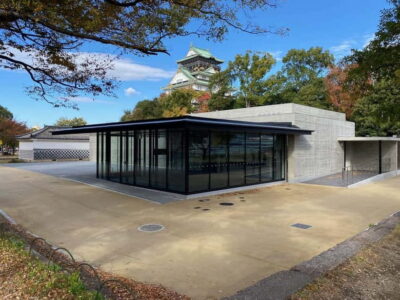
Your day begins at Osaka Castle, and you walk through the grounds with a guide who explains why the castle mattered during the samurai era and the unification of Japan in the 16th century. It is the kind of start that helps you understand Osaka as more than food and nightlife.

Here is the key practical point: Osaka Castle entrance is not included on group tours. You still get the castle as a symbol, plus the historical framing, but you avoid the situation where a long line eats the rest of your itinerary.

If you like learning history that connects to geography, this stop works. You are not just memorizing dates. You are placing stories in the real physical space where they happened, then you head right out into the neighborhoods that grew after those eras.

What to do with this stop: slow down in the grounds. Listen for the guide’s context, then take a couple photos, and do not try to turn it into a self-guided museum day.

Shinsaibashi-suji and Namba: Osaka’s Shopping Street with a 400-Year Job

Osaka: Half-day Ultimate Highlights Guided Walking Tour - Shinsaibashi-suji and Namba: Osaka’s Shopping Street with a 400-Year Job
After the first walk, you take the subway to Namba, where the tour focuses on one of Osaka’s best-known shopping corridors. A highlight here is the Shinsaibashi-suji, a covered shopping street that has served as a major shopping area for about 400 years, stretching roughly 600 meters.

This is not just retail therapy. It is a living example of how Osaka’s merchant culture shaped daily life. The guide’s job is to help you notice the pattern, what the street is good at, and how shopping districts function differently here than in other big Japanese cities.

You also get time for a Namba break and lunch. That matters because it keeps the tour from feeling like a nonstop march. Instead of ending up grumpy and hungry in the neon rush, you eat early enough to stay present for the next stops.

Practical tip: wear comfortable shoes. This section feels easy at first, then you realize you are walking a lot under cover and around crowds.

Namba Lunch: Osaka Street Food, Plus a Guide Who Keeps You Comfortable

Osaka: Half-day Ultimate Highlights Guided Walking Tour - Namba Lunch: Osaka Street Food, Plus a Guide Who Keeps You Comfortable
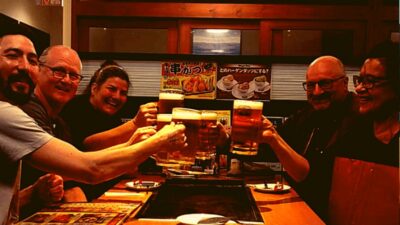
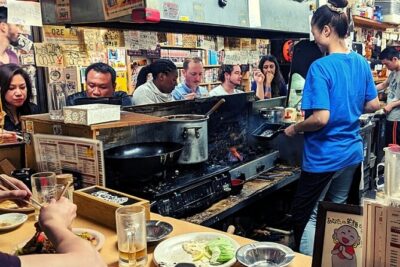
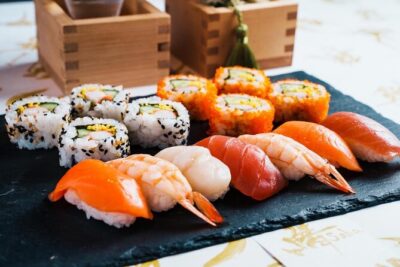
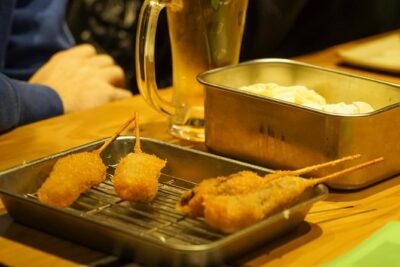
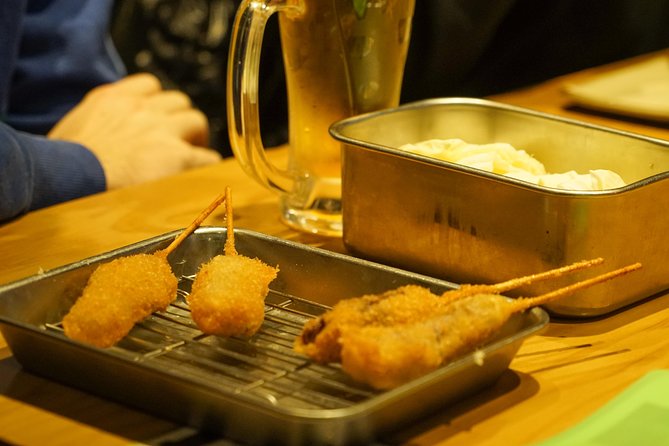
Lunch is included at a local restaurant, and it comes with a drink. The tour is designed around Osaka-style street food, and in recent experiences, that has often meant things like takoyaki and okonomiyaki as part of what you can end up trying.

What makes this lunch break valuable is the guide support. Guides such as Anna have been praised for getting water and suggesting key rest areas to beat the heat, and Tim has been noted for pacing and crowd control. Even if the food is familiar to you from photos, the guide helps you eat it like locals do, without making it feel like a lesson that kills the fun.

Also, lunch time is where your brain catches up. You go from history to food culture to shopping energy, and then you reset before the canals and alleyways.

If you have specific dietary needs, note the tour data says vegan and gluten-free diets are not included. The tour team may be able to help in some ways depending on the restaurant, but you should plan around that reality.

Ebisu Bridge to Dotonbori: The Glico Man Moment and the Real Canal Noise

Osaka: Half-day Ultimate Highlights Guided Walking Tour - Ebisu Bridge to Dotonbori: The Glico Man Moment and the Real Canal Noise
You hit Ebisu Bridge next, with a short guided walk and context. The bridge is associated with local meeting points and is known for its wood construction from the 1600s, and the area connects directly to the famous Glico Man photo spot.

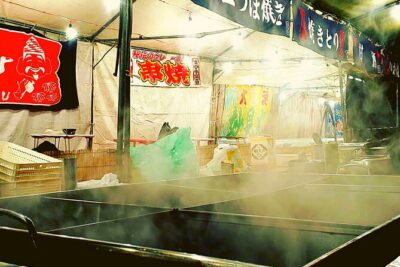
Then comes Dotonbori, the neon heart of Osaka along the Dōtonbori canal. This section is the payoff for people who came for atmosphere: neon signs, loud energy, and street-food smells that pull you in from every direction.

The guided part helps here. If you arrive cold, Dotonbori can feel like you are just walking past a wall of signs. With a guide, you learn what the area is known for, why certain spots became famous, and where it is easier to pause for photos without getting pushed around by crowds.

One small note: you only spend a short time here. That is intentional. The tour uses Dotonbori as a highlight, not as a full-day theme park. If you want to linger, plan to come back later on your own.

Hozenji Yokocho: Old Lanterns, Cobblestone, and a 17th Century Temple Pocket

Osaka: Half-day Ultimate Highlights Guided Walking Tour - Hozenji Yokocho: Old Lanterns, Cobblestone, and a 17th Century Temple Pocket
After the canal buzz, the tour slips into Hozenji Yokocho, a narrow alley with traditional lanterns and cobblestone paths. It is a classic Osaka contrast move, going from loud entertainment streets into a calmer, older-feeling pocket near Dotonbori.

You also visit Hozenji, a small Buddhist temple built in the 17th century, and the guide explains the temple’s place in the area. The effect is not just scenic. It helps you understand how Osaka blends everyday commerce with spiritual landmarks that people still treat as part of daily life.

This is one of the spots that makes the tour feel different from a basic checklist. It teaches you that Osaka’s identity is not only about neon. It is also about quiet spaces people keep in the middle of busy districts.

What to expect during this stop: short, walkable, and a little slower. Bring your patience and let yourself notice the details: the alley layout, the lantern feel, and how the temple space changes your senses.

Kuromon Ichiba Market: Osaka’s Kitchen in One Guided Food Lesson

Osaka: Half-day Ultimate Highlights Guided Walking Tour - Kuromon Ichiba Market: Osaka’s Kitchen in One Guided Food Lesson
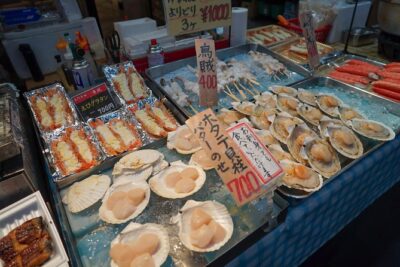
Next is Kuromon Ichiba Market, often described as the heart of Osaka’s food culture and known for being around for over 200 years. You walk through with a guide and focus on what makes this market a real institution: fresh seafood, meat, and produce.

This stop is great for first-time Osaka food travelers because you get instant context. You learn what kinds of items the market is best at, and how Osaka consumers use markets as everyday food supply, not just a tourist snack gallery.

You may see seafood prepared and eaten on the spot, including examples like large crabs and tuna mentioned in past experiences. If you want to buy something to taste, your guide can point you toward good stalls and what to look for, but the tour data only guarantees the included lunch, not extra market tastings.

The practical upside: you do not need to know Japanese to benefit. The guide handles the food context and crowd flow, so you can watch, learn, and decide what you want to try without feeling lost.

Back Streets and Doguyasuji: Cutlery Shops and the Merchant Past

Osaka: Half-day Ultimate Highlights Guided Walking Tour - Back Streets and Doguyasuji: Cutlery Shops and the Merchant Past
Osaka has always been a city of merchants, and part of this tour’s value is showing that story in real streets. One of the areas mentioned for specialty shopping is Doguyasuji, packed with wholesalers and specialist shops, including cutlery and crockery.

Even if you do not buy anything, this kind of street adds meaning to the day. Dotonbori gives you entertainment and food vibes, but Doguyasuji and similar back streets remind you that the city’s identity is built on trade and daily essentials.

This also helps you connect the dots. When the guide talks about Osaka’s merchant past, you are not hearing it as a history lecture. You see it in how the shops are organized, what they sell, and how that street operates like a tool for locals, not a costume for tourists.

Expect this to be more about observation than shopping. If you like photography, this is where small details pay off.

Shinsekai and the Tsutenkaku Area: Retro Osaka Still Has a Pulse

You finish with Shinsekai, the retro district associated with Tsutenkaku. The atmosphere here is part nostalgic neon, part local identity, developed before World War II and still known for that old-meets-new feeling.

This stop is a smart way to end the day. After markets and temples, you land in a neighborhood that feels like a living theme of retro Osaka. You get the nostalgic charm, and the guide ties it back to what Osaka was like historically and how that energy continues.

The day ends at Dobutsuen-Mae Station, which is convenient because you can continue on to other parts of the city easily. It also means you are not forced into a long return walk at the end of the tour.

Who loves this ending: people who want an Osaka photo set that is not just canal neon. Also people who like a sense of place, not only famous landmarks.

Price and Value: What $61 Buys You, Plus the Small Extra Costs

At $61 per person, you are paying for three things: a bilingual, expat-style guide, a structured route that links major neighborhoods, and included lunch with a drink.

Two short train rides are required, and train fares are not included (¥240 and ¥190 are listed). That is a relatively small add-on compared to the time you save by having a guide lead the flow and explain where you are going.

Tickets are also not included for paid attractions, and Osaka Castle entrance is not included on group tours. In other words, you are buying guided walking access and context, not entry to everything.

Is it good value? For most first-time visitors, yes. You get a guided day across major areas that are otherwise hard to connect logically in half a day, plus lunch is handled. If you already know Osaka well and only want one market or one neighborhood, you might find the route too broad. But if your goal is a smart highlights path, the price fits the format.

Pace, Comfort, and Who Should Rethink This Tour

This tour is mostly on foot and it runs rain or shine. So your shoes matter, and so does your energy level. The route is designed for a manageable pace, and recent experiences praise the way guides keep the group moving without burning everyone out, with regular breaks and crowd control.

A few more practical rules are worth noting:

  • Bring comfortable shoes
  • No luggage or large bags
  • Filming is not permitted
  • It is not suitable for people with mobility impairments
  • It is not suitable for pregnant women

If you fall into any of those categories, you should skip this particular format. For everyone else, the key is to show up ready to walk, keep water in mind, and accept that the day’s reward is the connections between stops, not the time spent at any single location.

Guides also help with train navigation. That is a huge advantage if you are new to Osaka transit, because you finish the tour knowing how to get around on your own.

Should You Book This Osaka Highlights Walking Tour?

I think you should book this tour if you want an Osaka day that feels like a guided story, not a list of places. It is especially strong for first-time visitors who want Osaka Castle context, Dotonbori energy, Kuromon market food culture, and a finish in Shinsekai that shows a different side of the city.

Book it with caution if you hate walking, need step-free routes, or are expecting fully ticketed museum-style access. The tour’s format is intentionally simple: guided walks, public transit between neighborhoods, and one included meal to keep you fueled.

If you want to make the most of it, go in with one mindset: watch how the city changes as you move. You will leave with a much clearer idea of where Osaka’s identity comes from, and where to return later for deeper time on your own.

FAQ

How long is the Osaka highlights walking tour?

The duration is listed as 5 to 7 hours.

What is included in the price besides the guide?

A local guide accompanies you throughout, and lunch is included with Osaka-style street food and a drink.

Are train fares included?

No. Train fares are not included, and the tour data lists ¥240 and ¥190.

Is Osaka Castle entrance included?

No. Entrance into Osaka Castle is not included on group tours. You walk the grounds with a guided explanation.

Where do I meet the tour?

Meet at JR Osakajokoen Station (JR Osaka Loop Line), in front of the 7-11 kiosk inside the station building, just outside the ticket gates. Arrive 15 minutes early.

Is hotel pickup available?

Hotel pickup is offered for private tours only. Group tours meet at the JR Osakajokoen Station meeting point.

What should I bring?

Bring comfortable shoes.

Will the tour run if it rains?

Yes, the tour will take place rain or shine.