
REVIEW · KUROMON ICHIBA MARKET FOOD WALKS
Kuromon Market Food Walking Tour in Osaka (6 stops, 6 tastes)
Six tastes in two hours, and it makes sense. This Kuromon Market food walk pairs classic Osaka eats with Doguyasuji kitchenware shopping, then rolls into Namba and Dotonbori so you get more than just food. It’s built for people who want a smooth route through the noise and a local guide to translate what matters.
I love how the pace stays manageable because it’s capped at 7 travelers, not a herd. I also like that the guide can help you order across language barriers, so you spend your energy eating, not guessing menus.
One thing to consider: gluten-free can be tricky here. The guidance notes both limits and limited options, and you should confirm dietary needs ahead of time since allergy-free meals are not guaranteed.
Key points worth knowing
- 6 stops, 6 tastes in about 2 hours, so you leave fed, not just full of smells
- Kuromon Market plus Doguyasuji kitchenware shopping, a fun mix of food and practical souvenirs
- Namba and Dotonbori pass-throughs, including famous sights like the Glico sign and comedy theater area
- Small-group tour size (up to 7), which helps with pacing and questions
- Guides help with ordering, so you can say yes to the food without stress
Kuromon Market plus Namba: the fast track to Osaka eating
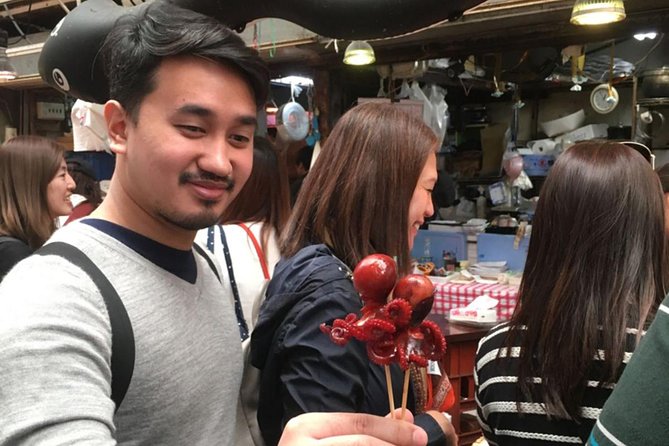
Osaka’s food scene is famous for a reason, and this tour gives you a focused route through the parts most visitors naturally cluster around. You start in Kuromon Market, move through nearby shopping areas, then finish in the Namba and Dotonbori zone where neon signs and snack stands make it hard to miss a thing.
The big value is how the route is designed for flow. Instead of you zigzagging between stalls and reading menus you can’t fully interpret, you follow a guide who knows where to go and when to go there. That matters in Osaka, because lines, crowds, and the sheer number of choices can turn a fun plan into decision fatigue fast.
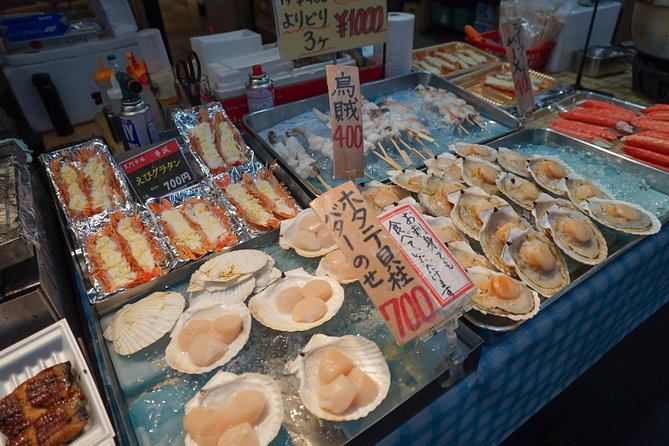
You also get a blend that feels more local than the standard street-food loop. Kuromon is the seafood and street-snack hub, while Doguyasuji is about kitchenware and tableware, so you can pick up useful items that actually match what you just tasted and ate from.
Still hungry? More mornings in Kuromon
Meeting at Nippon-bashi: quick start, clear handoff
You meet in front of a SMBC ATM at Nippon-bashi 1-chome, near Kintetsu Nippon-bashi Station (Exit 10). The meeting point address is listed at 17-17 Pikaso Japan building area, which is handy for navigating when you’re using maps on the go.
The tour starts on time, and you can’t join late or get a refund if you miss the group. That sounds strict, but it keeps the whole 2-hour block realistic, especially when food stops involve short windows at small counters.
If you’re trying to time this around other Osaka plans, I recommend scheduling it earlier rather than later. This is the kind of experience that helps you understand what you like, then you can return on your own with better instincts for the rest of your trip.
Stop 1 at Kuromon Market: where your “what to eat” problem disappears
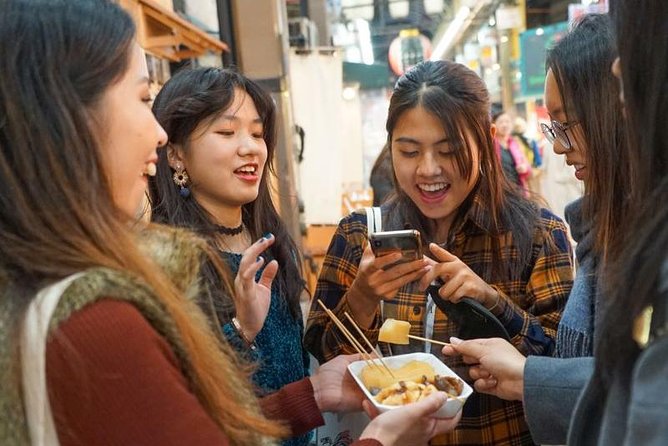
Kuromon Market sits in Minami, the center of Osaka’s action, and it’s the ideal place to begin because the whole area is built around tasting and browsing. Even the origin of the name ties it to the black mountain gate of Enmyoji Temple, which is a nice detail if you’re the type who enjoys small history while you walk.
Here’s what makes this stop work for you: it’s not just eating at random stalls. The tour is structured as a walking circuit through places where you can try multiple Osaka favorites without needing to hunt down the best option yourself.
You’ll typically sample well-known hits like takoyaki. Based on past guides and menu patterns from this style of tour, you may also run into other Osaka classics like sushi, yakitori, dumplings, and comfort foods such as oden or gyoza, depending on the day and your preferences.
A practical tip for your brain: after the first taste, you’ll start recognizing the flavors Osaka leans on, so the later stops feel less like surprises and more like informed choices. That’s the quiet magic of a guided market loop.
Doguyasuji street: buy things that make sense after you eat
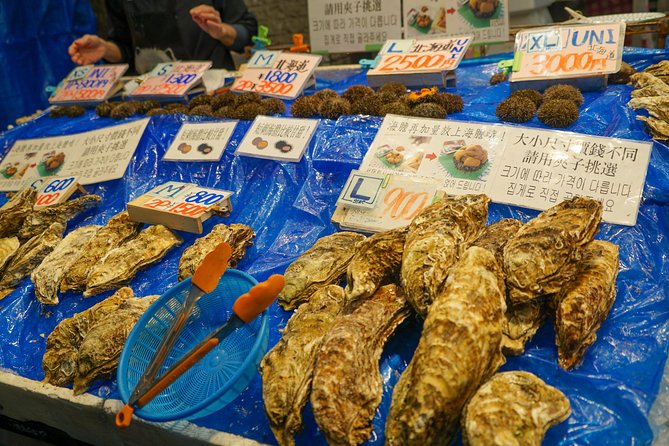
One of the more distinctive parts of this tour is the time you spend around Doguyasuji, the kitchenware and tableware street. This is where you can browse utensils, cooking equipment, and items you’ll actually use back home.
This matters even if you don’t think of yourself as a “souvenir person.” If you love street food, you likely love the feeling of cooking or prepping meals later. Picking up the right small tool, chopstick set, or serving item can make your next food memory last longer than a magnet ever will.
Also, the shop browsing adds breathing room. Markets can feel intense, especially when the next counter is the size of a pocket. Doguyasuji gives your eyes and feet a bit of a change in texture while still staying connected to the theme.
Namba’s comedy theater zone: a quick culture detour
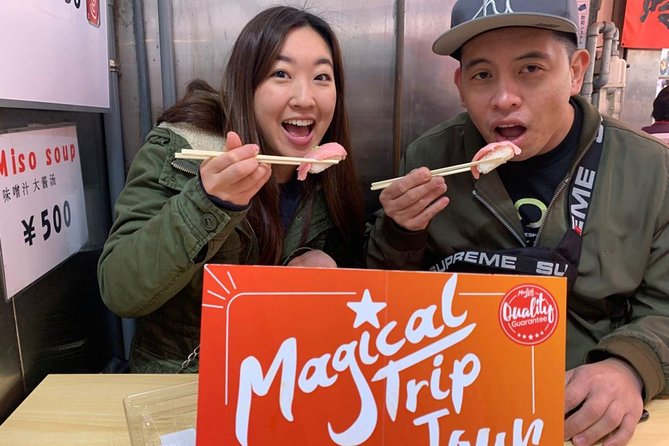
After Kuromon, you pass by Namba Grand Kagetsu, a comedy and entertainment theater operated by Yoshimoto Kogyo. You’re not going to sit through a show here, but the pass-by is still useful because it places you in the context of what Namba is.
Namba isn’t just a place to eat. It’s a district where performance culture is part of daily life, and that energy shows up in the streets. Even if you only catch glimpses, you’ll feel how the area runs on entertainment momentum.
If you’re planning your own self-guided time afterward, this helps you orient yourself. You know where the “fun” portion of the neighborhood begins, and you can decide whether you want more street snacks or a quieter corner to sit with your drink.
Osaka at walking pace, a few more
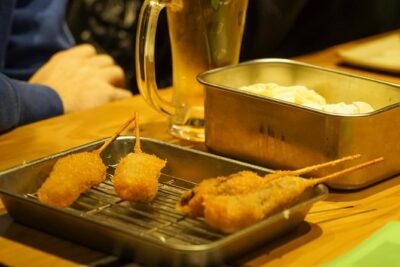
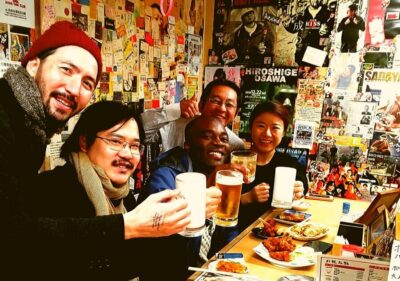
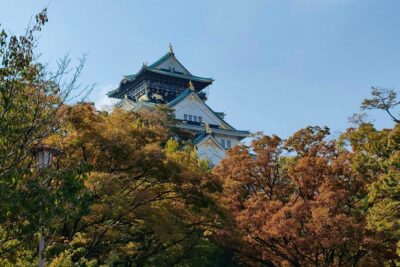
Dotonbori pass-through: neon sights, but with help to keep it smart
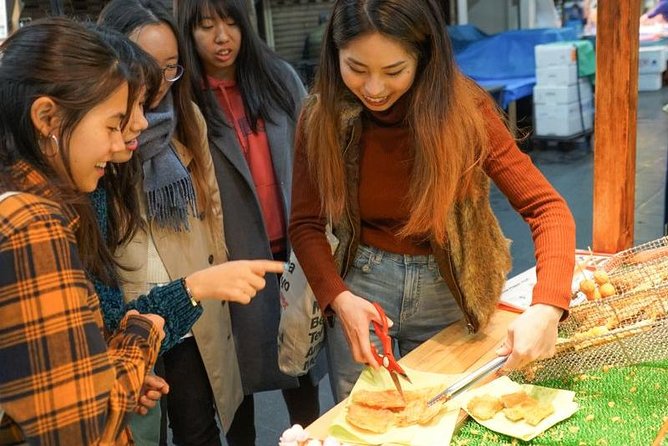
Dotonbori is where Osaka’s famous billboards and canal-side energy hit you in the face. You pass major landmarks like the Shochikuza Theater, Kani Douraku, and the Glico sign.
The practical win is that this tour doesn’t treat Dotonbori like a checklist where you stand and take photos and then leave hungry. Instead, the guide helps you keep your attention on the food decisions that matter, especially when you’re trying to avoid the most obvious tourist trap patterns.
This is also where having even basic ordering support helps a lot. You don’t need to be fluent in Japanese to point at the right item, ask what’s good, or follow timing cues so you don’t miss the best window at each stop.
For your own planning later that day, Dotonbori is also a strong base. If you want to return after dinner, you’ll already know what streets and sights connect the market area to the neon zone.
Why the guides tend to make or break this tour
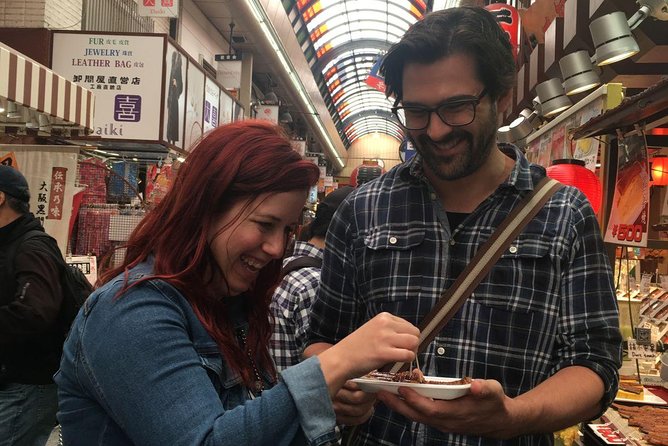
This tour is clearly built around the guide relationship, and the results show it. You’ll see praise tied to guides who are funny, warm, and able to explain Osaka food culture in an easy way. Names that come up often include Nina, Yuto, Rie, Niko, Megumi, Aya, Aina, Taku, and Anne.
The highest-impact skills are the ones that help you in real life:
- helping you order when language is a barrier
- adjusting pacing so you’re not rushed through tastings
- steering you toward places locals go, not just the loudest storefront
- staying upbeat even when weather turns
Some guides are also noted for small, practical touches like assisting with messy-food cleanups using wipes, or helping families with kid questions and holding a friendly rhythm for everyone. One guide is even highlighted for helping a solo traveler take good photos and for helping the group figure out the correct train at the end.
Bottom line: you’re paying for more than food. You’re paying for direction, and in a place like Osaka, direction is what turns “maybe I’ll eat well” into “I know exactly what I’m doing.”
Price and value: what about $50 really buys you
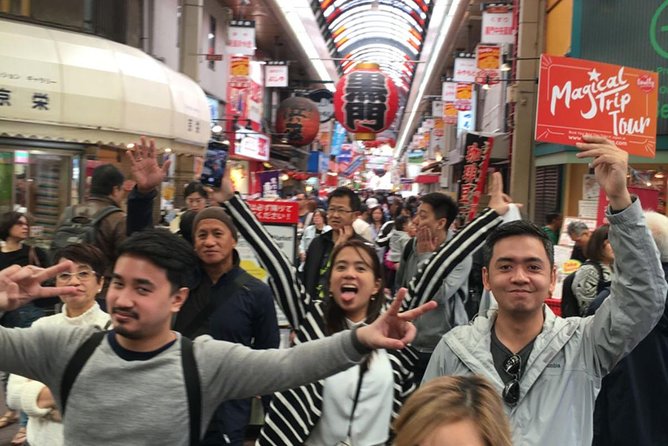
The price is $50.41 per person, and the tour runs about 2 hours with 6 stops and 6 tastes. That’s the structure you want to use as your value yardstick.
If you were trying to recreate this yourself, you’d spend time comparing places, translating menus, and tracking down where to go next. Even when the food is cheap in Japan, the total cost creeps up once you add multiple drinks, snacks between meals, and impulse buys.
Here, your costs are bundled into the experience flow. You also get a small-group cap of up to 7 people, which usually means less time waiting and more time tasting.
One small detail that affects your budget: the guide’s food and drinks are not your responsibility. But you should bring cash if you want extra snacks or drinks beyond the included tastes.
Food that may fit you, based on what typically shows up
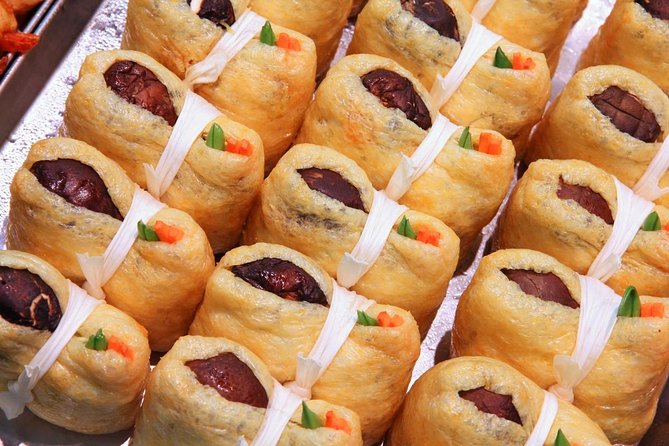
The tour is built around famous Osaka dishes, including takoyaki, and you’ll get multiple tastings rather than one big meal. From the guide outcomes described in past experiences, common foods that can show up include sushi, yakitori (including mushroom), dumplings, gyoza, and oden.
You should still expect some day-to-day variation. Markets change, vendors rotate, and guides may adjust choices based on group preferences.
The smart way to use this tour is to treat it like your “first calibration.” After you taste a few items, you’ll know what Osaka flavor profile you actually love, so your later independent eating becomes easier.
Dietary needs: what’s possible, what’s risky
Here’s the reality check you need before booking: this tour is not set up as an allergy-safe guarantee machine.
The information provided says they are unable to accommodate gluten-free requests, yet it also states they can accommodate vegetarian, vegan, and gluten-free requests with limitations. Those two statements don’t align perfectly, so I’d treat gluten-free as a confirm-before-you-pay situation.
Even when dietary categories are listed as possible, the operator warns that Japanese restaurants are not fully prepared for special diets, and options can be limited. They also ask you to inform them at least one day before the tour if you have dietary requests or allergies. Requests made on tour day may not be accommodated.
If you’re vegetarian or vegan, I’d still plan for limited options and keep your expectations flexible. If you have serious allergies, you should assume you may not be able to get a fully risk-free meal.
Timing, comfort, and staying sane in Osaka weather
Osaka weather can be extreme, with summer highs reaching up to 40°C (110°F) and winter lows dropping to -5°C (20°F). For a 2-hour walking tour, that range matters.
I suggest dressing for heat or cold more than for the forecast on paper. If it’s hot, bring water and consider something light for sweat. If it’s cold, wear layers that you can keep moving in without feeling like you’ll freeze halfway through.
Also, because the tour starts on time and you cannot join late, arrive a few minutes early and don’t cut it close at the station. This is a small-group experience, so missing the group is more serious than on big bus tours.
Should you book this Kuromon Market food tour?
Yes, if you want a high-signal introduction to Osaka eating and you value guidance. This tour is strongest for people who like markets, want to compare multiple flavors quickly, and appreciate help with ordering and navigating.
You should think twice if you need guaranteed gluten-free meals or strict allergy safety. The information given points to limitations and no allergy-free guarantees, so you’ll need to plan carefully.
If you’re traveling with kids or you want a fun guide who keeps the mood light, the results tied to guides like Nina and Aina suggest this can work really well for families. If you’re solo, the help with photos and navigation details makes it feel less like you’re wandering alone.
Overall, if you want 6 tastes plus smart routing through Kuromon and the Namba-Dotonbori corridor, this is a good use of two hours in Osaka.
FAQ
How long is the Kuromon Market Food Walking Tour in Osaka?
The tour lasts about 2 hours.
How many stops and tastes are included?
It includes 6 stops and 6 tastes.
Where is the meeting point near Nippon-bashi?
Meet in front of the SMBC ATM at Nippon-bashi 1-chome near Kintetsu Nippon-bashi Station, Exit 10.
Is this a small-group tour?
Yes. The tour has a maximum of 7 travelers.
Do I need cash during the tour?
You do not need to cover the guide’s food and drinks. You should bring cash if you want to purchase additional snacks or drinks.
What dietary requests can you accommodate?
Vegetarian and vegan requests are listed as possible, but options may be limited. Gluten-free information is provided with limitations, so you should confirm ahead of time, especially since allergy-free meals are not guaranteed.
What if I arrive late to the meeting point?
The tour starts on time. If you arrive late and miss the group, you cannot join, and you will not be able to receive a refund or reschedule.
Can I get a full refund if I cancel?
Yes. You can cancel up to 24 hours in advance for a full refund. Canceling less than 24 hours before the start time does not provide a refund.
More Tours in Osaka
More Tour Reviews in Osaka
Back to Kuromon: More Market Mornings
Latest out of Osaka


Kuromon Ichiba Market Food Walks, side by side.
 ★ 4.6Osaka: Kuromon Market Food Walking Tour (6 stops, 6 tastes)From $49272 reviews
 ★ 5.0Kuromon Market Tour: All inclusive 6~8 Dishes & 3~4 samplingsFrom $63103 reviews
 ★ 5.0PRIVATE 6hr, Food tour from Osaka Castle, Kuromon, Dotonbori.From $15568 reviews
 ★ 4.7All Inclusive Kuromon Markets Tour: Flavors Of OsakaFrom $6131 reviews
 ★ 3.5Nara, Todaiji Temple & Kuroshio Market Day BUS Tour from OsakaFrom $9918 reviews
 ★ 4.5Osaka: Food Tour Kuromon Market & Dotonbori with GuideFrom $8415 reviews
 ★ 5.0Osaka: Kuromon Market 1.5-Hour Seafood & Street Food TourFrom $418 reviews
 ★ 5.0Osaka: Kuromon Market Street Food Tour with Pro Local GuideFrom $515 reviews