
Osaka is best seen from above. This short open-top bus ride gives you wide city views and a multilingual audio guide that helps you connect what you see to what it means. It is a smart way to get your bearings fast when you have limited time.
The main catch is that you usually cannot get off to explore on your own, so this is for viewing and learning, not hopping into shops or temples. Also, if the weather turns, roof closure and window clarity can change how great your photos look.
Key Highlights You Will Care About
- Open-top views across major landmarks, with photo-friendly angles from a double-decker
- English, Mandarin, Cantonese, and Korean audio that keeps the ride from being just sightseeing traffic
- WiFi on board plus WiFi makes your waiting and photo sorting easier
- Rain gear included when rain is forecast, with an umbrella-free safety rule
- Small group size (up to 20), which helps the bus feel less chaotic
- Only one real get-off moment near Abeno Harukas, everything else stays bus-view only
Why This Double-Decker Bus Tour Makes Sense in Osaka
Osaka can feel like a choose-your-own-adventure city. You can spend hours walking and still miss stuff, especially if you are trying to cover a lot in one day. This Sky Vista style tour works because it compresses the city highlights into a ride that takes under an hour, while keeping you up high and exposed to big views.
What I like most is the mix of sightlines and context. You do not just watch buildings slide by. You get an audio guide in English plus three other languages, so you can understand why each area matters. That matters on an open-top bus, where you are often looking up, scanning streets, and trying to match modern landmarks with older neighborhoods.
I also like that the experience is built for comfort in real weather. In summer, you get cooling gel sheets. If rain is forecast, you get a rain coat. In Osaka, those details matter more than you think, because a ride with full exposure to the elements either stays pleasant or becomes miserable fast.
The drawback is not subtle. You are mostly stuck viewing from the window. If your goal is to build a list of places to return to later by stepping out right away, the limited on-bus stops can feel disappointing.
Weigh this one against the Osaka bookings people rate highest:
Price and Time: Does $24.98 Buy Value or Regret?
At $24.98 per person, this is not a bargain bus ticket, but it is also not a huge splurge. The value comes from what you are getting for that time block: a double-decker ride, open-air viewing, multilingual audio, and practical add-ons like WiFi, rain gear, and summer cooling.
The duration is roughly 45 minutes to 1 hour, with a listed ride time around 55 minutes. That short window is the whole point. If you are doing Osaka in a tight schedule, you can fit this between meals or after checking out from a morning plan. You also avoid the mental work of designing a route across multiple neighborhoods.
Where value might fall apart is if you already know the city well. One review pointed out that the drive can feel heavy on office and shopping areas. If you are here for food alleys and want to pop into specific streets right away, this tour may feel more like an aerial slideshow than a hands-on experience.
So I would treat it like a fast orientation tool. Use it to get photo references and neighborhood names in your head, then build your walking plan after.
Getting There: Osaka Station, Terminal 3, and the One Moment You Can’t Waste
The meeting point is Osaka Station JR Express Bus Terminal 3, in Umeda, Kita Ward (address listed as Chome-1, Osaka Station area). The tour ends back at the same place.
The practical tip here is simple: plan time to find the right terminal inside Osaka Station. One review called the walk to the meeting point stressful. Osaka Station is huge, and bus terminals are easy to miss if you arrive late or tired.
You also select your desired route and corresponding departure time when booking. That means you should confirm the departure time you are actually targeting, then build your day around it. If you are rushing to catch it, you are more likely to end up frustrated before the ride even starts.
What You See on the Route: Osaka Castle to Dotonbori From the Window
This tour is essentially a moving panoramic loop through central Osaka. The standout thing is that you are looking at major landmarks from an elevated position, with wide views designed for photos.
Here is the lineup you can expect to spot as the bus moves:
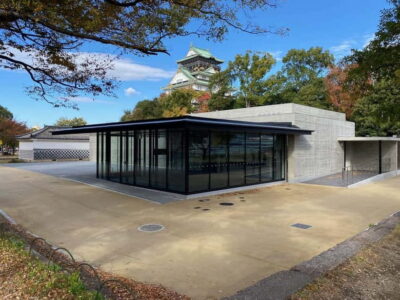
- Osaka Castle, including the idea of the city’s big historical anchor
- Umeda Sky Building, the modern skyline contrast
- Namba, one of the core entertainment zones
- Dotonbori, famous for its neon and canal-side street energy
Even though you cannot get off most of the time, the window viewing is still useful. From the upper deck, you get a better sense of spacing between neighborhoods than you would from a single street. And because the audio guide provides commentary, you can follow along with names and themes while you watch.
Just be aware of photo realities. A couple of reviews mentioned dirty windows, which can soften the crispness of photos taken through glass. You can reduce glare by shooting at angles and using your phone camera settings for exposure, but you cannot fully fix smeared window surfaces. If clean photos are your top priority, keep your expectations flexible.
Osaka Castle and Umeda: Two Different Osaka Moods, One Ride
Osaka Castle and Umeda Sky Building are a neat pairing because they represent two sides of the city. One is the historic symbol route, the other is the modern vertical skyline.
From a bus seat, you will not get the same close-up detail you would on foot. But you do get context. You can see how Umeda sits as a modern hub while older Osaka sits within reach. That is helpful if you are planning later visits and wondering where your day should start.
Audio helps here. The narration is multilingual (English plus Mandarin, Cantonese, and Korean), so you can track what you are seeing without guessing. If you are traveling with someone who does not read much Japanese, this kind of audio support can make the ride feel less confusing and more like guided sightseeing.
Namba and Dotonbori: Neon Area Views Without the Crowd Chaos
Namba and Dotonbori are often the neighborhoods people sprint to, then quickly scramble back from because the sidewalks get crowded. The bus approach changes the feel. You get the Dotonbori neon vibe through the window, without being stuck in shoulder-to-shoulder lines.
This is also where you can take quick reference shots. If you later want to walk Dotonbori, you will know what direction to head, what streets you saw, and which corners look most photogenic.
That said, you should not expect time to wander. The tour is built for viewing, and the bus stays moving. If your idea of Dotonbori includes immediate wandering, you will likely prefer a separate walking plan.
The One Time You Can Leave: Abeno Harukas Parking Area
Most of your sightseeing is view-only. You cannot leave the bus to visit the spots you see from the window, except at the parking area of Abeno Harukas, where you can leave if you wish.
This is the tour’s compromise between quick orientation and actual exploring. Abeno Harukas is one of those places where you might want a breather, a photo stop, or a chance to stretch.
If your goal is to create a return list for later, this is where it can help most. You can step out, take a few minutes to reset, and then use the rest of the ride to identify other neighborhoods for future visits.
Just keep in mind the overall structure. This is not a hop-on hop-off model. It is closer to a one-pass guided ride, with a single optional break.
Audio Guide, WiFi, and the Tiny Extras That Matter
The tour includes an audio guide in English, Mandarin, Cantonese, and Korean. The ride also includes WiFi on board. On a day with lots of photos, short video clips, and map checking, that WiFi can be genuinely useful.
One review highlighted that the audio experience felt like mini audio translators for people not fluent in Japanese. Even if you already speak enough for signs, this kind of support can make the ride smoother, because you spend less time decoding what you are looking at.
On comfort, you also get:
- Cooling gel sheets in summer
- Rain coat if rain is forecast
And you get a weather rule that is worth knowing. You cannot use an umbrella for safety reasons, and a parasol is prohibited. That means if you carry a compact umbrella as a default in Japan, switch to the rain coat plan or keep an extra layer. The tour staff provide rain gear when rain is expected, but you still need to show up prepared enough to handle wet weather without an umbrella.
Weather Reality: Open-Top Views Versus Roof Closure Comfort
Open-top buses are all about the feeling. If weather forces roof closure, the vibe changes. You might get less airy exposure, and one review mentioned a comfort problem after the roof was closed due to rain, specifically a lack of cooling.
The practical way to use this info is to check the forecast before you decide what to wear. If the day looks iffy, dress in layers and plan for damp conditions. Also, because there are no restrooms on the bus, you may want to time your bathroom break before you board, especially on a damp day when you do not want to rush.
On-Board Comfort Details: Seats, No Restrooms, and Window Limits
A few onboard details can make or break your experience.
Seats are assigned automatically by the system. If you book for more than one person, you may not be seated next to each other. If you care about sitting together, it is better to know this ahead of time. Seat changes can come with a handling fee if you cancel due to change in seat location, so do not plan your day around the idea of swapping seats later.
There are no restrooms on the bus. That is common on short city tours, but it is still important. If you need a restroom break, build it into the time before the ride.
Finally, there is the glass factor. Dirty windows were mentioned in negative reviews. That is not something you can control on the day. You can help your photos with camera angle and wiping your lens, but your best move is to set expectations: this tour is for seeing and learning more than it is for perfect editorial-style shots through spotless glass.
The Big Downside: View-Only Means You Must Plan Your Walking Day
This tour can feel disappointing if your mental plan is to use the bus as a way to explore stop-by-stop. The reality is: you cannot get off to visit the spots you see from the bus window, except at Abeno Harukas.
One low rating described wanting the open-top experience and also wanting to create a list of places to revisit. The problem was that the view-only format did not match the expectation of quick walk-ins. That is a key decision point for you.
So here is how to get the most from it. Treat the bus as your map generator. Use it to identify the neighborhoods that interest you, then schedule the walking or museum time afterward. If you try to pack your sightseeing only into the bus ride, you will feel like you missed the point.
Who Should Book This Bus Tour, and Who Should Skip It
This tour is a good fit if:
- You want a short orientation to Osaka’s major sights
- You like panoramic photos and open-air viewing when weather permits
- You want multilingual audio support instead of relying on guesswork
- You have limited time and need a single ride that hits Castle, Umeda, Namba, and Dotonbori
Skip it or think twice if:
- You expect to hop off frequently to explore multiple neighborhoods in one go
- You already spent multiple days walking Osaka and want deeper, smaller detours
- Window clarity and photo perfection are your main priority
- You need restrooms during the ride, because there are none on board
Also, if meeting point stress could ruin your morning mood, make sure you have time to locate Terminal 3 at Osaka Station.
Should You Book the Osaka Sky Vista Double-Decker Open-Top Bus Tour?
Book it if you want a fast, guided way to understand central Osaka without burning energy on navigation. For many first-timers, the combination of open-top views, multilingual audio, and a short ride time makes it a practical value.
Skip it if you are mainly looking for hands-on exploring from the bus. This is sightseeing from above, not a series of landings. The payoff is orientation and photo references, especially around Castle, Umeda, Namba, and Dotonbori.
My best advice is to align your expectations with the format. If you treat this as your quick city overview, you will likely enjoy it. If you treat it like a hop-on bus that replaces walking plans, you may feel shortchanged.
FAQ
How long is the Osaka Sky Vista Double-Decker Open-Top Bus Tour?
The ride is approximately 45 minutes to 1 hour, with a listed duration of about 55 minutes.
How much does the tour cost?
The price is $24.98 per person.
Where is the meeting point?
You start at Osaka Station JR Express Bus Terminal 3, Chome-1 Umeda, Kita Ward, Osaka (530-0001, Japan).
Where does the tour end?
The tour ends back at the meeting point.
Can I get off the bus to visit the spots I see?
You cannot get off to visit most spots. The one exception is the parking area of Abeno Harukas, where you can leave the tour if you wish.
What languages are available in the audio guide?
The audio guide is available in English, Mandarin, Cantonese, and Korean.
Is WiFi included?
Yes, WiFi is included on board.
What happens if it rains?
If rain is forecast, a free rain coat is provided. Umbrellas are not allowed for safety reasons.
Are there restrooms on the bus?
No, there are no restrooms on the bus.
How many people are on the tour at most?
The tour has a maximum of 20 travelers.
More Tours in Osaka


More Tour Reviews in Osaka

Latest out of Osaka


Tours, side by side.
 ★ 5.0Osaka Go Karting Tour with Funny CostumeFrom $462,658 reviews
 ★ 4.8Osaka: Shinsekai Food Tour with 13-15 Dishes at 5 EateriesFrom $532,204 reviews
 ★ 5.0Osaka Food Tour: 13 Dishes at 5 Local EateriesFrom $732,149 reviews
 ★ 5.0Osaka Kickstart: Hotspots & Hidden Gems TourFrom $311,306 reviews
 ★ 5.0Deep Backstreet Osaka Tours (Option to add Dinner)From $531,290 reviews
 ★ 5.0Osaka Local Foodie Walking Tour in Dotonbori and ShinsekaiFrom $111985 reviews
 ★ 5.0Osaka Bar Hopping Night Walking Tour in Namba (3 bars, 6 tastes)From $98958 reviews
 ★ 4.7Osaka/Kyoto: Hiroshima Miyajima Bus Tour & Shinkansen TicketFrom $277919 reviews