
REVIEW · OSAKA HOME COOKING CLASSES
Authentic SUSHI Course Cooking Class
Sushi lessons get real when you touch the rice. I love the small-group setup, and I love that you leave with hands-on skills for three types of sushi plus miso soup and yakitori. One thing to consider: if you want super-detailed written instructions to re-create everything exactly, plan to take a few notes during the class.
This is a proper course meal in Osaka, not a quick demo. You start by making sushi rice from scratch, then you build flavor with dashi and miso soup, and finally you shape nigiri, gunkan-maki, and a rolled sushi all together before sitting down with your own cooking.
Key takeaways before you go
- Hands-on sushi rice for each person: you get your own wooden tub and paddle, so you’re not watching only.
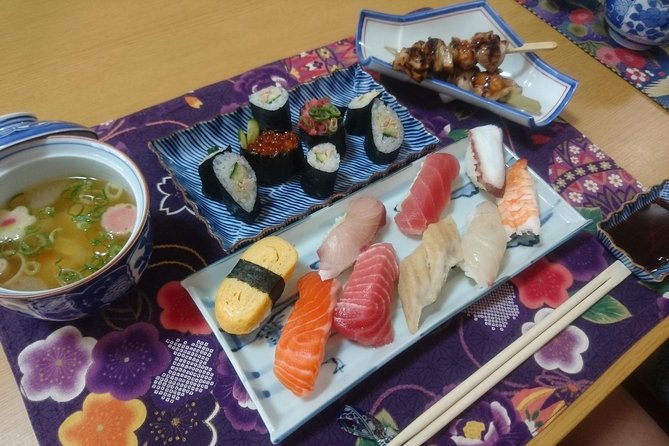
- Dashi to understand the miso soup base: you make the broth then move into miso soup with tofu and shaped vegetables.
- Tamagoyaki-style rolled egg: you make rolled eggs using a rectangular frying pan.
- Specific sushi outputs you can count: 9 nigiri-sushi, 2 gunkan-maki, and 1 rolled sushi.
- Yakitori included: you skewer chicken and make yakitori as part of the meal.
- You eat what you make: chopsticks, itadakimasu moment, and a complimentary seasonal dessert.
Osaka sushi course cooking class: what makes it worth your $99.08
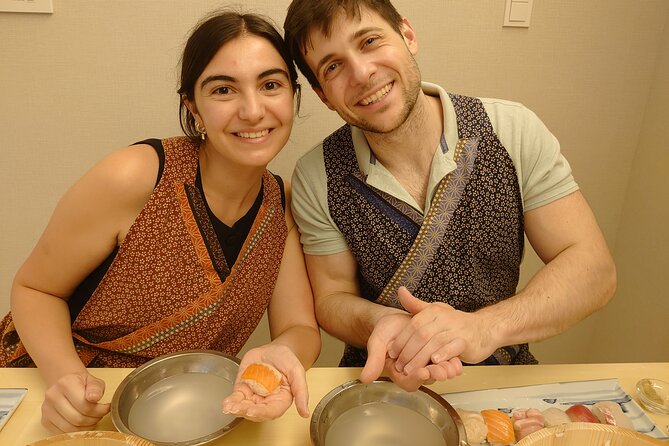
For Osaka, I want two things from a cooking class: you should actually do the work, and you should eat a real meal at the end. This course hits both. In about 2 hours 30 minutes, you go from basics like rice seasoning to a plate that looks like a proper Japanese set.
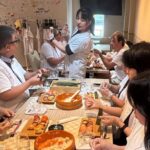
The price, $99.08 per person, feels easier to justify when you see what’s included. You’re not just getting a lesson, you’re getting ingredients for multiple dishes, plus the meal itself, plus some sweets afterward. And because the class is capped at a small group size (the info says up to 14, with a separate note that it can be up to 8), you’re much more likely to get direct help when your technique needs a tweak.
The other practical win is the time format. You can choose lunch- or dinnertime, so you can fit it into your Osaka rhythm instead of forcing it around one fixed schedule. One example start time shown is 5:30 pm, which is a great slot for building an appetite and still having energy for the evening.
More kitchen tables to sit at
The menu you’ll cook, in the order that makes sense
The class flows like a real cooking progression. You start with the rice, because everything depends on how the rice tastes and feels. From there, you build savory broth and soup. Then you move into egg and sushi shaping, and finish with yakitori for that grilled, smoky contrast that makes the whole meal feel complete.
Here’s what you can expect to make during the session:
- Sushi rice from scratch (your own bowl, your own method)
- Rolled eggs for egg sushi
- Dashi broth, then miso soup with tofu and fancy shaped vegetables
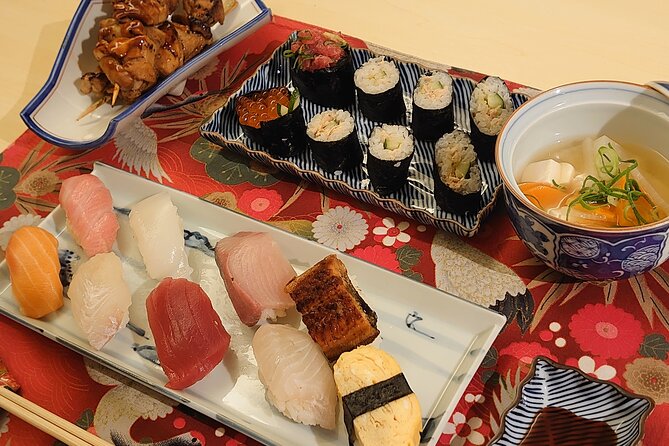
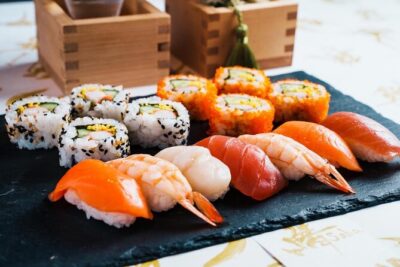
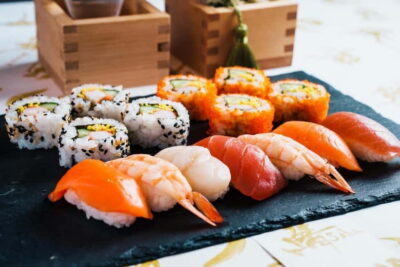
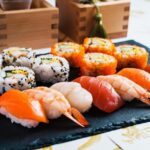
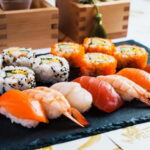
- Sushi course outputs: 9 nigiri-sushi, 2 gunkan-maki, and 1 rolled sushi
- Yakitori chicken, including skewering and cooking
If you’re trying to learn sushi for real at home, I think this sequence is smart. Rice first means you understand the base. Soup next means you learn flavor-building, not just assembly. Then sushi shaping and yakitori happen while your skills are still warm.
Step 1: sushi rice, wooden tub, paddle, and the hand skills
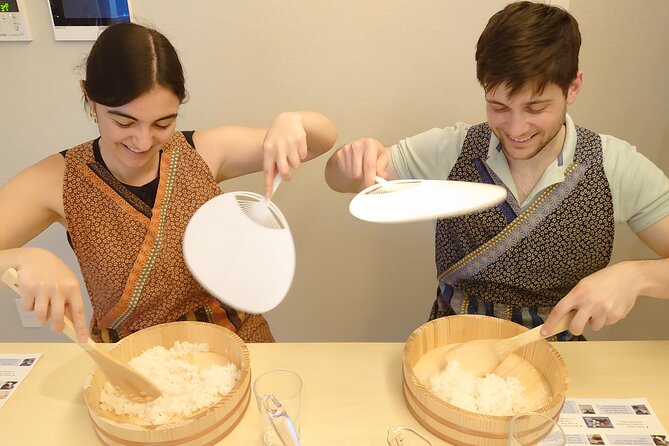
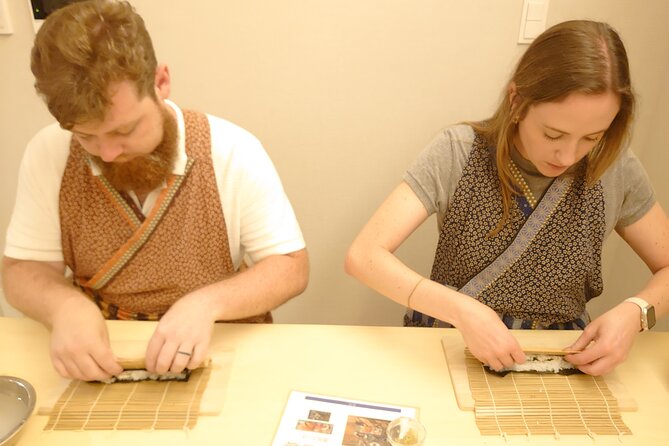
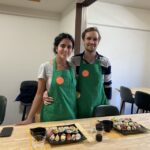
The class begins with you wearing an apron and making sushi rice on your own. You’ll get a wooden tub and paddle for each participant. That detail matters. Sushi rice is all about texture and seasoning, and it’s hard to get a feel for it if you never touch the rice yourself.
This is one of the reasons people rate the experience so highly. In the feedback, the instructors are repeatedly praised for patience and for making each step understandable, even when you’re learning something that looks simple but is actually technical. One review also talks about learning to season and roll the sushi rice with bare hands, which matches the idea that you’re practicing real technique rather than just watching.
Practical tip: if you’re nervous about sticky rice or hand technique, treat it like a workout, not a test. Your job is to learn the feel, not to be perfect on the first try.
Step 2: rolled egg sushi using a rectangular pan
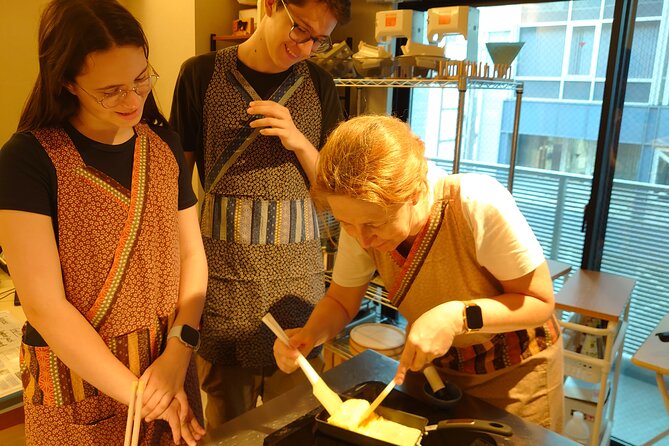
Next up is rolled eggs for egg sushi. You’ll use a rectangle-shaped frying pan. That shape is a clue. Tamagoyaki is layered, and a rectangular pan makes it easier to roll and shape evenly.
What I like here is that it’s not just decorative. Egg sushi teaches you how Japanese cooks build form and texture, and it also gives you another hands-on confidence boost before you handle seaweed and sushi rice in earnest.
In at least one review, the instructor is specifically credited with guiding students through the tamagoyaki process layer by layer, which suggests you’ll get hands-on coaching rather than a vague explanation.
Step 3: dashi and miso soup with tofu and shaped vegetables
After the egg, the course moves into dashi, the savory broth that supports a lot of Japanese cooking. Then you make miso soup using dashi as the base. You’ll use tofu and vegetables cut into more eye-catching shapes.
This part is where the class stops being only sushi training and becomes real Japanese home-cooking practice. A few reviews mention background explanations tied to flavor, including ideas like umami and bonito. Even if you’re not chasing a food-science degree, understanding the base flavor helps you season more confidently later.
A quick expectation check: miso soup is comfort food, but the shaped vegetables and tofu make it feel like you’re learning how restaurants get presentation without being complicated.
More rice, more knife work
Step 4: the sushi course you’ll actually assemble
Now comes the main event, and you’ll do it in a structured way that results in a countable plate.
You make three kinds of sushi:
- Nigiri-sushi: 9 pieces
- Gunkan-maki: 2 pieces
- Rolled sushi: 1 roll
You’re not just rolling one thing and calling it a day. This combo teaches different handling skills. Nigiri is about rice, pressure, and topping placement. Gunkan-maki needs careful shaping so it can hold its filling. Rolled sushi asks you to manage seaweed, rice spread, and rolling tension all at once.
Two things I think you’ll find valuable:
- You’re guided while you’re building, not after the fact.
- You end up with a full sushi-course plate, so you’re practicing enough variety to make the learning feel real.
In the reviews, the instructors are praised for involving everyone, making sure you succeed, and explaining ingredients and steps clearly. Some people also mention learning how to roll seaweed for the maki, which is the one step that often makes home attempts fail later.
Step 5: yakitori chicken, skewers, and grilling
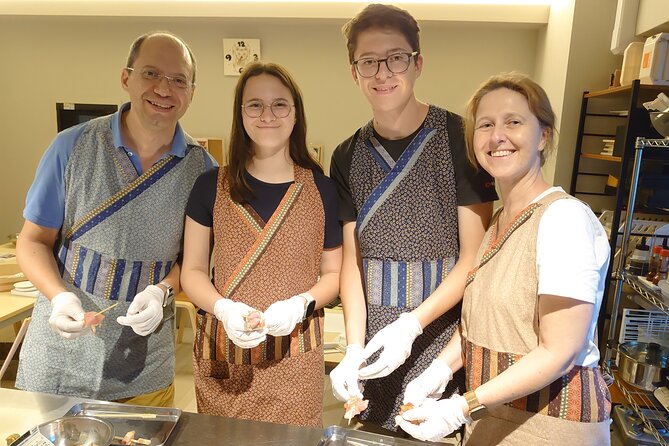
Then you shift to yakitori chicken. You skewer the chicken and make yakitori as part of the class.
This is a smart addition to a sushi class. Sushi relies on delicate seasoning and texture. Yakitori adds smoke and char, and it gives you another skill you can use later without needing the same precision as sushi shaping. It also rounds out the meal so you feel like you had dinner, not a snack with a side lesson.
If you’re the type who loves grilled food, this is likely the part you’ll remember as much as the sushi.
Eating your meal, dessert afterward, and the itadakimasu moment
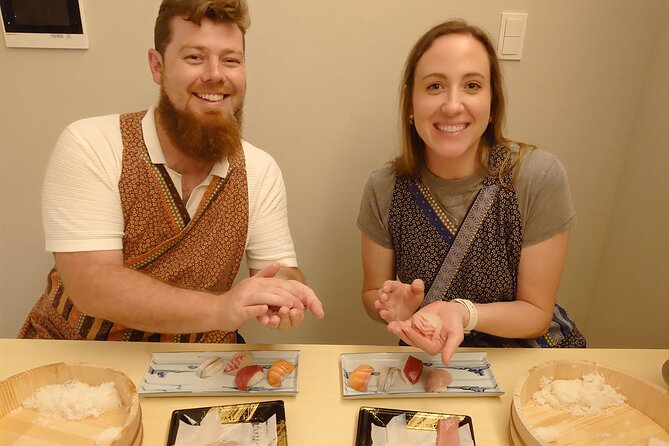
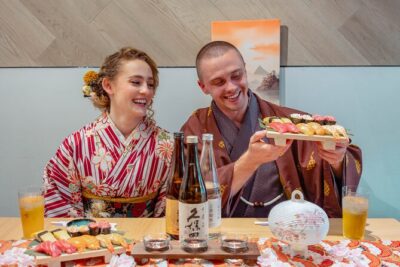
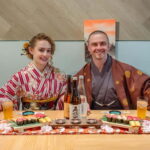
At the end, you plate your dishes with chopsticks and start eating after the classic itadakimasu moment. You’ll enjoy your seasonal dessert afterward, which is described as complimentary.
This matters more than it sounds. A cooking class is more motivating when you’re proud of what lands on your table. And in the feedback, the best moments repeatedly include eating what was made and leaving with confidence that you can replicate at home.
One extra detail from a review: there was mention of dessert being good enough to take along, even as a flight snack. That’s not required, but it hints that the sweet portion is actually enjoyable.
Instructor impact: why names like Fumi and Sakura keep popping up
The experience is run by Sakura Cook, and recent classes are led by instructors named in the reviews, including Fumi and Sakura. The consistent theme across reviews is teaching style: patient, encouraging, and attentive to detail.
I also like that the teaching isn’t only technique. Some reviews mention cultural background tied to the dishes, and even flavor concepts like umami and bonito. That blend helps you cook more than one way. If your goal is to understand sushi beyond following steps, that context makes a difference.
Where to meet in Osaka (Kitahorie) and how timing affects your plan
You meet at Banix北堀江 Japan, 550-0014, Osaka, Nishi Ward, Kitahorie, 3-chōme 6-2, Systema Gallery. It ends back at the meeting point.
The class also runs near public transportation, so you’re not stuck with long taxi rides. Use Google Maps and aim for the exact building name to avoid stress. This area is practical for walking into dinner plans afterward since you’ll already be in the city rhythm.
A start time of 5:30 pm is shown, which means it can work nicely as your main meal. If you pick a lunch class instead, you’ll still get the same core dishes, so you can plan around when you want your hands-on work to happen.
Small-group size, mobile tickets, and how to prepare
Two details help set expectations:
- The group size is small (up to 14, and the info also notes up to 8 travelers).
- You’ll use a mobile ticket.
Preparing is simple. Wear comfortable clothes you can move in while cooking. Use photos sparingly. You’ll learn faster if your hands, not your phone, are the focus. If you have dietary requirements, you’re asked to advise them at booking, so do that early.
If you’re coming as a solo traveler, don’t let that stop you. One review specifically notes going alone and still having a comfortable experience, which tells me the class design supports individuals as well as couples and families.
Price and value check: what $99.08 really buys you
Let’s translate the cost into real value. For $99.08, you get:
- A professional-guided, hands-on cooking session
- Ingredients included for multiple dishes
- A full sushi-course output that includes both nigiri and roll styles
- Miso soup with dashi, plus tofu and shaped vegetables
- Yakitori chicken that you skewer and cook
- A meal you eat at the end, plus some sweets and a complimentary seasonal dessert
- A mobile ticket experience, near public transportation, with a meeting point that’s clearly defined
Cooking classes can be expensive when they only teach one dish. Here, you work through several. You also get guided technique practice that’s hard to learn alone, especially sushi rice seasoning and sushi shaping.
Booked 63 days in advance on average, so it’s popular. That’s a good sign, but it also means you should lock in dates if your Osaka trip is tight.
Who should book this Osaka sushi course (and who might not)
I’d steer you toward this class if:
- You want real technique, not a demo
- You like sushi but also want miso soup and yakitori skills
- You enjoy structured lessons where you can count what you made
- You’re traveling as a couple, family, or even solo, and you want attention in a small group
It might not be the best fit if:
- You need a heavy written recipe pack for home practice, because one review notes that the take-home recipes can feel a bit light and steps not fully spelled out
- You dislike hands-on cooking with sticky sushi rice and shaping
Should you book the Sakura Cook sushi course?
If your goal is a hands-on Osaka dinner with a real outcome, I think this is an easy yes. The class is built around making the parts that usually trip people up, sushi rice, flavor base like dashi and miso, and multiple sushi formats, not just one. You’ll also get yakitori, which makes the meal feel like a full Japanese set.
Book it if you want technique plus a satisfying dinner in one go. If you’re the type who relies on paper instructions more than practice, bring a small notebook and take quick notes during the lesson. Otherwise, you should be very happy with what you learn and what you eat.
FAQ
What dishes do I make in this Osaka sushi course?
You make sushi rice, rolled eggs for egg sushi, dashi, miso soup with tofu and shaped vegetables, 9 nigiri-sushi, 2 gunkan-maki, and 1 rolled sushi. You also skewer and make yakitori chicken.
How long is the class?
The class runs about 2 hours 30 minutes.
Is it a lunch or dinner class?
You can choose either lunch- or dinnertime to match your schedule.
How big is the group?
The experience is described as a small group with a maximum of 14 participants, and there is also a note that it will have a maximum of 8 travelers.
Where is the meeting point?
You meet at Banix北堀江 Japan, 550-0014 Osaka, Nishi Ward, Kitahorie, 3-chōme62 システマギャラリー. The class ends back at the meeting point.
What time does the class start?
A start time of 5:30 pm is shown for the experience.
What’s included in the price?
All ingredients are included, along with some sweets to enjoy afterward. You also eat the dishes you make at the end, plus a complimentary seasonal dessert.
Are dietary requirements handled?
You should advise any specific dietary requirements at the time of booking.
Do kids need to be accompanied?
Yes. Children must be accompanied by an adult.
How do I get my ticket?
You’ll have a mobile ticket.
What is the cancellation policy?
Free cancellation is available up to 24 hours in advance of the experience for a full refund. If you cancel less than 24 hours before, the amount paid will not be refunded.
More Tour Reviews in Osaka


More Rice and Knife Work

More Kitchen Tables to Sit At
Latest out of Osaka


Osaka Home Cooking Classes, side by side.
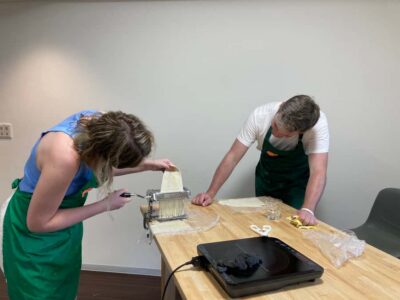 ★ 5.0Osaka: Ramen and Gyoza Cooking Class in DotonboriFrom $70378 reviews
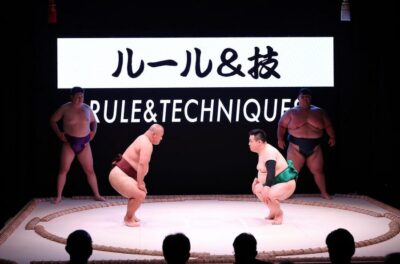 ★ 4.3Osaka: Sumo Stage Show with Bento or Snack + Fight & PhotoFrom $93364 reviews
 ★ 5.0Osaka Cooking Class: Okonomiyaki &Japanese cuisines experienceFrom $104261 reviews
 ★ 5.0Ramen and Gyoza Cooking Class in OsakaFrom $79202 reviews
 ★ 5.0Osaka Sake Tasting with Takoyaki CookingFrom $70156 reviews
 ★ 5.0Osaka Sake Tasting & Takoyaki Cooking ExperienceFrom $72149 reviews
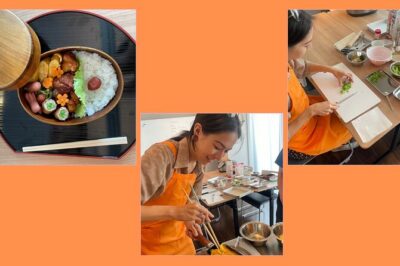 ★ 5.0Cooking Ramen&Gyoza/KatsuCurry/Bento/Okonomiyaki+Store Tour@OsakaFrom $85138 reviews
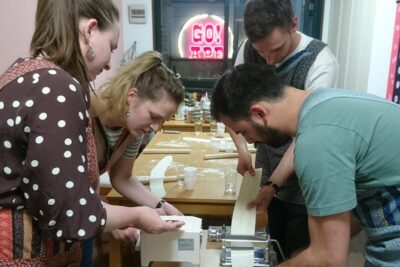 ★ 5.0Three Types of Ramen Cooking Class in OsakaFrom $79119 reviews
Also worth a look in