
REVIEW · OSAKA HOME COOKING CLASSES
Three Types of Ramen Cooking Class in Osaka
Three ramens, one hands-on class in Osaka. I love the from-scratch noodle making and the small-group feel that keeps things personal, plus you get three different bowls instead of one. One heads-up, there is no hotel pickup, so you will need to get yourself to the Kitahorie meeting point in Osaka.
This Osaka ramen cooking class runs about 2 hours 30 minutes and ends back where you start. You’ll make salt ramen, soy sauce ramen, and miso ramen all in the same session, with lunch or dinner style food included, plus dessert and green tea.
Three Ramen Types in 2.5 Hours, Starting at Kitahorie
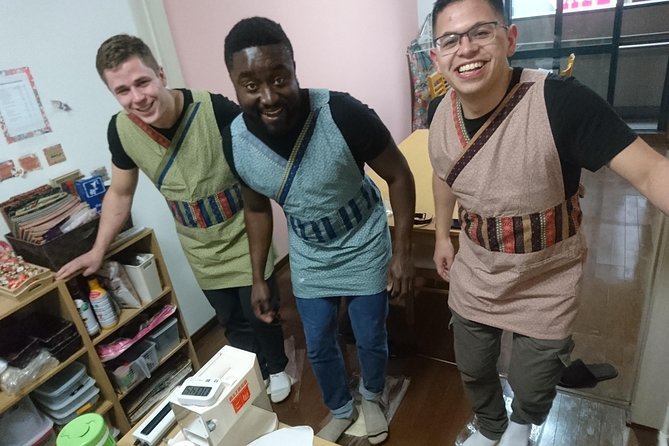
The experience is simple in concept and well paced in practice: arrive, get an apron, and jump straight into cooking. The flow is designed so you are not just watching. You are rolling up your sleeves, learning the basics of ramen noodle dough, then building three different soups and toppings.
The class is taught in a small group. The listing notes small-group attention limited to eight people, and the maximum is 12 travelers. Either way, you should expect more hands-on time and more chances to ask questions, rather than a crowded kitchen where you only stir once.
You also get a clean, stress-free structure. All utensils and ingredients are provided, so you do not have to bring a knife kit or hunt for ramen staples in advance. The big value here is that you get to leave with three finished bowls and a printed recipe you can actually use later.
Where you meet, and why it matters
You meet at Banix北堀江 Japan, 550-0014 Osaka, Nishi Ward, Kitahorie, 3-chōme62 システマギャラリー. The activity ends back at the meeting point. It is near public transportation, but since there is no hotel pickup, plan to arrive a few minutes early. If you like having a buffer for train exits and short walks, this is the kind of class where that buffer pays off.
More kitchen tables to sit at
From Dough to Noodles: What You Learn First
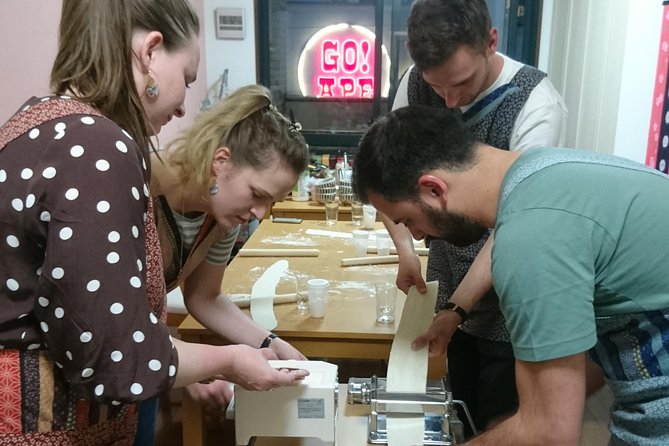
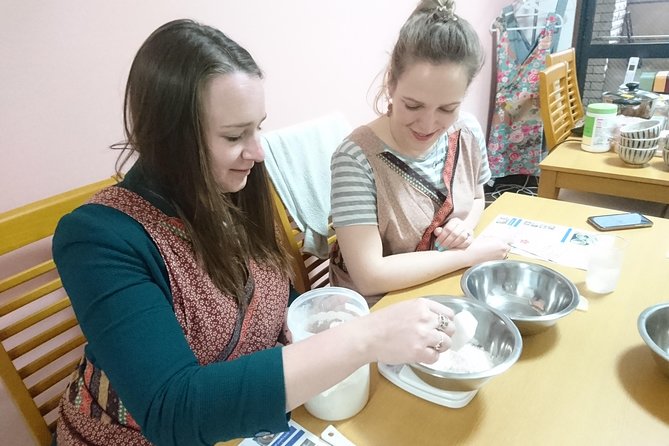
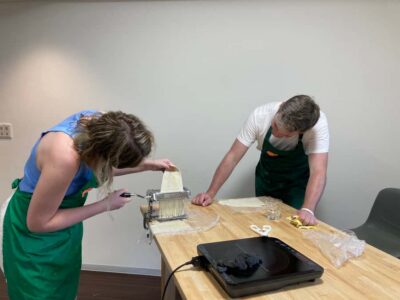
The first big learning block is the part most visitors actually care about: making noodles from scratch. You start by putting on an apron, then the class begins with handmade noodle making.
The total noodle amount is listed as 100g. That number matters because it signals you are learning technique, not just cooking a token snack. It’s enough to feel like a real ramen process, and it’s enough to notice how dough texture changes as you work.
In the feedback, people repeatedly mention that the directions are clear and that the instructors are patient. You will see this show up in practical ways: step-by-step guidance, attention to what the dough should feel like, and enough time to catch up if it’s your first time cooking ramen noodles.
Also, the kitchen setup seems geared for comfort. Reviews specifically mention air conditioning and a well organized setup, which is not always guaranteed in cooking classes during Osaka summer weather.
The instructor factor (based on prior sessions)
Past sessions have had instructors named Fumi (also written Fumiyo), Keigo, and Tomiko-san in the feedback. What connects the comments is the teaching style: friendly, helpful, and willing to explain each step clearly, including for people with no cooking background. One reviewer even highlighted good English support, which helps if you want to follow along without guessing.
Salt Ramen: Pork, Bean Sprouts, and Seaweed
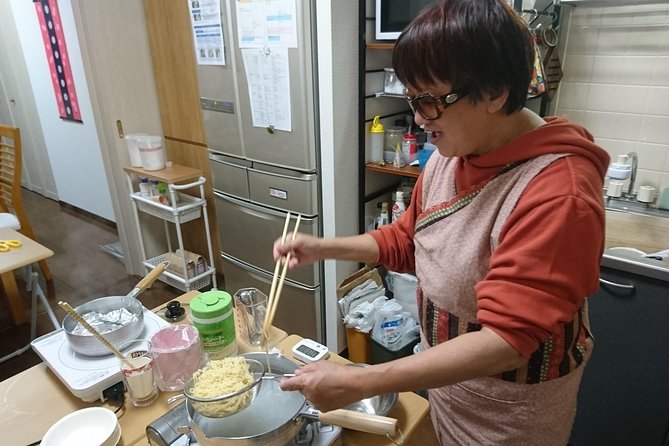
Once the noodles are ready, the class pivots to building ramen. You’ll make three types of soup, then assemble with topping ingredients.
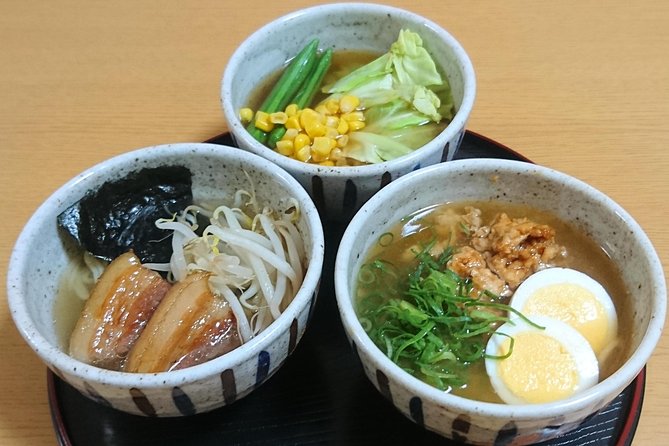
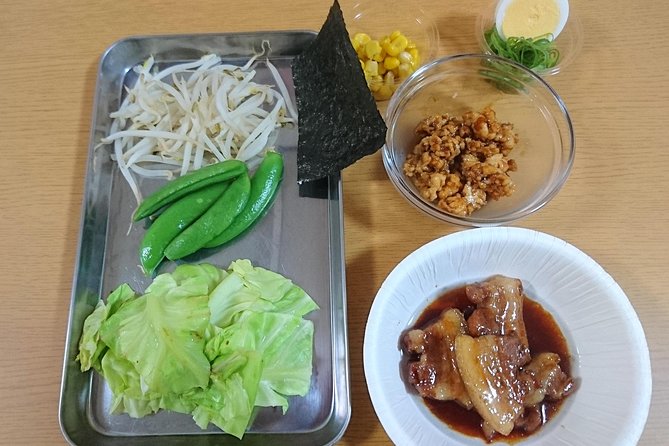
The salt ramen course is one of the most straightforward for first-timers. The topping set is listed as:
- juicy sweet pork
- bean sprouts
- seaweed
Salt ramen is a great “training wheel” broth because it lets you taste seasoning choices and balance without hiding everything behind heavy miso or soy sauce depth. When you make it yourself, you tend to understand ramen more quickly, because you can connect toppings to flavor.
You’ll also get hands-on with basic ramen assembly using chopsticks at serving time. The class wraps with a group meal moment where you place the dishes out and say Itadakimasu.
Soy Sauce Ramen: Cabbage, Green Vegetables, and Sweet Corn
Next up is soy sauce ramen, which shifts the flavor profile toward deeper umami. The topping ingredients listed here are:
- steamed cabbage
- green vegetables
- sweet corn
This part is valuable because it shows you how ramen can change simply by swapping toppings and adjusting the soup direction. Cabbage brings a soft bite and sweetness. Green vegetables add fresh character. Sweet corn adds another layer of mild sweetness that helps round out soy sauce flavors.
From the comments, the instructors tend to give cooking tips throughout the process, not just at the start. That means you’ll likely walk away with a better sense of timing too, like when to prep toppings so they are ready when the noodles and broth are.
And because you are making soy sauce ramen after salt ramen, you’ll probably notice how quickly your taste buds adjust. That contrast is one of the reasons this class is more memorable than doing only one bowl.
More broth and more pleats


Miso Ramen: Spicy Chicken, Boiled Eggs, and Green Onion
The third bowl is miso ramen, and it is the one most people associate with “bold comfort.” The topping list is:
- spicy chicken
- boiled eggs
- green onion
Miso ramen is thicker and more assertive than many salt or soy sauce versions. When you build it in a class setting, you get to see how richer broths change the role of toppings. The boiled egg is a perfect example. It brings richness and softens intensity, so spicy chicken does not feel harsh.
One small caution from past participants: some people mentioned chili oil used at the end can be easy to overdo. If you like heat, go slowly. If you don’t, keep it light and add more only after you taste.
The payoff is that you end up eating three bowls you actually cooked. This is not a one-bite demo. It’s a real meal, and that makes the learning stick.
What’s Included, and Where the Value Comes From
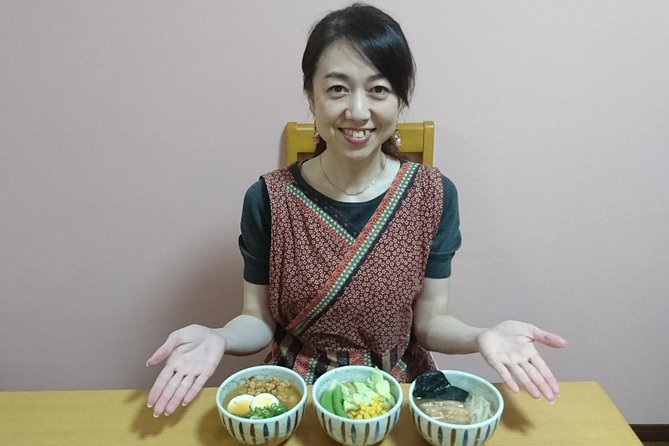
At $79.28 per person for an Osaka ramen cooking class, you are not paying just for noodles and soup. The value is in the full “do it all” package.
Included items:
- all ingredients for lunch or dinner
- kitchen utensils and equipment
- printed recipe to take home
- seasonal fruits
- ramen meal plus dessert and green tea
Not included:
- hotel pickup and drop-off
- personal expenses or additional drinks
This matters because ramen at restaurants can be fun but leaves you with no real technique. Here, you learn the core skill, then you apply it immediately across three ramen styles. That turns your money into something you can repeat later.
Also, the printed recipe is practical. Cooking classes can be either hands-on and helpful or hands-on and forgettable. A take-home guide is how you convert the experience into an activity you can repeat at home, without guessing what you did on day one.
A quick reality check on price
You are paying for:
1) instruction and translation support when needed
2) a full kitchen session with ingredients supplied
3) three completed ramen styles and meal add-ons
If you want one bowl only, you could eat for less. But if you want the method, the variety, and the meal all together, this is a strong use of your time in Osaka.
Small Group Size, Easy Pace, and Real Comfort
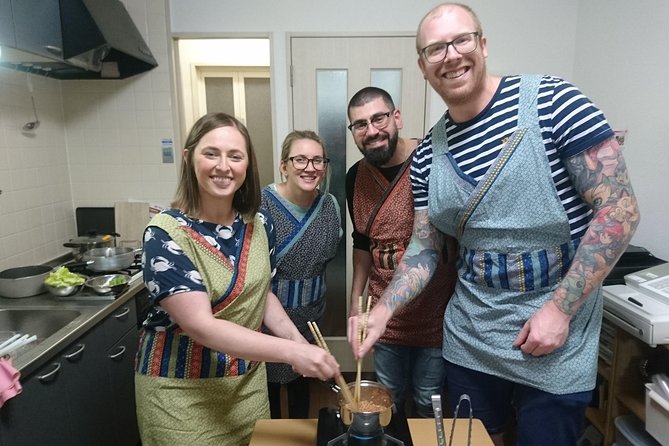
This class is designed for people who want to cook, not scramble. The small-group limit helps the instructor keep the session running smoothly, and it keeps you from waiting around.
A few things to look for as you decide if this is your style:
- You should feel comfortable in a working kitchen. You will handle steps, not just watch.
- You are not expected to know ramen cooking ahead of time. Multiple reviews describe success for beginners.
- If you are traveling with family, the class appears to work for kids. One review specifically mentioned a youngest participant around age 10 following along.
One additional detail that can be important: reviews mention vegetarian accommodation. That does not appear as a standard feature in the provided summary, so I can’t promise it for every booking. But if you eat vegetarian, it is worth asking ahead of time when you confirm your reservation.
Who Should Book This Osaka Ramen Cooking Class
I think this is a great match for three kinds of travelers.
First, ramen lovers who want to understand the difference between salt, soy sauce, and miso beyond taste alone. Making noodles from scratch changes how you think about the dish.
Second, people who like practical souvenirs. A recipe sheet plus skill carry-over beats a postcard. You also get the meal experience right away.
Third, couples or friends who want something different from the typical Osaka checklist. The small group size tends to make it feel more like a shared cooking session than a mass tour.
If you hate being in the kitchen, or you want a passive food tour, this may feel too hands-on. But if you like doing, it’s a strong pick.
Should You Book Sakura Cook’s Three-Ramen Class?
Yes, if you want an Osaka ramen cooking class that is hands-on, structured, and focused on technique. The biggest reason to book is the combination: three types of ramen plus noodle making from scratch, with dessert and green tea included.
I would book this now if:
- you want more than one bowl and want to learn the “why” behind different ramen styles
- you like small-group instruction
- you want a recipe you can take home and actually use
I would reconsider if:
- you need hotel pickup
- you prefer tastings over cooking
- you are tight on time and cannot reach the Kitahorie meeting point easily
If you book, I’d plan to arrive a bit early at Banix北堀江. That small move keeps your first 10 minutes calm, which makes the whole 2.5 hours more enjoyable.
FAQ
How long is the ramen cooking class in Osaka?
The class runs about 2 hours 30 minutes.
What types of ramen do you make during the class?
You make three types: salt ramen, soy sauce ramen, and miso ramen.
Do you make the noodles from scratch?
Yes. The class includes handmade noodle making, and it teaches you how to make noodles from scratch.
What food and drinks are included?
The included items are ramen (lunch or dinner style), dessert, green tea, and seasonal fruits.
Is there a recipe you can take home?
Yes. You receive a printed recipe to take home.
How large is the group?
It is described as a small-group tour limited to eight people for a more personalized experience, and the activity has a maximum of 12 travelers.
Where do you meet for the class?
The start point is Banix北堀江 Japan, Osaka, Nishi Ward, Kitahorie, 3-chōme62 システマギャラリー.
Is hotel pickup or drop-off included?
No. Hotel pickup and drop-off are not included, and the class ends back at the meeting point.
Is the ticket mobile?
Yes. The experience includes a mobile ticket.
More Tour Reviews in Osaka




Broth, Pleats and Second Helpings


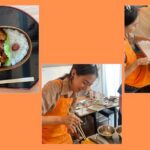
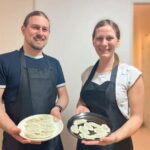
More Kitchen Tables to Sit At

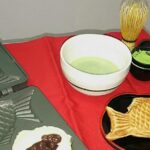


Latest out of Osaka


Osaka Home Cooking Classes, side by side.
 ★ 5.0Osaka: Ramen and Gyoza Cooking Class in DotonboriFrom $70378 reviews
 ★ 4.3Osaka: Sumo Stage Show with Bento or Snack + Fight & PhotoFrom $93364 reviews
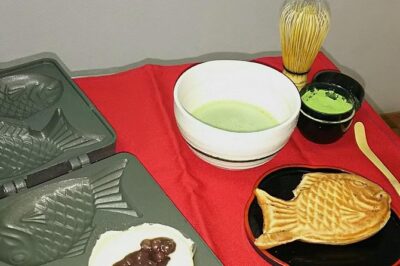 ★ 5.0Osaka Cooking Class: Okonomiyaki &Japanese cuisines experienceFrom $104261 reviews
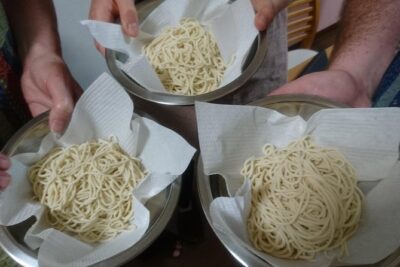 ★ 5.0Ramen and Gyoza Cooking Class in OsakaFrom $79202 reviews
 ★ 5.0Osaka Sake Tasting with Takoyaki CookingFrom $70156 reviews
 ★ 5.0Osaka Sake Tasting & Takoyaki Cooking ExperienceFrom $72149 reviews
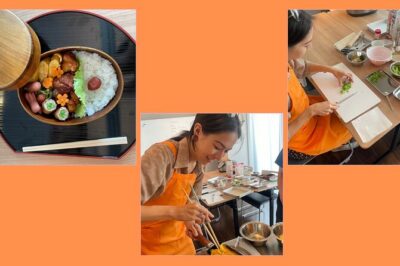 ★ 5.0Cooking Ramen&Gyoza/KatsuCurry/Bento/Okonomiyaki+Store Tour@OsakaFrom $85138 reviews
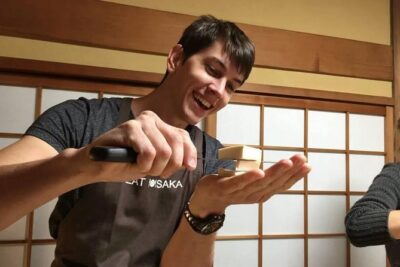 ★ 5.0Eat Osaka: Street Food Cooking in an Authentic Kitchen!From $7987 reviews
Also worth a look in