
REVIEW · DOTONBORI NEON & STREET FOOD WALKS
Traditional Calligraphy Experience near Dotonbori
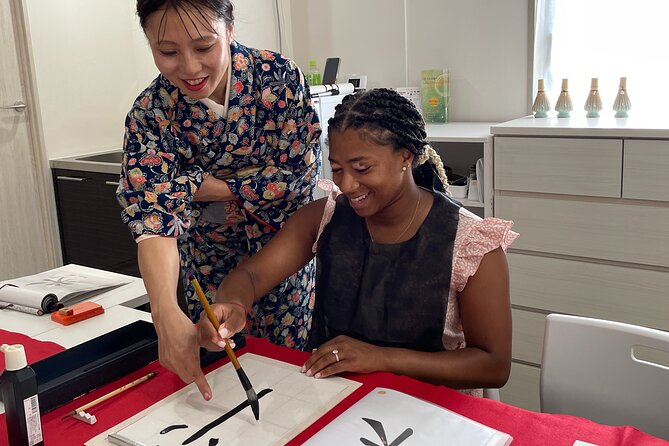
If you want a slower side of Osaka, try calligraphy. This hands-on class turns kanji writing into a calm, focused hour right near the Dotonbori area. I like that the instruction is in English and paced for beginners. One thing to note, this is best for creating one or two finished pieces, not for long-form calligraphy training.
The biggest payoff is practical and personal: you write your own kanji and finish it on a beautiful hanging scroll you can take home. You sit on a chair during instruction, so you do not have to force strict posture to participate. The vibe is gentle and technique-focused, not competitive.
Your guide works with a small group, with a maximum of 8 people, and the whole experience runs about an hour. The provider is MIYABI Culture Salon, and the address is in Nishishinsaibashi, Chuo Ward, an easy area to combine with an Osaka evening.
Key things to look forward to
- English instruction from Japanese teachers, with guidance designed for beginners
- Chair seating so you can focus on the strokes instead of struggling with posture
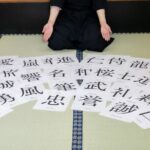
- Pick your own kanji from examples, then practice it step by step
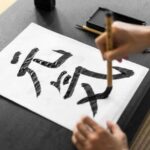
- Authentic brush and tool use, plus correct technique for holding and writing
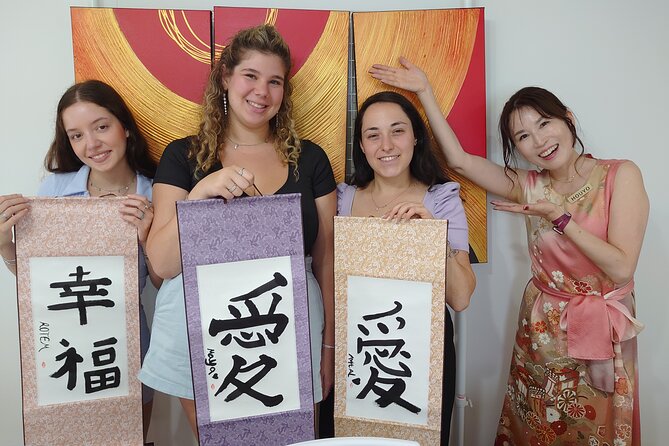
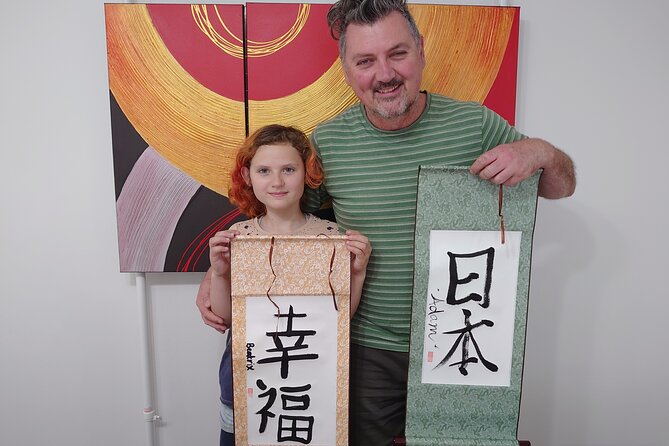
- A hanging scroll souvenir with your kanji, plus your name and stamp
Why kanji calligraphy feels like a reset in Osaka
Osaka is energetic, loud, and fast. Calligraphy gives you the opposite tempo. You spend the hour doing something physical and precise, stroke by stroke, which naturally pulls your attention away from the mental noise of travel.
The class frames calligraphy as one of Japan’s traditional “ways,” something passed down for generations. That matters, because you are not just copying shapes. You are learning how to control a brush, where the pressure goes, and how each stroke connects to the next. Even if you never wrote a kanji before, the goal is to create a finished scroll that looks intentional.
This is also a great way to try a cultural skill without needing prior knowledge. You choose from kanji examples prepared by your instructor, and the teaching approach is beginner-friendly. The emotional result is simple: you feel more centered as you go, because the task has clear steps and immediate feedback.
More of the canal after dark
Meet up near Nishishinsaibashi, close to the Dotonbori orbit
The session starts at 1-chōme-5-12 Nishishinsaibashi, Chuo Ward, Osaka. It ends back at the meeting point, so you do not need to plan an extra transfer at the end of your class.
This location is useful for two reasons. First, it keeps you close to the Osaka night scene around Dotonbori, so you can slot the class in before dinner or after a daytime walk. Second, it is near public transportation, which makes getting there feel straightforward even if you are juggling train times.
The tour uses a mobile ticket, which is convenient when you are already using your phone for maps and transit. And because the group is small, you will likely feel like you are in a real workshop rather than a mass activity line.
If you are visiting Osaka for food and shopping, this is a nice contrast. You still get a very Japanese activity, but it does not require a full day of planning.
The instructor lecture and tool setup that makes it click
You start with a short lecture on the background of calligraphy. That matters more than it sounds. When you understand where the tradition comes from, the writing stops being random shapes and starts being a kind of controlled expression.
Next comes the tools. The instructor walks you through how to use the traditional setup and how to write kanji with the correct technique. The key benefit here is that you are being coached on the fundamentals, not just handed materials.
From what people consistently say about the teaching style, the instructor named Fumi-san is especially patient with first-timers. That patience is not fluff. In calligraphy, tiny mistakes in brush handling can ruin the line. A patient teacher helps you correct the problem early, while you still feel confident.
You will also learn something practical you can carry beyond the class: holding the brush in a way that gives you control. And yes, your posture matters, even though the class lets you sit. You still learn the relationship between body position and the brush line, which is part of what makes the finished characters look more balanced.
Choosing your kanji, practicing strokes, and finding your pace
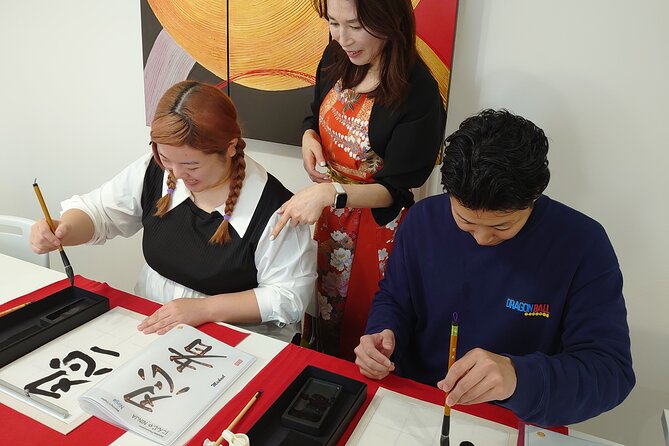
If you are new, do not worry. You pick your favorite kanji from the samples the instructor prepares. That single choice changes the whole experience, because you are not working with a random character you will forget in five minutes. You are making something you actually want to keep.
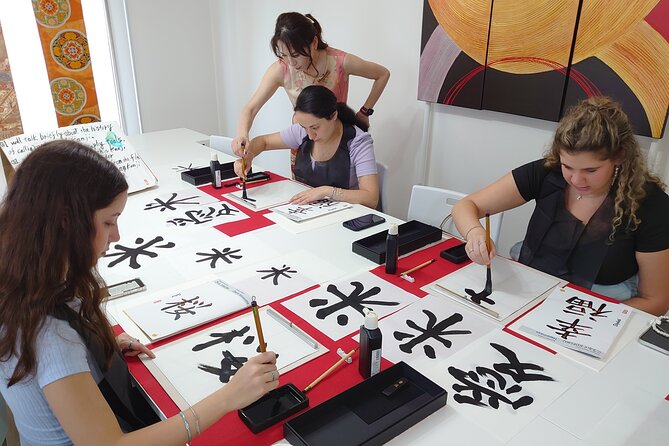
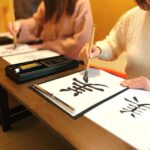
Then you practice. The structure is step-by-step, and the class is designed so you can imitate the sample while gradually getting the rhythm of the strokes. This is where the “mind clearing” part becomes real, because your attention narrows to one job: get the stroke right.
One underrated detail is that the instruction is in English. When you are learning hand movements and stroke order, language barriers can be frustrating. Here, the goal is clear, and the teacher can explain corrections in a way that you can use immediately.
In feedback, people highlight that they can practice as much as they want during the session. That is important because one rushed attempt is how beginners get discouraged. With more time at the work surface, you get to adjust pressure, spacing, and the shape of each stroke until it feels consistent.
If you want a psychological win, it is this: you start copying, then you start recognizing patterns. Over the hour, your writing often looks more unified because you are learning how to control the same brush behavior across strokes.
From paper practice to a finished hanging scroll
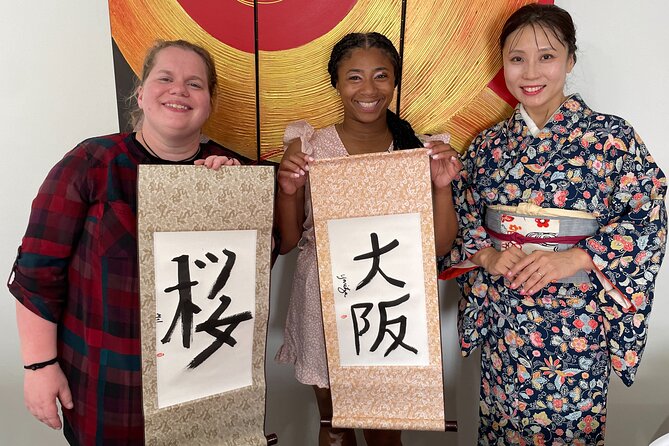
The final stage is the part you will remember in your home afterward: writing your kanji on a hanging scroll.
This is more than just a souvenir step. The hanging scroll forces a higher standard of composition. On paper, mistakes are easy to hide. On a scroll, balance and spacing matter, because your character needs to look intentional in one complete view.
After writing your kanji, you also write your name and add a stamp to finish it. That personalizing step is one reason this experience lands well for families and couples. Your scroll becomes yours, not something generic you brought home and forgot.
The hanging scroll format also gives you a traditional way to display it. Even if you do not plan to hang it immediately, it becomes a tangible memory of Osaka that you can pull out later.
The classroom teaching style supports the transition from practice to final product. You are not thrown into the final step with zero guidance. You learn the basics first, then apply them while creating the piece you take home.
More ink, more craft benches
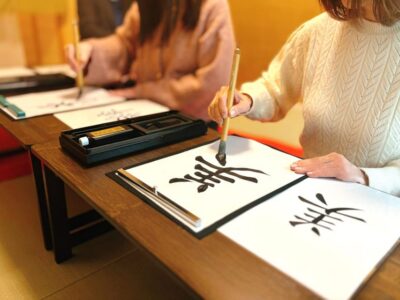
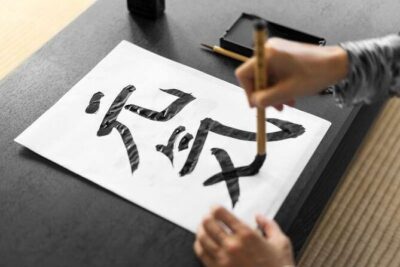
What it feels like to learn with a small group
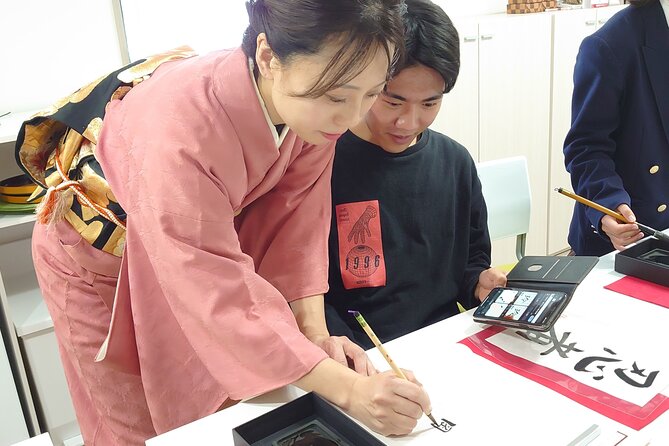
This is a small-group experience, with a maximum of 8 travelers. That size matters because it keeps the class interactive. You are more likely to get personal corrections, and the instructor can adjust pacing if someone is stuck.
It also helps emotionally. Calligraphy can feel intimidating because it is traditional and looks complex from the outside. In a small group, you see other beginners making similar attempts, and you realize the process is normal.
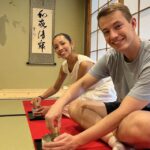
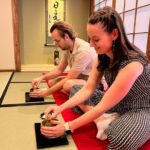
You sit on a chair during instruction. That is a big deal for travelers who want to participate but do not want the physical strain of strict kneeling posture. The goal remains the same, clean technique, but the class removes one barrier that can block participation.
Also, service animals are allowed. That is a helpful detail for anyone traveling with a companion animal, since not all small cultural workshops accommodate it.
Overall, the class feels like a proper guided workshop: quiet enough for focus, structured enough to keep you from getting lost, and short enough that it fits into a travel schedule.
Price and value for a one-hour Japanese cultural skill
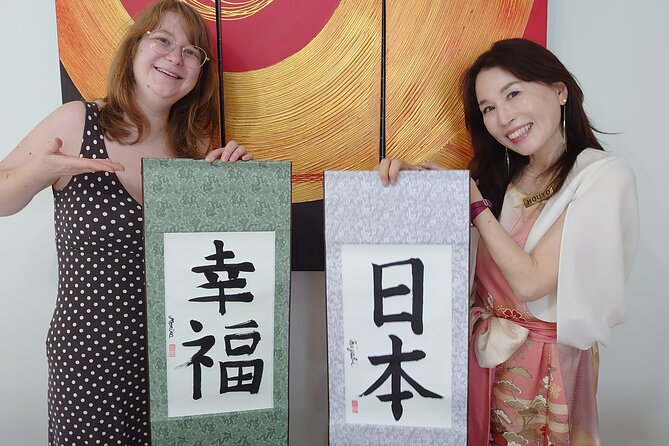
At $45.52 per person, this is not a budget activity, but it is also not a high-cost “private everything” experience. For your money, you get instruction, tool guidance, and a finished hanging scroll that becomes a take-home product.
Here is how the value stacks up:
- You are paying for coaching in technique, especially useful for beginners who need help holding a brush and forming strokes correctly.
- You are paying for the end result, a hanging scroll with kanji plus your name and stamp. That reduces the chance you feel like you bought a ticket to watch someone else work.
- You are paying for a limited group size, which increases the chance you get corrections during the class.
Duration is about 1 hour, so it is efficient. It is long enough to learn fundamentals and create something finished, but short enough that it does not eat a half day from your Osaka plan.
If you are the kind of traveler who likes buying souvenirs that are personal and skill-based, this price starts to make sense fast. You are not just buying a handmade item, you are making it.
Who should book this, and who should think twice
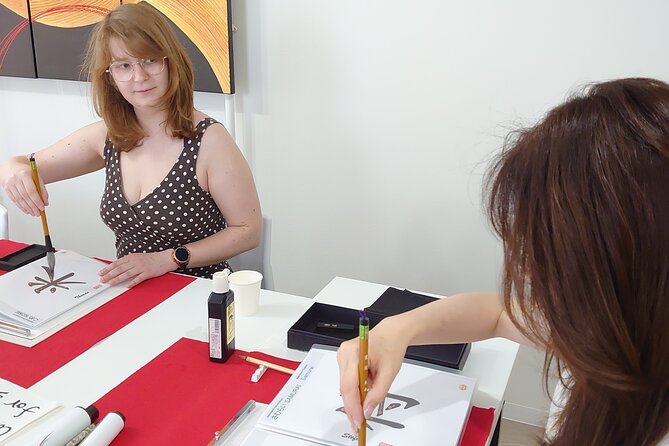
This calligraphy experience is a great fit if you want a meaningful Osaka activity that is not purely food or shopping. It is also a strong choice if you enjoy learning practical skills where the result is visible and you can take it home.
It suits:
- First-time learners of Japanese culture and arts
- Travelers who like structured, step-by-step activities
- Families, since the class supports beginners and creates a finished souvenir
- Anyone who wants a calm hour away from the busiest streets
You might think twice if:
- You want advanced training in multiple kanji styles or long-term refinement. This is a one-hour experience, so the focus is on producing a finished scroll, not turning you into a calligraphy expert.
- You are very time-sensitive and dislike any workshop-style schedule. The class has a clear sequence and moves from instruction to practice to final writing.
The way it is taught makes it accessible. The one tradeoff is depth. You should book with the expectation of a solid introduction and a beautiful personal output, not a deep mastery course.
Quick practical tips before you go
Because you will write with brush and ink tools, plan to wear something comfortable. If you have long hair, tie it back. You will appreciate it once you are concentrating on strokes.
Also, pick your kanji ahead of time if you have an idea. Even with samples provided, having a favorite ready can make the session feel smoother.
Finally, mentally plan to slow down for an hour. This class works best when you let your attention focus on the present task. If you treat it like something to power through while thinking about your next stop, you miss the point.
Should you book this traditional calligraphy class near Dotonbori?
Book it if you want a real cultural activity with an English-guided teaching plan, a patient instructor experience, and a take-home hanging scroll that is actually made by your hands. The small-group size and chair seating make it easier than many traditional arts experiences, and the step-by-step process helps beginners succeed without guesswork.
Skip it if you are looking for a long, advanced calligraphy course or a fast photo-only activity. This is a workshop, not a sightseeing show.
One more reason to feel good about booking: it is tied to a specific endpoint, the finished scroll you take home, and it ends back at the meeting point. Free cancellation is available up to 24 hours in advance, so you can plan your schedule with some flexibility.
FAQ
How long is the calligraphy experience?
It lasts about 1 hour.
Is the instruction offered in English?
Yes. Experienced Japanese instructors teach calligraphy techniques in English.
Can I choose which kanji I want to practice?
Yes. You can select your favorite kanji from samples prepared by the instructor.
What do I take home at the end of the class?
You write your kanji on a hanging scroll, add your name, stamp it, and take the hanging scroll home as a souvenir.
How large is the group?
The class has a maximum of 8 travelers.
What is the cancellation policy?
You can cancel for a full refund up to 24 hours before the experience starts. Free cancellation is available, and changes inside 24 hours are not accepted.
More Tour Reviews in Osaka



Brush, Ink and Workbench
The Canal After Dark, Continued


Latest out of Osaka


Dotonbori Neon & Street Food Walks, side by side.
 ★ 5.0Osaka Local Foodie Walking Tour in Dotonbori and ShinsekaiFrom $111985 reviews
 ★ 5.0Ultimate Osaka Walking Tour: Castle, Dotonbori & Hidden GemsFrom $73862 reviews
 ★ 5.0Tea Ceremony Experience in Osaka DoutonboriFrom $20754 reviews
 ★ 5.0Osaka: Ramen and Gyoza Cooking Class in DotonboriFrom $70378 reviews
Osaka: Dotonbori River Cruise with Glico Sign & Neon ViewsFrom $12376 reviews
 ★ 3.9Osaka: Dotonbori’s Bridges 20-Minute CruiseFrom $12303 reviews
 ★ 4.9Osaka: Roll and Authentic Sushi Making Class in DotonboriFrom $45239 reviews
 ★ 5.0Osaka Local Bar Crawl in Dotombori & Uranamba AreaFrom $26199 reviews
Also worth a look in