
REVIEW · WORKSHOPS
Osaka: Noh Performance with English Subtitles and Workshop
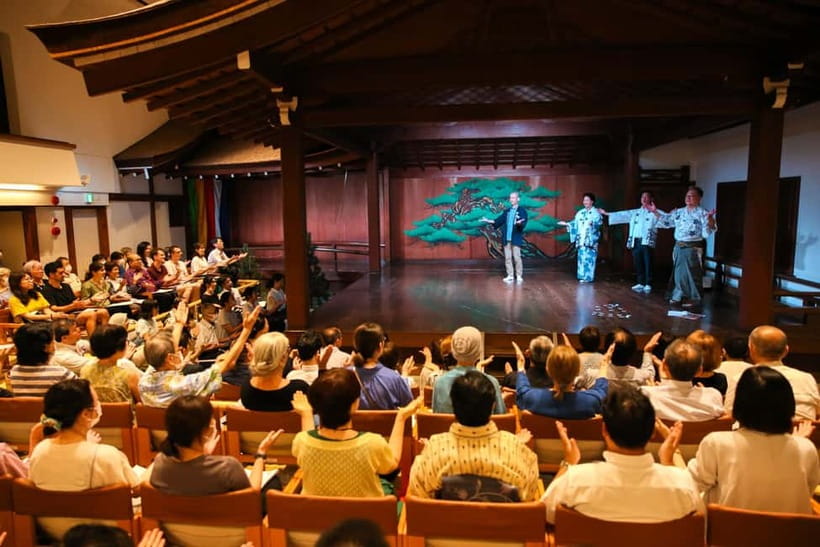
Noh can feel hard to enter. This Osaka experience at Yamamoto Noh Theater makes it approachable, with a clear setup before the show and English subtitles for non-Japanese speakers. You also get to see how Noh lives inside a real, working traditional space near Osaka Castle.
I especially love the way the theater explains what you are seeing before the performance starts. And after the show, you get hands-on time to try on Noh masks and costumes, plus a look at musical instruments used in Noh. One catch to plan for: video recording and photography inside are not allowed, so you will be watching with your eyes.
Key things you will notice in this Noh experience
- Beginner-first explanation before the performance, so the slow pace feels intentional, not confusing
- English subtitles that track the story and help you follow along right away
- Try-on workshop after the show, including masks and costumes, plus musical instruments
- Yamamoto Noh Theater details: established in 1927, and recognized as a Japanese Tangible Heritage in 2006
- Former samurai residence area setting near Osaka Castle, a great spot to wander after
Yamamoto Noh Theater, a real 1927 stage near Osaka Castle
If you want traditional Japanese performing arts without getting lost, this is a strong choice. The show happens at Yamamoto Noh Theater, established in 1927, and it is recognized as a Japanese Tangible Heritage (registered in 2006). That matters because you are not just watching Noh in theory, you are watching it in a place built for it.
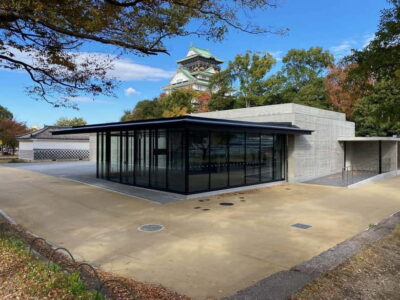
The theater sits in the former samurai residence area in Osaka, and it is about a 10-minute walk from Osaka Castle. That is a practical combo: you can pair it with a daytime castle visit, or you can use it as your evening cultural stop when the city is calmer.
More things to make and take home
The 2-hour rhythm, from explanation to hands-on masks
This experience runs about 2 hours. The format stays simple: you start with an explanation, then you watch the Noh performance with English subtitles, and finally you get a hands-on segment after the show.
Because it is designed for beginners, the pacing works even if you have never seen Noh before. You are not expected to memorize terms or catch every cultural reference on your own. Instead, the goal is to help you understand what the performance is trying to do.
Pre-show briefing that turns Noh into something you can follow
Noh has a reputation for being slow and stylized. That style is the point, but it can feel like a wall if nobody helps you read it. Here, you get a pre-performance explanation, which is one of the most valuable parts for first-timers.
The theater walk-through is set up to give you a mental map. You learn key background on Noh and specifically about the Yamamoto Noh Theater, so the stage does not feel random. Once you know what to listen for and what the performer is signaling, the performance becomes easier to enjoy.
Practical tip: arrive a bit early so you can settle in. Early arrival also helps you get your bearings before the explanation starts, especially if you are walking in from Osaka Castle.
The Noh performance with English subtitles, what to watch for
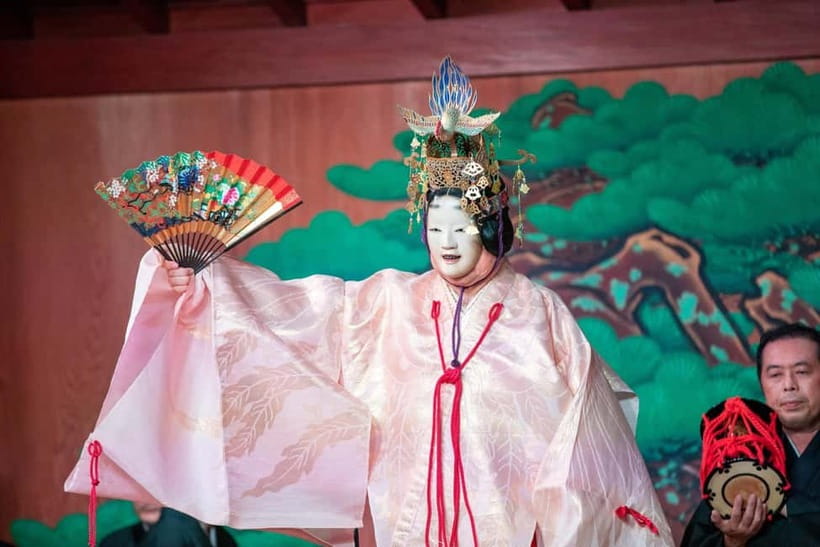
The main event is a Noh performance inside the Yamamoto Noh Theater. What makes this version work well for English speakers is that you get English subtitles during the show. That is huge, because Noh can be hard to track with only visuals.
During your watch, pay attention to three things:
First, the performer’s controlled movement. Even when nothing seems to happen, the body language is doing storytelling work.
Second, the relationship between the performer and the music. In Noh, the soundtrack often carries mood and structure.
Third, how the performance communicates character and emotion through minimal actions.
Also note the support you get from the theater. The experience includes an English-speaking host or greeter, and if questions come up, you are not left alone with them. One highlight from past experiences is that the theater owner has taken time to answer a long list of audience questions after the performance, with interpretation support for non-Japanese speakers. That friendly Q and A energy can make the show stick in your mind.
After the show: trying on Noh masks, costumes, and instruments
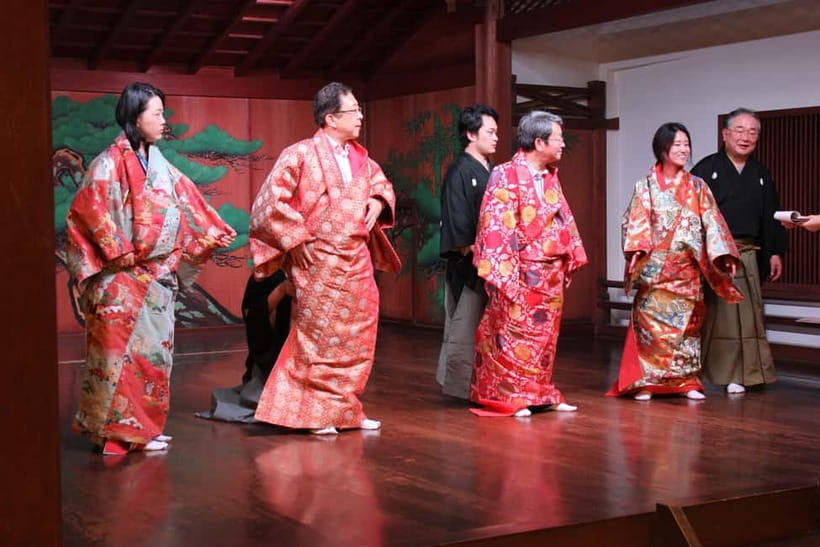
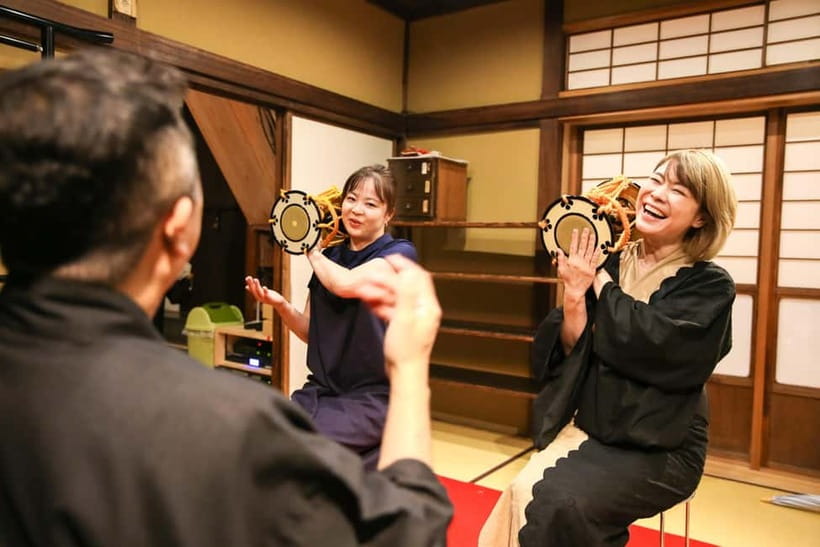
The post-performance workshop is where this experience becomes more than a sit-and-watch ticket. After the performance, you get time to try on Noh masks and costumes, and you also explore musical instruments used in Noh.
This is worth your time because masks and costume choices explain a lot about Noh’s meaning. When you hold a mask, even briefly, you start to understand why they are not just decoration. The mask shape changes how light hits the face, and it changes how emotion reads from the audience side.
The same idea applies to the instruments. You are not just hearing music in the dark and wondering what role it plays. In the workshop segment, you get to see the instruments up close and connect them back to what you watched during the performance.
Photography and video rules: you cannot take video, and photography inside is not allowed. I would treat this like a hands-on museum moment. Let your phone stay away for a bit, and you will likely enjoy the try-on segment more.


Why the location near Osaka Castle adds value
This activity is placed in a part of Osaka that makes the culture feel grounded. The former samurai residence area has history in the walls, the street layout, and the way you move through the neighborhood.
Because the theater is a 10-minute walk from Osaka Castle, you can plan your day like this:
Do castle area sightseeing first, then head to the theater for a cultural deepening.
Or do the theater first, then wander outside with a calmer pace.
Either way, the setting helps you understand that Noh is not a museum-only artifact. It is part of the living cultural fabric of the city.
Price and value, why $32 can make sense here
At about $32 per person for a 2-hour experience, you are paying for more than a seat in a theater. Your ticket includes:
- the Noh performance
- a beginner-friendly explanation beforehand
- English subtitles
- and the hands-on try-on time with masks, costumes, and instruments
If you have ever tried to enjoy Noh without support, you know how quickly confusion turns into indifference. Here, the explanation and English subtitles reduce that risk. And the mask and instrument segment is extra time that many performances do not include.
Value also comes from the atmosphere. The theater staff are kind, and the tone feels welcoming, not intimidating. For a first Noh experience, that kind of support matters as much as the content.
Who should book this Noh experience in Osaka
This is a good fit if you:
- have never seen Noh and want a clear on-ramp
- want English subtitles and a friendly explanation for context
- like hands-on experiences, even brief ones, like trying costumes and masks
- are already in the Osaka Castle area and want an art stop that fits a short timeline
It is not the best match if you:
- have a strong need to record everything on your camera or phone, because photography inside and video recording are not allowed
- are traveling with very young kids, since it is not suitable for children under 7
Small planning tips that make the evening smoother
A few practical moves will help you enjoy the full 2 hours.
Wear something comfortable. You will be sitting for the performance, and then you will move a bit during the mask and instrument time.
Keep your expectations realistic. This is not a long workshop that teaches you to perform Noh, it is an introduction plus a hands-on taste.
Plan your day around silence. Noh is calm and focused, and you will get more out of it if you treat it like a quiet show rather than a background activity.
If you care about accessibility, the experience is wheelchair accessible. That is a major advantage when you want theater experiences that do not require complicated logistics.
Should you book this Osaka Noh show and workshop?
If you want a first Noh experience that does not assume you already know the language or the traditions, I think you should book it. The combination of an explanation, English subtitles, and a post-show chance to try on masks and costumes makes the ticket feel practical and complete.
The main reason to hesitate is simple: if you want to take photos or record video inside, you will be disappointed. Otherwise, this is a strong pick for culture lovers who want something authentic, understandable, and time-efficient near Osaka Castle.
FAQ
How long is the Osaka Noh performance with English subtitles and workshop?
It lasts about 2 hours.
Are English subtitles included during the Noh performance?
Yes. The performance includes English subtitles, and the host or greeter provides English and Japanese.
Where is the Yamamoto Noh Theater located?
It is in the former samurai residence area in Osaka, about a 10-minute walk from Osaka Castle.
Can I take photos or record video inside the theater?
No. Video recording and photography inside are not allowed.
Is this experience wheelchair accessible?
Yes, it is wheelchair accessible.
What is the cancellation policy?
You can cancel up to 24 hours in advance for a full refund.
Make Something to Take Home






More Tour Reviews in Osaka




Latest out of Osaka


Workshops, side by side.
 ★ 5.0Sushi Making Osaka Roll and Authentic Japanese Sushi ClassFrom $311,220 reviews
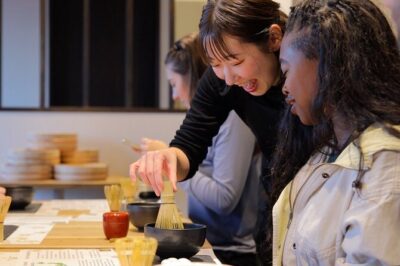 ★ 5.0Matcha Making Class in Osaka with Authentic Japanese Sweets SetFrom $21509 reviews
 ★ 5.0Osaka: Ramen and Gyoza Cooking Class in DotonboriFrom $70378 reviews
 ★ 5.0Osaka Sushi Making Class – Hands-On Nigiri & Rolls (Same-Day OK)From $33352 reviews
 ★ 5.0Osaka Cooking Class: Okonomiyaki &Japanese cuisines experienceFrom $104261 reviews
 ★ 4.9Osaka: Roll and Authentic Sushi Making Class in DotonboriFrom $45239 reviews
 ★ 5.0Ramen and Gyoza Cooking Class in OsakaFrom $79202 reviews
 ★ 4.9Osaka: Sushi Class in DotonboriFrom $67160 reviews
Also worth a look in