
REVIEW · WORKSHOPS
Kintsugi Workshop: Beauty in Brokenness
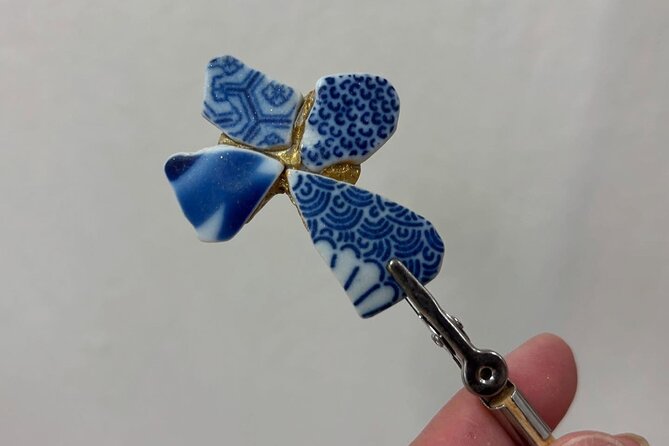
Fixing something broken sounds simple, then Japan’s craft tradition makes it profound. In this Osaka kintsugi workshop, you learn the meaning of “joined by gold” while actually restoring a ceramic piece in a real artisan studio. You’ll work with step-by-step guidance, using modern materials like synthetic lacquer, resin, and silver-based gold powder.
I really like the small group size (maximum 8), which keeps the session calm and gives you time to ask questions. I also like that everything is provided, so you can walk in empty-handed and still leave with a finished piece. One thing to consider: you repair from a selection of broken pottery, so if you are very specific about shape or color, you may feel the choice is limited.
Key things to know before you go
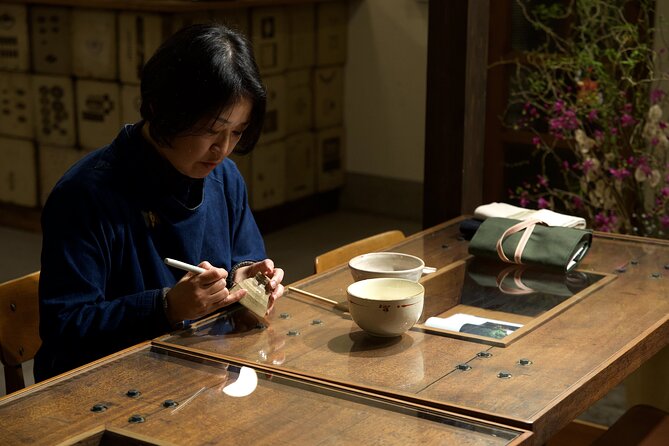
- Real studio setting in Osaka with hands-on instruction from an artisan
- No experience needed, and all tools and materials are included
- You repair an actual broken ceramic piece from the studio’s selection
- Modern kintsugi materials (synthetic lacquer, resin, silver-based gold powder)
- You take your finished piece home, wrapped for the trip
- Small group format that supports patience and personal coaching
Arriving at the studio: Osaka timing, group size, and what to bring
This is a 3-hour workshop that starts at 3:00 pm in Osaka, at 102, 1-chōme-4-18 Shigita, Joto Ward. The location is near public transportation, which matters because you do not want to arrive stressed and rushed. Also, you only need to show up and get started. No special prep is required.
The group stays small, with a maximum of 8 travelers. That small size shows up in the pace. You are not herded through a script. The instructor can slow down for explanation, and you can watch closely when it matters most.
You will want to bring yourself, plus a calm mindset. Kintsugi takes careful attention, and you’ll get better results when you are not trying to multitask. Dress like you might get a little messy. Even with tools provided, you are handling resin and lacquer, and ceramics work is hands-on.
More things to make and take home
Choosing your broken ceramic: making the most of the studio’s selection
A key part of this experience is that the studio gives you access to a selection of broken pottery pieces to repair. This is one of the reasons the workshop feels personal, because you are not just practicing technique on an anonymous sample. You are restoring a real object with its own break pattern, which affects how the repair line will look.
Here’s the catch: your outcome depends on the piece you pick. If you’re someone who wants a specific shape or you care deeply about the visual tone of the final repaired area, spend a minute looking before you commit. One practical tip that comes straight from participant experience is to consider bringing your own broken dish if you are particular. If you want the freedom to choose exactly what you will be repairing, that can help a lot.
If you are flexible, you’ll still get a great payoff, because the focus here is on learning the process and taking home a restored item that carries meaning.
Understanding kintsugi, joined by gold, and why wabi-sabi fits the room
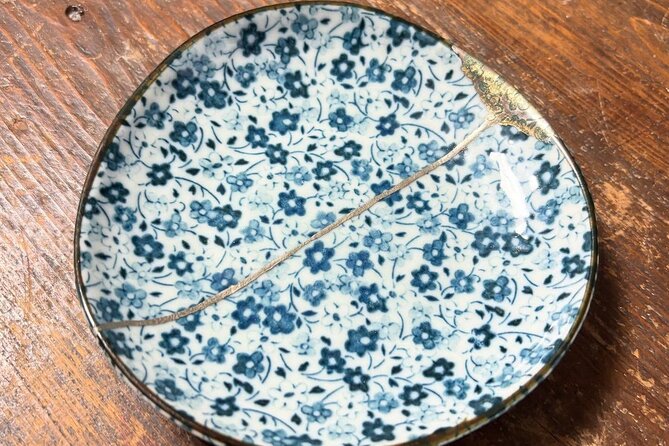
Before you touch lacquer or resin, you’ll get a history and philosophy walkthrough. Kintsugi literally means joined by gold, and it grew from a tradition that doesn’t hide damage. Instead, it treats the break as part of the object’s life.
The philosophy you’re learning is rooted in wabi-sabi, which is about impermanence and accepting imperfection. In plain terms, kintsugi asks you to pause on the “fault” and see the “story.” That shift matters because it changes how you think while repairing. You stop trying to erase the break, and you start building a new connection along the crack.
I find this part of the workshop makes the hands-on work feel more intentional. The repair steps are technical, but the reason you do them is emotional and cultural. That combination is what gives the workshop its staying power.
The workshop flow: what happens during your 3 hours
This is one of those craft sessions where the timing feels efficient because the instructor is guiding each step. While the exact order is taught on-site, you can expect the workshop to follow a clear progression:
Step 1: Bonding pieces with synthetic lacquer
You’ll use synthetic lacquer to join broken ceramics. This is the moment where your work becomes a restoration instead of just decoration. You are aligning parts so the final piece makes sense as an object again.
Because lacquer work needs attention, you’ll likely be coached on how to handle the pieces and apply the bonding material carefully. This is also where a small group helps. You can ask questions without waiting your turn.

Step 2: Filling missing fragments with resin
Next comes filling where pieces are missing. You will use resin to rebuild those gaps so the repaired area has structure and continuity.
This stage is where your eye for shape matters. You are not expected to be a professional sculptor, but you are encouraged to take your time. The best-looking repairs tend to come from patience, not speed.
Step 3: Dusting the repair with silver-based gold powder
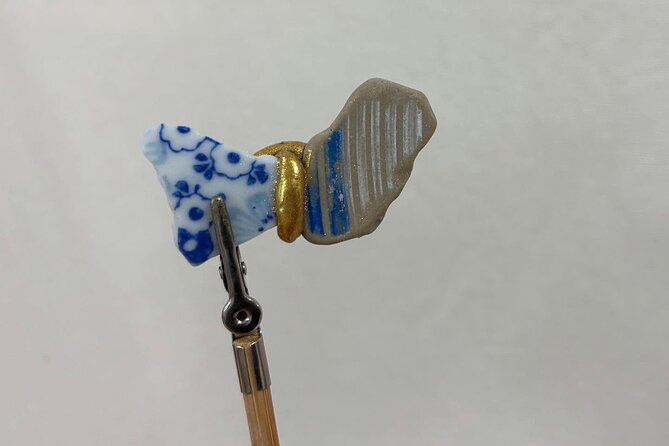
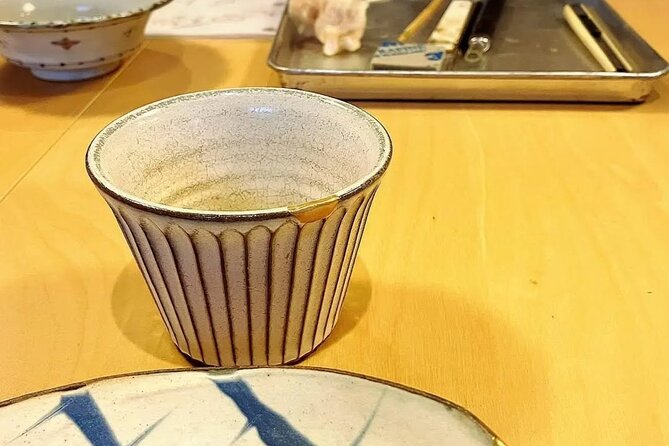
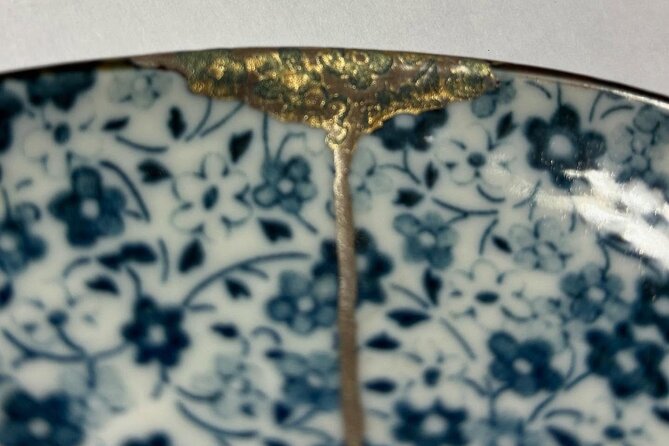
Finally, you’ll dust your repaired area with silver-based golden powder. Even though you’re not using traditional materials like powdered pure gold, the effect is still the signature kintsugi glow. It’s the “joined by gold” moment, turning the repair line into something you want to look at.
This is also where the philosophy lands visually. The repair becomes a feature, not an afterthought.
Throughout, the studio provides the tools you need, including brushes and the materials used in each stage. You do not have to bring supplies or figure out technical details ahead of time.
What you take home: your repaired piece and the wrapping details that matter
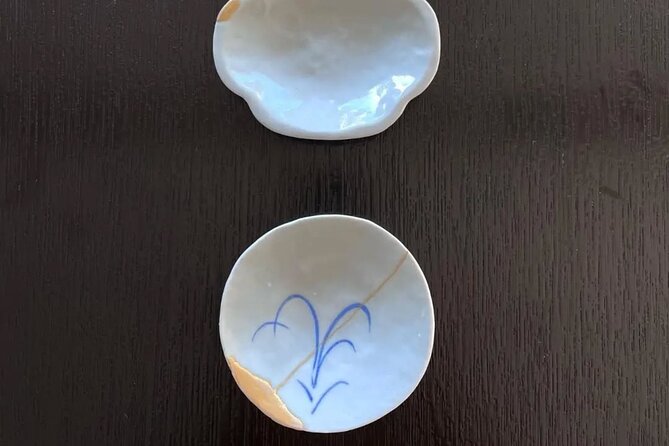
You end with your own restored ceramic piece, and it’s meant to go home with you. The workshop includes that completed item as part of the experience, so you are not leaving with only a certificate or photos.
In practice, you should plan to carry it carefully. One thing I appreciated from participant experiences is that the finished piece is wrapped so you can take it safely home. That small detail makes a real difference when you’re navigating trains and transfers.
If you like having a record of what you made, there’s also a nice optional bonus some participants have noted: photos from the event shared after the workshop. Since it’s not stated as a universal guarantee, treat it as a pleasant extra, not the main reason to book.
Price and value: is $97.73 worth a 3-hour kintsugi session?
At $97.73 per person for about 3 hours, this isn’t a budget craft class, but it also isn’t in the “tourist overpriced” category. The value is in three places.
First, you are paying for guidance from a professional artisan in a real studio environment. That matters more than you might expect. Kintsugi looks simple in photos, then you learn how alignment, application, and timing influence results.
Second, the price includes the materials and tools. You are using synthetic lacquer, resin, and silver-based gold powder, and you’re getting the brushes and equipment to do it correctly. That’s usually where hands-on classes get expensive if you have to buy your own supplies.
Third, the small group format reduces wasted time. With only a handful of people, you get clearer instruction and more attention. That’s a strong value lever when you’re learning something technical.
Given that this activity is often booked about 20 days in advance on average, I’d treat it as a real planned stop, not a last-minute add-on.
Logistics that will help: mobile ticket, transportation, and staying comfortable
You’ll receive confirmation at booking, and you get a mobile ticket. Also, it’s near public transportation, so you can plan your day around trains and buses instead of worrying about parking or taxis.
Transportation to the venue is on you. That’s common, but it matters because kintsugi involves fragile materials and a finished ceramic object. Before you go, I’d map your route and build in a little buffer so you’re not late and flustered.
Finally, the workshop requires good weather. That detail is important. If weather turns bad, the organizer will handle it by offering a different date or a refund.
Who this workshop suits best (and who might want a different option)
This is a great fit if you:
- Want a meaningful hands-on activity rather than a quick sightseeing stop
- Like learning a cultural philosophy alongside a craft skill
- Prefer a small group with patient guidance
- Want something tangible to take home that feels personal
It may be less ideal if you:
- Have very strong preferences for the exact look of your final object and dislike any uncertainty about what pottery you’ll get
- Are trying to pack this in with a tight schedule and no flexibility, since it’s a fixed 3:00 pm start and runs about 3 hours
The workaround, if you are picky, is simple: consider bringing your own broken dish so you control the final shape and visual outcome.
Should you book the Kintsugi Workshop in Osaka?
I’d book it if you want an authentic Osaka activity that teaches a Japanese concept you’ll actually understand after your hands are on the materials. The combination of real studio guidance, a calm small-group atmosphere, and the final take-home piece makes it one of those experiences that feels more like a personal workshop than a checklist stop.
Skip it only if you are mainly chasing a purely visual souvenir and you don’t want any uncertainty about the piece you’ll repair. Otherwise, this is a thoughtful craft class where imperfection becomes the point, and you leave with proof in your hands.
Make Something to Take Home


More Tour Reviews in Osaka



Latest out of Osaka


Workshops, side by side.
 ★ 5.0Sushi Making Osaka Roll and Authentic Japanese Sushi ClassFrom $311,220 reviews
 ★ 5.0Matcha Making Class in Osaka with Authentic Japanese Sweets SetFrom $21509 reviews
 ★ 5.0Osaka: Ramen and Gyoza Cooking Class in DotonboriFrom $70378 reviews
 ★ 5.0Osaka Sushi Making Class – Hands-On Nigiri & Rolls (Same-Day OK)From $33352 reviews
 ★ 5.0Osaka Cooking Class: Okonomiyaki &Japanese cuisines experienceFrom $104261 reviews
 ★ 4.9Osaka: Roll and Authentic Sushi Making Class in DotonboriFrom $45239 reviews
 ★ 5.0Ramen and Gyoza Cooking Class in OsakaFrom $79202 reviews
 ★ 4.9Osaka: Sushi Class in DotonboriFrom $67160 reviews
Also worth a look in