
REVIEW · SHINSEKAI, TSUTENKAKU & TENNOJI TOURS
Tsumami Zaiku (Kanzashi) making Workshop in Abeno Osaka
Kanzashi looks tricky, but it is doable. In Osaka’s Abeno neighborhood, this tsunami zaiku (kanzashi) workshop teaches you step-by-step, with matcha and Japanese sweets built into the session. I like that you can choose between an easier traditional style and a more challenging sakura option. One thing to plan for: the workshop house has a steep staircase, so mobility limits may make entry tough.
You’ll also get a warm, small-group vibe. The group size tops out at 6, and the instruction is guided throughout, with friendly help from the team, including Misa-sensei (along with Jun and Ami). The best part for most people is the pace: materials are ready, you focus on shaping the petals, and you leave with your own finished kanzashi in a take-home box.
Key things to know before you go
- 100-year-old Japanese house in Abeno with a mixed eastern-style interior that feels distinctly local
- Two kanzashi skill paths: traditional (easier) or sakura cherry blossom (a bit harder)
- All the prep is done for you: cloths, pin sets, accessories, and the patterned base pieces are provided and pre-cut
- A real pause in the middle when glue dries, with matcha and sweets so you do not rush
- Max 6 people means you get hands-on guidance and time to ask questions
- Take-home kanzashi in a box plus a chance to browse instructor-made pieces for purchase
Entering a 100-year-old house in Abeno Osaka
This workshop happens in a 100-year-old traditional Japanese house, and that matters more than it sounds. The setting is part of the experience because it changes how you move and focus. Instead of a modern classroom feel, you’re working in a space that looks and feels lived-in, with a mixed eastern-style interior that keeps the mood calm and attentive.
The location is also practical. You start at Nishitanabe Station (meeting point listed as Nishitanabechō, Abeno Ward), and the activity runs back to the same meeting area afterward. If you want pickup, that option is offered, which can help if you’re pairing this with other Osaka stops.
One planning note I would not skip: there’s a steep staircase in the house. Even if you can manage a few steps, think about how you’ll handle any bags and where you’ll pause. If mobility is a concern, this is the first factor I’d check before booking.
Under the tower: more Shinsekai hours
The two kanzashi options: traditional vs sakura
The workshop is built around choosing your kanzashi style before you start cutting and shaping anything. You’ll be introduced to a brief history of tsumami-zaiku, then you pick one of two designs:
1) Traditional kanzashi
This is the easier option. It’s the one to choose if you want success without stress. I like this for first-timers because you still get the satisfaction of making something refined, but the steps are more forgiving.
2) Sakura (cherry blossom) kanzashi
This version is a little more difficult. You may spend more time shaping the petals and assembling the pieces, but the instructor guides you throughout. If you like a challenge or you’re the type who enjoys careful, detailed work, this is the style that will feel the most rewarding.
The way the workshop is structured, your choice does not turn into a solo project. Both options are taught step by step, so you’re not left guessing what comes next.
How tsumami zaiku actually comes together (step-by-step, not chaos)
Once you choose your design, the workshop moves into the fun part: building your kanzashi from materials that are ready to work with.
Here’s what you can expect to be provided:
- Cloths, pin sets, and accessory pieces
- A box for taking your finished kanzashi home
- Patterned cloths and designed components you’ll use to create your own piece
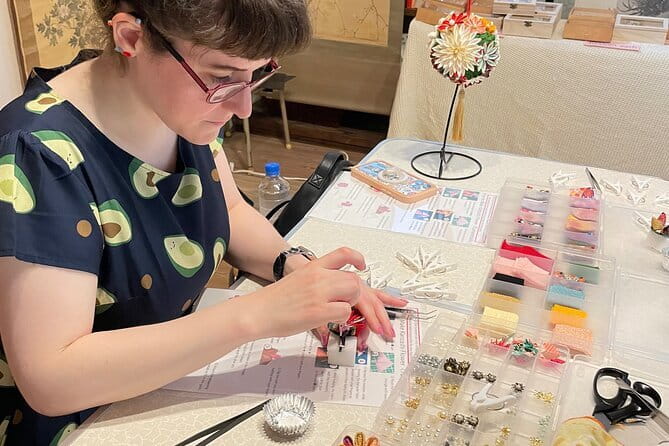
- Petals that you’ll make as part of the process (the petals are the part you actually shape)
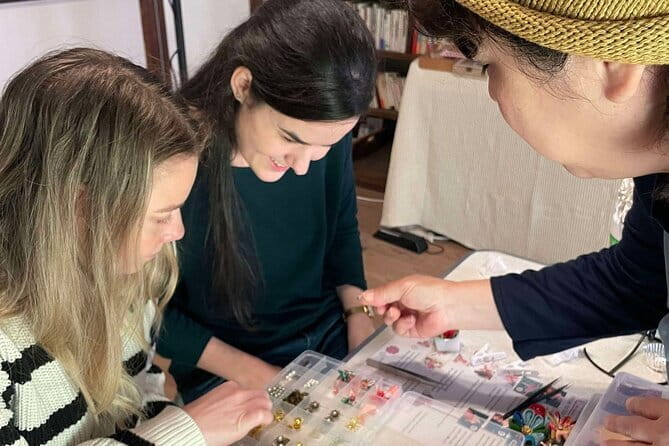
That “petals are up to you” detail is key. The other items are already prepared to keep the workshop focused and efficient. So you’re not spending your limited class time measuring, cutting, or figuring out supplies. Instead, you learn the technique, follow the steps, and ask questions when you need help.
In practice, you’ll get instruction on how to:
- Arrange and use patterned cloth pieces
- Form the petal shapes required for your chosen kanzashi style
- Assemble the piece using the taught method and glue
- Finish it so it’s ready to take home
Because guidance is continuous, you can treat mistakes as part of learning rather than a disaster. If you want your first attempt to look polished, pay attention to the instructor’s pacing and how they hold the cloth while shaping the petals.
The mid-workshop matcha break, timed for glue to set
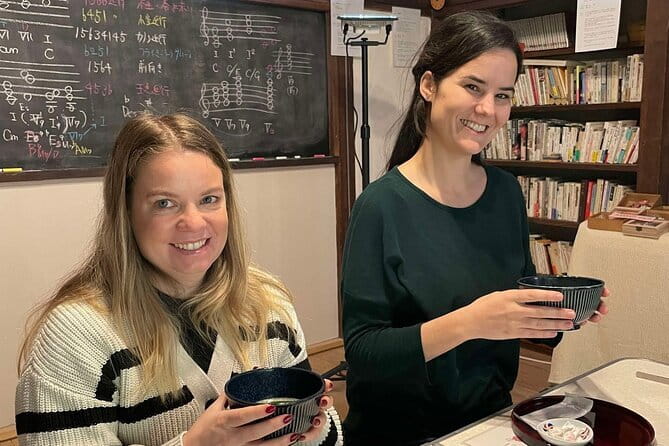
One of the smartest parts of this workshop is the timing of the break. The glue used to put together the kanzashi takes time to dry. During that wait, you pause and enjoy matcha and Japanese sweets.
This is not just a nice extra. It actually improves your final result. When you’re waiting anyway for glue to set, you get a structured break instead of sitting there staring at a half-finished piece. You can relax, enjoy the snacks, and then come back with a clear head.
There’s also time during the workshop to look at handmade kanzashi displayed by the instructor. This is useful because you can see how different patterns and petal shapes change the overall look. If you’re debating whether to pick traditional or sakura next time, this browsing time gives you something concrete to compare.
Small-group instruction with Misa-sensei, Jun, and Ami
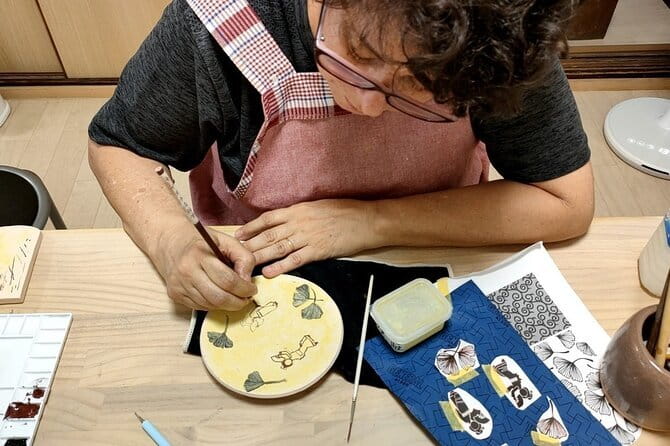
The workshop runs with a maximum of 6 people, and that small size changes everything about the experience. You’re not competing for attention. When you need help, you get it while the step is still fresh.
The teaching team includes Misa-sensei, and the vibe described by past participants is friendly and accommodating, with lots of room to ask questions. Jun and Ami are mentioned as part of the welcoming, professional guidance. Even if your Japanese is basic, crafting has a universal language: hands show you what to do, and the instructions are delivered clearly enough to keep you moving.
If you like learning with interaction, you’ll probably enjoy the conversation aspect too. People often get chatty when they’re concentrating on something tactile, and this workshop seems to encourage that comfort.
More things to make and take home

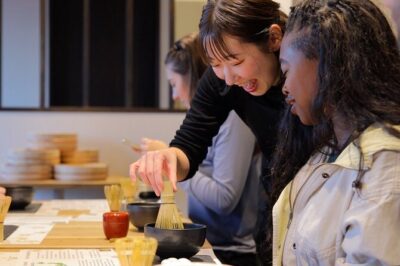

Take-home kanzashi in a box, plus shopping time

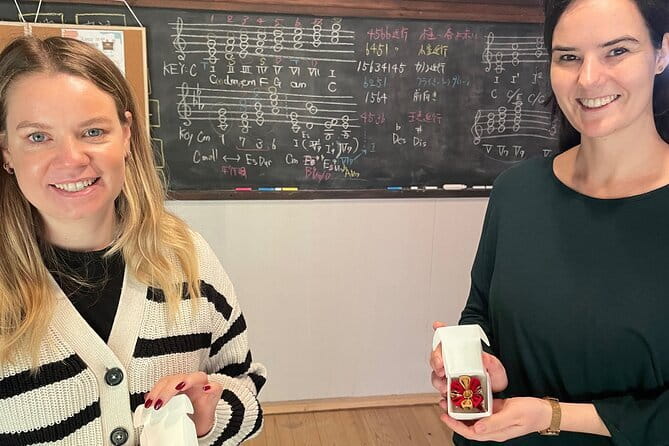
When you finish, your kanzashi is wrapped up and ready to take home in the provided box. That may sound like a minor detail, but it’s part of the value. You do not leave with a fragile, unprotected item. You can store it neatly, travel with it more easily, and use it later for photos, gifts, or personal keepsakes.
Another thoughtful element is the chance to browse instructor-made pieces for purchase. This gives you a fallback option if you decide you want a more complex design than you made in the class, or if you want to buy a souvenir that is already finished.
If you’re shopping in Osaka anyway, I’d treat this browsing time as inspiration. Even if you do not buy, it helps you understand what looks best in different color and pattern combinations.
Price and value: is $35.83 fair for what you get?
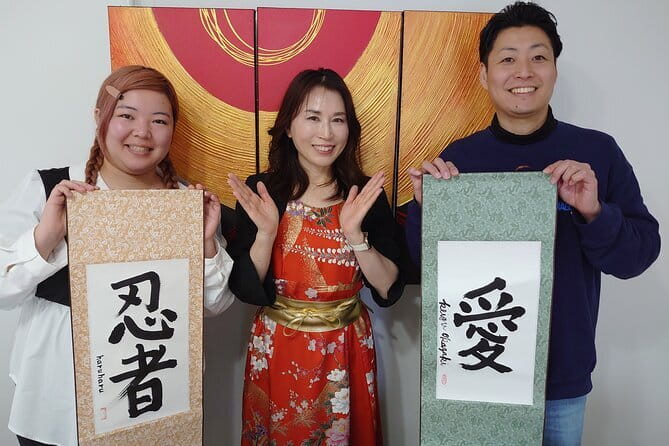
At $35.83 per person, this workshop is priced like a focused craft class with real materials and guided instruction. The value comes from what’s included and what is not.
You do get:
- Pre-cut and pre-made cloth and accessory components
- The box for your finished kanzashi
- Matcha and Japanese sweets during the session
- Step-by-step teaching so you are not stuck figuring things out alone
- Two design options with different difficulty levels
You also get the “time saved” factor. Because most components are prepared for you, you spend your 1 hour 30 minutes making the key part, shaping petals, and assembling your piece. If you tried to replicate this on your own without a teacher, your first attempt would likely take much longer, and you’d still risk buying the wrong materials.
In short: you’re paying for instruction, tools, and the materials that make the class run smoothly. For most people, that turns out to be a fair trade for a hands-on souvenir that looks genuinely handmade.
Who this workshop suits best in Osaka
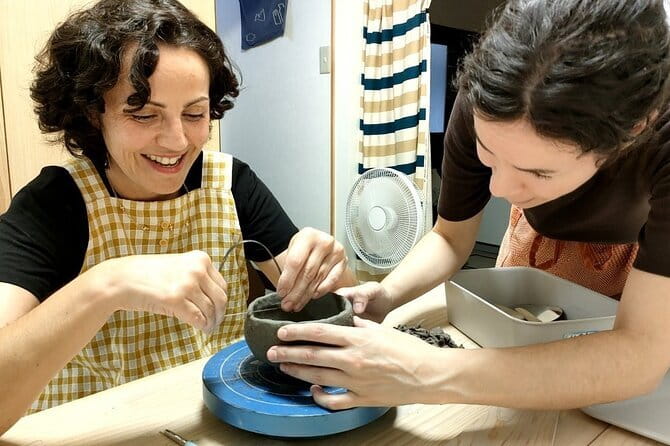
This is a great pick if you want an activity that feels traditional but not overwhelming. Here’s the kind of traveler (I’ll say it as you) who usually enjoys it most:
- You want a hands-on craft in a small group, not a big group tour
- You enjoy learning a technique, even if you are a beginner
- You like taking something home that you can actually use or gift
- You want a structured break in the middle, not a nonstop session
- You’re comfortable working at close range with glue and small components
It may be less ideal if:
- You need step-free access due to the steep staircase
- You are bringing children who cannot reliably follow along and manage their own attention (the workshop allows children from age 8 and up, but you still remain responsible for them during the activity)
- You’re dealing with an illness risk like flu or COVID symptoms, since the activity is not recommended when infectious diseases are a concern
If you’re pairing this with other Osaka stops, try to schedule it when you can arrive a few minutes early. Craft workshops run on steady timing, especially when glue drying is part of the plan.
How to prepare so your kanzashi looks its best
You can make the whole thing smoother with a little prep. The workshop gives you materials, but your mindset and comfort still matter.
Here are practical tips that help:
- Wear comfortable clothes. You’ll be seated and working with small items, so choose something that does not restrict your movement.
- Keep your phone handy for photos after assembly, not during the most delicate steps.
- When you reach the glue stage, slow down. This is where the drying time and technique are most important.
- Pick traditional if you want an easier win, and pick sakura if you want a more detailed, longer-feeling experience.
Also, bring curiosity. If you don’t know what to ask, a simple question like how to hold the cloth during petal shaping can lead to helpful guidance. The format is built for questions.
And one more small point: the workshop takes place in a traditional house setting, so your comfort with getting in and out of the space matters. If you have any doubt about the staircase, plan around it.
Should you book this Tsumami Zaiku workshop in Abeno Osaka?
I’d book it if you want a compact, hands-on craft experience that still feels authentic. The biggest green flags are the small group size (max 6), the step-by-step teaching, and the fact that the materials are ready for you, so you focus on making the petals and assembling your kanzashi. I also like that there’s a real break built into the glue drying time, so the session doesn’t feel rushed.
Skip it or think twice if staircase access is an issue for you, or if you’re looking for something more casual like a walk-through cultural show. This is a making workshop. If you want to learn how tsumami zaiku works and leave with a finished piece in a box, this is a strong match.
FAQ
How long is the Tsumami Zaiku (Kanzashi) making workshop?
It’s about 1 hour 30 minutes.
What’s the price per person?
The price is $35.83 per person.
Are there different kanzashi options to choose from?
Yes. You can choose between a traditional kanzashi and a sakura (cherry blossom) kanzashi. The traditional option is easier, and the sakura option is more difficult.
What is included in the workshop?
You get materials for the workshop, including cloths, pin sets, accessories, and a box for your finished kanzashi. You also get matcha and Japanese sweets.
Is pickup available and how do I get there?
Pickup is offered. The meeting point is Nishitanabe Station (listed address in Abeno Ward), and the activity ends back at the meeting point.
Is it suitable for children and people with mobility issues?
Children age 8 and above are allowed, with the responsibility resting on the parent or guardian during the workshop. The house has a steep staircase, so people with mobility difficulties should take that into consideration.
Make Something to Take Home




More Tour Reviews in Osaka





Shinsekai, Three More Ways





Latest out of Osaka


Shinsekai, Tsutenkaku & Tennoji Tours, side by side.
 ★ 4.8Osaka: Shinsekai Food Tour with 13-15 Dishes at 5 EateriesFrom $532,204 reviews
 ★ 5.0Osaka Local Foodie Walking Tour in Dotonbori and ShinsekaiFrom $111985 reviews
 ★ 4.2Osaka: Abeno Harukas 300 Observatory E-TicketFrom $3169 reviews
 ★ 3.8Osaka: Tsutenkaku Tower Entry TicketFrom $8125 reviews
 ★ 4.7Osaka: Local Foodie Tour in Dotonbori and ShinsekaiFrom $10895 reviews
 ★ 4.5Retro Osaka Street Food Tour: ShinsekaiFrom $21777 reviews
 ★ 4.5Osaka: Shinsekai Food Tour – 13 Dishes at 5 Local EateriesFrom $7929 reviews
 ★ 5.0Night Soul Food Tour in Shinsekai with a local guideFrom $8528 reviews
Also worth a look in