
REVIEW · SHINSEKAI, TSUTENKAKU & TENNOJI TOURS
Retro Osaka Street Food Tour: Shinsekai
Retro streets and snacks, in the best way. This Shinsekai tour pairs photo-ready landmarks with real Osakan food traditions, guided in English so menus are no mystery. You also get a hands-on moment with tako-yaki plus a drink based on the local mixed juice idea.
I especially like that the guide turns the neighborhood into a story you can walk through, including how Shinsekai’s food culture traces back to the early 1900s. Another big plus is the practical flow: you get to try food from several shops in one 3-hour window, then cap it with a restaurant dinner and a coffee stop at the end.
One thing to weigh first: dietary limits are real here. The tour is vegetarian and pescetarian friendly, but it’s not recommended for vegans or gluten-free travelers.
Key highlights you’ll care about
- Small group of up to 10 makes it easier to ask questions and keep the pace comfortable.
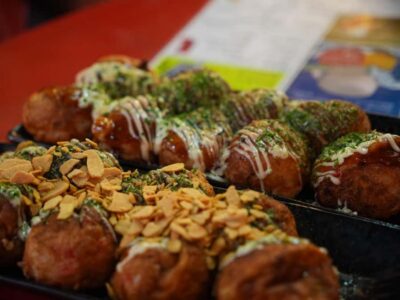
- Hands-on takoyaki making so you are not just eating, you are participating.
- Mixed juice and an Osaka-style breakfast give you variety beyond one-note street snacks.
- English-speaking local guide helps you order and understand what you are tasting.
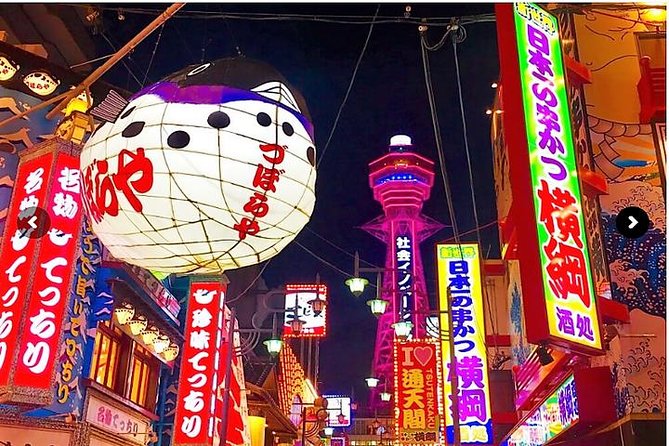
- Landmarks built for photos like Tsutenkaku, the Billiken shrine, and Ja Jan Yokocho.
- Food stops plus restaurant dinner means you leave properly fed, not nibbling.
Shinsekai at 5 pm: where the street food rhythm clicks
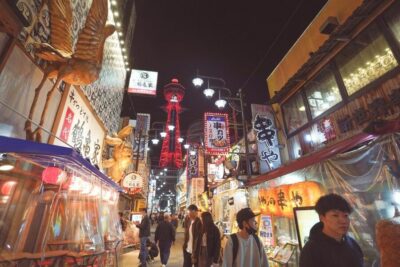
Start time is 5:00 pm, and that timing matters. Shinsekai is the kind of place that feels different as evening turns on the lights. You get the retro look you came for, but you also catch the food scene when people actually use the streets instead of just taking pictures.
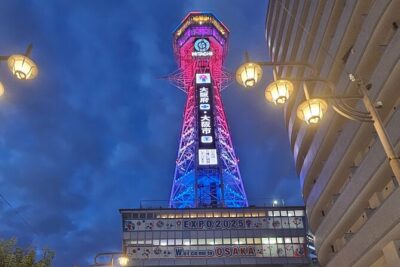
You begin at Tsutenkaku, an easy first win for orientation. Even before the first tasting, the area makes you understand why it’s loved locally: it has landmark energy, narrow side-street movement, and that Osaka habit of turning everyday meals into a social thing.
This tour also leans on the “walk where locals go” idea. You are guided through a part of the city many first-time visitors miss, which is ideal if you want more than a loop through the same souvenir shops.
Under the tower: more Shinsekai hours
Your guide and the small-group advantage
This experience runs with a local guide, and the group size tops out at 10. For street food tours, that small number is not a nice-to-have. It means you can ask what something is, confirm ingredients when you have dietary preferences, and get context without everyone getting lost.
English support is a big deal too. Instead of doing the usual menu guessing game, you get help understanding what you are ordering and why it matters in Osaka. That is especially useful for traditions like mixed juice, where the “what is it?” question is half the fun.
In feedback, guides named Ike, Eki, and Hiro come up, and the common theme is a relaxed, informative style. The best guides here do two things: they help you eat confidently, and they explain how the neighborhood works day to day.
What you’ll actually eat and drink (and why it feels like Osaka)
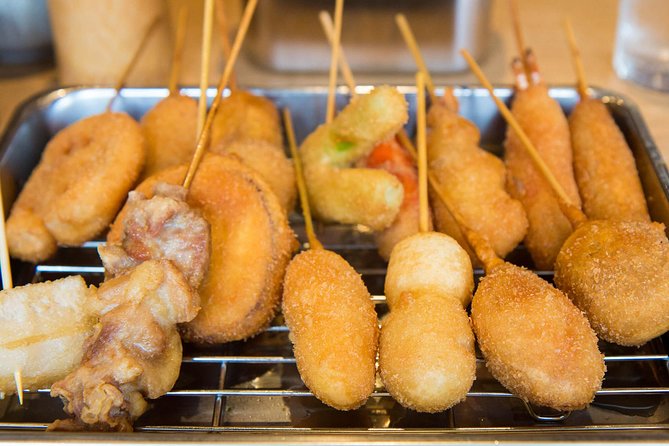
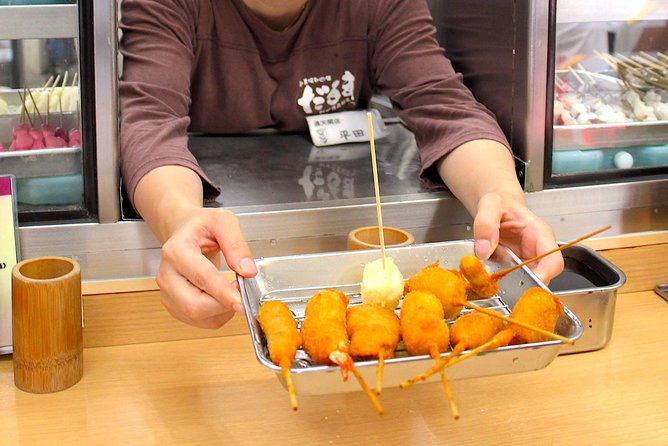
This tour includes 1 beverage, dinner in a restaurant, and tastings at 4 food stops. Plus, you get the hands-on takoyaki experience, where you make the snack, not just watch someone else do it.
Here are the food themes to expect:
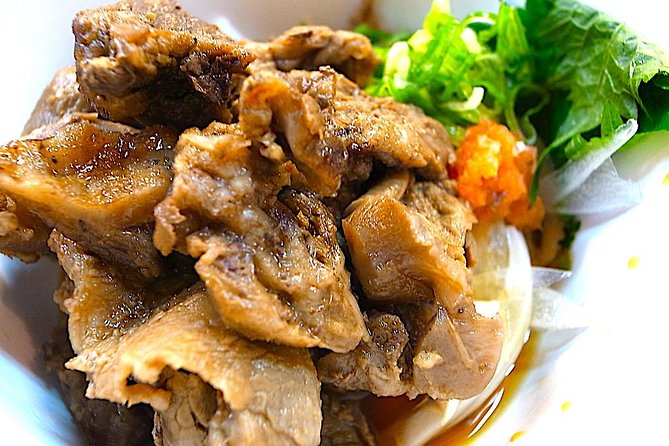
- Mixed juice: a classic Osaka drink idea tied to local food culture. It’s part of the fun because it feels like something you can only understand by trying it.
- Takoyaki: the octopus ball you likely associate with Japan, but here it comes with the small workshop energy that makes it memorable.
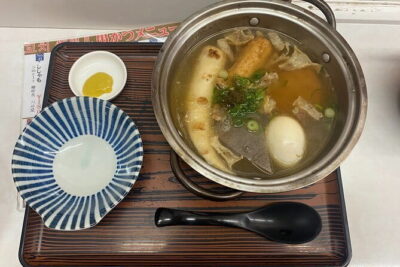
- Osaka-style breakfast: you are sampling early-day flavor in the evening, which is a clever way to stretch the menu without eating the same thing twice.
- Seasonal and local dishes: you visit multiple street food shops and sample what’s on offer.
Two practical notes.
First, the tour is not recommended for vegans and gluten-free. If that applies to you, this is probably not the right fit.
Second, the tour sets a minimum drinking age of 21. Since there is an included beverage, make sure you are comfortable with what that drink category might mean for your group.
Stop-by-stop: Tsutenkaku, Shinsekai, and the “retro photo” route
Your first stop is Tsutenkaku. It’s quick to reach, and it gives you a visual anchor for the whole outing. You will be looking at a place that Osaka uses as a landmark, not just a background for selfies, and that sets the tone for the walk.
Then you move into Shinsekai, where the tour focuses on how the district’s food culture connects to the past. You also get a look at how people spend time locally, including shopping and entertainment habits that help you understand why Shinsekai survives as more than a theme.
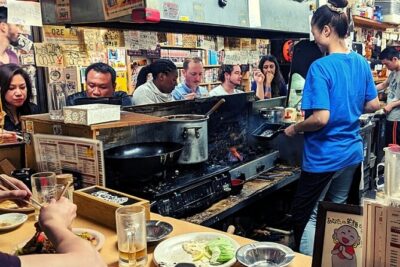
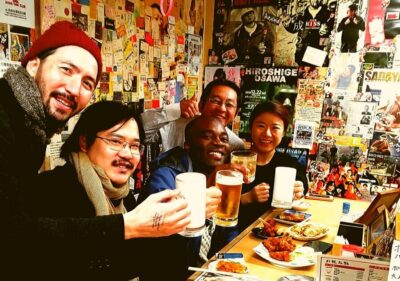
A big part of the experience is the overlap between food and atmosphere. You eat at spots that match what you are seeing outside the shop doors. That is what makes it feel like a tour of a neighborhood, not a checklist of bites.
If you care about photos, this is one of those routes where it’s easy to keep shooting without feeling like you are constantly stopping. Landmarks like Tsutenkaku help, and the guide keeps you moving so you do not miss the best snack windows.
Billiken shrine and Ja Jan Yokocho: old-school vibes, easy to enjoy
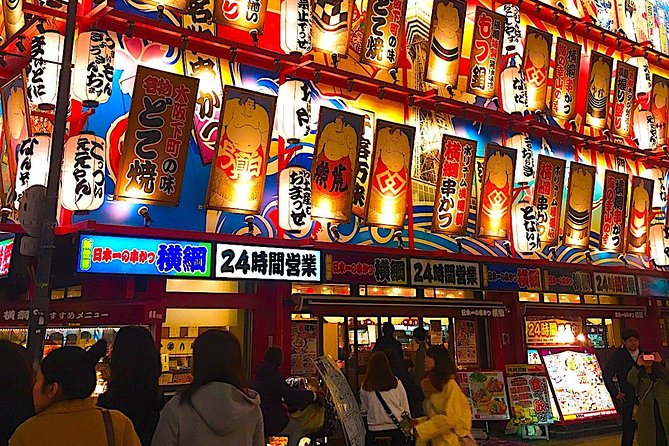
One of the most fun transitions is the move toward the Billiken shrine. Billiken is a familiar Japanese good-luck figure, and the stop is short but memorable. Even if you do not know the story ahead of time, it works as a palate cleanser between food spots, and it gives your walk a distinct rhythm.
Next comes Ja Jan Yokocho. This is the kind of alley area that makes you slow down, look left and right, and notice the small details you would not spot on your own. You tend to get that “this is where people actually hang out” feel, because these lanes are built for everyday use, not just tourism.
The benefit of having a guide here is simple: you know where to go for the best experience, and you avoid wandering into dead ends. You also get context about what you are seeing, which helps you interpret the atmosphere instead of just snapping photos.
Further off the arcade

Isshin-ji and Tower Knife Osaka: more than snacks, more story
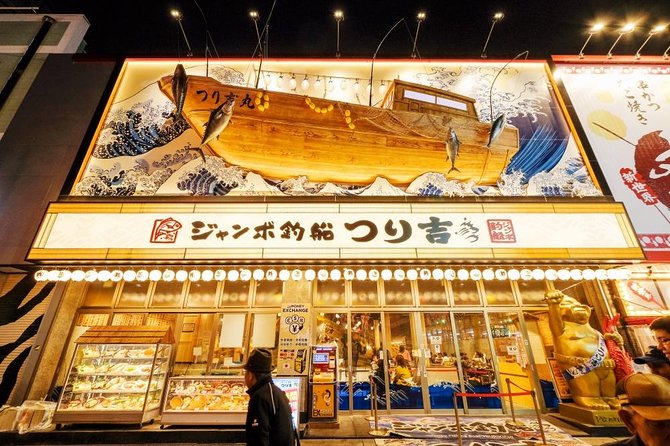
Later, you pass Isshin-ji. A temple stop can feel like a detour on a food tour, but it usually works here because it adds a pause. You get a change of pace from the street-food intensity, and you can reset your appetite for the next tasting.
After that, Tower Knife Osaka is a standout for people who like quirky landmarks. It sounds like an odd stop, and that is exactly why it’s great for an evening walk. It gives the tour a playful edge while still staying grounded in the district’s identity.
The real value is that you get a mix of textures: food, local faith and space, and a weirdly memorable landmark for photos. If you only wanted calories, you could eat your way through Shinsekai on your own. But if you want meaning, these stops add it.
Kuromon Ichiba Market and the Sennariya Coffee finish
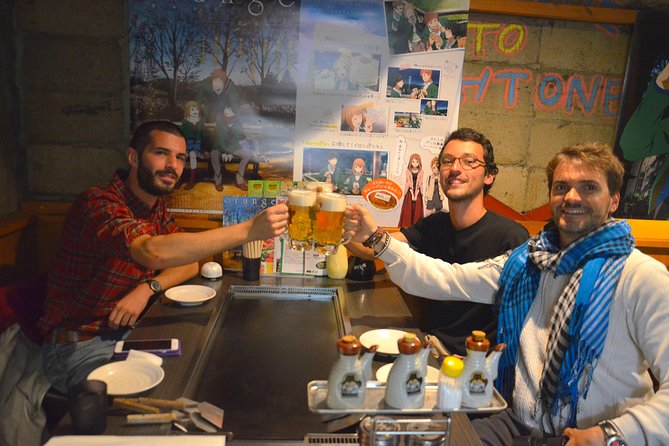
You end up at Kuromon Ichiba Market, which is one of Osaka’s well-known food destinations. On this tour, it works because it is not just “go look at stuff.” You reach it after tasting in the Shinsekai area, so your palate is already warmed up and you are ready to keep exploring.
The market stop also gives you a useful contrast. Shinsekai offers that retro street-food vibe. Kuromon shifts the feel into a more market-forward rhythm. It’s a good way to see how Osaka handles food from neighborhood lanes to a concentrated market setting.
Then you finish at Sennariya Coffee. I like endings like this because your brain is still in snack mode, but you get a calmer place to regroup. Coffee also makes it easier to slow down and reflect on what you liked most, and it gives you a natural stopping point before you head back out into the city.
Price and value: what $217 buys you in the real world
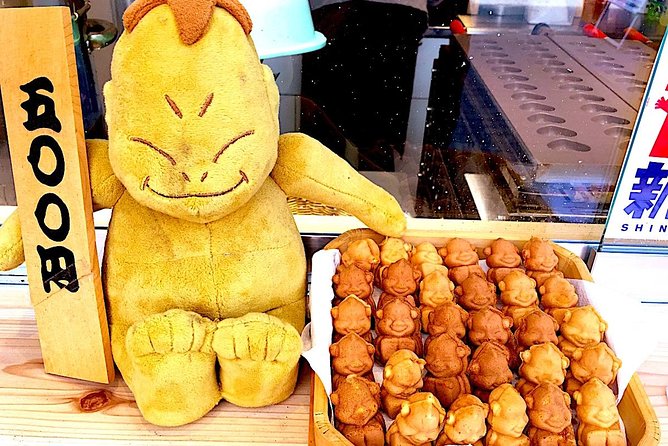
At $217 per person, this is not a budget street-food crawl. But it is also not just paying for a few bites. You are paying for:
- A local guide who handles ordering and context in English
- 4 food stops included
- 1 beverage included
- Restaurant dinner included
- A hands-on takoyaki-making component
- A structured 3-hour walk through multiple landmarks in Shinsekai and beyond
For me, the value shows up in the combination: you get guided access plus enough food to feel like you did something real, not just sampled. The small group size matters too. When a tour is capped at 10, the guide can manage the flow and help you keep up without turning the whole thing into a long queue.
If you are comparing to buying items one by one, a big part of the hidden cost is your time and stress. Here, that friction is handled for you.
When this tour is the right fit (and when it isn’t)
This is a strong choice if you:
- Want a guided evening walk with retro Osaka street food energy
- Prefer English help so you can order confidently
- Like photo-friendly neighborhoods and short landmark stops
- Enjoy interactive experiences like making takoyaki
- Want a mix of street snacks and a proper restaurant dinner
It may not be ideal if you:
- Are vegan or need gluten-free options, since the tour is not recommended for those diets
- Want a non-alcohol experience, since there is an included beverage and the tour notes a minimum drinking age of 21
- Have mobility concerns, since you are walking a district at evening pace and moving between several stops
It is family-friendly and you travel near public transportation, which helps. Still, it’s designed as an evening experience, so plan on comfortable walking shoes.
Should you book the Retro Osaka Street Food Tour of Shinsekai?
If you want Osaka to feel like a lived-in city, not a scavenger hunt, I’d say book it. This tour hits the sweet spot of food plus neighborhood context, and the takoyaki workshop is the kind of thing you remember because you did it, not because you merely tasted it.
I’d especially recommend it if Shinsekai is on your list and you want to swap tourist hotspots for a route built around local rhythm, landmarks, and tastings that make sense as one connected evening.
If you are vegan or gluten-free, or you need very strict dietary control, you should think twice and look for a tour that explicitly supports your needs. Otherwise, the mix of guided English help, multiple tastings, and an old-school Osaka vibe makes it a practical, fun value for $217.
FAQ
How long is the Shinsekai street food tour?
It runs for approximately 3 hours.
When does the tour start?
The start time is 5:00 pm.
Where do I meet and where does the tour end?
You meet at Tsutenkaku (1-chōme-18-6 Ebisuhigashi, Naniwa Ward, Osaka, 556-0002, Japan). The activity ends back at the meeting point.
What’s included in the price?
Included are 1 beverage, dinner in a restaurant, a local guide, and 4 food stops.
Is the tour family-friendly and are children allowed?
Yes, it’s family-friendly. Children must be accompanied by an adult, and for kids 10 and above, a copy of passport information is required.
Are there limits for dietary needs?
It is vegetarian and pescetarian friendly. It is not recommended for vegans and gluten-free travelers.
What is the group size and is the tour weather dependent?
The maximum group size is 10 travelers. It requires good weather, and if canceled due to poor weather you will be offered a different date or a full refund.
Eat Your Way Round Osaka


Off the Arcade Again


Shinsekai, Three More Ways


Latest out of Osaka


Shinsekai, Tsutenkaku & Tennoji Tours, side by side.
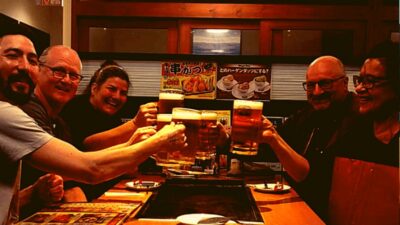 ★ 4.8Osaka: Shinsekai Food Tour with 13-15 Dishes at 5 EateriesFrom $532,204 reviews
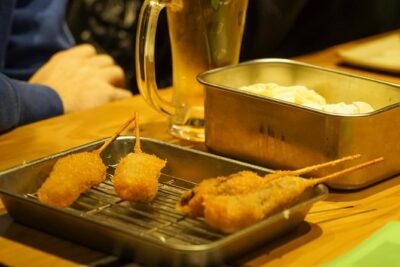 ★ 5.0Osaka Local Foodie Walking Tour in Dotonbori and ShinsekaiFrom $111985 reviews
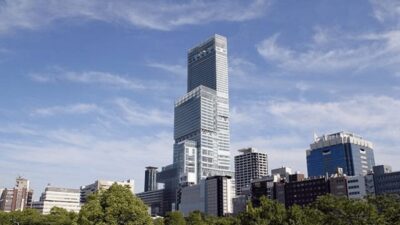 ★ 4.2Osaka: Abeno Harukas 300 Observatory E-TicketFrom $3169 reviews
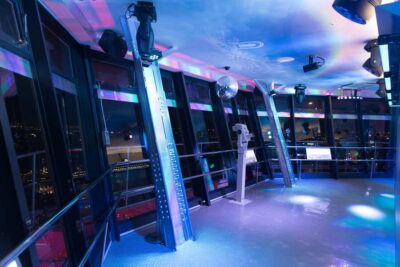 ★ 3.8Osaka: Tsutenkaku Tower Entry TicketFrom $8125 reviews
 ★ 4.7Osaka: Local Foodie Tour in Dotonbori and ShinsekaiFrom $10895 reviews
 ★ 4.5Osaka: Shinsekai Food Tour – 13 Dishes at 5 Local EateriesFrom $7929 reviews
 ★ 5.0Night Soul Food Tour in Shinsekai with a local guideFrom $8528 reviews
 ★ 5.0Osaka Morning Tour: Shitennoji Temple, Shinsekai &DoutonboriFrom $7423 reviews