
Real katana slashing near Osaka Castle
I love how this lesson starts with proper samurai manners and builds step by step, using an iai practice sword before you touch the real blade. I also love the mix of trial slashing plus a photo service that captures your form. One possible drawback: it is only about an hour, so you’ll walk away impressed, not transformed into a lifelong swordsman.
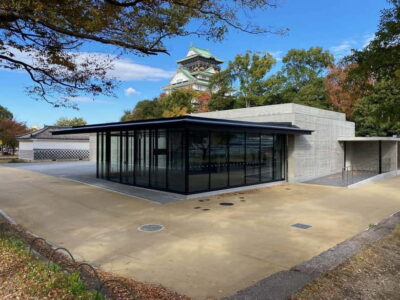
You meet at Samurai Honor, a one-minute walk from Osaka-jo Koen Station on the JR Osaka Loop Line, right by Osaka Castle. The session is designed for small groups, up to 5 people, and it uses English as the default language. If you’re comfortable following safety rules closely, this is a fun, hands-on way to get closer to Bushido than a museum stop ever could.
Key things I’d highlight before you go
- Short, focused training in about 1 hour, from bowing to a real-blade trial cut
- Real sword, but safety first, since you do not draw the blade unless the instructor gives permission
- Step-by-step kata prep using an iai practice sword and clear action names
- Battou, Chiburui, Nottou taught as part of the routine, not random sword tricks
- Photo delivery within both days, so you get proof fast
- Samurai language keepsake, tied to loyalty and discipline from the Warring States period
Walking From Osaka-jo Koen Station to Samurai Honor
This is the kind of activity that fits neatly into a day around Osaka Castle. The meeting place is Samurai Honor, and it’s described as just a one-minute walk from Osaka-jo Koen Station on the JR Osaka Loop Line. That’s a big deal in Osaka, where stations can feel like a labyrinth if you’re not in the mood to hunt.
The address for the meeting point is listed as 536-0014 Osaka, Joto Ward, Shiginonishi, 2-chōme 3-19, Excellence Takayama. In practice, you’ll want to arrive a bit early, because once you’re at the right neighborhood, the remaining distance is short, but you still need a moment to find the exact entrance.
You’ll also use a mobile ticket, which is convenient on the day, as long as you keep your phone charged. Also note the group size: a maximum of 5 travelers. That matters because the session is very physical and you’re working with formal sword routines. A smaller group usually means you get more attention when your stance or motion needs adjusting.
More time in the dojo
In Samurai Costume, You Start With Bow and Samurai Etiquette
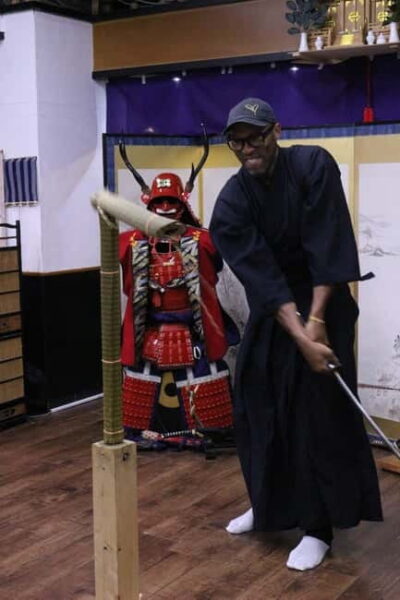
Your first step is costume. You change into a samurai outfit with a dogi and hakama, then you become a samurai in the context of the lesson. This is not just for photos. The instructor uses costume and manners to set the tone: disciplined movement, respectful posture, and calm behavior.
The lesson begins with a bow, then moves into explanations of swords and samurai manners. Even if you’ve read a bit about Bushido, you’ll likely appreciate how they translate it into something you can physically do. You’re not just hearing about discipline, you’re being guided into a formal sequence: attention, controlled body position, and deliberate transitions.
There’s also a built-in cultural element called 《samurai language》. It refers to the language mainly used by the samurai class during the Warring States period. The focus is on loyalty to a lord, discipline, and the spirit of bushido, and the spirit is reflected in how samurai spoke. In this lesson, that concept shows up as part of the learning experience and as a souvenir from your teacher.
From Iai Practice Sword to Battou, Chiburui, and Nottou
Here’s where the class becomes genuinely useful. Before you swing a real blade, you practice with an iai practice sword. That is the smart pacing choice. It lets you learn the form without the extra intimidation factor of a sharpened weapon.
The basics you’ll work on include:
- swinging the sword from the stance
- Battou, pulling the sword out of the scabbard to cut
- Chiburui, a symbolic blood-removal action after cutting
- Nottou, returning the sword to the sheath after the blood-burui action
The names can sound dramatic, but the point is clarity. You’re learning that sword work is not just about the cut. It’s about the sequence: start position, extraction timing, the cut itself, and the controlled return. If you only focus on the slash, you miss the discipline.
Also, the lesson explicitly includes danger-related instruction. Drawing swords is dangerous, so you should not do so without permission. That warning isn’t there to scare you off. It’s there to explain why the course uses practice steps and why you follow the instructor’s timing.
After those basics, you get instruction directly from a master. The class covers basic kata and stances, plus sword swings. You’re not left alone to figure it out. Expect the guide to correct your body position and pacing so your motions stay controlled and respectful.
Trial Slashing on Rolled Straw With a Real Japanese Sword
Then comes the highlight: trial slashing. You’ll try cutting a rolled straw with a real Japanese sword. This is the moment most people come for, and it’s also the moment where you’ll feel the difference between sword-for-display and sword-for-action.
The description emphasizes world-class cutting performance, and it also notes that this sword is the most effective blade to date and can only be worn by samurai. Whether you take that wording literally or as marketing, the practical takeaway is simple: you’re handling a serious piece of equipment, not a toy prop.
Because the session is only about 1 hour, they do not waste time. You’ll go from posture and kata basics into real-blade form relatively quickly. That’s why listening closely in the first half matters. If you treat the prep as filler, your trial cut won’t feel as satisfying.
A couple of practical considerations:
- The experience calls for moderate physical fitness level. You don’t need to be an athlete, but you should be able to stand, move your arms, and hold a stance for short periods.
- Keep your energy calm. Fast nerves tend to wreck form in sword drills.
- Follow the safety instruction about drawing. Don’t improvise. The whole point of the kata approach is that the routine controls the danger.
If you’ve watched samurai sword demonstrations in person before, you’ll recognize the rhythm. If you haven’t, you’ll still feel the structure. Even the symbolic actions are part of the discipline, and the cut itself lands as a clear, physical milestone.
Getting Photos and a Samurai-Language Souvenir Right After Training
This experience includes photography. They’ll capture serious figures during the activity, and the photo data will be sent to your designated email address within both days. That’s a practical benefit: you’re not stuck sorting blurry screenshots on the spot, and you can focus on doing the training instead of posing.
You also get souvenirs from your teacher, specifically tied to 《samurai language》. Even if you treat this as a small keepsake, it helps you remember that Bushido here isn’t only about weapons. It’s also about the mindset and the language of loyalty and discipline from the Warring States era.
One more value point: since the lesson ends back at the meeting point and includes a bow at the end, it feels like a complete mini-ritual. That “start to finish” structure is what makes short experiences feel meaningful rather than rushed.

Price, Value, and What’s Actually Included
The price is listed as $78.83 per person for this 1-hour experience. On the surface, that’s not cheap, especially when you consider you’ll also need local transportation and a small amount of extra spending for personal items. But the value calculation here is pretty clear.
What’s included:
- samurai outfit
- certified professional instructor
- photography (photo data sent to your email)
- gratuities
What’s not included:
- public transportation station or hotel transfers
- bottled water
- other personal expenses, with an example paid option for movie shooting (listed as ¥33,000 per person)
So you’re paying for a package that covers instruction, costume, and a real cutting demonstration with an instructor present, plus a photo deliverable. In a city like Osaka, that combination usually costs more when done separately.
Also, note the booking timing. The average booking window is 27 days in advance. That suggests this is not a last-minute-only activity for everyone. If you’re traveling during peak periods around Osaka Castle, booking ahead is smart.
If you want to stretch your money, plan the day so you’re already near the JR Osaka Loop Line. One-minute walking distance sounds small, but it often determines whether you enjoy the activity or spend half your time lost before it starts.
Who This Katana Lesson Fits Best (And Who Should Skip It)
This is a strong fit if you want a hands-on cultural experience, not a passive one. I’d especially point it out to:
- beginners who want instruction from the ground up with clear kata steps
- people who like discipline-focused activities, where calm posture matters
- couples or parents who want a shared, memorable activity near Osaka Castle
There’s also something nice about the small group size. With a maximum of 5 travelers, you’re more likely to feel you are part of the lesson, not just watching from the sidelines.
I’d be more cautious if:
- you’re uncomfortable around sharp tools and need extra reassurance about safety rules
- you expect a long training program, because this is about trial and basics in roughly 1 hour
- you want transportation included, since the offering lists transfers as not included
Should You Book Samurai Honor’s Bushido Trial Slashing?
Book it if you want an hour of structured Bushido-style sword training that ends with a real trial cut, plus photos you’ll actually want to keep. The biggest reason to choose it is the pacing: bow and etiquette, then iai practice basics with named steps (Battou, Chiburui, Nottou), then trial slashing on rolled straw with a real Japanese sword.
Skip it if you’re only looking for sightseeing and don’t want anything physical. You can still enjoy Osaka Castle without this, but you’ll miss the unique part of this experience: learning discipline through motion, and seeing how much control matters even before the cut.
FAQ
How long is the Samurai Honor Bushido trial slashing lesson?
It’s listed as about 1 hour.
Where does the experience take place?
The meeting location is Samurai Honor near Osaka-jo Koen Station on the JR Osaka Loop Line, and the address listed is Osaka, Joto Ward, Shiginonishi, 2-chōme 3-19 (Excellence Takayama). The activity ends back at the meeting point.
Do I need a mobile ticket?
Yes, the experience uses a mobile ticket.
What language is available during the lesson?
The default language is English. Other languages may be available if you inquire, including Italian, Spanish, French, Chinese, Thai, and Indonesia.
What do I practice before using the real sword?
The class starts with preparation, then basic practice using an iai practice sword, including stance work and the sequence steps named Battou, Chiburui, and Nottou.
What will I cut during trial slashing?
You try cutting a rolled straw.
Is photography included?
Yes. Photography is included, and the photo data will be sent to your designated email address within both days.
What is included in the price, and what is not?
Included are the samurai outfit, a certified professional instructor, photography data sent by email, and gratuities. Not included are public transportation transfers, bottled water, and other personal expenses such as an optional paid movie shooting add-on.
More Tour Reviews in Osaka



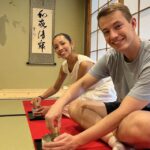
More Hours in the Dojo


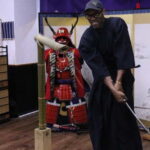
Latest out of Osaka


Osaka Samurai, Ninja & Kendo Experiences, side by side.
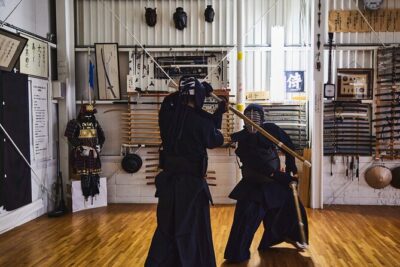 ★ 5.0Samurai Training Experience KENDO in OsakaFrom $131515 reviews
 ★ 4.8OSAKA NIGHT FUSION Japanese Taiko Kabuki Samurai Dance ShowFrom $40155 reviews
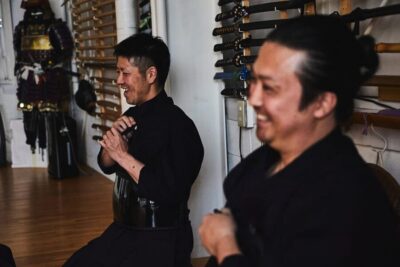 ★ 5.0Osaka: Samurai Training Experience KENDO in OsakaFrom $127111 reviews
 ★ 4.5Osaka: A Modern Samurai, Kabuki, Taiko, & Dance ShowFrom $1966 reviews
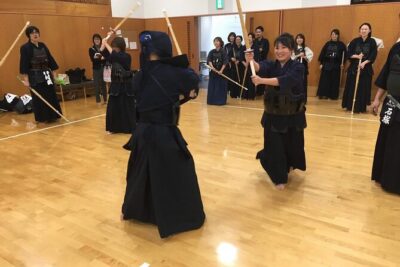 ★ 5.0Osaka 2-Hour Genuine Kendo / Samurai Experience In JapanFrom $11865 reviews
 ★ 4.9Osaka: Learn Bushido – Trial Slashing with Samurai SwordFrom $9259 reviews
 ★ 5.0Samurai Show, Tea Ceremony, Japanese Traditional ActivitiesFrom $4456 reviews
 ★ 5.0Osaka: Private Samurai Experience – Train with Sword MasterFrom $15836 reviews
Also worth a look in