
REVIEW · OSAKA STREET FOOD CRAWLS
Eat Osaka: Street Food Cooking in an Authentic Kitchen!
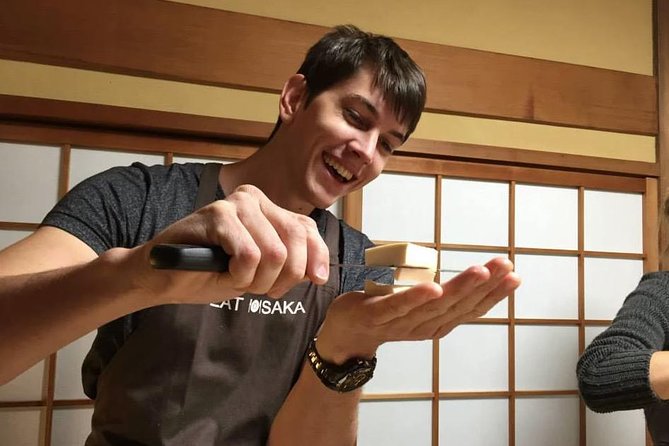
Osaka street food tastes better when you make it yourself. This small-group class takes place in an old Japanese house kitchen, run by a local bilingual chef, and the focus stays on hands-on skills, not just watching. I like the small group size that makes it easy to ask questions, and I also like the old-restaurant kitchen setting that feels very local.
You’ll cook a full set of Osaka comfort foods, and the best part is getting to actually shape each dish, from noodles to pancakes. I especially liked that you leave with a sit-down meal and matching drinks like beer, sake, or green tea after cooking. One consideration: it is a workshop, so if you want a purely light, eat-only experience, the hands-on part will take some effort and attention.
Key things to know before you go
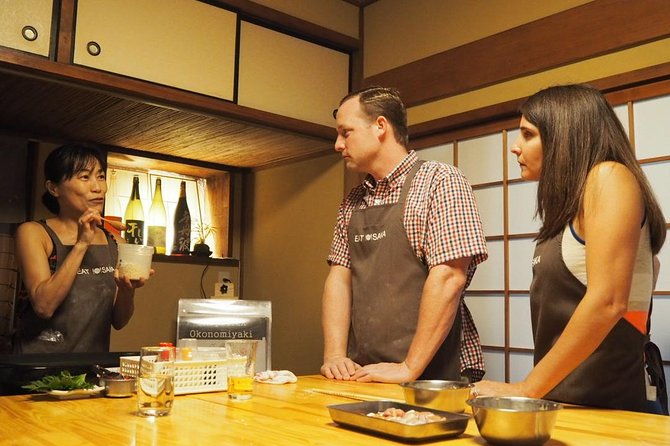
- Old Japanese house kitchen: you learn in a real local setting, not a generic demo room
- Small group, up to 8: more time with the chef and quicker help when you get stuck
- From-scratch cooking: you make Osaka dishes like okonomiyaki and hand-made udon, not just assemble
- Multiple street-food hits: tempura-style bites, yakitori skewers with signature sauce, and more
- Drinks are part of the meal: welcome drinks plus beer, sake, or green tea with what you cook
- Professional tools and included ingredients: you get the supplies and guidance, so you can focus on technique
Street food skills in a real Osaka townhouse kitchen
Osaka has a talent for making everyday food feel like an event. This class taps that spirit by putting you in an old Japanese house kitchen, where the smells, tools, and rhythm feel familiar to local cooking. It is the kind of place where you learn faster because you are actively doing the work, right alongside the chef.
The class is small, with a maximum of 8 travelers, and that matters more than people expect. When your batter is too thick or your noodles need a bit more handling, quick guidance saves the dish and saves your confidence. You’ll get help in the moment, and you can ask questions without feeling rushed.
More plates on more streets
What you cook: okonomiyaki, hand-made udon, tempura, yakitori, mochi
This is not a one-item cooking show. The menu is built like a mini Osaka food tour, with several street-food favorites that teach different techniques, from batter work to noodle handling.
Okonomiyaki pancake from scratch
Okonomiyaki is the star for many people, and here you make it from scratch. That means you’re not just pouring sauce on top, you’re building the pancake and learning how to manage the cooking so it turns out right. You also get guidance on the process, which is especially useful if you’ve only ever seen okonomiyaki from the outside.
If you want one reason to book, it is that making okonomiyaki at home later is much easier once you understand the steps you performed here.
Hand-made udon noodles
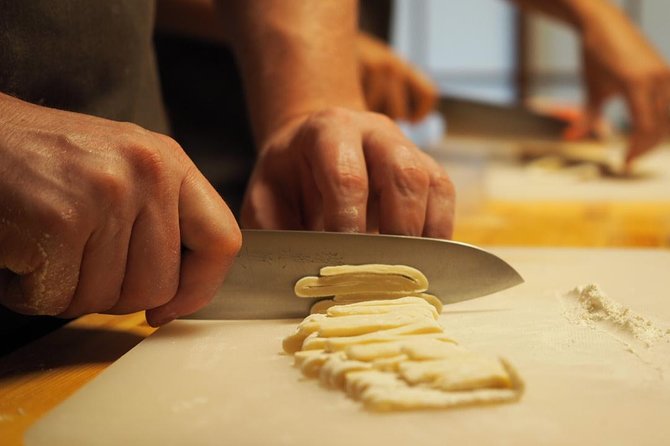
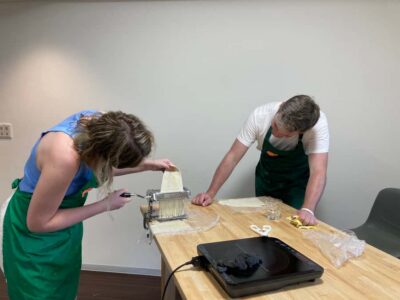
Udon is another big piece of the lesson. Making noodles by hand teaches you about texture and dough behavior in a way store-bought noodles never will. You’ll learn the shaping and handling that affects how udon feels when you cook and eat it.
Even if you are not a “noodle person,” this part is fun because it is physical. You can feel the dough change as you work, and that feedback makes the technique stick.
Tempura-style cooking and veggie bites
The class includes Osaka-style tempura. In reviews, vegetable tempura comes up specifically, so you can expect to practice tempura technique, likely with vegetables you prepare as part of the cooking process. Tempura is all about timing and control, and that’s why a guided class is a huge advantage.
You will learn the tools and approach to get crisp results, without having to guess the heat or timing.
More kitchen tables to sit at
Yakitori skewers with signature sauce
Yakitori is another street-food essential, and you’ll prepare skewers along with the class’s signature sauce. This is a good contrast to frying and batter work, because skewers are more about layering flavor and getting the sauce balance right. You’re learning how the dish tastes when it’s cooked through properly, not just warmed.
Pickled cucumber plus a sweet mochi finish
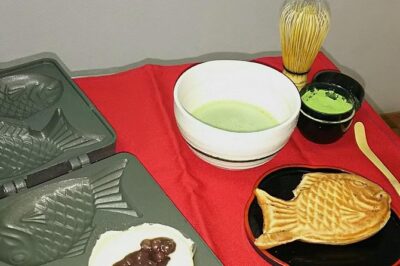
You’ll also get pickled cucumber, which helps cut through fried and savory flavors. Then you end with a sweet mochi dessert, a classic way to close a meal in Japan. It is a nice rhythm shift, and it makes the whole experience feel complete.
How the 2.5-hour flow usually feels
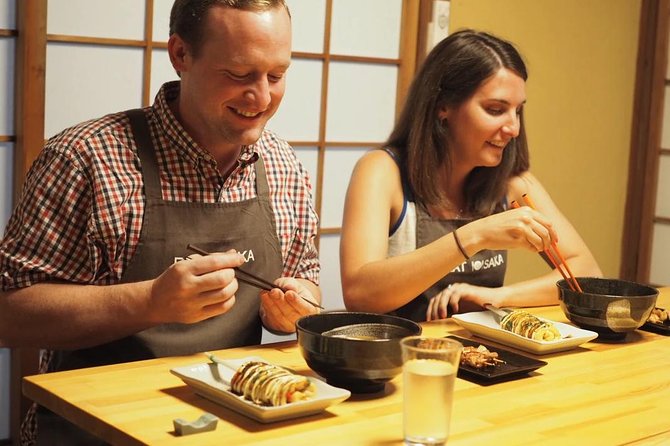
The duration is about 2 hours 30 minutes, and the pacing is designed so you do not spend the whole time waiting. A workshop like this typically starts with a warm welcome, then moves quickly into prep and cooking stations.
Before you get cooking, there are welcome drinks included. After that, the chef leads you through each dish while you work with professional tools and ingredients. This is one of those classes where you learn by doing, and the small group size means your instructor can correct issues without turning your dish into a lost cause.
Once you finish cooking, you sit down and eat what you made. Drinks continue with local options like beer, sake, or green tea, depending on what you choose. It’s a satisfying finish because you’re eating your own output, not someone else’s.
The chef and teaching style that keeps it fun
The class is assisted by a local bilingual chef, and that bilingual aspect matters for comfort. You’re less likely to miss key steps when instructions are delivered clearly, and you can ask questions during the process.
From the teaching style described in past classes, names like Miki, Nathalie, and Niki show up as guides who keep the tone welcoming and patient. People emphasize how the chef explains steps and reasoning, not just commands. That is exactly what you want for skills like noodle handling and pancake cooking, where one small adjustment changes results.
If you’re the type who wants to understand why something works, this class fits that. You’ll likely find yourself thinking about technique long after the meal.
Value check: why $79.28 can make sense in Osaka
At first glance, $79.28 sounds like a lot compared to buying street food. But cooking classes are different: you’re paying for ingredients, instruction, tools, and a guided meal that you would not recreate on your own without practice.
Here’s where the value comes from:
- Ingredients and instructions are included, so you are not hunting down supplies or paying extra later.
- Professional tools are part of the experience, and that reduces the guesswork.
- You cook multiple dishes, which is more time and more food than many single-dish lessons.
- Welcome drinks plus a drink option with the meal turns it into more of a full evening experience than a snack class.
If you like food, learnable skills, and eating what you make, this pricing can feel fair. If you only want to sample Osaka street food quickly, you might prefer a food crawl instead.
Getting to Eat Osaka in Higashinari
The start point is Eat Osaka in Higashinari, address listed as 1丁目-2-10 東中本 東成区 大阪市 大阪府 537-0021, Japan. The activity is near public transportation, so you should be able to reach it without complicated transfers.
Plan to arrive a little early, because you want a calm start before cooking begins. Also, the tour uses a mobile ticket, so have your ticket ready on your phone.
Small group, big difference in attention
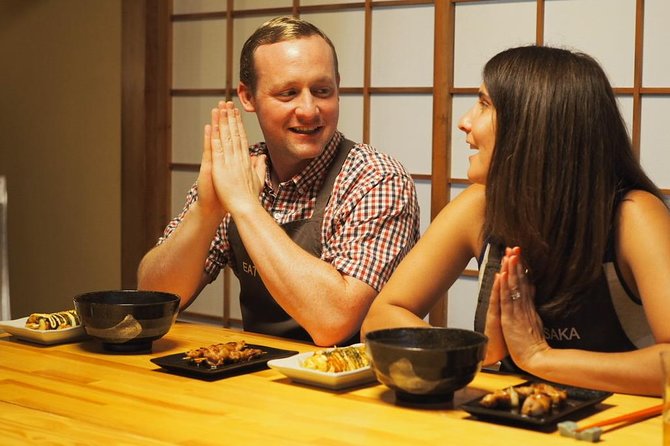
A maximum of 8 travelers is a meaningful cap. In larger groups, you can get “line help” where you watch and do one small task. Here, the class structure supports more back-and-forth, so when you need a fix, you get it.
This is especially helpful if it is your first time doing Japanese cooking techniques. With hands-on work, practice is the point, and the chef is there to keep you from repeating the same mistake.
Dietary needs: what to do if you’re not eating everything
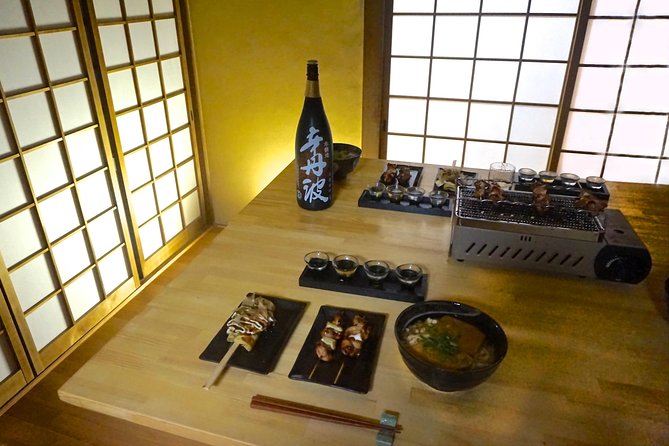
The class includes specific dishes like tempura and skewers, so it’s not a buffet where you can ignore everything you dislike. Still, at least one previous participant reported that vegetarian needs were accommodated. That suggests the chef can handle some dietary requests, but you should still ask directly when booking to confirm what will work for you.
If you have allergies or strict dietary limits, message ahead. Cooking classes can adapt, but you want clarity before you arrive.
Who should book Eat Osaka, and who might skip it
This is a great fit if you:
- Want a practical cooking skill you can repeat after your trip
- Like Osaka flavors like okonomiyaki, udon, and yakitori
- Prefer learning in a small group with real help
- Enjoy eating what you cook, with drinks after
You might skip it if you:
- Want only quick food samples, not cooking time
- Dislike hands-on activities that require attention for heat and timing
- Have dietary restrictions that you have not confirmed in advance
If you’re traveling with family, this kind of skill-based food class can be a highlight, especially when the guides keep the atmosphere welcoming.
Should you book Eat Osaka street food cooking?
If you want more than an Osaka checklist, I’d book this. The best reason is that it teaches you how the food is made, not just what it tastes like. You’ll come away with a better understanding of techniques behind okonomiyaki, udon, tempura, and yakitori, plus you actually eat your creations.
Also, the small group size and friendly, explain-it-all teaching style make a difference if you’re a beginner. If you like food, want a memorable evening, and can handle a hands-on class for about 2.5 hours, this is strong value.
FAQ
FAQ
How long is the Eat Osaka street food cooking class?
It’s approximately 2 hours 30 minutes.
What is the group size for this class?
The class has a maximum of 8 travelers.
What dishes will I learn to make?
The experience includes making Osaka-style okonomiyaki from scratch, hand-made udon noodles, yakitori skewers with signature sauce, Osaka-style tempura, pickled cucumber, and a sweet mochi dessert.
Are ingredients and instructions included?
Yes. All ingredients and instruction are included, and you’ll use professional tools with guidance.
Are drinks included?
Yes. Welcome drinks are included, and after cooking you can enjoy beer, sake, or green tea with your meal.
Where does the class start?
The meeting point is Eat Osaka, Higashinari, 1丁目-2-10 東中本 東成区 大阪市 大阪府 537-0021, Japan.
Is the meeting point near public transportation?
Yes, it is near public transportation.
Do I need Japanese language skills?
You’ll be assisted by a local bilingual chef, so the class includes guidance in more than one language.
How does the ticket work?
You’ll receive a mobile ticket.
What is the cancellation window?
You can cancel for a full refund up to 24 hours before the experience starts (confirmation is received at booking). If you cancel less than 24 hours before, the amount paid is not refunded.
If you tell me your travel dates and any dietary needs, I can help you decide if this fits your Osaka plan.
More Tour Reviews in Osaka




More Kitchen Tables to Sit At

Eat Your Way Round Osaka
Latest out of Osaka


Osaka Street Food Crawls, side by side.
 ★ 4.8Osaka: Shinsekai Food Tour with 13-15 Dishes at 5 EateriesFrom $532,204 reviews
 ★ 5.0Osaka Food Tour: 13 Dishes at 5 Local EateriesFrom $732,149 reviews
 ★ 5.0Osaka Local Foodie Walking Tour in Dotonbori and ShinsekaiFrom $111985 reviews
 ★ 4.9Hungry Osaka Street Food Tour: 15 Dishes & 3 DrinksFrom $79694 reviews
 ★ 5.0Osaka: Guided Food Tour with 12 Dishes at 4 Local EateriesFrom $83533 reviews
 ★ 5.0Absolute Osaka Food TourFrom $231309 reviews
 ★ 4.5Osaka After Dark: Small-Group Night Food Tour (Max 6)From $116245 reviews
 ★ 5.0Eat, Drink & Cycle: Osaka Foodie Bike TourFrom $99224 reviews
Also worth a look in