
REVIEW · NAMBA, SHINSAIBASHI & AMERIKAMURA WALKS
Osaka: Cooking Class Ramen & Gyoza Course in Nanba
Ramen feels intimidating until you do it step-by-step. This Osaka class in Nanba turns the process into something you can actually repeat, with hands-on cooking and a friendly small-group vibe.
Two things I really like: you get guided practice on both ramen and gyoza, including details like making the ramen flour and mastering the gyoza fold, and you finish with a meal you made yourself, paired with drinks like sake and beer. One possible drawback to plan for is the location: it’s in an apartment building, so you’ll want to follow the meeting-point instructions closely when you arrive.
Key Things You’ll Remember
- Ramen from scratch, including making noodles with your own hands
- Gyoza folding practice that turns everyone from beginner to confident
- Small group, up to 8 people, so questions actually get answered
- One-hour tasting session with drinks, not just a quick bite
- Take-home recipes, so this is more than a one-night show
- English instruction available, plus support in Japanese
Osaka Ramen and Gyoza in 2 Hours: Why This Format Works
This class is built for people who want real food skills, not just watching someone else cook. In 2 hours, you go from prep to cooking to eating, which is perfect when Osaka is already packed with temples, markets, and trying new street snacks.
The structure also helps you learn. You start with a short orientation and preparation session, then you spend most of the time cooking, then you get a tasting hour to enjoy what you made and ask any last questions. It’s a smart flow. You don’t leave with “almost” ramen. You leave with something you can build on at home.
Keep walking: the rest of Namba and Shinsaibashi
Finding Dear Court Semba and Room 303 (No Stress If You Follow This)
The meeting point is at Dear Court Semba 303 in Chuo Ward, near Bakurōmachi. Since it’s not a big hotel lobby or a street-level restaurant, a little navigation time is worth it.
Here’s how entry works:
- Look for the doorbell panel at the entrance.
- Press 303, then press the “Call 呼” button.
- After the door opens, go to Room 303 on the 3rd floor, by stairs or elevator.
One helpful on-the-ground tip from a prior participant: the building is tucked a block behind a Ferrari dealership, just past a large stairway to a gym, and near an outdoor lounge with couches. If you’re in the area and things feel confusing, messaging or calling for help is part of the process.
What Happens in the 30-Minute Orientation and Prep Session
You start with a 30-minute orientation and preparation block. This matters more than it sounds. Getting comfortable with the workflow early is what makes the hands-on portion feel fun instead of chaotic.
During this phase, you’ll get:
- A quick setup on what you’re making and how your station works
- Prep guidance so you’re not guessing when it’s time to cook
- Help from instructors fluent in English and Japanese
This also sets expectations for the cooking time. You’ll know what to focus on, like chopping vegetables for gyoza filling, and what ramen steps come next. Think of it as getting your bearings fast, so the rest of the evening runs smoothly.
Cooking Ramen and Gyoza: Where the Skills Actually Happen
The core of the experience is 1.5 hours of hands-on cooking. This is the part that people talk about most, because you’re doing real technique, not just assembly.
Ramen: Learning the noodle work
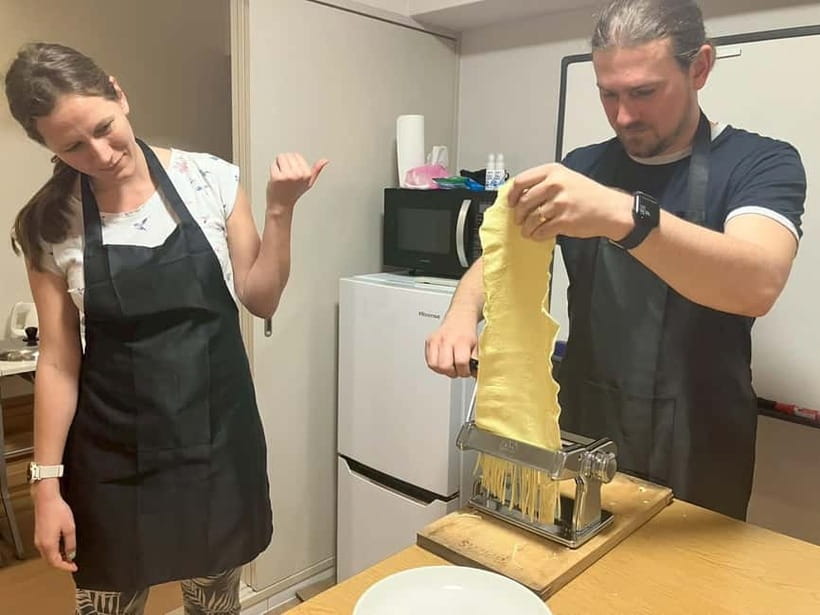
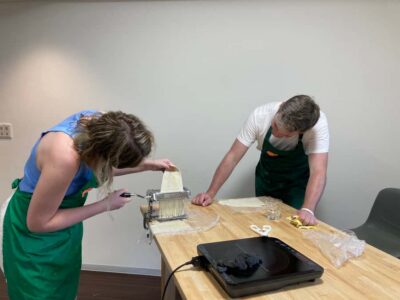
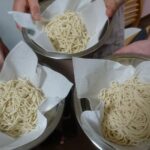
Ramen here isn’t limited to warming soup. You’ll work on making ramen noodles, including preparation steps like making the flour. That kind of detail is a big deal because it changes how you understand the dish.
You’re learning how dough and noodles behave, how timing matters, and how to treat ramen like a composed dish rather than a packet you doctor at home. Even if you’ve only eaten ramen before, the class turns it into something practical.
More kitchen tables to sit at

Gyoza: Folding technique that feels oddly satisfying
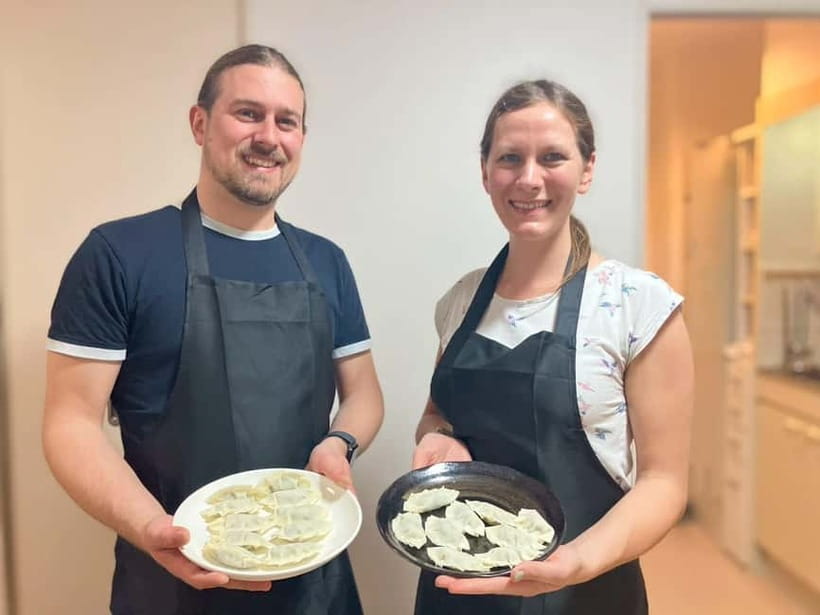
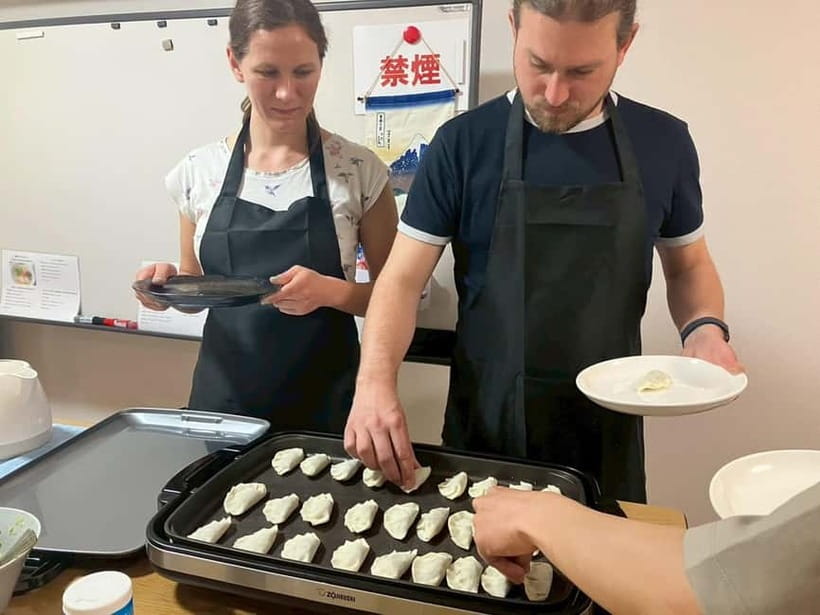
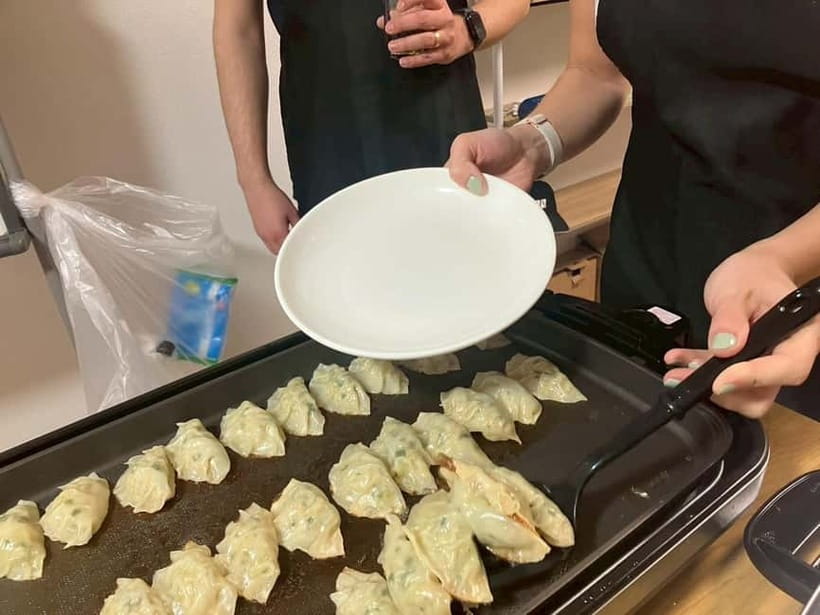
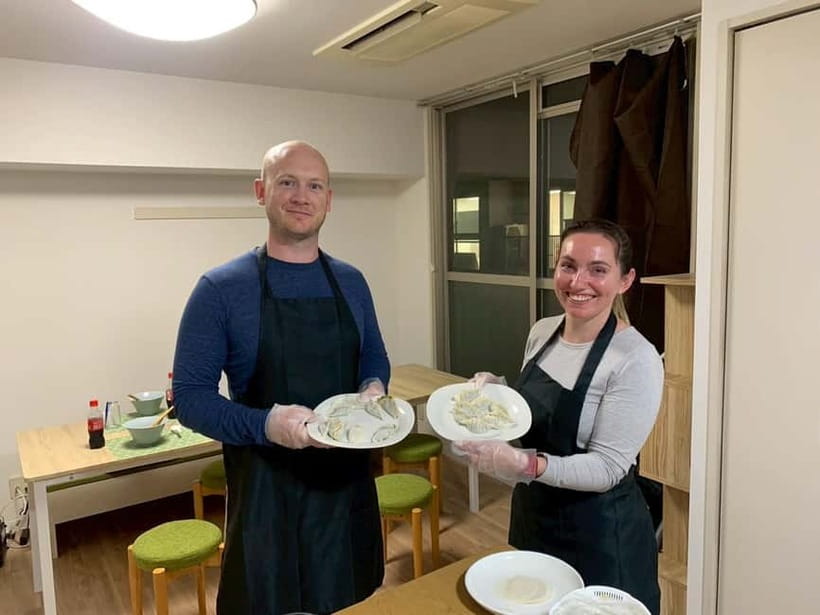
Gyoza gets extra attention. Multiple participants highlighted the intricate folding details, and it makes sense. Once you get the hang of the seal, gyoza becomes a repeatable skill you can use for parties or weeknight dinners.
You’ll handle the components and learn how to bring the edges together properly. It’s not just about looks either. A good fold helps keep the dumpling intact and gives you that satisfying bite when you cook and then eat.
One reviewer specifically loved the gyoza folding coaching from hosts including Mimi and Yuma, and another mentioned incredible patience and clear steps from instructors like Keiichi and Keiichi’s team. That’s the theme: technique with guidance, not technique with pressure.
The Best Part: Eating Your Own Ramen and Gyoza With Drinks
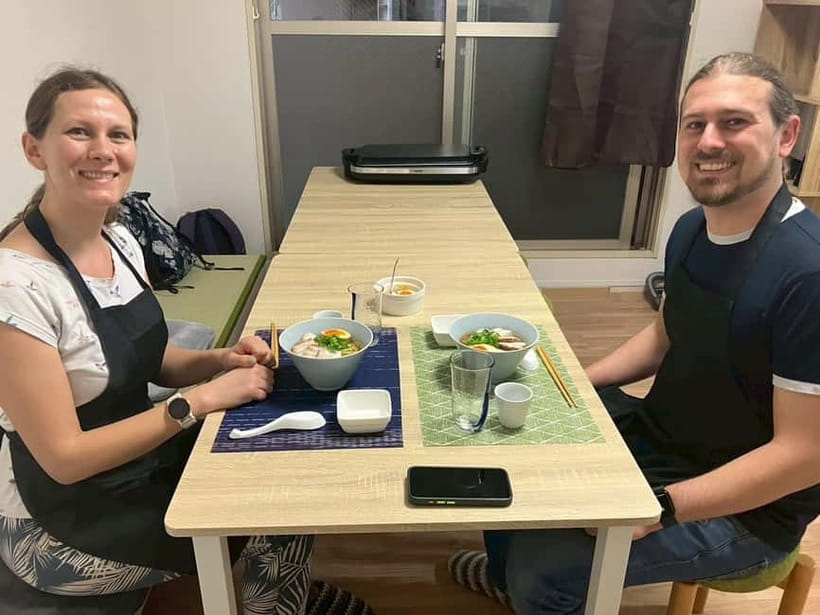
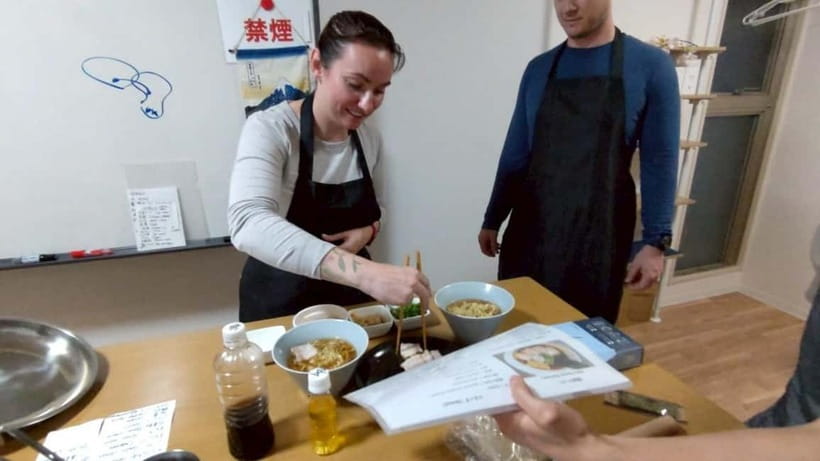
After cooking, you get a 1-hour tasting session. This is where the whole thing clicks.
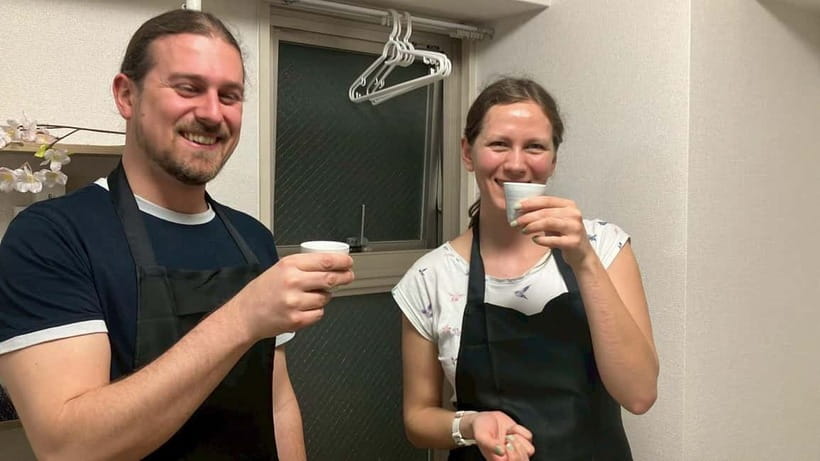
You’ll sit down to enjoy the ramen and gyoza you made, and it comes with drinks such as:
- sake
- beer
- soft drinks
You don’t just taste one bite and move on. The tasting is long enough to slow down and actually enjoy the results. In practice, it’s also when conversation starts to flow. People share what they found easiest, what was tricky, and how they plan to recreate it later.
A practical note: the class provides the drinks included in the tasting session. Any additional food or drinks beyond that are not part of the price, so if you’re someone who tends to order one extra round, plan for that.
Instructors, Language, and the Small-Group Advantage
This class caps at 8 participants, which is a big quality lever. In a room this size, instructors can check what you’re doing. When you ask a question, you’re not waiting for a microphone moment. You get direct help.
Instructors are listed as fluent in English and Japanese, and many past sessions were led by hosts with names like:
- Nana and Yuriko
- Ryota, Saya, and others
- Keiichi
- Mimi
- Yuma
Different nights have different combinations, but the common thread in the feedback is clear instruction and a “cooking with friends” feel. That matters, especially if you’re traveling solo or you don’t want to feel like you’re stuck with a scripted experience.
Dietary Notes: What You Should Ask Before You Go
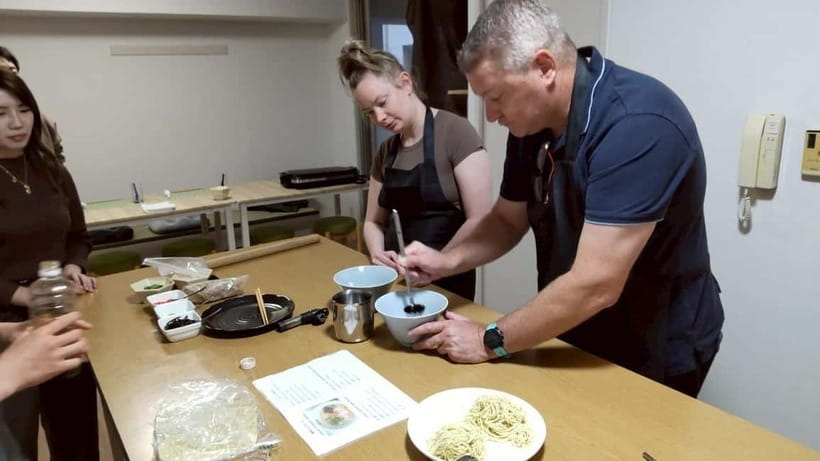
One important practical upside: you may be able to get adjustments. For example, there are reports from participants that the team accommodated vegan needs, and also vegetarian options.
Still, don’t assume it’s automatic for every booking. If your diet has strict requirements, message or ask when you reserve. That’s the safest way to confirm what can be done for your specific needs.
Price and Value: Is $70 Worth It in Osaka?
At $70 per person for a 2-hour class, the value depends on what you want from your trip.
This price covers:
- ingredients and tools
- expert guidance
- the full cooking block (1.5 hours)
- the orientation and preparation time (30 minutes)
- a tasting session (1 hour) with drinks
- recipes to take home
So you’re paying for more than a meal. You’re paying for technique, coaching, and the ability to recreate ramen and gyoza later. And that’s the real value for food-focused travelers. Osaka has plenty of places to eat. This class helps you bring a piece of Osaka home.
Where the cost can feel less “all-inclusive” is if you plan to add extra drinks or extra food. The tasting includes drinks provided in the session, but additional items are not included.
Practical Tips Before You Book
Here’s how to make this class go smoothly.
- Book ahead. Booking is required, and you should reserve at least one day in advance.
- Plan your arrival. The meeting point is specific and the building entrance has a doorbell check-in method.
- Bring yourself, not extra gear. The class provides ingredients and tools.
- Go in with a curious mindset. The best outcomes come when you ask questions and follow along with the steps, even if you think you’ll be bad at folding gyoza.
Also, if you’re sensitive to alcohol, note that sake and beer are included in the tasting. You can always pace yourself, but you’ll want to decide how you want to handle it.
Who This Osaka Cooking Class Is For (And Who Might Skip It)
This experience is ideal if:
- you want hands-on Japanese cooking skills
- ramen and gyoza are on your food hit list
- you like smaller, instruction-heavy activities
- you want recipes you can use later, not just photos
You might consider skipping if:
- you only want to eat, not cook
- you hate group settings where everyone works at a shared pace
- you strongly prefer street food and self-guided wandering over a scheduled experience
Should You Book This Ramen and Gyoza Class in Nanba?
Yes, if you want a practical Osaka memory. The mix of scratch-made ramen work, guided gyoza folding, and the chance to eat what you cooked makes the evening feel like more than a dinner reservation. The small group size is also a big advantage if you like asking questions and getting real feedback.
If you’re on the fence, here’s the simple test: do you want to learn a technique you can repeat at home? If the answer is yes, this is a strong pick for your Osaka schedule.
FAQ
How long is the Osaka ramen and gyoza cooking class?
The class duration is 2 hours, including a 30-minute orientation and preparation session, 1.5 hours of hands-on cooking, and a 1-hour tasting session.
What dishes will I learn to make?
You’ll make traditional Japanese ramen (Japanese noodle soup) and gyoza (dumplings with vegetables and pork).
Is the class suitable for beginners?
Yes, it’s suitable for beginners and food enthusiasts.
Is the class taught in English?
Yes. Instruction is available in English and Japanese.
How big is the group?
It’s a small group with a maximum of 8 participants.
What’s included in the price?
The price includes all ingredients and tools, expert guidance, the cooking and orientation time, a tasting session with drinks (sake, beer, and soft drinks), and recipes to take home.
Do I need to bring ingredients or cooking tools?
No. The class provides all ingredients and tools you need, and you only need to bring yourself.
Are drinks included beyond the tasting session?
No. Additional food and drinks beyond what is provided in the tasting session are not included.
Where do I meet the group?
You meet at Dear Court Semba 303, 4-chōme-3-1 Bakurōmachi, Chuo Ward, Osaka 541-0059, Japan. Check in by pressing 303 and then Call 呼 on the doorbell panel.
Is pickup and drop-off included?
No. Hotel pickup and drop-off are not included.
Broth, Pleats and Second Helpings

More Kitchen Tables to Sit At
Still in Namba? Keep Going




Latest out of Osaka


Namba, Shinsaibashi & Amerikamura Walks, side by side.
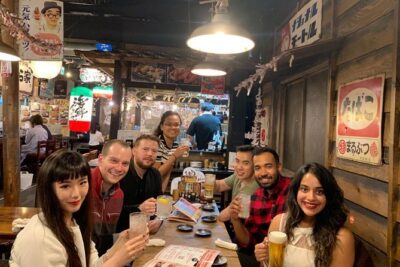 ★ 5.0Osaka Bar Hopping Night Walking Tour in Namba (3 bars, 6 tastes)From $98958 reviews
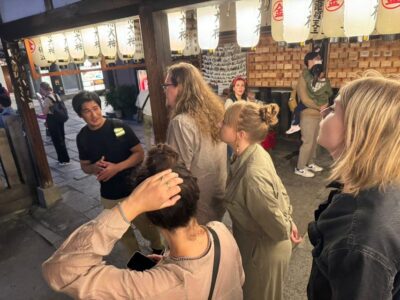 ★ 4.9Osaka: Namba Pub Bar Crawl with a Local GuideFrom $30424 reviews
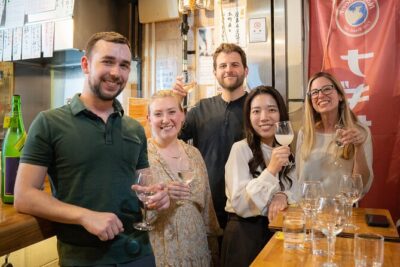 ★ 5.0Osaka Local Bar Crawl in Dotombori & Uranamba AreaFrom $26199 reviews
 ★ 5.03Hour Osaka Pub Crawl Bar Hopping Nightlife Guided Tour in NambaFrom $46122 reviews
 ★ 4.7Osaka: Bar-Hopping Night Tour in NambaFrom $112117 reviews
 ★ 4.6Osaka: 2-Hour Local Street Food Tour – Dotonbori & NambaFrom $5195 reviews
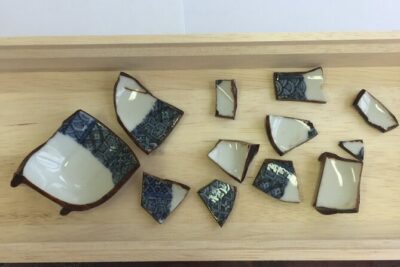 ★ 5.01.5〜2 Hours Traditional Kintsugi Work Shop in Namba OsakaFrom $12575 reviews
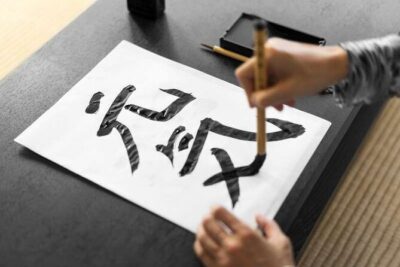 ★ 5.0Calligraphy Workshop in Namba, DotonboriFrom $4957 reviews