
REVIEW · FOOD & DRINK
Osaka Winery Tour with Wine Tasting & Vineyard Walk
Three wines, one timeworn town.
This Katashimo Winery experience turns a simple tasting into a guided walk through how wine culture grew in western Japan, starting with a winery founded in 1914. I love the way the guide layers facts with cultural stories, and I really like the structured tasting of G20-selected bottles alongside other locally made wines. One heads-up: it is only a 2-hour format and the tasting is limited to what is included, so go for the education and atmosphere, not a long drinking session.
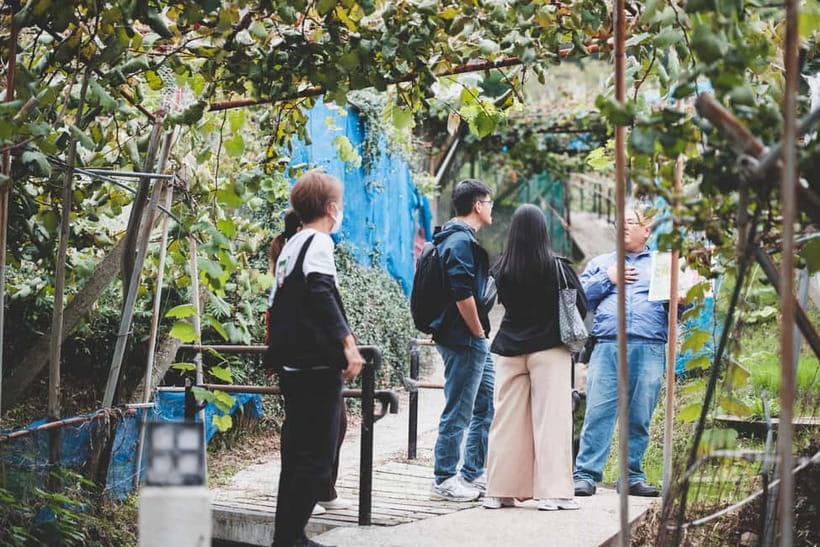
You’ll also spend real time outside, moving through Edo-period wooden streets, with stops that can include a shrine and a 1,000-year camphor tree. Add in small bites paired with your drinks, plus a museum ticket, and you leave feeling like you understand the basics of Japanese wine culture, not just the flavors. If you’re expecting a long, leisurely vineyard day with lots of free time, this tight schedule may feel a bit fast.
Key points you’ll care about
- Katashimo Winery, founded in 1914, with a long view on western Japan’s wine scene
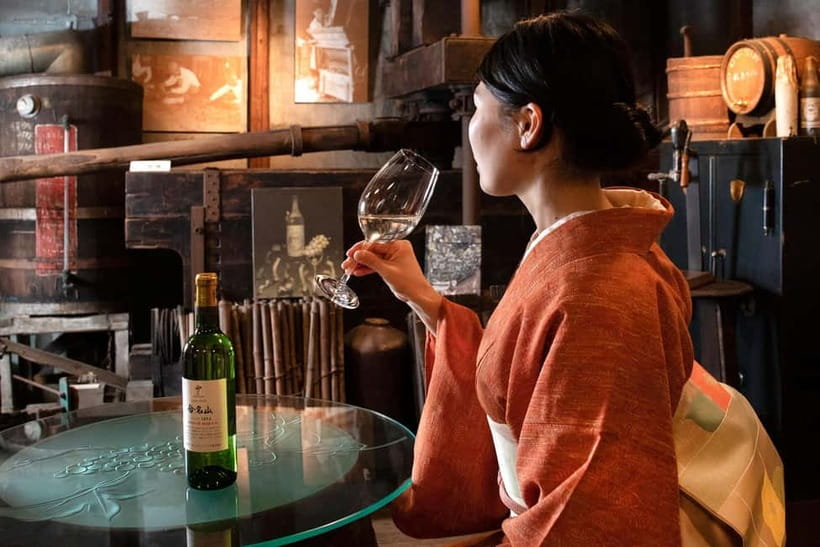
- A 100-year-old aging cellar that’s treated like cultural heritage, not a back-of-house afterthought
- Edo-period wooden streets, including a stop connected to a 1,000-year camphor tree
- Three premium wine tastings, including bottles selected for the G20 summit lineup
- Small bites with wine, plus museum tickets to anchor what you taste
- Easy day trip feel from Osaka, about 40 minutes by train to the meeting area
Getting There: Why This Osaka Escape Works in 2 Hours
Osaka can be loud, fast, and a bit same-y once you’re stuck in the big sights. This tour gives you a cleaner change of pace. You head out to Katashimo Winery, which is about 40 minutes from Osaka City by train, and you get back the same day without spending half your trip commuting.
The tour itself is a compact 2 hours. That time structure matters, because it makes it easier to fit into a busy Osaka itinerary. If your schedule is tight, this is the kind of activity that lets you add something distinctive without turning your day into a logistics puzzle.
Osaka at walking pace, a few more
Meeting at カタシモワイナリー 直売所: Start With the Right Context
You meet in front of Katashimo winery, at カタシモワイナリー 直売所. That matters more than it sounds, because you’re not just arriving at a tasting room. You’re stepping into a real winery setting, where the shop and visitor spaces help set the tone before you learn the deeper story.
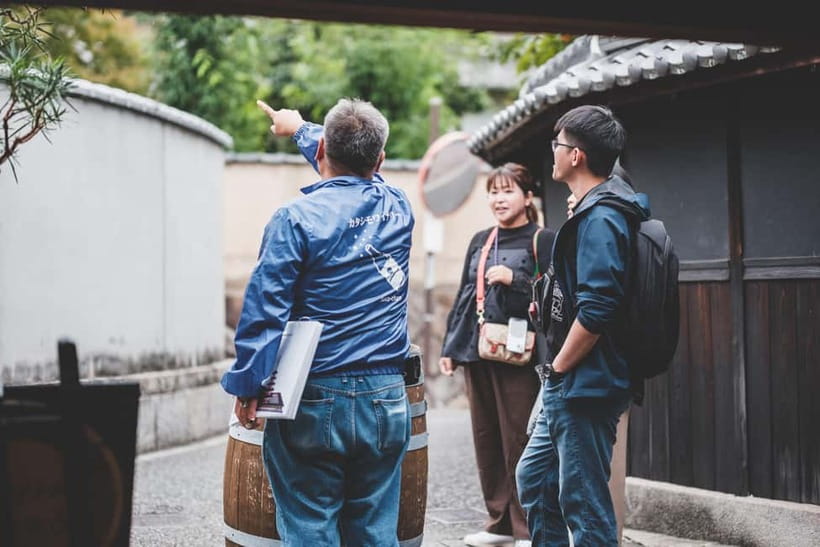
From the start, the tour is designed to be guided, not do-it-yourself. Expect an English or Japanese live guide, and plan to use the time actively. Bring questions about what you’re tasting and what you’re seeing outside, because the guide is part interpreter and part cultural storyteller.
The Winery Bar and 100-Year-Old Aging Cellar: Where the Time Starts
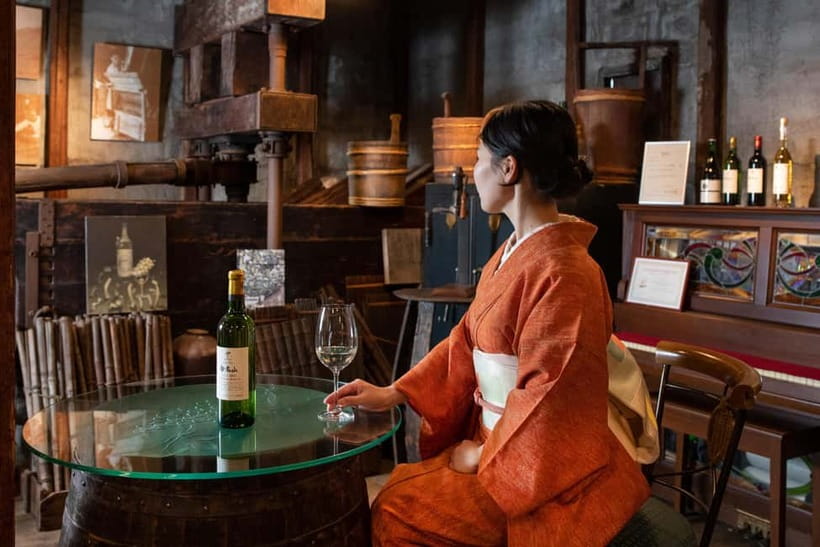
Your visit begins with a stop at the winery bar before you go deeper. Then you move into a 100-year-old aging cellar, described as a designated cultural heritage site. This is one of the strongest parts of the experience because it changes how you think about wine.
Instead of treating wine as a product that shows up in a glass, you see it as something shaped over time. When you learn how aging works, the tasting becomes more meaningful. You can connect the aroma and taste to the slow process rather than guessing at it.
This cellar stop also gives you a physical sense of why the winery matters historically. A winery founded in 1914 is old enough that you can sense continuity, even if the winemaking techniques are modern. It’s a mix of patience and craft, and the guide helps translate that into something you can taste.
The Historic Town Walk: Edo-Period Streets, a Shrine, and a 1,000-Year Tree
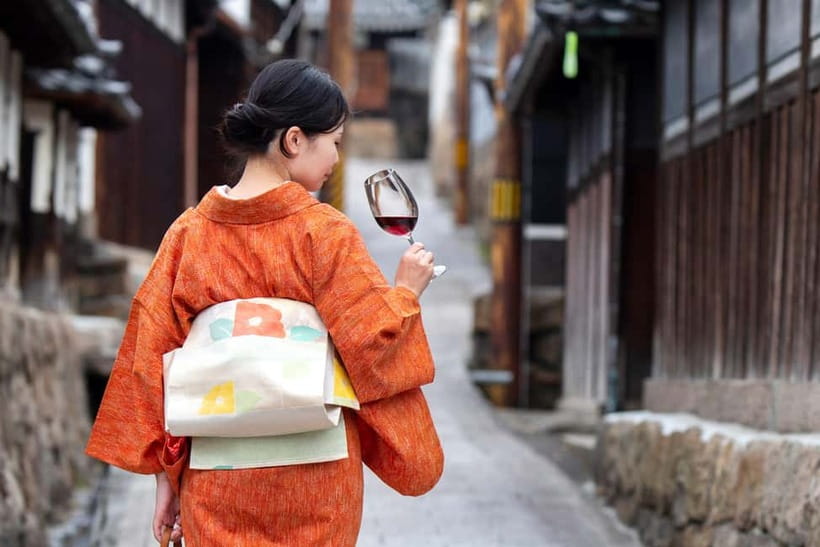
After the cellar portion, you shift gears to walking. The tour includes a guided stroll through Edo-period wooden buildings, so you’re not only moving through a neighborhood, you’re moving through a timeline.
You may also pass a shrine, which helps break up the route with a different type of local culture. It’s not just “look at old buildings,” it’s “notice how daily life and belief show up in the built environment.”
One highlight that stands out in the tour description is a stop connected to a 1,000-year camphor tree. Big trees like that can feel like landmarks of memory. Even if you only get a short stop, it gives you something tangible to anchor the walk.
Practical note: you’re outside part of the tour. Wear comfortable shoes. You don’t need hiking gear, but you do want traction and support because it’s a walking-focused experience.
Vineyard Walk Energy: How the Wine Theme Continues Outside
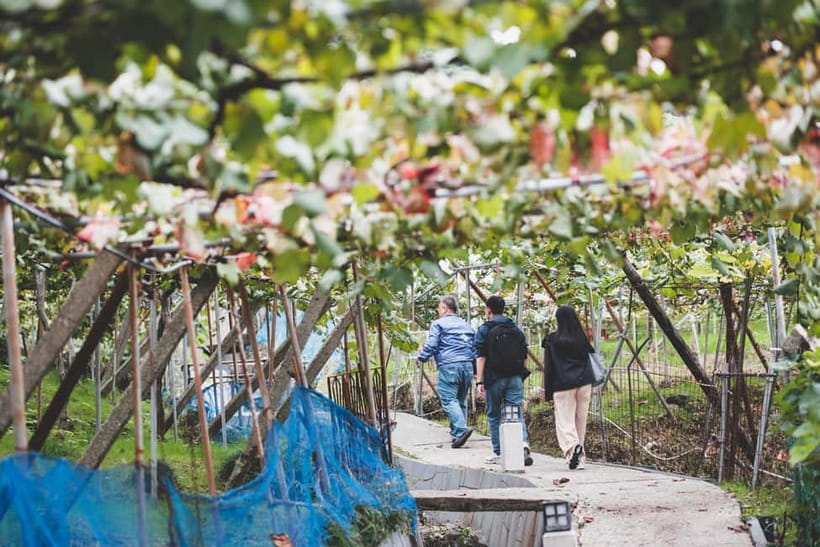
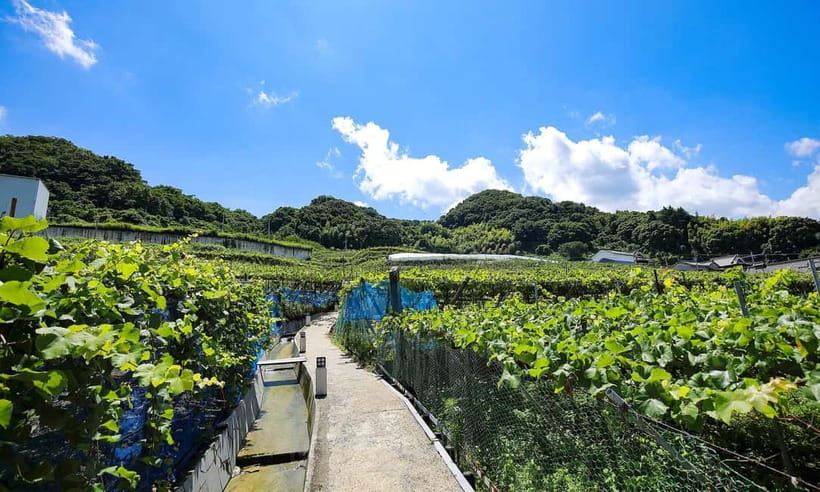
The tour is described as including a vineyard walk. Even in a short 2-hour window, the point is to connect the wine on your table to where it comes from in the landscape.
That’s why this part works. Wine tastings can sometimes feel like a single moment, like a “now” event. Adding a vineyard walk helps you stretch that moment into a story that includes growing, seasonality, and place.
You’re not signing up for an all-day agricultural expedition here. You’re getting enough outdoor time to keep the theme coherent, and then returning to the core experiences of cellar learning and tasting.
Plates worth crossing Osaka for
Wine Tasting: Three Wines, Small Bites, and the G20 Connection
The heart of the tour is tasting three premium Japanese wines. The plan is guided and structured, with a tasting time that sits alongside small bites paired with your drinks. That pairing part is worth paying attention to because it changes how you perceive acidity, sweetness, and body.
The standout element is that your lineup can include wines described as selected for the G20 summit. Even if you’re not a wine-nerd, that detail signals something useful: these are not “just for visitors” bottles. They represent a higher tier of Japanese wine craftsmanship.
The guide helps translate the tasting into plain language. Expect explanations of Japanese boutique winemaking, not only what to taste but why it’s made that way. I like this approach because it turns a tasting into learning. You can leave knowing what to look for later when you shop bottles in Japan.
Also, the tasting experience may include non-alcohol options like juices alongside the wine. That’s a smart option in a group setting because everyone can participate fully, and you still get the same learning flow.
Museum Tickets and What They Add to Your Understanding
Your package includes wine museum tickets. This is valuable because it gives you a chance to connect what you heard in the cellar and tasting with something you can revisit at your own pace.
Think of it like reinforcement. The guided walk tells the story through people and places. The museum gives you a chance to absorb details that your brain might miss when you’re focusing on flavors.
Because the tour is only 2 hours, the museum ticket also functions as a time saver. You’re not trying to figure out where to go next. You already have a defined add-on that keeps the experience cohesive.
Language Choice: English and Japanese Help You Get More Out of Every Stop
The guide is available in English and Japanese. That makes a big difference in a tasting tour, because wine language can get technical fast.
If you’re comfortable in English, you should use the guide’s explanations actively. Ask what the wines have in common, how they differ, and what kind of food they pair with in general terms. If you prefer Japanese support, the format still gives you a clear path through each stop.
A practical tip: bring one question you genuinely want answered. Even something simple like how Japanese wine styles differ from what you’ve had at home can spark a useful discussion.
Price and Value: What $83 Buys, and Who It’s For
At about $83 per person for a 2-hour tour, you’re paying for three things that are hard to replicate on your own: guidance, a timed tasting experience, and included entry (wine museum tickets).
You also get small bites with your wine, and you taste three different Japanese wines. That combination matters. If you tried to piece it together yourself, you might end up paying separately for entry and a guided explanation. Here, those pieces come packaged into one visit.
Value-wise, I’d call this a good fit if:
- you want Japanese culture plus wine, not just one of those
- you like learning through structured stops (cellar, street walk, tasting)
- you’re curious about how boutique winemaking expresses itself in flavor
It may feel less worth it if you already know a lot about Japanese wine and you want a deeper master-class with more bottles. This is a strong introduction and a well-shaped experience, but it is not built as an all-night wine marathon.
What You’ll Notice on the Day: Pace, Focus, and Small Details
This tour is designed to stay focused. You move from the start area to tasting, then into the guided tour segment that connects the cellar, the historic streets, and outdoor stops.
That structure is useful when you’re busy. You’re not wandering. You’re collecting information, then translating it immediately into taste. The small bites keep you comfortable during the tasting, and the museum ticket gives you a final place to solidify what you learned.
If you’re the type who gets distracted easily, you’ll probably appreciate this format. It offers enough movement to keep your interest up, without turning into a complicated route.
Who Should Book This Tour, and Who Might Skip It
I’d steer you toward this tour if you want an Osaka day that feels different from the usual neon-and-shops loop. It’s also ideal if you enjoy walking and you like cultural context alongside food and drink.
You might consider skipping or adjusting expectations if:
- you want a longer tasting experience with optional extra pours (additional tasting is not included)
- you don’t like walking segments, since part of the tour is a guided stroll through historic streets
- you’re only interested in the vineyard aspect and nothing else, because the main value is the combined cellar plus tasting plus cultural walk
If you’re deciding between a purely sightseeing day and a foodie culture day, this sits nicely in the middle.
Should You Book Katashimo Winery for a Wine Tasting and Vineyard Walk?
Yes, if you want a short, guided, meaningful slice of Japanese wine culture near Osaka. The combination of a 1914-founded winery, a 100-year-old aging cellar, a historic town walk, and a tasting of three premium wines including G20-selected bottles is a rare bundle in a tight 2-hour window.
Book it especially if you like structure. You get a story you can follow, taste you can compare, and a walk that ties it all together. If you’re hoping for hours of free exploration and endless pours, you may feel a little boxed in.
FAQ
How long is the Osaka Winery Tour with Wine Tasting & Vineyard Walk?
The tour lasts 2 hours.
Where is the meeting point?
Meet in front of Katashimo winery (カタシモワイナリー 直売所).
What’s included in the tour price?
Wine tasting of 3 different kinds of Japanese wine, small bites with wine, a professional guide, and wine museum tickets.
How many wines do you taste?
You taste 3 different kinds of Japanese wine.
Are additional tastings included?
No. Additional tasting is not included.
What languages are available for the live guide?
The live tour guide is available in English and Japanese.
Is free cancellation available?
Yes, you can cancel up to 24 hours in advance for a full refund.
Is there a reserve now, pay later option?
Yes. You can reserve now and pay later.
If you want, tell me your travel dates and whether you prefer English or Japanese, and I’ll suggest a simple Osaka plan that pairs well with this 2-hour outing.
Osaka on Foot: More Walks



More Tours in Osaka





More Tour Reviews in Osaka

Latest out of Osaka


Food & Drink, side by side.
 ★ 4.8Osaka: Shinsekai Food Tour with 13-15 Dishes at 5 EateriesFrom $532,204 reviews
 ★ 5.0Osaka Food Tour: 13 Dishes at 5 Local EateriesFrom $732,149 reviews
 ★ 5.0Osaka Local Foodie Walking Tour in Dotonbori and ShinsekaiFrom $111985 reviews
 ★ 4.9Hungry Osaka Street Food Tour: 15 Dishes & 3 DrinksFrom $79694 reviews
 ★ 5.0Kuromon Market Food Walking Tour in Osaka (6 stops, 6 tastes)From $50550 reviews
 ★ 5.0Osaka: Guided Food Tour with 12 Dishes at 4 Local EateriesFrom $83533 reviews
 ★ 5.0Absolute Osaka Food TourFrom $231309 reviews
 ★ 4.9Osaka: Traditional Mochi Pounding Experience with TastingFrom $31306 reviews
Also worth a look in