
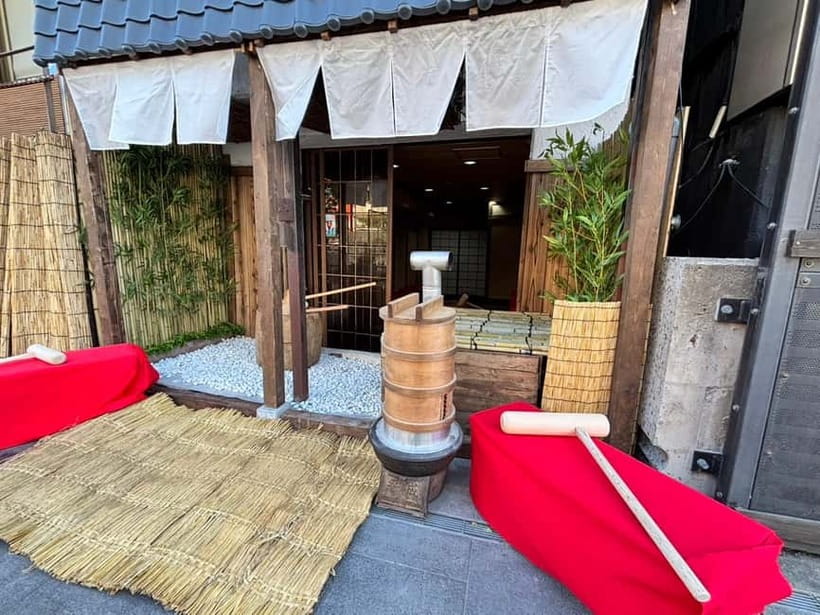
REVIEW · FOOD & DRINK
Osaka: Traditional Mochi Pounding Experience with Tasting
Sticky fingers, real mochi. This Osaka workshop is a hands-on mochi pounding session that turns steamed rice into chewy cakes using traditional tools, and you finish with a fresh tasting of what you made. I especially like how the class is paced for real participation, not just watching. One heads-up, you’ll work your arms and you should wear clothes you don’t mind getting a little sticky.
The setup is built for comfort and conversation: small groups limited to 4 people, and guides who can teach in English or Chinese. You also get a short intro to why mochi pounding matters, then jump straight into the making. If you’re traveling with kids, there’s a family option for all ages, and the energy stays playful without turning chaotic.
Key highlights you’ll feel right away
- Up to 4 people in the group, so you actually get time pounding and shaping
- Traditional tools and motion, mortar and pestle, the real rhythm of mochi making
- Fresh mochi tasting with classic toppings like kinako, nori, sweet red bean, and sweet soy
- Tea with your creations, so you can slow down and enjoy the flavors
- English and Chinese instruction, with guides who are used to helping different ages
- Two options for ages 13+ or all ages, letting you pick the right vibe for your group
Mochi Pounding in Osaka: What a 1-Hour Class Really Delivers
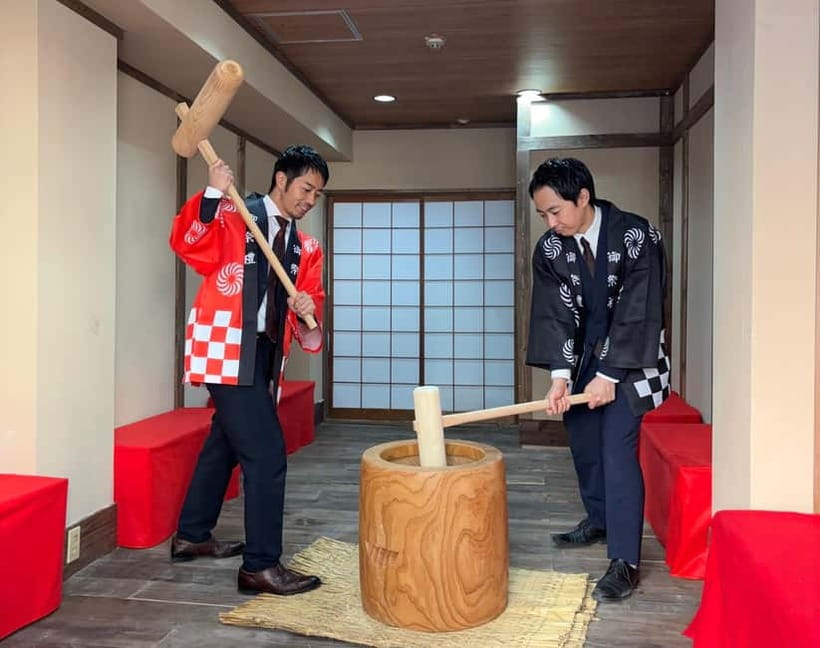
If you want one Osaka activity that mixes culture with hands-on fun, this mochi pounding experience does the job. In about 1 hour, you go from soft, steamed glutinous rice to finished mochi you roll and flavor. It is short enough to fit into a busy day, but long enough that you feel like you made something real with your own hands.
The workshop is guided, and that matters. The process can sound simple, but it is physical and precise. You need to pound until the rice turns smooth and stretchy, then handle the sticky dough without turning it into a disaster. That is exactly why a small group works so well. You get personal attention from the instructor while still moving at a lively class pace.
I also like the balance between learning and action. There is a brief 10-minute introduction to the significance and origins of mochi pounding, then you get right into the work. If you only care about food, you still learn just enough to make the experience make sense. If you care about Japanese traditions, you leave with a clearer picture of why people keep doing this by hand.
Plates worth crossing Osaka for
A quick reality check on the physical part
Your forearms will get a workout. That is not a bad thing, but it is the main consideration. If you have mobility limits or you hate messy hands, you might feel frustrated. If you are okay with a bit of stickiness and the satisfaction of doing it yourself, it is a blast.
From Steamed Rice to Mochi: The Step-by-Step Flow
Here is what the class looks like, in the order you’ll experience it.
1) A short intro, then straight to the rice
You start with a 10-minute introduction to the history and significance of mochi pounding. The goal is not a lecture. It sets context for what you are about to do with the mortar and pestle. You also learn the basics of how the texture changes, and what “good” mochi feels like while it is still warm.
2) Steam, mash, then pound with traditional tools
Next comes the hands-on part. You work with the rice and traditional pounding tools to transform glutinous rice into mochi. You will use a mortar and pestle, which is what makes this feel authentic. The guides show you the technique, then you take over. Expect a lot of energy, short pauses to correct your form, and plenty of coaching as you go.
This is where the small-group limit really pays off. With only up to 4 participants, the guide can adjust for your strength level, your pace, and how quickly your dough gets sticky. It’s also less waiting around, so you stay focused on the process.


3) Form and finish your mochi
After pounding, you form your mochi into bite-sized pieces for tasting. This step is usually where people get surprised by texture. Mochi is warm and elastic when done right, and it is a different experience from store-bought chewy sweets. Your hands learn what your mouth will taste in a few minutes.
In several sessions, guides have included names like Seina, Taka, Misaki, Moe, Grace, Pari, and Aiko. If you get one of these instructors, you can count on a friendly, supportive vibe and an emphasis on getting everyone involved.
Toppings and Tea: Why the Tasting Part Matters
The end of the class is not an afterthought. The tasting is built into the experience, and it is where mochi becomes more than a fun craft.
You’ll taste the mochi you made with classic Japanese seasonings. The menu includes options such as:
- Kinako (toasted soybean flour)
- Sweet red bean paste
- Nori
- Sweet soy sauce
Each topping changes the mochi in a different direction. Kinako gives a nutty, lightly sweet coating. Sweet red bean is classic and comforting. Nori adds a savory, seaweed note that balances the sweetness. Sweet soy sauce brings a deeper caramel-like flavor. The mix helps you understand why mochi is such a flexible base in Japanese sweets.
And yes, you get a cup of tea. That is practical, not decorative. Tea cuts the richness and makes it easier to keep tasting without getting overwhelmed.
Plan your day around getting full
People leave with a surprisingly satisfying meal feeling. Since you’re making and tasting multiple mochi variations, it can replace dessert, and sometimes your late snack too. If you are aiming for a light dinner afterward, schedule it early or keep it simple.
Price and Value: Is $31 Worth It in Osaka?
At $31 per person for a 1-hour small-group workshop, the value is strong if you want more than a photo stop. You pay for three things bundled together: guided instruction, the materials and ingredients, and a tasting set with toppings and tea.
You are not just buying mochi. You are buying time on the mortar and pestle, coaching so you do it correctly, and a guided process that you could not easily replicate on your own without equipment and ingredients. That turns the price into something closer to a hands-on class than a quick dessert purchase.
There is also a comfort factor. With a group limited to 4 people, it is less crowded, and it is easier to ask questions in real time. You feel the difference when you get corrections while you’re pounding, instead of waiting your turn.
What is not included
Transportation to and from the activity is not included. That matters more than you might think, because finding it may be easier than you expect if you are already near central streets, but you still need to get there on your own.
Who Should Book It: Adults, Teens, and Families
This is a rare Osaka activity that works across ages without becoming too childish or too complicated.
Adult Experience (ages 13 and up)
The adult option fits if you want a deeper cultural and hands-on focus. You’ll likely enjoy the whole process start to finish, especially if you like food craft, cooking, or learning how Japanese sweets are made beyond store packaging.
Family Experience (all ages welcome)
The family option is made to engage both kids and adults. The work involves teamwork and repetition, which helps younger participants feel included. You also get enough activity to keep attention from drifting.
I like that the class structure stays consistent, but the session can be adjusted for mixed ages. That’s useful when you have teenagers who want the experience to feel real, and younger kids who need more help holding steady.
Where It Happens: Getting In and Finding the Entrance
Location is key for any short class, and this one can be a little tricky on first try. The workshop entrance can be along the river or canal side, not necessarily the main shopping street you might think of first. That matters if you are navigating by instinct.
One practical tip: look for a simple handwritten sign at the entrance area if you do not see anything obvious. If you plan to arrive a few minutes early, you will have time to orient yourself without stress.
Also note that the meeting point may vary depending on which option you book. So once you confirm your reservation, check the exact meeting details for your time slot.
What You’ll Actually Take Home, Besides Food
The best souvenirs here are physical. You leave with the memory of how warm dough stretches and how quickly the texture changes under steady pounding. You also learn enough about the cultural background to connect mochi to Japanese seasonal traditions and everyday food culture.
Another takeaway is competence. After watching a few minutes and then pounding yourself, you understand why mochi is made by trained hands in many settings. It is not hard in a classroom sense, but it is easy to mess up if you rush.
If you enjoy taking photos, the guides are used to helping with pictures during the process. That is especially helpful if you are traveling solo and you want more than just phone selfies.
Should You Book This Osaka Mochi Pounding Class?
Book it if you want a fun, hands-on Osaka food experience that finishes with a satisfying tasting lineup. It is a great choice for couples, small groups, and families because the class is structured, short, and interactive. The small group size helps a lot, since you do the pounding and shaping yourself instead of watching.
Skip it if you hate mess or you do not want any physical effort. Also consider it carefully if you have strong mobility limits, because the pounding action is part of the main experience.
FAQ
How long is the mochi pounding experience?
The experience lasts 1 hour.
How much does it cost?
It costs $31 per person.
What is the group size?
The group is small, limited to 4 participants.
What languages are offered?
The instruction is available in English and Chinese.
What is included in the price?
You get a guided mochi pounding experience, all necessary materials and ingredients, a tasting session with traditional Japanese seasonings, and instruction from experienced guides.
Is transportation included?
No. Transportation to and from the activity location is not included.
What toppings and drinks are provided?
You’ll taste your mochi with classic seasonings such as kinako, sweet red bean paste, nori, and sweet soy sauce, and you’ll also have tea.
Are there different options for adults and families?
Yes. There is an Adult Experience (ages 13 and up) and a Family Experience (all ages welcome).
What is the cancellation and payment policy?
You can cancel up to 24 hours in advance for a full refund. You can also reserve now & pay later, keeping your plans flexible.
More Good Eating in Osaka





More Tour Reviews in Osaka


Latest out of Osaka


Food & Drink, side by side.
 ★ 4.8Osaka: Shinsekai Food Tour with 13-15 Dishes at 5 EateriesFrom $532,204 reviews
 ★ 5.0Osaka Food Tour: 13 Dishes at 5 Local EateriesFrom $732,149 reviews
 ★ 5.0Osaka Local Foodie Walking Tour in Dotonbori and ShinsekaiFrom $111985 reviews
 ★ 4.9Hungry Osaka Street Food Tour: 15 Dishes & 3 DrinksFrom $79694 reviews
 ★ 5.0Kuromon Market Food Walking Tour in Osaka (6 stops, 6 tastes)From $50550 reviews
 ★ 5.0Osaka: Guided Food Tour with 12 Dishes at 4 Local EateriesFrom $83533 reviews
 ★ 5.0Absolute Osaka Food TourFrom $231309 reviews
 ★ 4.6Osaka: Kuromon Market Food Walking Tour (6 stops, 6 tastes)From $49272 reviews
Also worth a look in