
REVIEW · FOOD & DRINK
Osaka: Walking Tour to Local Gems, Food & Culture
Osaka turns personal on foot. You get a fast, 150-minute route through well known areas, guided by a licensed English guide who explains what you’re seeing and why it matters for everyday Osaka. I especially like how the pace feels efficient without turning into a race, and how the stops are built around story-driven context rather than just photos.
On this walk, I like two things a lot. First, you get a clear sequence of sights that starts in Shinsaibashi and ends near Namba, so it’s easy to keep exploring after. Second, guides such as Rico and J. are praised for strong English and for answering questions about Japanese culture, so your visit feels more personal than a standard walkthrough. One drawback to plan for: food is not included, so if you want snacks or meals, you’ll need to budget time and money on your own.
This tour fits both first timers and repeat visitors because it stays focused on must-see highlights, while still adding local angles you might miss on your own. If you hate being in a group or want total freedom to wander, you might prefer a self guided day. If you want structure plus real cultural explanations, this is a solid use of a short Osaka trip.
Key Points That Make This Tour Worth Your Time
- Licensed English guide, with Q&A built in so you can ask about how Japanese culture works, not just facts on a sign
- A tight 150-minute route that connects Shinsaibashi, Dotonbori, Hozenji, Kuromon Ichiba, and Nipponbashi without long backtracking
- Two photo stops in the most camera friendly stretches, so you don’t lose time hunting for the shot
- Kuromon Ichiba Market on the schedule which is great for people who like market energy, even if you don’t eat on the tour
- Finish at Namba Grand Kagetsu which puts you in the right area to continue your evening plan
Why This Osaka Walking Tour Works in Just 150 Minutes
The best part of a walking tour like this is how it respects your time. In about 2 and a half hours, you move between major Osaka landmarks, but you also get guided stops where you can actually process what you’re looking at. You’re not just checking off points on a map.
I also like that the tour is designed to be efficient, not frantic. The day flows from a clear meeting point, through short guided segments, then into the bigger photo and sightseeing moments. That means you spend less time asking where to go next and more time learning how Osaka fits together.
One more value point: you’re paying for guidance and interpretation, not a long list of included meals. At $25 per person for a licensed guide and all fees and taxes, it’s a budget friendly way to get cultural context without committing to a full day.
Osaka at walking pace, a few more
Finding Your Guide Near Apple 心斎橋 (Shinsaibashi)
Your guide meets you right in Shinsaibashi, outside an Apple store. The key detail is simple: the guide will be holding a sign in front of the Apple store Shinsaibashi, so you can spot them quickly.
This matters more than it sounds. In cities like Osaka, meeting points that are easy to identify save you stress. You don’t want to lose the first 20 minutes figuring out where the tour starts, especially when the whole experience is timed to 150 minutes.
If you’re arriving by transit, give yourself a little buffer so you’re not rushing at the end. Once you’re with the group, you’ll get that initial guided orientation that helps the rest of the walk feel coherent.
Shinsaibashi to Dotonbori: Quick Orientation, Then a Proper Photo Moment
You start with a short guided stretch, which is a smart way to get your bearings. That early guidance helps you understand what you’re going to see next, instead of spending the first chunk of the tour wondering what everything means.
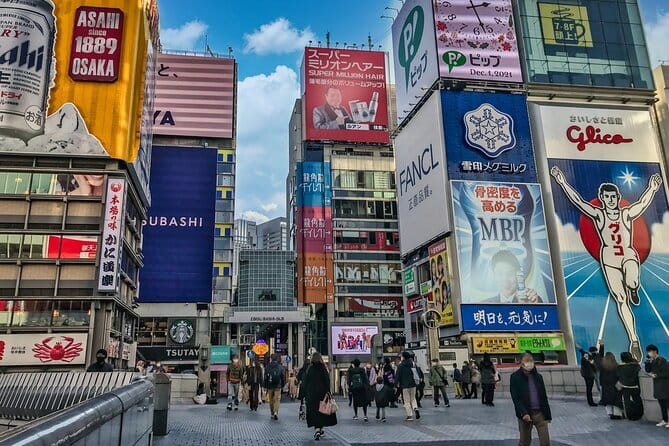
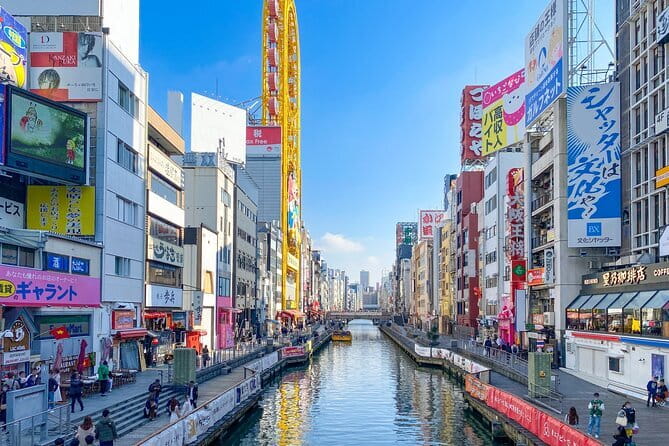
From there, you move through short stop segments before hitting Dotonbori. Dotonbori is built into the route as a highlight, with a photo stop included and guided time that helps you make sense of the area beyond the visuals. Even if you already know Osaka’s famous scenes, you’ll likely pick up local stories that explain how the place became what it is.
One practical tip: for the Dotonbori photo stop, have your camera ready but don’t freeze. The guide is there to keep the flow moving, so aim for a quick shot and then listen for the story while the group stays together.
Hōzenji Temple Stop: A Short Pause With Cultural Meaning
After the energetic streets, the tour shifts into a temple stop: Hōzenji Temple. This part of the walk is shorter, but that’s exactly why it works. You get a change of pace, and the guide uses the moment to connect what you’re seeing to cultural significance.
If you like tours that include both showpiece sights and quieter context, this is the kind of stop that adds depth. A temple visit also gives your brain a reset from neon and crowds, so by the time you reach the market, you’re more likely to enjoy the next sensory shift.
Keep your expectations realistic here. This is not a long sit down. It’s a guided visit that’s designed to fit within the overall 150-minute flow, so you’ll enjoy it most if you’re ready to observe, listen, and move on with the group.
Kuromon Ichiba Market: Market Energy Without Relying on the Tour for Food
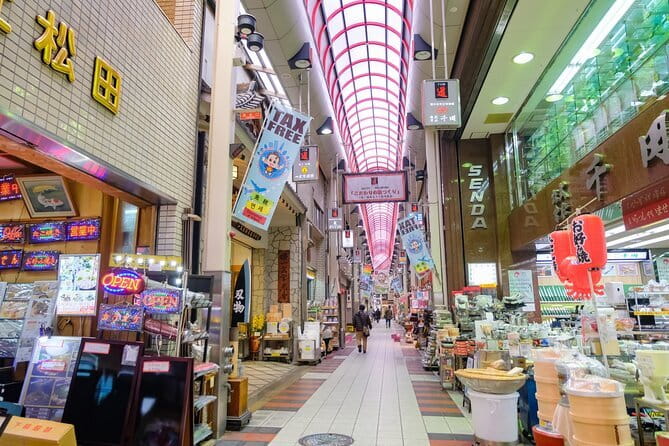
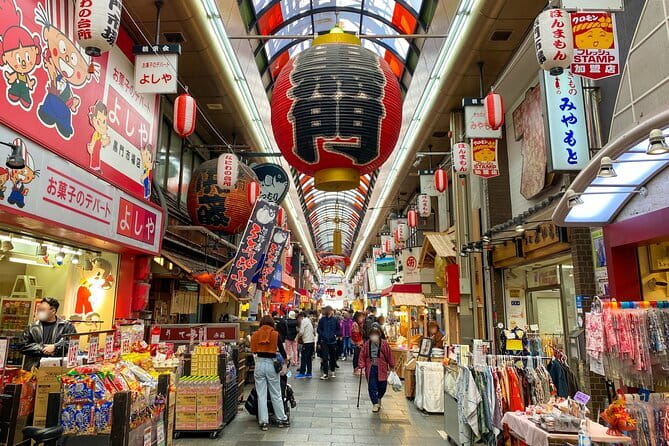
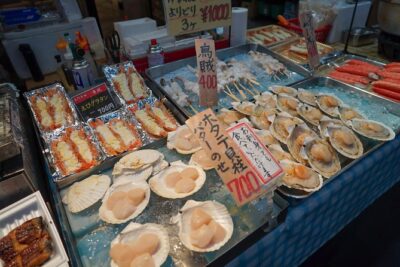
Kuromon Ichiba Market is on the schedule with guided time. Even though food is not included, the market stop is still a great experience for anyone who likes seeing how everyday life shows up in Osaka.
What you can do with this stop is simple. Use the guide time to understand what makes the market area distinctive, then decide on the spot whether you want to buy snacks or just enjoy the atmosphere. The tour keeps you informed, and you keep control of your budget and dietary needs.
Because food is not included, plan ahead the same way you would for any market wander. If you’re hungry, set aside money for one or two items on your own. If you’re not eating, you can still enjoy the visual rhythm, the chatter, and the sense of Osaka in motion.
If markets can overwhelm you, keep an eye on your comfort level. Markets are often busy, so if you want space, position yourself near the edges during photo moments, then step in only when the group pauses.
Plates worth crossing Osaka for
Nipponbashi Denden Town: Pop Culture Corners and a Second Photo Break
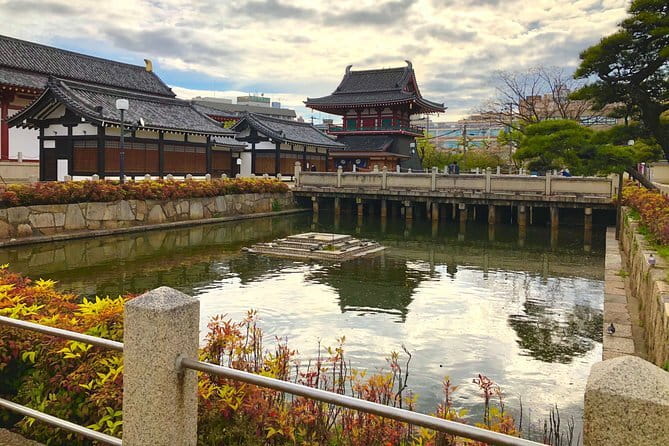
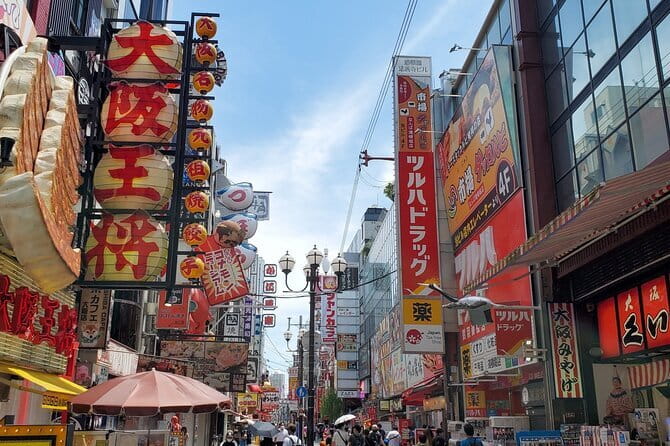
Next you reach Nipponbashi Denden Town, another key Osaka area, with a photo stop included and guided walking time. This is the part of the tour that feels more playful, especially if you’re into electronics, games, or anything techy and visual.
The guide’s job here is to help you understand what you’re looking at and how the area fits into Osaka’s wider culture. You’re not expected to know everything already, and the English commentary is there to make the quick stops meaningful.
A small but helpful strategy for this section: treat it like a guided orientation plus browsing window. Look around during the guided time, but also give yourself a moment to wander your eyes without asking for permission. The tour stays structured, but it doesn’t have to feel restrictive.
Finishing at Namba Grand Kagetsu: Use the Endpoint Smartly

The tour ends at Namba Grand Kagetsu. That finish location is useful because it drops you into an area where it’s easier to plan the next step, whether that’s more sightseeing, shopping, or heading for dinner.
I like tours that end somewhere practical. A tour that finishes in the wrong place can leave you stuck deciding what to do next. This one puts you in the Namba zone, which is convenient if you want to keep going after the guided 150 minutes.
If you like to travel with momentum, map your next plan right after you arrive at the endpoint. Then you avoid the classic late-tour fog where you’re hungry, tired, and suddenly unsure how to continue.
Price and Value: Is $25 a Good Deal Here?
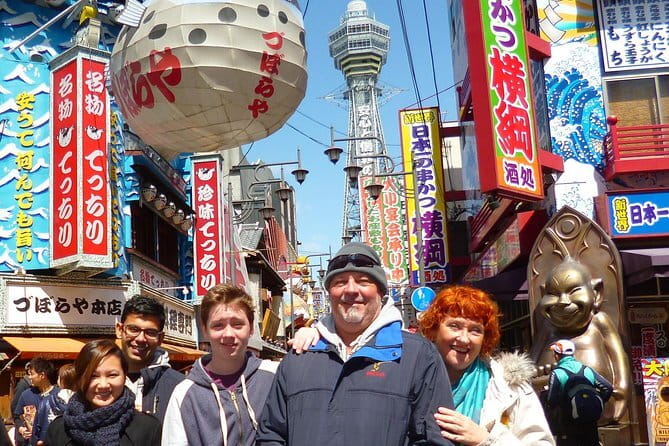
For $25, you’re getting a licensed guide, all fees and taxes, and English live guiding for 150 minutes. That’s strong value if you care about context, not just walking between landmarks.
This is also a good deal because the tour is time efficient. You’re paying for someone to organize the route and explain the cultural significance of what you see. If you’d otherwise spend hours researching neighborhoods and landmarks, the guided structure saves effort.
The one value trade off is food. Since food is not included, you should think of this as a guided sightseeing experience, not a tasting tour. The upside is flexibility. You can eat what you want, when you want, and in whatever portion size fits your day.
Who This Tour Suits (and Who Might Skip It)
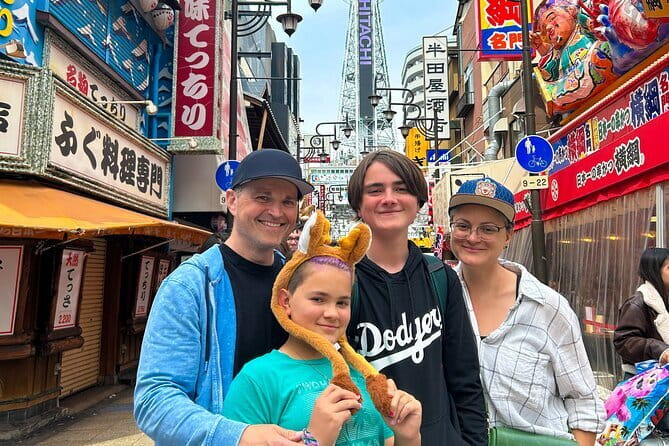
This walk is ideal if you want an English guided experience through Osaka’s major highlights without spending your entire day on planning. It also suits people who like asking questions. Guides such as Rico and J. are specifically praised for being ready to reply, including questions about Japanese culture.
It’s a nice match for first-time visitors who need guidance on what matters, and also for seasoned travelers who want local interpretation instead of doing everything solo.
A quick consideration: it is not suitable for wheelchair users. Also, the rules are clear that alcohol and drugs are not allowed, which makes the experience feel more straightforward and family friendly.
If you want total control over every minute, a self guided day might feel better. If you want smart structure plus cultural storytelling, this tour is a good fit.
Should You Book This Osaka Local Culture Walk?
Book it if you want a short, organized Osaka day that hits top highlights and adds interpretation. The combination of a clear start near Apple 心斎橋, a guided route through Dotonbori, Hōzenji, and Kuromon Ichiba, then a finish near Namba Grand Kagetsu makes it easy to build an itinerary around.
Skip it if you’re traveling with someone who strongly dislikes group pacing, or if you need a food included experience. In that case, you might prefer a tour that builds meals into the schedule.
My best advice for the decision: plan one snack or drink on your own during the market area, and treat the rest of the day as sightseeing plus stories. Do that, and this becomes a very efficient way to understand Osaka in a couple of hours.
FAQ
Where is the meeting point for the Osaka walking tour?
The guide will meet you in front of the Apple store Shinsaibashi, holding a sign to make it easy to spot.
How long is the tour?
The duration is 150 minutes.
How much does the tour cost?
The price is $25 per person.
Is the tour guide available in English?
Yes, the live tour guide speaks English.
What is included in the price?
The price includes all fees and taxes, plus a licensed guide.
Is food included on the tour?
No, food is not included.
Where does the tour finish?
The tour finishes at Namba Grand Kagetsu.
Are there rules about what I can bring or drink?
Alcohol and drugs are not allowed.
What is the cancellation policy?
You can cancel up to 24 hours in advance for a full refund.
Osaka on Foot: More Walks
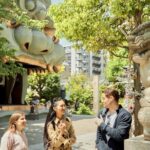
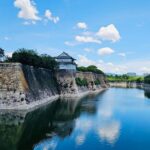
More Tours in Osaka
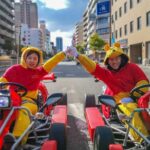
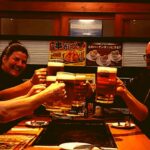
More Tour Reviews in Osaka
Latest out of Osaka


Food & Drink, side by side.
 ★ 4.8Osaka: Shinsekai Food Tour with 13-15 Dishes at 5 EateriesFrom $532,204 reviews
 ★ 5.0Osaka Food Tour: 13 Dishes at 5 Local EateriesFrom $732,149 reviews
 ★ 5.0Osaka Local Foodie Walking Tour in Dotonbori and ShinsekaiFrom $111985 reviews
 ★ 4.9Hungry Osaka Street Food Tour: 15 Dishes & 3 DrinksFrom $79694 reviews
 ★ 5.0Kuromon Market Food Walking Tour in Osaka (6 stops, 6 tastes)From $50550 reviews
 ★ 5.0Osaka: Guided Food Tour with 12 Dishes at 4 Local EateriesFrom $83533 reviews
 ★ 5.0Absolute Osaka Food TourFrom $231309 reviews
 ★ 4.9Osaka: Traditional Mochi Pounding Experience with TastingFrom $31306 reviews
Also worth a look in