
REVIEW · OSAKA TEMPLE & SHRINE VISITS
Osaka: Temple Tour and Traditional Calligraphy Lesson
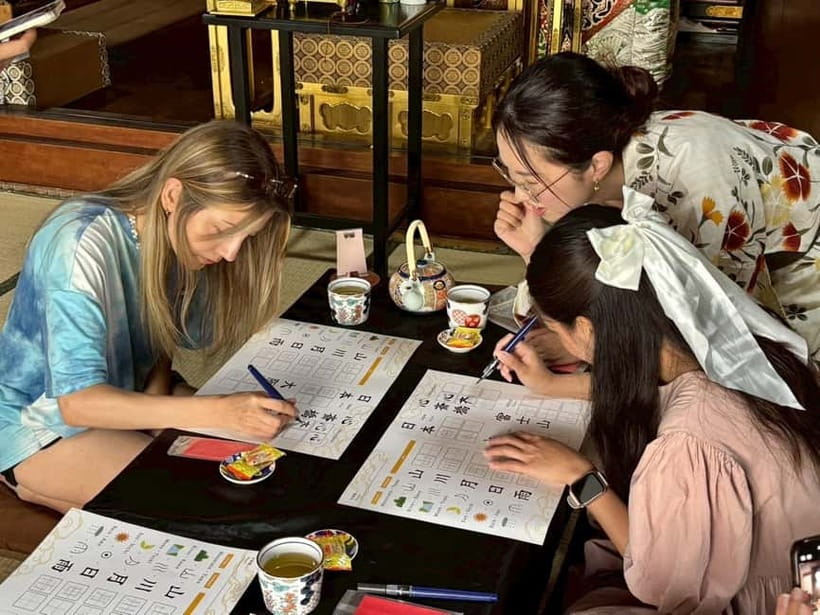
A brush, a breath, a quiet temple. I like this Osaka experience because it turns basic Japanese into something you do with your hands, not just memorize with your eyes. The setting also matters, since you’re practicing near a historic Zen temple where the pace naturally slows down.
I particularly like the zazen meditation part, because it helps you focus before you pick up the brush. Then you write a single favorite kanji on a mini shikishi, and you take home a name card with the character and its meaning, plus a small ceramic plate gift.
One consideration: it’s only 1 hour, so it’s best for learning the fundamentals and leaving refreshed, not for deep, hours-long calligraphy practice.
Key takeaways before you go
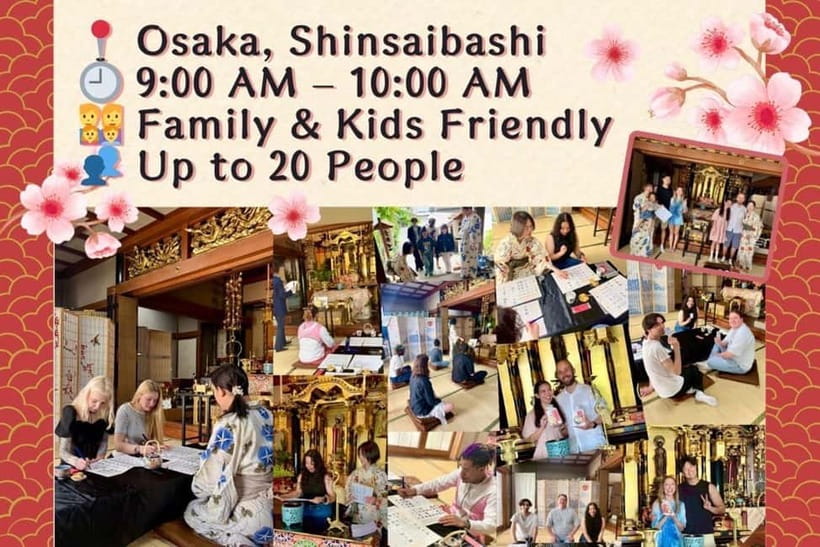
- Zen-first schedule: meditation comes before the brush work, so you’re calmer when you write.
- One kanji, done properly: you’ll copy basics and choose a favorite kanji for your final piece.
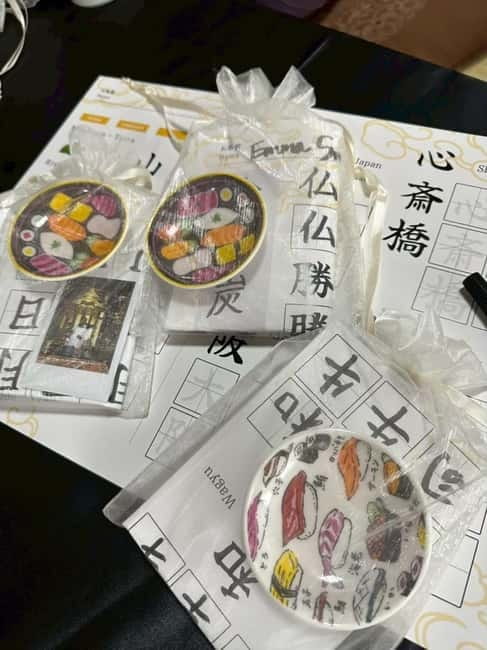
- Take-home keepsakes: name card with kanji and meaning, plus a small ceramic plate (about 8 cm).
- English-led instruction: the lesson is taught in English with support from monks and staff.
- Osaka context included: you get a guided history-style intro covering Shinsaibashi, Yotsubashi, and Osaka Castle.
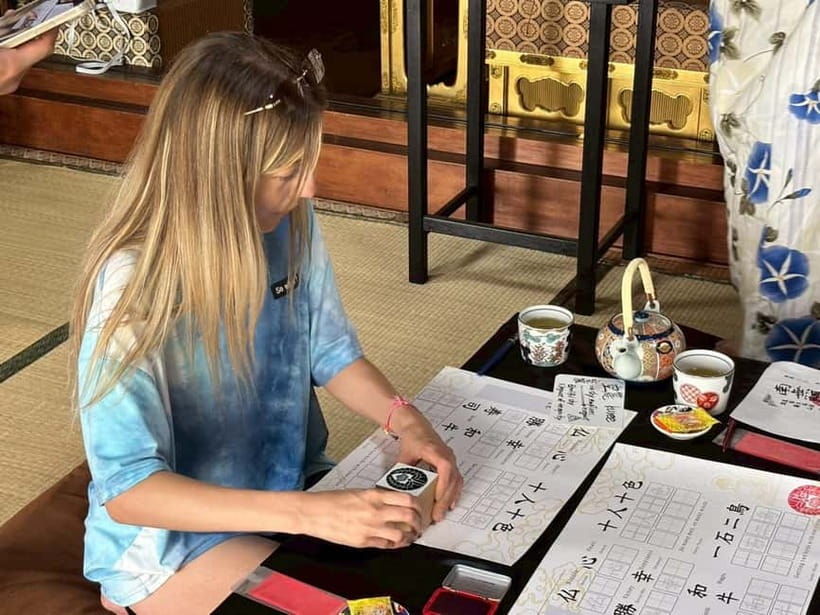
- Extra tactile details: some sessions include intricate stamps or seal-style elements, adding to the hands-on feel.
Saishoji Temple and the feel of Zen practice
This is not a calligraphy class in a classroom. You’re in the peaceful surroundings of a historic Zen temple, and that changes the whole mood of learning Japanese. Instead of feeling like you’re studying in a hurry, you’re practicing in a space built for attention and restraint.
The biggest reason I think it works is that the experience doesn’t separate language from culture. You’re guided through differences between temples and shrines in Japan, and you also practice Japanese phrases tied to everyday social moments. That means when you write kanji, you’re not treating them like art objects only. You’re treating them like communication symbols with a real-life context.
You should also like that the temple setting gives you a built-in reset. Several people describe the calm effect of concentrating on ink, brush handling, and slow breathing. If your Japan trip feels rushed, this one-hour pause can be a satisfying counterweight.
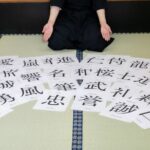
Quieter courtyards nearby
Getting there near Yotsubashi Station in Osaka
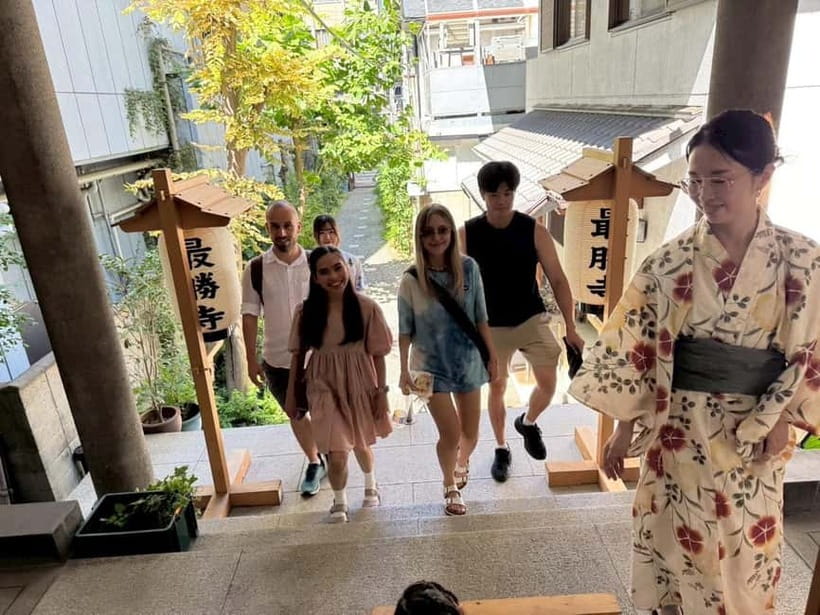
Logistics are refreshingly simple. You meet at Saishoji Temple, address 1-6-18 Kitahorie, Nishi-ku, Osaka, 550-0014. The location is right by public transit, so you don’t need a taxi buffer or complicated planning.
Here’s the walking reality:
- About a 3-minute walk from Yotsubashi Station (Osaka Metro Yotsubashi Line, Exit 4)
- About a 10-minute walk from Shinsaibashi Station (Osaka Metro Midosuji Line)
- About a 15-minute walk from Namba Station
In other words, you can fit this before or after time in Shinsaibashi without wrecking your schedule. And because the duration is 1 hour, you’re unlikely to feel like you’re sacrificing a big chunk of your day.
One practical note: since it’s a temple experience, keep your movements quiet and your phone use limited. You’ll get the best results when you let the pace of the space set your pace.
History and Japanese phrases before you touch the brush
The lesson starts with a guided language and culture warm-up. You get a brief overview of Shinsaibashi, Yotsubashi, and Osaka Castle. That context matters because it helps you place place names you’ve likely heard around the city, especially if you’re already spending time in central Osaka.
Then you learn the difference between temples and shrines in Japan, in a way that connects to how people think and behave in each setting. This is useful even if you only know a little Japanese, because you’ll understand what you’re seeing and why.
You also practice conversational phrases and idiomatic cultural expressions. The key here is that you’re not just reciting lines. The guidance emphasizes mindful communication, so the phrases feel more natural. You’re essentially getting mini-practice for how to speak with politeness and cultural awareness, not just pronunciation.
If you want a quick confidence boost in Japanese, this part is where it starts. Even before calligraphy begins, you’ll feel less like a tourist reading a sign and more like someone who knows how to react in real situations.
Zazen meditation: the calm that makes calligraphy easier
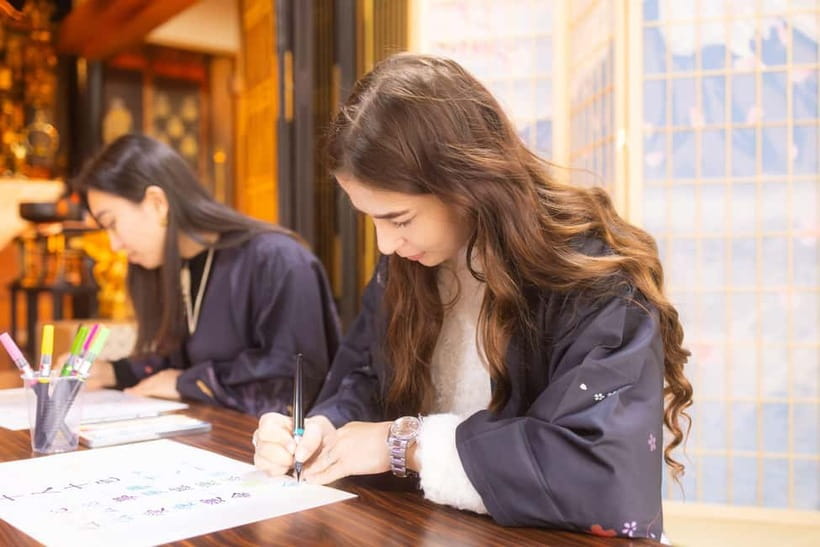
After the warm-up, you move into zazen meditation. This is short, but it’s not random. The goal is to clear your mind and focus on your breathing, which sounds simple until you try it when you’re used to constant motion.
For calligraphy, this matters. Writing with brush and ink is all about pressure, control, and timing. If your mind is racing, your hand follows. A meditation reset helps you slow down naturally, so your strokes get smoother and your attention sharpens.
You’ll also notice the sensory side of it. People often mention the calm effect of the ink smell and the feel of the brush. When you give yourself permission to do slow, careful movements, you stop trying to be perfect and start being present.
If you’ve never tried meditation before, don’t worry. You’re guided through it in a way that supports beginners. The point isn’t performance. It’s focus.
One small drawback you might notice: if you’re looking for nonstop action, meditation can feel like a pause. But for most people, that pause becomes the highlight.
Calligraphy practice: copy basics, then write your favorite kanji
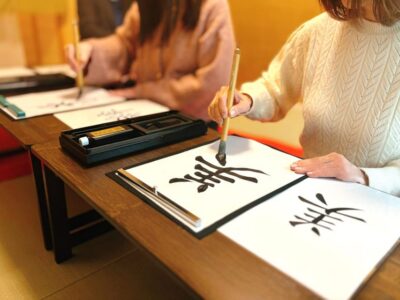
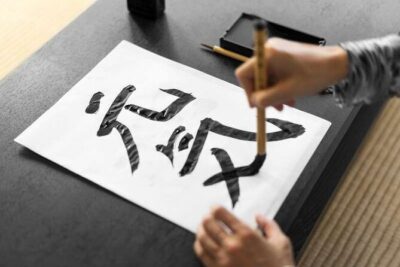
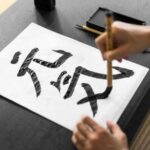
Now for the part you can hold onto. You’ll practice basic calligraphy, then write one favorite kanji on a mini shikishi. That structure helps a lot.
First, you copy and learn the basics with guidance. Then you apply that practice to a character that you personally choose. That turns the final piece from something you made on autopilot into something that feels like yours.
You also get materials, so you’re not hunting down supplies. The class includes what you need for the brush work, and the instruction is led in English. That makes it approachable even if kanji is brand new for you.
Two take-home items raise the value:
- A name card written with Japanese kanji and its meaning.
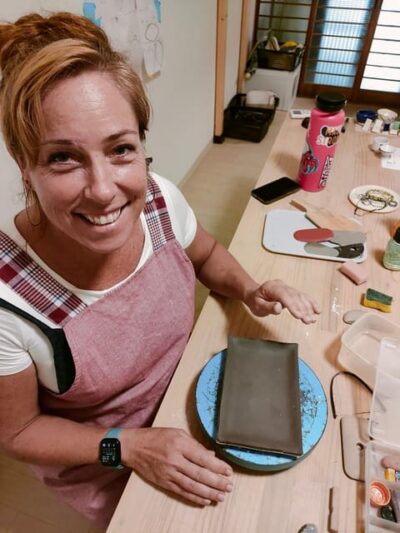
- A small ceramic plate gift, about 8 cm in diameter.
Some people also mention intricate stamps or seal-style elements as part of the experience. Even if you’ve done crafts before, this adds that extra ritual touch, like you’re officially completing something, not just finishing an activity.
What you should expect, realistically: you’ll walk away with a single strong kanji piece and the satisfaction of doing it slowly with proper guidance. If you want to create a whole set of characters, you may find the one-hour format limits how much you can produce. But if you want a calm, correct first impression, it’s a good match.
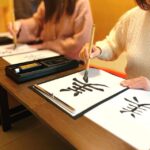
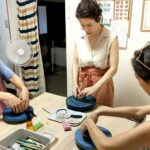
More ink, more craft benches
Matcha tea and using what you practiced
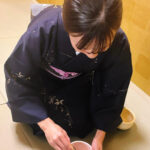
The experience doesn’t end when the brush is put down. You also take part in a traditional matcha tea ceremony. The value here isn’t about learning a complicated choreography you’ll forget next week. It’s about transitioning from focused making into mindful appreciation.
At the same time, you’ll likely continue using the Japanese phrases you practiced earlier. The overall flow is built around communication and cultural understanding, not just calligraphy steps. So after meditation and writing, the conversation focus helps everything connect.
This is also where the temple setting shines. You get a quiet environment for tea, so it feels like part of the same learning arc: attention, respect, and presence. People describe the experience as refreshing, especially when they’re in Osaka and surrounded by noise most of the day.
If you’re traveling solo, this part can also be a comfort. Reviews mention that staff are kind and attentive, so you don’t feel left out. You can relax, follow along, and enjoy the session without translating every second.
Price, what you get, and who this is best for
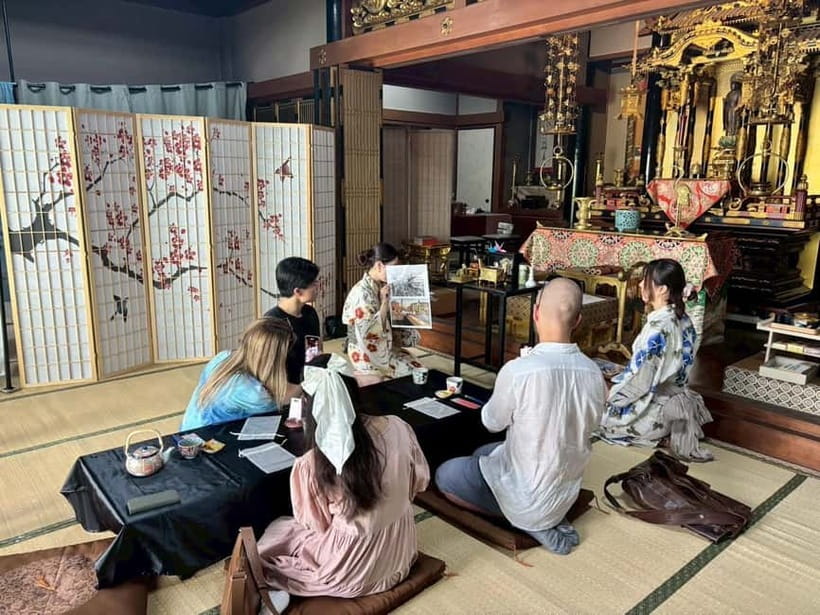
The price is listed at $20 per person for a 1-hour experience. For that, you’re not just paying for a worksheet. You’re paying for guided Japanese history and language practice, meditation guidance, calligraphy instruction with materials, interaction with monks, and a matcha ceremony.
You also receive tangible gifts: a name card with kanji and its meaning, plus the small ceramic plate (8 cm). Those details turn it into more than a lesson that evaporates when you leave the temple.
Where this is strongest:
- If you want a low-stress entry to Japanese culture through an activity that feels meaningful
- If you like quiet, structured experiences with good guidance
- If you want English support while learning practical cultural phrases
- If you’re okay with learning one kanji instead of making a huge stack of papers
Who might be happier with another option:
- If you want a long-form, intensive calligraphy course with lots of repetition
- If you dislike meditation entirely and need constant movement
- If you want advanced Japanese grammar drilling, since the language focus is conversational and cultural
Also, small group sizes help here. You’re more likely to get personal attention when you’re learning brush control and when you’re asking simple questions about kanji meaning.
Should you book the Osaka temple calligraphy session?
I’d book it if your Japan trip needs one calm, hands-on cultural moment. The combo of Zen meditation, English-led Japanese practice, and a real calligraphy output you can take home is exactly the kind of experience that makes Osaka feel more human, not just busy.
If you want a meaningful souvenir without turning your day into a museum marathon, this one fits. And if you’re traveling with friends or going solo, the temple atmosphere plus attentive instruction makes it easier to relax than many group activities in a crowded city.
Go for it when you can protect one hour from distractions. You’ll get the most value when you treat it like a slow skill lesson, not a quick photo stop.
FAQ
How long is the Osaka: Temple Tour and Traditional Calligraphy Lesson?
It lasts 1 hour.
Where does the experience meet?
You meet at Saishoji Temple, 1-6-18 Kitahorie, Nishi-ku, Osaka, 550-0014, Japan.
How do I get there from Yotsubashi Station?
It is about a 3-minute walk from Yotsubashi Station (Osaka Metro Yotsubashi Line, Exit 4).
Is the instruction available in English?
Yes, the instructor is listed as English.
What activities are included during the hour?
The experience includes a guided Japanese history and language lesson, zazen meditation, calligraphy practice (copying and writing one favorite kanji on a mini shikishi), and a traditional matcha tea ceremony.
What do I receive at the end of the calligraphy lesson?
You receive a name card with Japanese kanji and its meaning, and a small ceramic plate gift about 8 cm in diameter.
Do I get materials for the calligraphy?
Yes, all materials needed for the activities are included.
Is this experience okay if I’m a complete beginner at kanji or calligraphy?
Yes. The experience is described as suitable for both beginners and advanced learners.
What is the price and is it per person?
The price is $20 per person.
Can I cancel, and can I pay later?
There is free cancellation up to 24 hours in advance for a full refund, and you can reserve now and pay later.
More Tour Reviews in Osaka


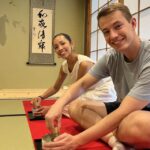
Brush, Ink and Workbench
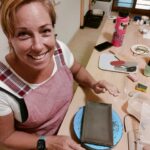
Quieter Courtyards in Osaka
Latest out of Osaka


Osaka Temple & Shrine Visits, side by side.
 ★ 4.9Osaka: Minoh, Katsuoji Temple, & Minoh Falls Full-day TourFrom $135172 reviews
Full Day Kyoto Tour : Bamboo Forest, Golden Temple, Fushimi InariFrom $10584 reviews
★ 4.9Osaka: Minoh, Katsuoji Temple, & Minoh Falls Full-day TourFrom $135172 reviews
Full Day Kyoto Tour : Bamboo Forest, Golden Temple, Fushimi InariFrom $10584 reviews
 ★ 4.9Osaka Temple Cool Foot Bath & Matcha Experience〈45min〉From $3482 reviews
 ★ 5.0Osaka: Mind & Spirit Balance Temple Reiki HealingFrom $16141 reviews
 ★ 4.0Katsuo-ji Temple, Arashiyama Forest, & Nara ParkFrom $9137 reviews
 ★ 4.7Osaka: Minoh Waterfall & Katsuo-ji Temple Half-Day TourFrom $4727 reviews
 ★ 5.0Osaka Half-day E-bike Adventure: Minoh Falls & Katsuoji TempleFrom $3425 reviews
 ★ 5.0Osaka Temple Head Spa &Matcha Facial – Refresh & Glow〈90min〉From $14124 reviews
Also worth a look in