
Kyoto can feel overwhelming fast. This one-day plan strings together the Arashiyama bamboo mood, the Golden Pavilion wow-factor, and the Fushimi Inari torii climb without you needing to plan trains and tickets. It runs from Osaka to Kyoto and back in about 8 to 9 hours, with an expert guide riding along so the day stays organized even when Kyoto is crowded.
I like that the tour uses a small-group setup (up to 11 people) with an air-conditioned private vehicle, so you get real talking time with the guide, not just head-nods through window views. I also like the people-side of this experience, guides such as Taka and Tom (and others like Woody or Jin) have been praised for clear history, friendly energy, and helping you navigate Kyoto smoothly.
One drawback to think about up front: this is a walking day with stairs and hills at multiple stops, and it is not customizable. If you need slower pacing or limited walking, this may feel rushed. Weather and traffic can also shift the exact schedule.
Key highlights worth your attention
- Private vehicle, small group (max 11), which helps the day feel less like a shuffle
- Arashiyama bamboo forest trail plus classic views from Togetsukyo Bridge
- Kinkakuji Temple ticket included, so you do not burn time lining up for entry
- Fushimi Inari-taisha for about 2 hours, enough for torii photos and a meaningful stroll
- English and Mandarin speaking support, plus onboard WiFi and bottled water
- Guides like Taka, Tom, Woody, or Jin show up repeatedly in excellent reviews
Kyoto in One Day, The Big Three Without Guesswork
If Kyoto is on your list but your days are limited, this style of tour can be a smart move. Instead of chasing places one by one, you get a guided flow through three of Kyoto’s most famous icons: Arashiyama’s bamboo area, Kinkakuji (the Golden Pavilion), and Fushimi Inari-taisha with its famous red gates.
What makes this tour work well is the structure. You do the “wow” visuals in a logical order, and you travel by private vehicle between sites so you spend less of your day on public-transport logistics. The guide’s job is not just announcements. It is context, timing, and helping you make sense of what you are looking at, including what matters historically and why each site feels the way it does.
You should also know what kind of Kyoto day you are signing up for. This is not a slow museum day, and it is not a deep, flexible itinerary. It is a highlight sweep with guided stops, built for people who want to see a lot while still learning the story.
Quieter courtyards nearby
Osaka to Arashiyama: Meeting Points and Ride Comfort
The day starts at 9:45 am. You meet either in Shinsaibashi or at the Umeda DT Tower, then board the comfortable private vehicle for the drive to Kyoto’s Arashiyama area. The ride takes about 1.2 hours, which is a big part of why this works for a “from Osaka” day trip.
Comfort matters here. You are in the van for road time, and Kyoto crowds can chew up energy fast. With air-conditioning, WiFi onboard, and bottled water, you arrive ready to walk instead of already wiped out. Also, this tour includes an English-speaking conductor and a Mandarin-speaking conductor, which is helpful for mixed language groups or if you prefer questions in a specific language.
Keep one practical note in mind: the tour is not customizable. That means you follow the guided flow and timing. If you want to linger at one spot for hours or skip another entirely, this setup may feel limiting.
Togetsukyo Bridge and the Arashiyama Walk: Classic Kyoto Views
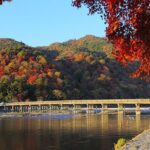
Your first Kyoto stop is at Togetsukyo Bridge. You get about 50 minutes here, which is a good “arrive and orient” window. You can cross the bridge and soak in the scenery around the river valley and mountains, then continue on toward Arashiyama’s town area.
This is one of those times when a guide helps more than people expect. Kyoto looks great in photos, but on foot you need help with timing, routes, and where to pause for views without feeling lost. The bridge and the approach into town also set expectations for what comes next, because the bamboo area is all about atmosphere and foot traffic.
A drawback to consider, and it applies to most of the day: Kyoto can be busy. Even with a small group, you will be sharing space with other visitors. The upside is that a good guide can help you avoid unnecessary backtracking so you keep moving without feeling rushed.
Bamboo Forest Trail: Why It Feels Special, and How Much Time You Get
The bamboo forest trail stop is listed at about 50 minutes, and that is exactly the amount of time many people need to experience the place without turning it into a blur. This area has been culturally significant for over 1000 years, and the bamboo cultivated by the nobles of the Heian era is still part of the story.
What I like about this stop is the way it is framed. Bamboo here is not just scenery. It is tied to Kyoto’s long cultural roots and the idea of nature as a designed, maintained space, not a random patch of plants. Walking the trail gives you that surreal feeling, the straight lines of stalks pulling your eyes forward, and the sense that the air is cooler and quieter once you step into the bamboo corridor.
Still, manage your expectations. A 50-minute window is enough for a satisfying walk and photos, but it is not enough to slow down for hours or explore every side angle. If your priority is the bamboo experience above all else, you may wish you had more time here. One review note also mentioned that the bamboo portion and the lunch break can feel long compared to other parts, so your ideal balance matters.
Practical tip: wear shoes with good grip. You are on a walking route, and you may encounter steps and uneven ground while moving between spots.
Arashiyama Town Lunch Break: Plan for Food Choices
After the bamboo area, you get about 1 hour in Arashiyama to walk around, then eat lunch and handle souvenirs. Lunch is not included, so you will want to decide what style of food you want before you get hungry and overwhelmed.
This stop is a nice buffer between the quieter bamboo trail and the more structured temple visit at Kinkakuji. It also gives you time to reset. If you love street snack energy, this is where you can do it. If you prefer a simple meal, you can keep it low stress.
One balancing issue to know: the schedule is fixed and not customizable, so you have limited time in this town window. If you are the kind of person who needs time to wander, you may find yourself planning faster than you would solo.
Quick strategy that works: pick a place early, then use the remaining time for a short stroll and one or two souvenir stops. That keeps lunch from stealing your best photo time.
Other Kyoto days, compared
Kinkakuji Temple Timing: Golden Pavilion Plus Included Entry
Next comes Kinkakuji Temple, also known as the Golden Pavilion. You drive about 25 minutes from Arashiyama to the temple area. The time here is about 1 hour 30 minutes, and the entry ticket is included in the tour price.
This is a strong stop for first-timers. Kinkakuji is famous for a reason. The pavilion and its surrounding garden were designed together, so when you look across the water and gardens you are not just seeing a building, you are seeing a staged view.
An organized visit also helps because temple sites are easy to misunderstand if you only know the photo version. A guide can explain what you are looking at and how the layout contributes to the experience. You end up feeling like you saw the place, not just photographed it.
You should still factor in crowding and walking inside the complex. Even within 1.5 hours, you will likely do a mix of walking and pausing. Wear layers if the weather is changing, because temple gardens and shaded paths can feel cooler than open sun.
Fushimi Inari-taisha: Red Torii Gates and the Value of 2 Hours
Then it is time for Fushimi Inari-taisha Shrine, with about 2 hours allocated. You drive about 50 minutes from the prior stop, and the shrine is founded over 1300 years ago for Inari Okami, associated with the god’s presence in Mt. Inari.
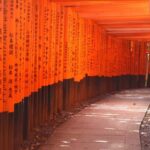
The torii gates are the headline, but the deeper experience is the climb rhythm. Red gates create a repeating pattern that makes each step feel like a new frame. It is also a place where you can choose your own comfort level. With a guided tour, you get suggestions on where to go and how to move, without feeling like you need to solve the route alone.
The practical catch is that the gates and paths mean stairs and uphill walking. This tour includes walking throughout the day, and this is one of the biggest “legs” of the itinerary. If you are not used to climbing or you do not like steep stairs, plan conservatively.
Also, 2 hours is often enough for a meaningful torii stroll and a solid photo set, but it can feel rushed if you want to go far up the mountain trail. One piece of feedback noted that time here can feel short. That is the key tradeoff: you get variety, but you do not get unlimited gate time.
Tip for photos: go at your pace early in the window, because later you are more likely to be stuck sharing space during peak flows.
Price and Value: What $105.71 Covers (and What It Does Not)
At about $105.71 per person, this tour is built for one-day efficiency from Osaka. The value angle is not only the vehicle. It is what you avoid: separate tickets, extra planning time, and the transport friction that can eat half a day.
Included items and services that matter:
- All fees and taxes
- Air-conditioned vehicle
- English-speaking conductor and Mandarin-speaking conductor
- WiFi on board and bottled water
- Entry tickets included for major attractions, including Kinkakuji Temple
Not included:
- Lunch
- Gratuity
The tradeoff is that you pay for convenience and guidance, not for customization. If you would rather control your own schedule, a DIY plan can be cheaper, but it is also more work, and it can be slower if you hit train or bus timing problems.
So for value, I think this is best if you want to see the big Kyoto hits in one day, and you prefer to spend your energy on the sights instead of logistics.
Who This Tour Fits Best, and Who Should Rethink It
This tour fits best if you:
- Want a full-day highlights approach from Osaka
- Like having an expert guide to explain what you are seeing
- Are comfortable with walking, stairs, and hills at multiple stops
- Prefer a small group and private vehicle over a large bus ride
You might rethink it if:
- You cannot handle long walking stretches. The tour explicitly notes stairs and hills, and it is not recommended for travelers who cannot walk long distances.
- You hate feeling time-pressured. The day has fixed durations at each stop, so you cannot linger without compromising another section.
- You want a highly customized itinerary. This tour is not customizable.
If you are traveling with family members who have limited mobility, you may want to look at a different pace. If you are an active couple, a solo explorer who likes structure, or a group of friends who want to hit the highlights and learn as you go, this is a solid match.
Should You Book This Full-Day Kyoto Tour From Osaka?
I would book it if your goal is clear: see Arashiyama bamboo, Kinkakuji Golden Pavilion, and Fushimi Inari-taisha in one efficient day, with guided context and included entry for at least the big-ticket temple stop. The small-group size, private-vehicle comfort, and guide help with navigation are the strongest reasons to choose it.
I would skip or switch to another option if you need minimal walking or you want lots of free-form time at any one stop. The schedule is a tradeoff: it keeps you moving and organized, but it limits how long you can linger in the red gates or the bamboo corridor.
If you are okay with a walking-heavy day and you want Kyoto highlights without planning stress, this tour earns its excellent rating in a practical way.
FAQ
What time does the tour start?
It starts at 9:45 am. Confirmation details are provided at booking, depending on availability.
Where do I meet the guide?
You meet at Shinsaibashi or Umeda DT Tower.
How long is the tour?
The duration is about 8 to 9 hours.
Is lunch included?
No. Lunch is not included.
Are entry tickets included?
Yes. All fees and taxes are included, and entry tickets for the major sights are included in the tour price.
Do I need to speak Japanese?
No. The tour includes an English-speaking conductor, and there is also Mandarin-speaking support.
How much walking is involved?
You should expect walking, including stairs and hills at each place. It is not recommended if you cannot walk long distances.
Can I customize the itinerary?
No. The tour is not customizable, and the schedule may also change due to weather and traffic.
Gates, Bamboo and the Rest

The Kyoto Shortlist: Other Days East


Quieter Courtyards in Osaka

Latest out of Osaka


Osaka Temple & Shrine Visits, side by side.
 ★ 4.9Osaka: Minoh, Katsuoji Temple, & Minoh Falls Full-day TourFrom $135172 reviews
 ★ 4.9Osaka Temple Cool Foot Bath & Matcha Experience〈45min〉From $3482 reviews
 ★ 5.0Osaka: Mind & Spirit Balance Temple Reiki HealingFrom $16141 reviews
 ★ 4.0Katsuo-ji Temple, Arashiyama Forest, & Nara ParkFrom $9137 reviews
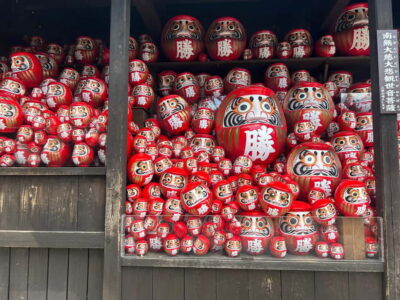 ★ 4.7Osaka: Minoh Waterfall & Katsuo-ji Temple Half-Day TourFrom $4727 reviews
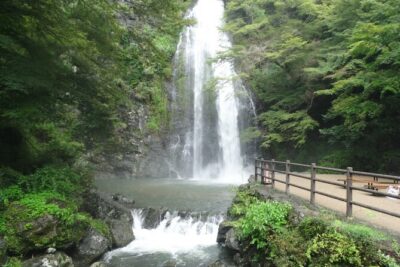 ★ 5.0Osaka Half-day E-bike Adventure: Minoh Falls & Katsuoji TempleFrom $3425 reviews
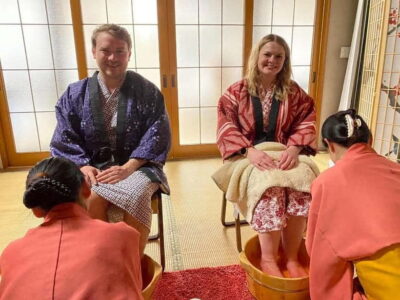 ★ 5.0Osaka Temple Head Spa &Matcha Facial – Refresh & Glow〈90min〉From $14124 reviews
 ★ 5.0Private Car Full Day Tour of Osaka Temples, Gardens and Kofun TombsFrom $70824 reviews