
REVIEW · OSAKA HOME COOKING CLASSES
Osaka Sushi Cooking Class
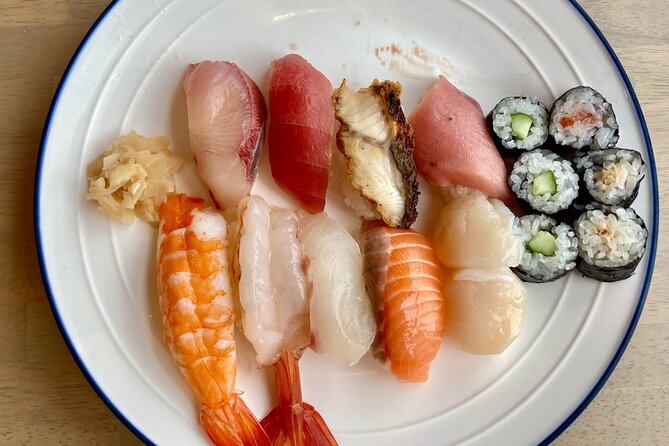
Sushi you make in 90 minutes. In Suita, Osaka, I liked the hands-on pace and the chance to practice Nigiri shaping and Maki rolling with a real chef. The main catch is time, it is about learning the core moves, not mastering every sushi style.
This class is built for beginners and sushi fans alike, with a small group size of up to 8 people and a lesson that ends with you eating your own work. You also get water and green tea, and the session runs back to the meeting point, so it feels simple to fit into a day in Osaka.
Key points I’d plan around
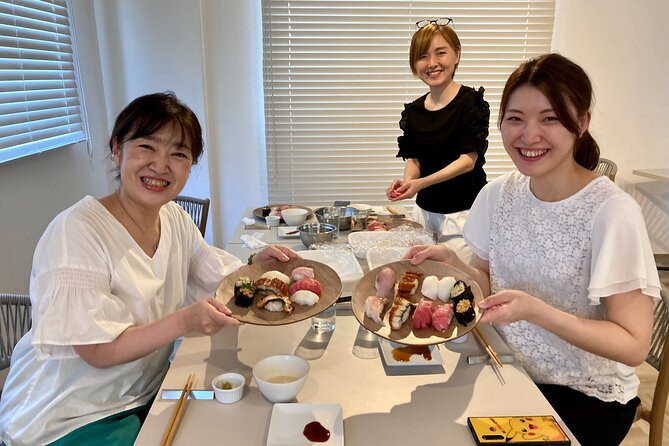
- Small group (up to 8) means more attention when your rice, nori, or roll looks a little off
- Nigiri plus Maki in one session gives you two classic techniques, not just one
- Hands-on guidance covers sushi building blocks like rice, seaweed, fillings, and condiments
- Flavor section is practical with wasabi, soy sauce, and pickled ginger, so you learn how to taste with intention
- Tasting is part of the lesson, so you get real feedback immediately, not later at home
Getting Oriented in Suita, Osaka Before You Roll
This cooking class takes place in Suita in Osaka Prefecture, not in the middle of tourist-heavy Osaka City. That matters because you can often reach it quickly by public transportation, and you are less likely to feel like you are fighting crowds right before dinner.
Your meeting point is listed as 3-chōme-35-5 Tarumichō, Suita, Osaka 564-0062, Japan. Since it is near public transportation, I recommend you plan for an extra 10 to 15 minutes to find the exact door and get settled. Bring your mobile ticket on your phone, because the tour uses a mobile ticket format.
One more small practical note: the class ends back at the meeting point. That is useful if you are already planning your evening nearby, because you do not have to figure out a second hop just to get back to your starting area.
And yes, you will smell like sushi rice by the end. That is not a problem, it is a souvenir.
Weigh this one against the Osaka Prefecture bookings people rate highest:
Your 90-Minute Sushi Lesson Plan (What Happens, and Why It Works)
The whole session is about 1 hour 30 minutes, and the flow is designed to keep you moving from basics to practice to eating.
Here’s the sequence you can expect:
- Welcome and introduction
You start with a quick hello and an overview of what you will cover. This is not a long lecture. It is a way to get you on the same page before you start handling ingredients.
- Sushi basics
The chef walks you through the building blocks: rice, seaweed, fillings, and condiments. This section matters because most first-time sushi makes fall apart for one of two reasons: the rice is treated casually, or people do not understand what the other elements are doing.
- Nigiri sushi practice
Next you shape rice and place toppings. Nigiri is a good first goal because it teaches control. Your hands learn how the rice should feel, and you learn that placement, not fussiness, is the main skill.
- Maki roll crafting
After that you make Maki and roll it with your chosen fillings. This is where technique shows up fast. A roll that is too loose is annoying to eat, and a roll that is too tight can be hard to bite cleanly. Even if yours is not perfect, you learn what to adjust.
- Flavor enhancements
Then you learn how to pair what you made with key flavor players: wasabi, soy sauce, and pickled ginger. This part is practical. It helps you stop eating sushi like it is just food, and start eating it like it is a balanced bite.
- Tasting and sharing
Finally you taste a plate of your own Nigiri and Maki. You share your thoughts, and you get a sense of what you did right, plus what you could tweak next time.
Why this structure is smart: you get instruction, immediate practice, and then feedback through tasting. That is how you actually improve in a short time.
Sushi Basics: Rice, Seaweed, Fillings, and Condiments
I love how this class starts with essentials instead of rushing straight to rolling. The chef covers the building blocks you will repeatedly use during the session: rice, seaweed, fillings, and condiments.
Rice first is not just tradition, it is strategy. Sushi rice acts like the base of the whole experience, so if you understand what the chef is trying to achieve with rice texture and handling, everything else becomes easier. Even if you are a beginner, the chef’s explanation gives you a framework you can remember later.
Seaweed and condiments might sound simple, but they are the difference between bland and balanced. With seaweed, you learn that it needs the right role in the bite. With condiments, you learn that you are not just adding flavor, you are shaping the experience. For example, when you move to the flavor section later, wasabi, soy sauce, and pickled ginger become tools instead of mystery extras.
Fillings also matter. If you choose the fillings with the chef’s guidance, you are learning how sushi is built for bite size and texture, not for maximum quantity.
If you are new to sushi, this is the part that makes you feel like you can cook later, not only watch.
Making Nigiri Like You Mean It (Rice Shaped, Toppings Placed)
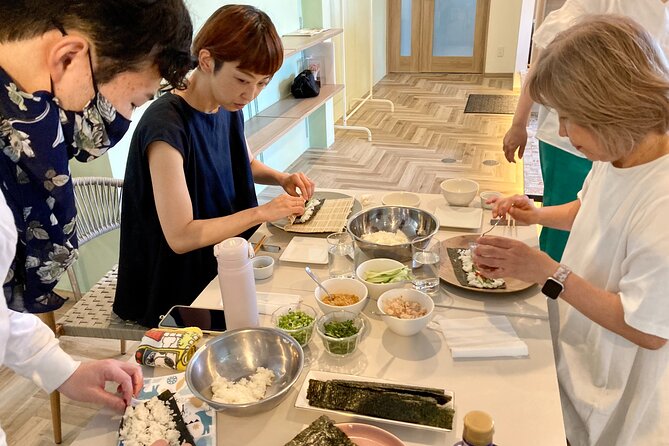
Nigiri is where you learn the core hand skills. In this class, you will create Nigiri sushi by shaping rice and placing toppings. That is the entire task in plain terms, and it is honestly refreshing.
This is one of the reasons I like this class: you do not get stuck in an endless prep workshop. You get to form the sushi, and you learn how the chef expects you to handle the rice and position the topping.
A quick way to think about it: Nigiri is practice in consistency. You are training your hands to repeat a process with enough control that the piece holds together and looks intentional.
If you are a sushi enthusiast, you will appreciate the focus on the classic style basics. If you are a beginner, you still get a win, because Nigiri is understandable. You can see what you are doing, fix it with guidance, and move forward.
Also, you are not doing this alone. The class keeps a maximum group size of 8 travelers, so you have a real chance to get help when you need it.
Rolling Maki With Favorite Fillings, Without Panic
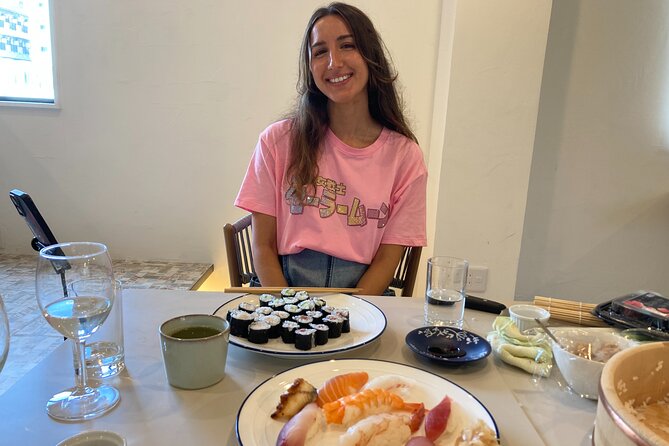
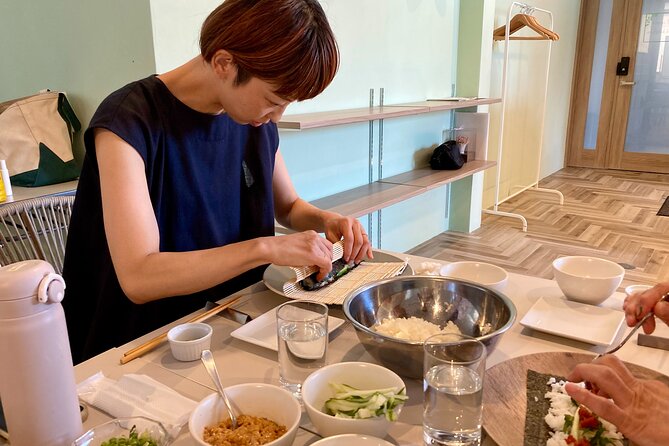
Then comes Maki roll crafting, where you roll sushi with your chosen fillings. Rolling sounds easy until you try it. In a lot of kitchens, people only learn by trial and error, which can turn frustrating fast.
Here, you get guided steps while you practice. You learn the process rather than just copying a finished example. That means if your roll looks a little rough, you can still adjust because the chef is telling you what to watch for.
You also get to pick your fillings, which adds two benefits. First, you will taste something you genuinely want. Second, you learn that sushi is flexible. The technique stays, but the inside can change.
The real value of Maki in a 90-minute class is that it teaches a transferable skill. If you can roll once with confidence, you can roll again. That is what makes a cooking class feel worth your time after the photos are done.


Wasabi, Soy Sauce, and Pickled Ginger: Flavor That Actually Makes Sense
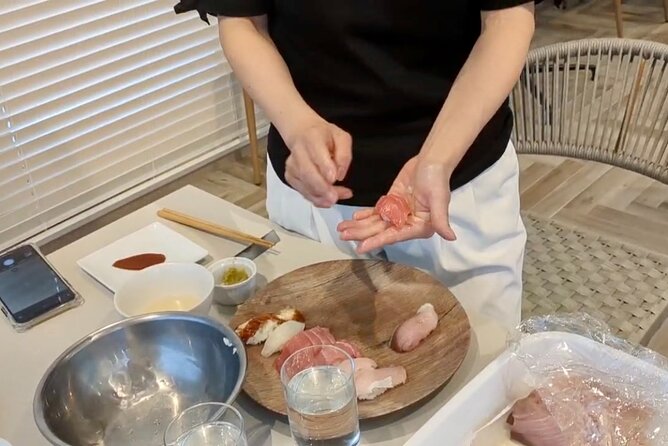
This class does not treat flavor as an afterthought. The chef includes a short but meaningful section on wasabi, soy sauce, and pickled ginger.
I like this because it helps you connect what you made to how you should eat it. Without this part, you might end up using too much soy sauce or eating each piece like it is separate from the others. With the chef’s guidance, you learn how these ingredients work as part of the bite.
Wasabi is a bite sharpener. Soy sauce adds depth. Pickled ginger works like a palate reset between tastes. You may not get a chemistry lesson, but you do get a practical sense of how the flavors interact with your Nigiri and Maki.
This is also where the included tasting becomes more rewarding. Since you are eating what you made, you can focus on the balance instead of just saying yum.
The Tasting Moment: Eating Your Nigiri and Maki
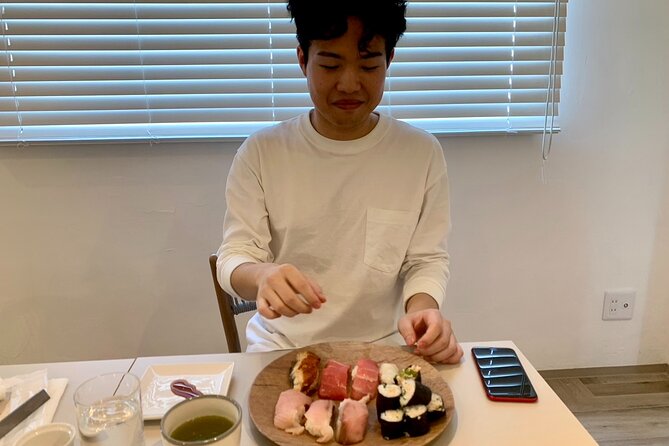
At the end, you sample a plate of self-made Nigiri and Maki. This is the point where a cooking class stops being an activity and becomes a memory.
Because you will taste your own work, you learn quickly. You notice what tastes right, what needs a tweak next time, and which part of the process you enjoyed most. That feedback is hard to get from a guided food tour where you just eat the result.
You also get to share your thoughts. With a small group of up to 8, that sharing feels relaxed. It is not a forced sing-along, it is just a chance to compare what you did and what felt easiest.
One more perk: the class includes water and green tea. That keeps you comfortable and focused while you are working with hands and ingredients.
Instructor Impact: Why Kazuki Harada’s Teaching Style Matters
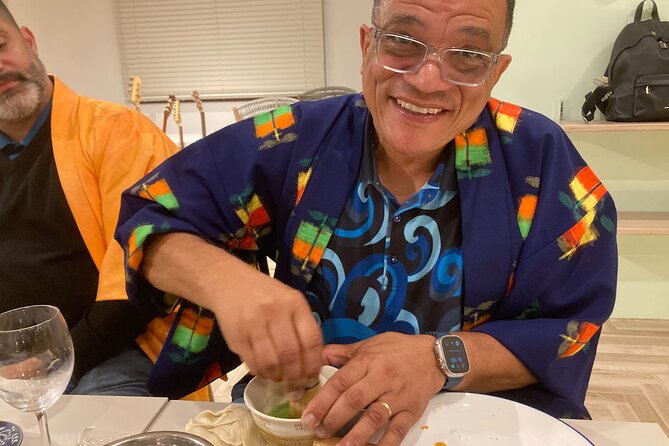
One of the strongest signals from the experience feedback is the instructor quality. The chef named Kazuki Harada is specifically praised for being an excellent instructor with a great personality and professionalism.
That kind of teaching matters in a sushi class. Sushi is technical, even when it looks simple. If the instructions are clear and the tone is supportive, you spend your time learning instead of guessing.
A good chef also makes you feel comfortable asking questions, especially when you are shaping rice or rolling a Maki that seems to be slipping. In this class, the instructor attention is built into the small group size.
If you care about learning rather than just consuming, this is an important part of the value.
Price and Value: Is $78.04 Worth 90 Minutes?
The price is listed at $78.04 per person, for about 1 hour 30 minutes, and that number is easiest to judge by what you receive.
Here is what is included:
- Ingredients
- Equipments
- Water and green tea
- Green tea (also listed again under included items)
- You get to make and taste Nigiri and Maki
What is not included:
- Alcoholic beverages such as sake or beer
For this kind of hands-on class, you are paying for ingredients, tools, and a chef who guides you through both Nigiri and Maki. You are also paying for the small group size, since classes with big groups often reduce the amount of feedback each person gets.
If your goal is to learn how to make sushi basics with real guidance, this is a reasonable use of time. If your goal is a long, multi-course meal with no cooking, then a cooking class might feel short.
But if you want a practical skill you can try on your next home meal, the value is in the combination: instruction plus making plus tasting, all in a single session.
Who This Class Fits Best (And Who Might Want Something Else)
This class is positioned as friendly for all levels, including beginners and sushi enthusiasts who want a quick, focused session.
I think it especially suits you if:
- you want a short class that does not eat your whole day
- you like learning by doing, not just watching
- you want to make both Nigiri and Maki, so you come away with variety
It might be less ideal if:
- you are looking for a deep, hours-long course with advanced techniques and lots of different sushi styles
- you want alcoholic beverages included in the experience
For most people visiting Osaka, this is a smart add-on. It gives you something interactive to do in Japan besides eating, and it leaves you with a skill.
Should You Book This Osaka Sushi Cooking Class?
Book it if you want a clear path from basics to finished sushi in a tight time frame. The class structure is simple: sushi essentials, practice with Nigiri and Maki, then wasabi, soy sauce, and pickled ginger pairing, and you end by eating your own plate.
I would also book it if you care about instruction quality. With praise for Kazuki Harada and a small group size of up to 8, you have a better chance of getting help that actually changes what you do with your hands.
Pass or consider alternatives if you already know sushi making and want advanced instruction, or if you mainly want a meal experience with no cooking.
If you are on the fence, my advice is to go for it. In 90 minutes, you walk away with something real, not just a ticket to watch.
More Tour Reviews in Osaka Prefecture





Latest out of Osaka Prefecture



Osaka Home Cooking Classes, side by side.
 ★ 5.0Osaka: Ramen and Gyoza Cooking Class in DotonboriFrom $70378 reviews
 ★ 4.3Osaka: Sumo Stage Show with Bento or Snack + Fight & PhotoFrom $93364 reviews
 ★ 5.0Osaka Cooking Class: Okonomiyaki &Japanese cuisines experienceFrom $104261 reviews
 ★ 5.0Ramen and Gyoza Cooking Class in OsakaFrom $79202 reviews
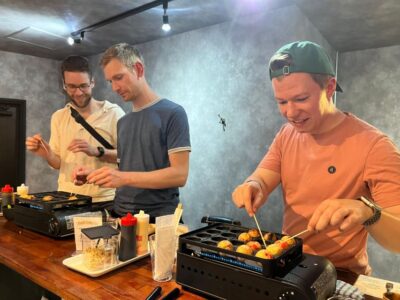 ★ 5.0Osaka Sake Tasting with Takoyaki CookingFrom $70156 reviews
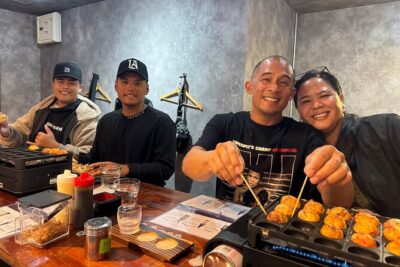 ★ 5.0Osaka Sake Tasting & Takoyaki Cooking ExperienceFrom $72149 reviews
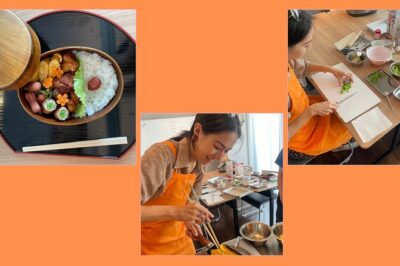 ★ 5.0Cooking Ramen&Gyoza/KatsuCurry/Bento/Okonomiyaki+Store Tour@OsakaFrom $85138 reviews
 ★ 5.0Three Types of Ramen Cooking Class in OsakaFrom $79119 reviews
Also worth a look in