
REVIEW · KOYASAN, WAKAYAMA & UJI ESCAPES
Koyasan Day Trip by Private Car from Osaka
Koyasan is worth the drive from Osaka. This private day trip turns a long haul into a smooth, guided experience, with hotel-area pickup by private car and a dedicated English-speaking guide. I like how the itinerary gives you both the big, famous sights and a few places that usually stay closed to casual visitors. The one thing to consider is the price, at $520.29 per person, which can feel steep unless you are traveling with someone you want to share a private vehicle and guide.
What makes this outing really satisfying is how the morning, lunch, and evening moments connect. You start with sacred sites around Mount Koya, then slow down at Shojin Ryori, and end with the walk through Okunoin’s lantern-lit cemetery paths. You also get a powerful esoteric Buddhism experience, including the Goma purification fire ceremony, plus an off-limits-style temple visit led with translation.
A guide is not just “company” here, it is the difference between seeing temples and understanding what you are looking at. Names like Meri and Megui show up in prior experiences, with a consistent theme of friendly, attentive pacing at each stop. If you are the type who likes structure and meaning on a day trip, this format will feel right.
Key highlights you’ll feel on the day
- Private car from Osaka that saves you from transfers and schedule stress
- English-speaking guide who explains Buddhism in everyday terms as you go
- Exclusive access to a normally off-limits temple stop with a resident monk and translation
- Goma fire ritual with a visually intense, spiritually serious ceremony
- Shojin Ryori lunch: a traditional vegan monk-style meal built for this setting
Private car from Osaka: no transfers, just temples
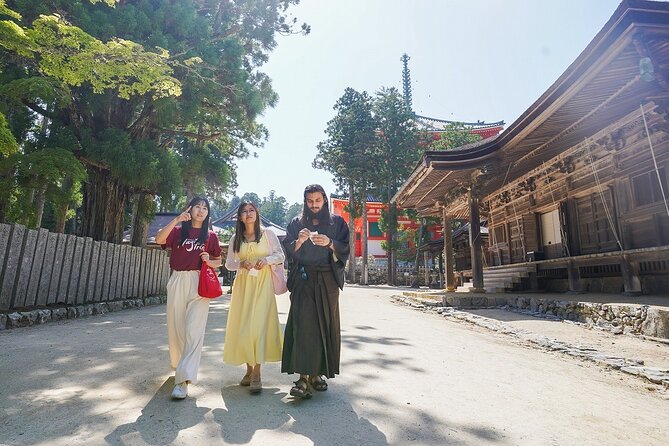
The biggest value in this tour is how it handles the hardest part of Koyasan, getting there. Instead of stitching together trains, buses, and walking, you get a private vehicle and pickup service, starting at 8:00 am. The meeting point is at the McDonald’s by JR Osaka Station Sakurabashi Exit, in the Umeda area, and the day ends back at the same meeting point.
That matters because Koyasan is not a “quick stop” location. It is a sacred mountain town built around temples, stone paths, and a slower rhythm. When you arrive by car with a driver and guide, you can focus on what you came for: religious sites and context, not logistics. You also have a dedicated English guide onboard, so you do not have to translate signage or guess what each building represents.
The tour runs about 10 hours, so you are getting a full day, not a rushed highlights loop. I like that the schedule stays organized by stops, which keeps you from spending your energy figuring out where to be next. The trade-off is simple: it is still a full day out of Osaka, so plan to keep your evening open for rest.
Longer escapes south and east
Katsuragi-cho shrine and the sacred waterfall stop
The first stop is Katsuragi-cho, where you visit a local shrine tied to a sacred waterfall. The site is located upstream in Higashidani along the Anabushi River (also called the Shijuhasse River), with the source in Mount Mikuni and Mount Shuku where steep valleys meet. Even without deep technical detail, this is the kind of place that immediately sets a tone for the day: water, devotion, and local spiritual geography.
This stop is short, about 30 minutes, so treat it like a meaningful opening rather than your main activity. Expect quiet observation time, a chance to take in the setting, and your guide’s framing of why this shrine matters in the broader Koyasan world. Practical tip: if you like photos, bring your camera ready, because early morning light and waterfall views are often the easiest shots to get before the day crowds.
Mt. Koya ascent: Kukai’s story in plain terms
Next you head to Mount Koya. As you ascend, your guide introduces the core beliefs of Japanese Buddhism and shares the inspiring story of Kukai, the monk who established this sacred sanctuary over 1,200 years ago. This is not a museum lecture. It is set up as context while you are moving through the landscape, so the ideas connect to what you are seeing next.
The time here is brief, about 10 minutes, with admission included. Use this moment to get your mental map. Once you hear the Kukai connection and the basics of the faith tradition, the temple buildings later make more sense. Without that context, you might just see impressive structures and gardens. With it, you start noticing symbols and layout logic.
A small reality check: since the ascent and explanation are time-limited, you might want to ask your guide questions on the spot if something sparks your curiosity. This is private, so you are not trapped waiting for the next tour group’s pace.
Danjo Garan: pagodas, halls, and esoteric architecture
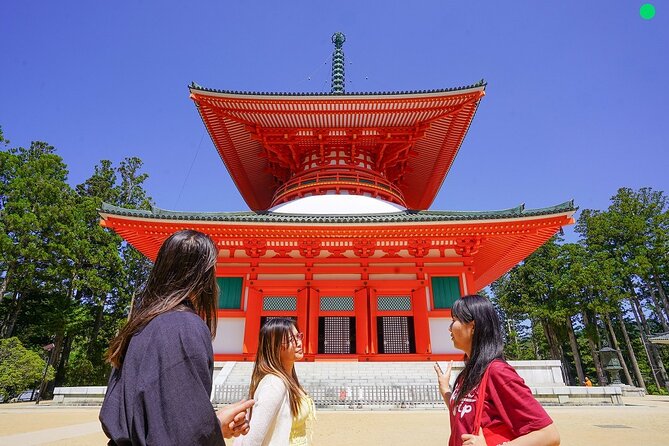
At Koyasan Danjo Garan, you visit one of the main temple complexes. This is where you get a concentrated look at striking pagodas, tranquil halls, and symbolic architecture tied to esoteric Buddhism teachings. The stop is around 20 minutes, and admission is included.
Danjo Garan’s strength is that it gives you a top-level view of how Koyasan communicates faith through layout and form. You are not just walking past buildings, you are seeing how multiple elements work together as a designed spiritual space. If you are the type who likes to understand design choices, this stop rewards you.
What I would watch for here is your attention span. After hours of travel, even a 20-minute stop can feel like a blur if you do not slow down. I like to pick one pagoda or one hall to focus on, then follow my guide’s explanation outward from that anchor. That keeps the visit from turning into a checklist.
Kongobu-ji and the rock garden pause
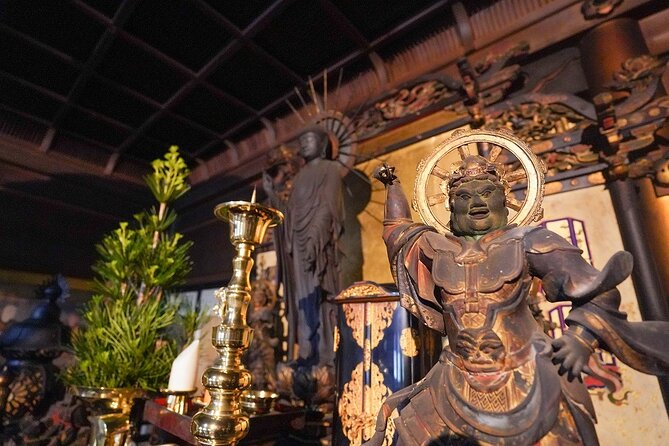
Then it is on to Kongobu-ji Temple, the main temple of the Shingon sect, known for Japan’s largest and most striking rock garden. You get about 40 minutes here, with admission included.
This is a great balance stop because it changes the pace from walking exterior spaces into a more contemplative mood. A rock garden visit can sound abstract, but your guide helps tie it back to esoteric practice and how space is meant to be read. Even if you are not a Buddhism specialist, you can usually feel the quiet structure of the garden. The “hushed wooden corridors” detail matters too, because the building style often sets your senses into observation mode.
Practical consideration: because this is a longer temple stop than some others, you may want to pace your photo-taking. If you rush, you miss the subtlety. If you slow down and let the guide explain a few key points, you walk away feeling you actually understood what you saw.
More days built around your list


Shojin Ryori lunch: a vegan meal shaped by monk life
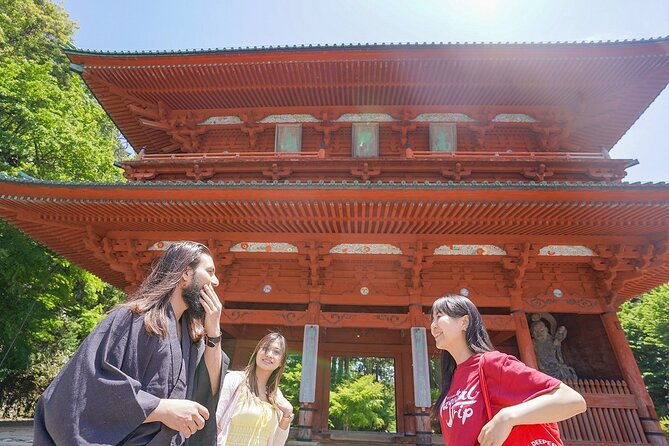
Lunch takes place at Koya-cho: traditional Buddhist vegan dining called Shojin Ryori. This meal is plant-based and developed for monks, and it lasts about 1 hour with admission included (the lunch itself is part of your tour program).
I really like when a tour feeds you in a way that matches the culture you are visiting. Here the lunch is not just “included food,” it is part of the spiritual rhythm. You get a pause from temples, and you eat something built for the same tradition that shaped these sites. That makes the day feel less like sightseeing and more like a coordinated experience.
If you have dietary restrictions, you are asked to inform the operator at booking time. Vegetarian and vegan options are available, and the meal is described as entirely vegan, which should make it easier to plan. If you are picky, still mention it early, because this is a specific type of cuisine with tofu, vegetables, and seasonal preparations rather than standard Western-style options.
Shojoshin-in temple access and the monk-led translation
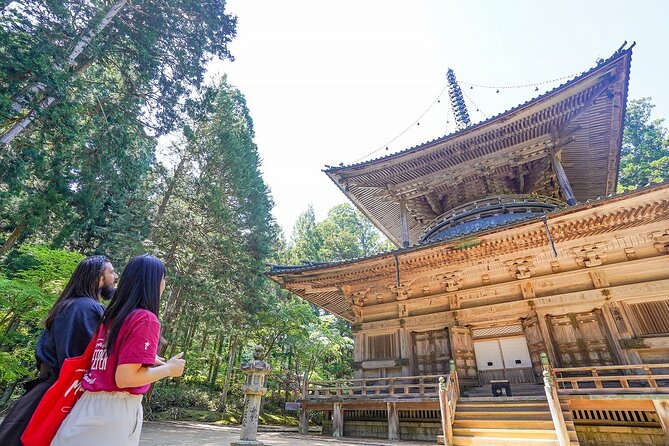
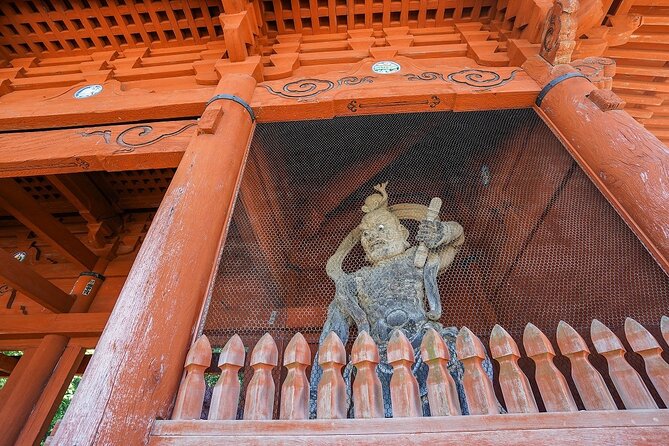
After lunch, you visit Shojoshin-in Temple. This is where the tour offers something special: a normally off-limits temple stop, opened exclusively for this experience. You get about 30 minutes, and admission is included.
What makes this stop different is the way it is presented. You explore inside with a resident monk, while your guide provides translation. That combination matters. You do not just get an outsider’s overview of a place, you get someone from the tradition and someone from your language bridging meaning to you.
For many visitors, the most memorable moments in temple touring are the ones that do not feel like a show. This sounds like one of those times. The room size, objects, or layout might not be what you’d expect if you are used to big tourist temples, so come with an open mind. I would also give yourself permission to slow down and look, even if you do not understand everything at first. Your guide’s translation should help you connect the dots without forcing you to perform knowledge on the spot.
Goma fire ritual: purification with real intensity
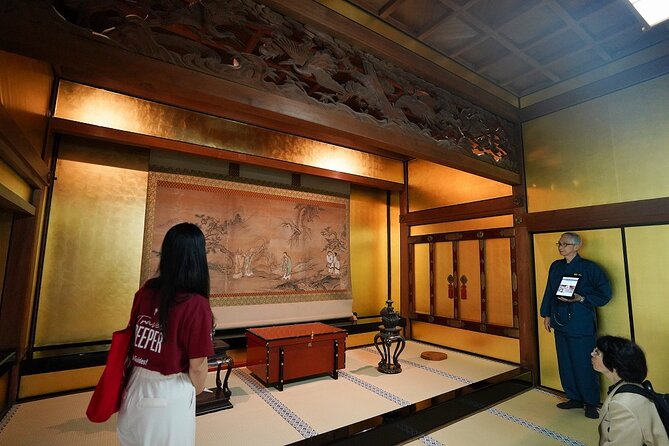
Then comes one of the most dramatic stops on the day: the Goma purification fire ceremony at Shojoshin-in. This is another 30-minute segment with admission included.
This ceremony is described as one of the most visually striking and spiritually charged rites in esoteric Buddhism. In front of the fire, participants may observe the ritual activities as part of the purification setting. The exact structure of what you do versus what you watch is not specified in the provided information, so the safest approach is to treat it as a guided observation with ceremonial meaning explained by your guide.
I like this stop because it adds emotion to the day. Temples and gardens are visual and architectural. Goma is sensory, intense, and tied to an explicit spiritual purpose. If you are curious about how faith shows up through ritual actions, this is the moment to lean in.
One practical thing to keep in mind: this is a ceremony, so keep your behavior respectful and follow your guide’s instructions about where to stand and when to move. Also, if you are sensitive to heat, smoke, or strong smells, tell your guide. They will be able to help you position yourself appropriately within what the program allows.
Okunoin cemetery walk: lantern-lit paths and quiet gravity
To end the day, you head to Koyasan Okunoin, where you walk to the Okunoin Temple. This last segment is about 1 hour, and admission is included.
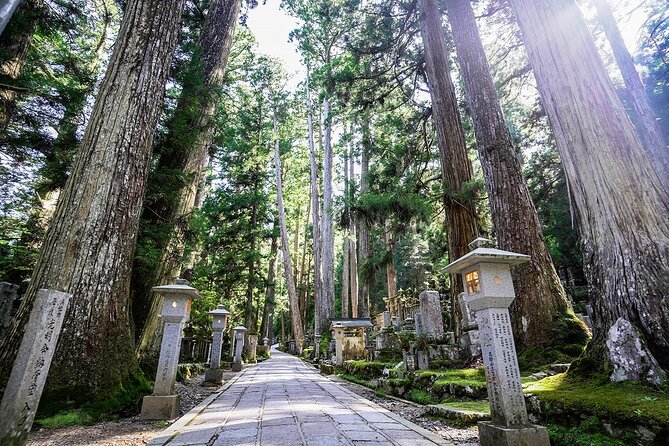
Okunoin is described as Japan’s most sacred cemetery, with a lantern-lit path past moss-covered gravestones toward the resting place. This is one of those places where the setting does part of the work for the meaning. The lantern path and the moss detail are not just atmosphere. They signal how Koyasan’s spirituality lives in the everyday physical world.
This walk can be emotionally powerful even if you do not share the beliefs. You are moving through a ceremonial geography built for remembrance. It also gives you a good transition from the intensity of the Goma ritual to a slower, reflective ending.
Wear shoes you feel stable in. The program includes walking on the way through Okunoin, and the ground can feel uneven on temple paths. If you have knee or balance issues, mention it to your guide early so they can help with pacing.
Price, timing, and value of a $520.29 private day
The price is $520.29 per person, and this is a private tour, meaning your group is the only group participating. There are also group discounts, which can matter if you are traveling with friends or family and can split the total cost across multiple people.
What you are paying for, in practical terms, is the combination of:
- a dedicated guide in English
- a private car and chauffeur, plus pickup
- admission tickets included across multiple stops
- Shojin Ryori lunch as part of the schedule
- access elements described as off-limits or exclusive for the experience
- a structured day that totals around 10 hours
If you are traveling as a couple and you really want the guide’s translation during the monk-led temple time plus the Goma ritual, this starts to look more reasonable. Without private transport, getting around Koyasan can eat time and energy, and the whole point is to keep your day focused.
If you are a solo traveler, the cost can be harder to swallow. In that case, I’d only book if you strongly value private access and you know you will make the most of the guide. Otherwise, it might feel like you are paying extra for comfort and scheduling control rather than for content.
One more scheduling detail that helps: confirmation is handled quickly after booking, and a mobile ticket is provided. That is useful for a smooth start, especially with an early 8:00 am meeting.
Should you book this Koyasan private car tour?
I would book this if you want a Koyasan day that feels intentional, not chaotic. The big reasons are the combination of exclusive temple access, the Goma purification ceremony, and a guide who explains the why behind the architecture and rituals. You also get the day-trip payoff without the transport headaches, thanks to the private car and pickup.
I would pause before booking if the group cost does not work for you. At $520.29 per person, you are paying for privacy and included logistics. If you are budget focused, you might prefer an independent approach.
If you do book, go in with a simple mindset: slow down at each stop, ask questions, and let the day’s order build meaning. When you connect Kukai’s story, the temple complexes, monk-style food, ceremony, and finally Okunoin’s quiet cemetery walk, Koyasan becomes more than a list of sights.
FAQ
What time does the Koyasan day trip start, and where do we meet?
The tour starts at 8:00 am and meets at McDonald’s JR Osaka Station Sakurabashi Exit Restaurant, Osaka, Japan (Umeda area). The day ends back at the meeting point.
How long is the tour?
The duration is approximately 10 hours.
Is hotel pickup offered?
Pickup is offered, and the tour includes private transportation by car with pickup service.
What’s included in the price?
The price includes a private vehicle, a dedicated English-speaking guide, admission tickets for the listed stops, and Shojin Ryori (a traditional vegan Buddhist meal). A mobile ticket is also provided.
Can you accommodate vegetarian or vegan diets?
Yes. The Shojin Ryori lunch is described as entirely plant-based, and you can inform the operator of any dietary restrictions at the time of booking.
What is the cancellation policy?
You can cancel for free up to 24 hours before the experience’s start time for a full refund.
More Tour Reviews in Osaka

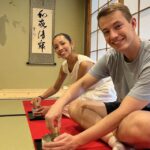
A Day Built Around Your List



Longer Escapes from Osaka
Latest out of Osaka


Koyasan, Wakayama & Uji Escapes, side by side.
 ★ 4.5Kyoto & Nara & Uji: Full Day Sightseeing Tour from Osaka or KyotoFrom $6739 reviews
 ★ 4.0Nara Deer Park, Uji Matcha, & Hot Spring Full-Day Tour from OsakaFrom $4921 reviews
 ★ 4.7Osaka: Kyoto & Nara & Uji Historical and Scenic One-Day TourFrom $5621 reviews
 ★ 4.5Lake Biwa Tour: Shirahige Shrine, Ukimido ,La Collina OmihachimanFrom $6521 reviews
 ★ 4.7Osaka: Kyoto & Uji Historical Sites and Scenic Delights TourFrom $5413 reviews
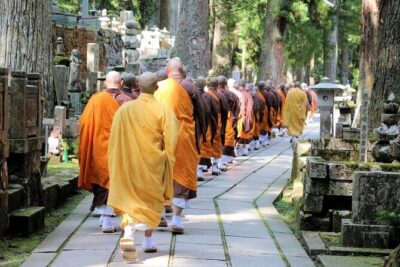 ★ 5.0Mt Koya Full Day Tour from Osaka with Licensed Guide and VehicleFrom $8988 reviews
 ★ 3.5Kansai Airport (KIX) Transfer to Osaka/Kobe/Kyoto/Nara/WakayamaFrom $658 reviews
 ★ 4.0Osaka: Nara, Todaiji, Uji Matcha, and Hot Spring TourFrom $817 reviews