
REVIEW · OSAKA TEMPLE & SHRINE VISITS
Osaka: Nara, Todaiji, Uji Matcha, and Hot Spring Tour
Deer, temples, then a hot soak. This day trip strings together Nara Park wildlife, Japan’s famous temples, and time to unwind at a real natural hot spring.
I like the structure here: you get round-trip transport from Osaka with a multilingual guide and driver, plus set time blocks at each major stop. I also like that hot spring entry is built into the day, so relaxation is not an afterthought.
One thing to plan around: some temple sites and museums are not included in the price, and one unhappy report pointed out a time crunch and confusion around included food. If you hate rushed schedules, go in expecting a tight but steady pace.
Key points I’d bank on before you go
A guided day that still feels outdoorsy, with real walking time at Nara Park and temple areas.
Natural hot spring time at Genji-no-Yu, with indoor and outdoor baths.
Uji matcha and tea-house culture, plus a stop that connects to Byōdō-in and the Phoenix Hall.
Most ticket costs are extra, so budget for temple entry and possibly other admissions.
Small groups capped at 15, which helps you stay together on a long day.
Practical timing matters, especially in cold weather when waiting and walking can feel longer.
Nara Park and Tōdai-ji, the day’s classic wow-factor
Your morning starts at 8:30 am at 1-chōme-3 Nipponbashi Parking in Osaka. From there, you roll out in an air-conditioned vehicle with your guide and driver. The tour is listed as 8 to 9 hours including travel time, so you’re basically trading one full day for a tightly packed route that hits two of the most iconic areas for first-timers.
The first major stop is Nara Park, with about 1 hour and 20 minutes on the ground. This is the deer park that Japan does so well, where you’re not just viewing animals behind fences. Deer roam freely, and they’re treated as sacred and protected. You’ll want to bring your attention level up here, because deer move fast and come close. Keep your hands and snacks controlled, and stay alert around paths where deer and people mix.
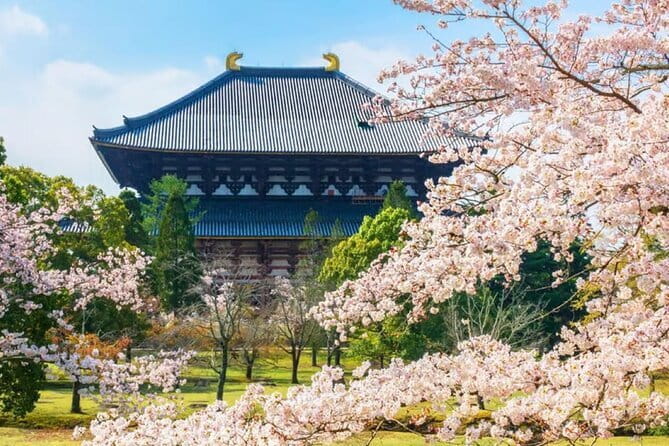
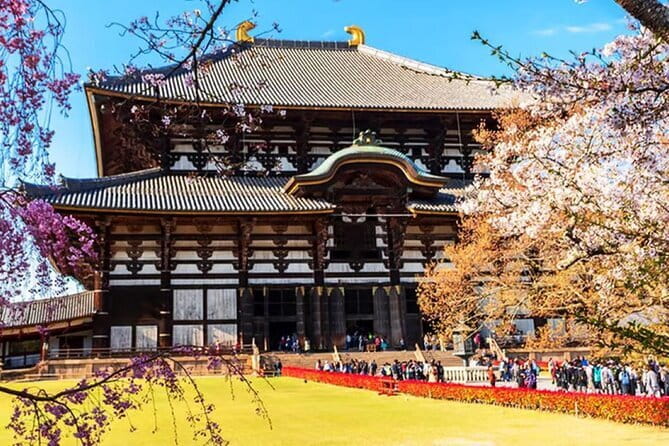
Then you head to Tōdai-ji, the temple famous for the Great Buddha (Daibutsu). The timing is shorter, about 40 minutes, but that’s still enough to see what you came for. The Great Buddha is a massive bronze statue of Vairocana Buddha, and the listing notes it stands around 15 meters tall. Even if you’ve seen photos, the scale lands differently in person. This is also one of those places where your brain slows down for a minute, partly because the crowds tend to bunch in predictable areas, and partly because the hall and statue dominate your viewpoint.
What to watch: with only 40 minutes, you’ll get a look, not a long wander. If you’re the type who loves lingering for photos from every angle, keep your expectations realistic. Think: see the Great Buddha, take a few photos, then move.
Ticket note: admission to Tōdai-ji is not included in the price list for the tour, so plan to pay separately at the site.
Quieter courtyards nearby
Kasuga-taisha’s lantern vibe and the art of not rushing
After Tōdai-ji, the itinerary continues to Kasuga-taisha Shrine, with about 40 minutes. Kasuga-taisha is dedicated to the deity Futsunushi no Mikoto, and it’s known for its long-standing history connected to the Fujiwara clan. The listing also hints at its fame for lanterns, which is the practical takeaway when you arrive: expect a visually atmospheric place where the details matter.
Forty minutes sounds tight, but it’s usually enough time to do the main approach, see key sights, and get a feel for the space. This is also a good stop for stretching your legs after time at Tōdai-ji. Shrines often feel easier to move through than temple interiors, and you’ll likely find it simpler to get photos without the same level of indoor crowding.
The one consideration: if it’s cold or rainy, those 40 minutes can feel longer, especially if you’re waiting for the group to come together. One review specifically mentioned cold weather making longer stops difficult, so dress like the day will be outdoors for longer than you expect.
Ticket note: admission to Kasuga-taisha is not included.
Uji matcha and tea-house culture, plus Byōdō-in and the Phoenix Hall
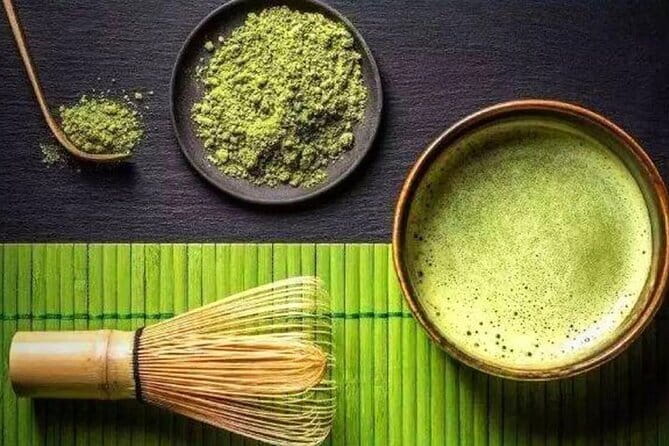
Next comes Uji, with about 2 hours and 20 minutes allocated. This is where the day shifts from deer and temple scale to something calmer and more deliberate. Uji is known for Uji matcha, and the tour includes time to enjoy a cup of green tea at a traditional tea house.
In practical terms, this stop is valuable because it breaks up the pace. After temples, you get a sensory reset: warm tea, a slower rhythm, and a chance to taste matcha that’s taken seriously in this region. If you’ve had matcha in a supermarket or as a sweet drink elsewhere, Uji tea often feels different. The tour does not promise a long lesson, but it gives you the setting where the tea actually makes sense.
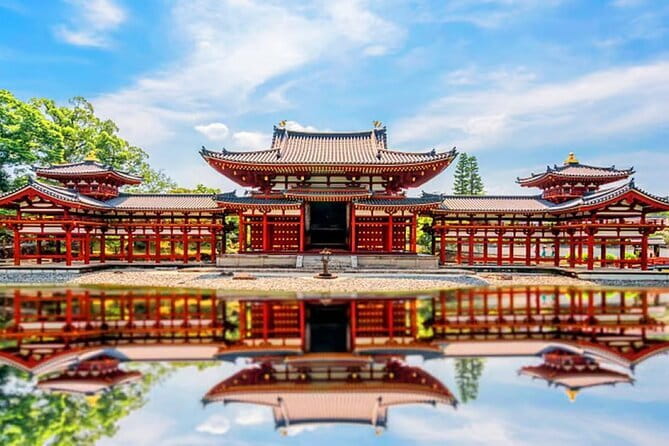
Uji sightseeing is also described as including Byōdō-in Temple, a UNESCO World Heritage Site, and its iconic Phoenix Hall. Even if your time feels compressed, seeing the Phoenix Hall is one of the big reasons people tack Uji onto a Japan itinerary. It’s a visual anchor, and it’s the kind of view you’ll remember without needing to overthink it.
Ticket note: the tour price list indicates entry for Byōdō-in is not included. There’s also mention of the Tale of Genji Museum under not included costs, so if the tour route includes it, plan for additional admissions.
Genji-no-Yu hot spring, where you actually recharge
The final anchor is Uji Natural Hot Spring Genji-no-Yu. You get about 1 hour and 20 minutes here, and the itinerary lists the admission as included at this stop.
This is one of those experiences that makes the whole day feel more balanced. You start with walking and sightseeing, and you end with a practical reset. The description also notes indoor and outdoor baths, so you can choose based on weather. In cold weather, outdoor soak time can feel amazing, but only if you go in prepared and you don’t rush yourself.
It’s also named after The Tale of Genji, which adds a bit of cultural flavor to the setting. You’re not just paying for warmth, you’re paying for a specific kind of place with a story connection.
What to budget: the tour’s “not included” section lists hot springs around $10. At the same time, the itinerary stop for Genji-no-Yu says admission included. That mismatch can happen when an operator uses different ticket types or add-ons. I recommend you confirm what you’ll pay on the day, especially if you plan to use any optional services.
Price and logistics, is $81 good value for this route?
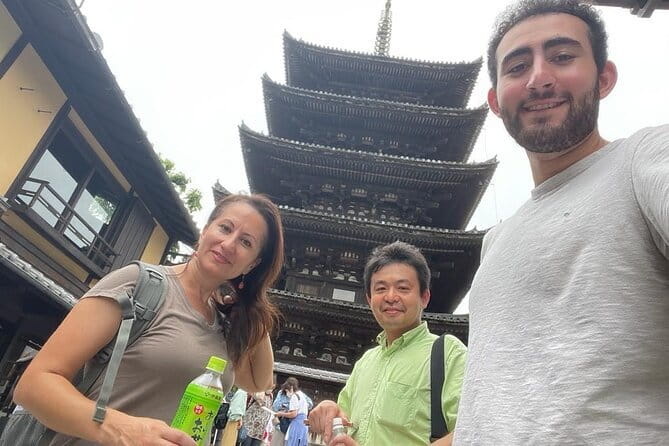
At $81 per person, you’re buying a full-day package that includes a lot of the expensive parts of logistics. The tour covers round-trip transportation from Osaka and uses an air-conditioned vehicle. It also includes a multilingual guide and driver, which is worth money on a day like this when you’re moving between Nara and Uji.
Then there’s the key value math:
- Included: transportation, guide/driver, Nara Park admission, and hot spring time is described as included at Genji-no-Yu.
- Not included: food and drinks, plus likely temple and shrine entry for Tōdai-ji, Kasuga-taisha, and Byōdō-in, plus possible museum entry and other small costs.
So yes, it can be good value, but only if you treat it as a “sightseeing and transport package,” not an all-in-one where every ticket and meal is automatically covered. One critical review complained that expected included food did not happen, and that time pressure led to skipping the Buddha temple and other elements. I can’t promise your day will go exactly the same way, but it’s a good reminder: confirm what is included for meals before you assume it will be served no matter what.
Group size also matters for value. This tour caps at a maximum of 15 travelers, which usually helps with pace and coordination. Smaller groups can mean fewer “where are we” moments, especially when you’re dealing with deer park logistics and shrine walking routes.
More runs out to the deer park
What to wear and how to avoid the common day-trip headaches
This tour is very doable for most people, but your comfort depends on your preparation. The walking is not described in miles, but the stop timing tells the truth: you’ll move a lot in a long day.
Here’s how I’d gear up:
1) Wear good footwear
You’ll be on outdoor paths at Nara Park and walking around temple and shrine areas. One review directly called out that sturdy shoes are essential, especially since the day can be long.
2) Dress for cold if you travel in winter
The itinerary compresses multiple outdoor-ish moments. If the weather is harsh, waiting and moving between stops can feel slower than the clock suggests.
3) Respect tattoo rules
Visible tattoos are not allowed on this tour. If that applies to you, plan to cover them or reconsider the activity.
4) Plan your food expectations
Food and drinks are not included. If there’s anything described as included in your booking notes, verify the details. A complaint about missing promised food is exactly the kind of mismatch that can ruin your mood mid-day.
5) Expect a tight schedule
The tour has clear time blocks: 1 hour and 20 minutes at Nara Park, 40 minutes at Tōdai-ji, 40 minutes at Kasuga-taisha, 2 hours and 20 minutes at Uji, and 1 hour and 20 minutes at Genji-no-Yu, plus transportation. That structure is good for seeing a lot, but it means you should not count on extra wandering.
Also note the tour needs at least 4 people to run. If it doesn’t meet the minimum, you may be offered cancellation or a route change. And unaccompanied minors are not allowed, so children need to be traveling with an adult.
Who this Osaka to Nara to Uji day trip is best for
This is a strong pick if you want a classic first-timer route with a built-in payoff at the end.
You’ll likely enjoy it if:
- You’re in the Osaka area and want to see Nara and Uji without navigating trains and transfers all day.
- You love the Nara deer experience and want it organized, not improvised.
- You appreciate matcha culture and want a tea house stop instead of just buying a souvenir drink.
- You value the reset of a hot spring after sightseeing.
Families can work well too, since the day pairs a visually exciting park with structured temple visits and a relaxing hot spring ending. The key is that your group stays together and you handle deer-practical behavior calmly.
If you’re the type who wants slow, deep exploration at Tōdai-ji or Byōdō-in, you might feel the time pressure. In that case, you may prefer a self-guided day or a tour with fewer stops.
Should you book this tour?

My honest take: I’d book it if you want a guided, transport-friendly day that gets you to the headline places, and you’re happy to pay extra for some temple tickets and keep food flexible. The hot spring ending at Genji-no-Yu is a real quality-of-life upgrade, especially when the day is cold or you’re on your feet a lot.
I would pause before booking if you know you’re sensitive to time crunches or you strongly rely on included meals showing up exactly as promised. Because the schedule is built on fixed time blocks, any delay can compress the last part of the itinerary.
If you do book, do two smart things: confirm what tickets and any food are actually included for your date, and pack footwear plus warm layers. That simple prep turns the day into a win instead of a hassle.
FAQ
How long is the tour?
It runs about 8 to 9 hours total, including transportation time.
What time does the tour start, and where is the meeting point?
The start time is 8:30 am. The meeting point is 1-chōme-3 Nipponbashi Parking in Osaka (542-0073, Japan). The tour ends back at the meeting point.
Is transportation included from Osaka?
Yes. The tour includes round-trip transportation from Osaka by an air-conditioned vehicle.
Is the Nara Park admission included?
Yes. Admission for Nara Park is listed as included.
Are tickets for Tōdai-ji and Kasuga-taisha included?
No. Entry tickets for Tōdai-ji and Kasuga-taisha are listed as not included.
What about Byōdō-in Temple and the Tale of Genji Museum?
Tickets for Byōdō-in Temple and the Tale of Genji Museum are listed as not included.
Is food included?
No. Food and drinks are not included.
Is the hot spring admission included?
The itinerary lists Genji-no-Yu hot spring admission as included, but the cost notes also mention hot springs around $10 under not included. Check what your booking covers for your date to avoid surprises.
What are the group size limits?
The tour has a maximum of 15 travelers.
Are tattoos and unaccompanied minors allowed?
Visible tattoos are not allowed. Unaccompanied minors are not allowed either.
Longer Escapes from Osaka
More Mornings with the Deer
Quieter Courtyards in Osaka
Latest out of Osaka


Osaka Temple & Shrine Visits, side by side.
 ★ 4.9Osaka: Minoh, Katsuoji Temple, & Minoh Falls Full-day TourFrom $135172 reviews
Full Day Kyoto Tour : Bamboo Forest, Golden Temple, Fushimi InariFrom $10584 reviews
 ★ 4.9Osaka Temple Cool Foot Bath & Matcha Experience〈45min〉From $3482 reviews
 ★ 5.0Osaka: Mind & Spirit Balance Temple Reiki HealingFrom $16141 reviews
 ★ 4.0Katsuo-ji Temple, Arashiyama Forest, & Nara ParkFrom $9137 reviews
 ★ 4.7Osaka: Minoh Waterfall & Katsuo-ji Temple Half-Day TourFrom $4727 reviews
 ★ 5.0Osaka Half-day E-bike Adventure: Minoh Falls & Katsuoji TempleFrom $3425 reviews
 ★ 5.0Osaka Temple Head Spa &Matcha Facial – Refresh & Glow〈90min〉From $14124 reviews