
REVIEW · OSAKA CALLIGRAPHY & ARTISAN WORKSHOPS
Japanese Calligraphy Experience in Osaka
Kanji looks different after you try it. This Osaka workshop turns traditional Japanese calligraphy into a hands-on skill, with clear guidance from instructor Ryusho and a short, satisfying path from first brush to finished artwork. I especially like the step-by-step instruction and the fact that you leave with your own framed, take-home piece.
The one thing to keep in mind is time. In about 1 hour 30 minutes, you practice one kanji from a set of choices, so it is not a long multi-character deep practice session. Still, for most people, that timebox is exactly the point.
Key Highlights If You’re Short on Time
- Shinsaibashi location that’s easy to reach, on the first floor of a hotel, about a 1-minute walk from the subway
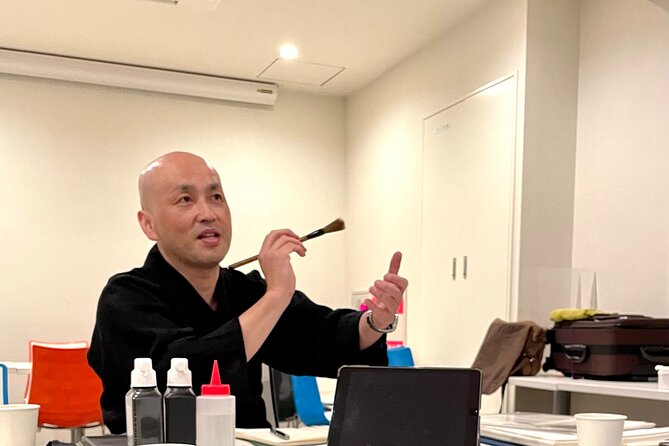
- Ryusho’s 27 years of teaching experience, with a calm, beginner-friendly pace
- Choose your kanji from 16 popular options, then practice the strokes you care about
- You sign your name and complete the work on a set board size, then package it as a hanging scroll you can display
- Green tea, Japanese sweets, and a commemorative photo at the end, so the experience lands as a real memory
A Hotel-First-Floor Workshop in Shinsaibashi That Makes It Easy
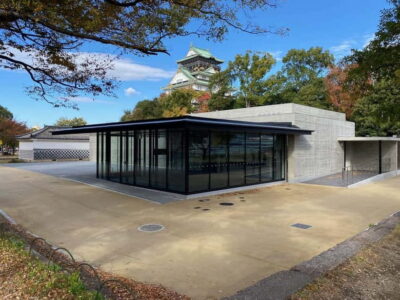
Osaka’s Shinsaibashi area is a smart base for this class because it keeps things simple. The workshop happens on the first floor of a hotel in Shinsaibashi (Chuo Ward), and the meeting point is listed as 1-chōme-1-3 Higashishinsaibashi, Osaka 542-0083. You do not need a museum ticket, a long walk, or a complicated scavenger hunt.
If you are timing your afternoon, note the start time is 2:00 pm and the experience runs about 1 hour 30 minutes. That makes it a good slot between lunch and evening plans. Since the location is near public transportation, you can also keep your day flexible instead of building your whole itinerary around getting there.
One more practical point I like: the group is capped at 10 people. Smaller groups usually mean more attention when you are learning something physical, like brush pressure and stroke control.
More ink, more craft benches
Meeting Ryusho and Learning the Purpose Behind Calligraphy
Before anyone hands you ink, you start with the story of Japanese calligraphy. You get the cultural context, including why calligraphy is considered more than just writing. The idea is that the character shows the mind behind the hand, so your focus matters as much as your final shape.
Ryusho’s teaching approach is built around clear, easy-to-understand steps. With 27 years as a calligraphy instructor, he does not treat this like a performance you watch from afar. Instead, you build understanding in the order that makes sense: what you are writing, what tools you are using, and how strokes work.
This part matters because it changes what you pay attention to later. If you only copy a symbol, your strokes will feel random. If you understand how brush movement creates the character, you start to control the outcome.
Tool Time: How Brush, Ink, and Board Work Together
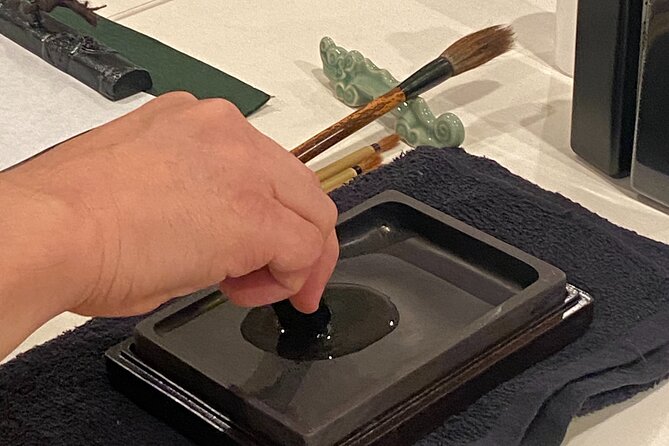
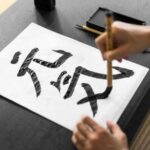
Next comes the practical basics. You learn how to use the calligraphy tools, then you get a demonstration of brush usage. The key detail here is that you do not jump right into your chosen kanji without building the foundation first.
You also learn how to think about strokes. The course is structured so you practice the feel of the brush and learn how to place strokes with intention. In calligraphy, even a tiny change in angle or pressure can change how the character looks, so the tool lesson is not optional. It is the difference between a souvenir and something you actually want to display.
If you have never held a brush, this is still the right place to start. The format is designed so you can follow along step by step, and you are not left figuring it out on your own at a table.
Your Kanji Choice: 16 Popular Options You Can Actually Connect With
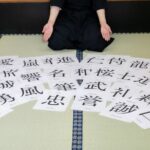
Once the basics are in place, you choose your favorite kanji. The class offers 16 kanji that are popular overseas, so you are not stuck with rare options you cannot pronounce or do not understand.
This choice is a big deal for value. A lot of craft classes end with a random outcome, or a design you do not really feel. Here, you pick the character, then you put your attention into learning how to write it. That means your final piece feels personal, not generic.
You also get to add your signature. The process includes signing your name as part of the finishing steps, so the end result reads like a real artwork, not just a practice sheet.
Practice the Strokes, Then Finish the Piece on a Real Board
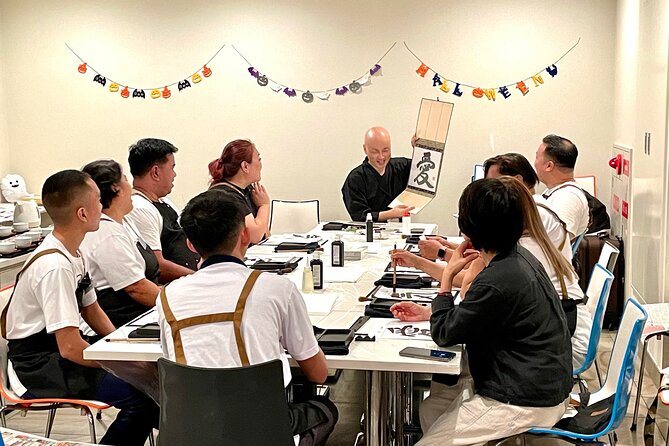
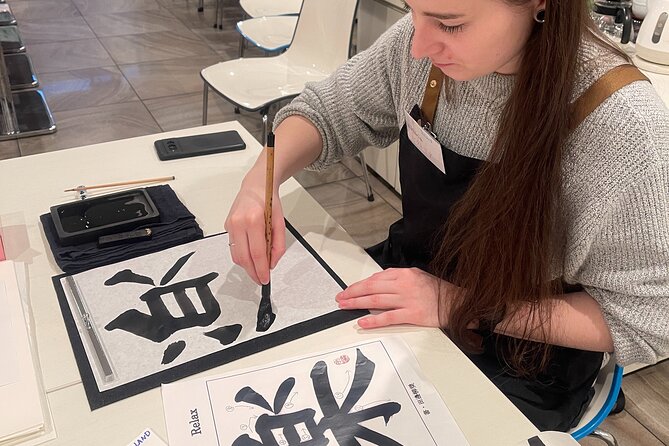
Now comes the work. You practice your chosen kanji by writing one stroke at a time, with guidance and repetition. The course emphasizes getting the movement right, not just getting it done quickly.
When you are ready, you complete your original work on a specific board size listed as 242 × 273 mm. That matters because it is not loose, vague “try your best” art. You are working on a defined format, which helps you produce something display-ready within the class time.
At the end, your finished writing is placed into a special art frame, then set into a display case as a hanging scroll. The class materials are designed to be portable and easy to keep, which is exactly what you want if you plan to take your art home the same day.

The Take-Home Hanging Scroll: A Souvenir You’ll Actually Put on a Wall
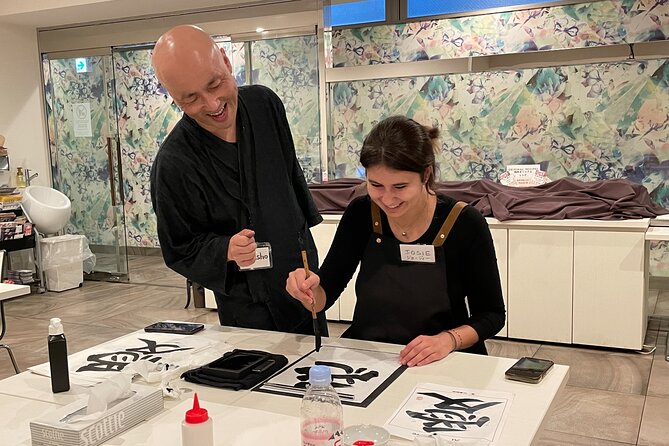
I like this class because the final packaging is part of the experience. You are not just handed a sheet of paper and sent on your way. Instead, your work is turned into a hanging-scroll style display that you can put up or keep as a meaningful keepsake.
The display case is described as foldable and good for portable. That is useful if you are also doing other Osaka activities and do not want to worry about how to carry a fragile item.
Also, because you are signing your name and selecting your kanji, the piece feels like your own. That is why this workshop works as a travel memory. It gives you something physical and personal that still connects to a deeper cultural practice.
Tea, Sweets, and a Commemorative Photo to Mark the Moment
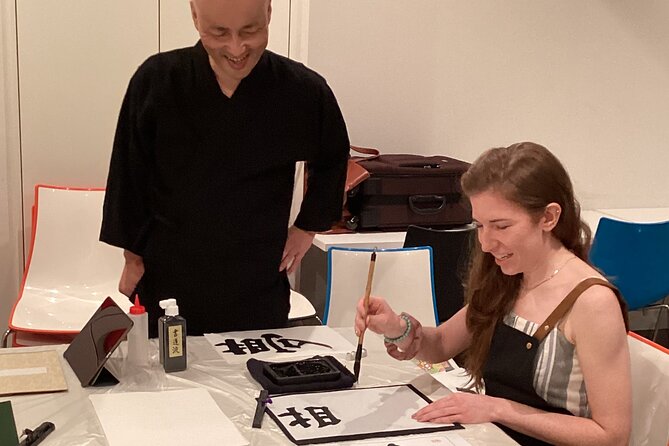
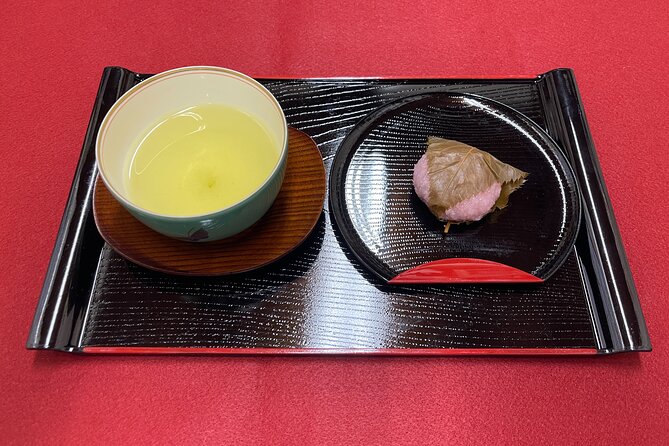
The class does not end when your brush goes down. You finish with green tea and Japanese sweets, plus a commemorative photo.
This part is not filler. It is what helps you slow down and treat the experience like a real event, not just a quick activity. If you are the type who always rushes to the next stop, this ending helps you land.
It also gives you a smooth transition back into normal travel mode. After tea, you can head out for Shinsaibashi shopping, dinner, or a nighttime walk without feeling like you still have something unfinished in your head.
Price and Value: What $51.24 Buys You in Real Terms
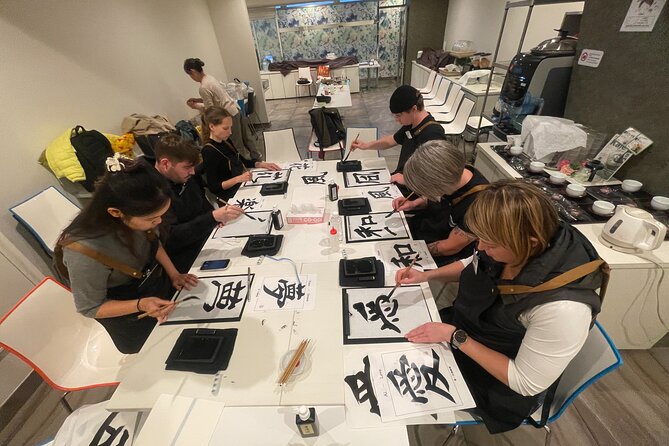
At $51.24 per person, this is not a bargain you ignore. It is a fair price for a class that includes instruction, materials, and a take-home finished product, not just a short demo.
Here is what you are paying for, in practical terms:
- Hands-on teaching led by Ryusho, who has decades of instruction experience
- Tool guidance and demonstration, so you are not guessing brush technique
- A complete, finished artwork that you can take home and display
- Green tea, Japanese sweets, and a commemorative photo, which make the experience feel complete
When you compare that to many “pay for a workshop, leave with a tiny result” activities, this one has a clearer end product. You leave with a hanging-scroll style display tied to your chosen kanji and your signature.
One more value angle: it is located in Shinsaibashi, which is usually convenient for travelers planning multiple stops. If you already plan to be in that area, the logistics cost you less time and energy.
Booking is also worth doing ahead. The average booking window shown is about 39 days, which usually means schedules fill at least for certain time slots.
When This Osaka Calligraphy Workshop Is the Right Fit
This experience fits best if you want:
- A short, structured cultural activity that does not require prior experience
- A real craft outcome you can take home and display
- Teaching that focuses on technique, not just decoration
- A location that is easy to reach in a central area like Shinsaibashi
It is especially good for first-timers. The class is built around learning strokes in order, with a demonstration and then your own practice. If you enjoy making something you can show later, you will like how the class ends.
If you want to write multiple characters or spend several hours perfecting composition, this likely feels too short. That is the trade-off: you get a polished single-piece souvenir, not a long calligraphy study session.
Should You Book It?
I think you should book this Japanese calligraphy workshop in Osaka if you want a beginner-friendly class with a real finish, not a quick photo stop. The combination of Ryusho’s instruction, your kanji choice, and the take-home hanging scroll makes it feel like you truly learned something, not just participated.
Do book early if you can, since it is capped at a small group size and starts at a specific afternoon time. Then plan your day so you arrive with time to settle in, not rushing from one location to the next.
If you are in Shinsaibashi anyway and you like the idea of bringing home a piece of writing that reflects your attention and effort, this is one of the more satisfying cultural workshops you can fit into a tight schedule.
FAQ
Where is the meeting point?
You meet at 1-chōme-1-3 Higashishinsaibashi, Chuo Ward, Osaka 542-0083, Japan. The experience takes place on the first floor of a hotel in Shinsaibashi and is about a 1-minute walk from the subway station.
What time does the class start?
The listed start time is 2:00 pm.
How long is the Japanese calligraphy experience?
The duration is listed as about 1 hour 30 minutes.
How many people are in a group?
The activity has a maximum of 10 travelers.
Do I get to choose my own kanji?
Yes. After a tool and technique explanation, you choose one kanji from 16 options that are popular overseas.
What do I take home at the end?
You take home your finished original artwork. It is completed on a board sized 242 × 273 mm, then placed into a special art frame and set into a display case as a foldable hanging scroll.
Is green tea and sweets included?
Yes. At the end you can enjoy green tea and Japanese sweets, along with a commemorative photo.
Can I get a full refund if I cancel?
Yes. Free cancellation is available if you cancel at least 24 hours before the experience start time for a full refund.
More Tour Reviews in Osaka


Brush, Ink and Workbench
Latest out of Osaka


Osaka Calligraphy & Artisan Workshops, side by side.
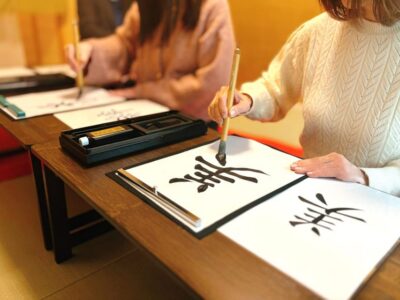 ★ 5.0Osaka: Private Japanese Calligraphy ExperienceFrom $5166 reviews
 ★ 5.0Osaka: Traditional Japanese Ceramics Private ExperienceFrom $9657 reviews
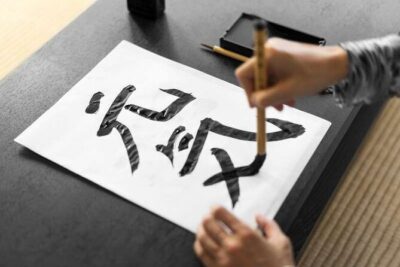 ★ 5.0Calligraphy Workshop in Namba, DotonboriFrom $4957 reviews
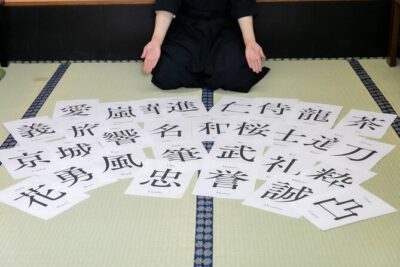 ★ 4.5Learning Zen of Japanese Calligraphy in kimono near Osaka CastleFrom $4353 reviews
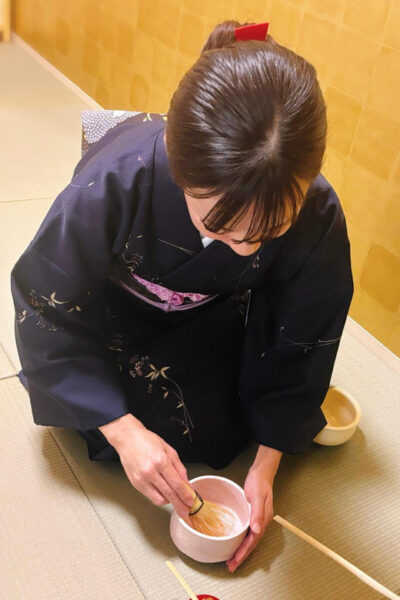 ★ 5.0Osaka: Private Tea Ceremony and Calligraphy ExperienceFrom $6450 reviews
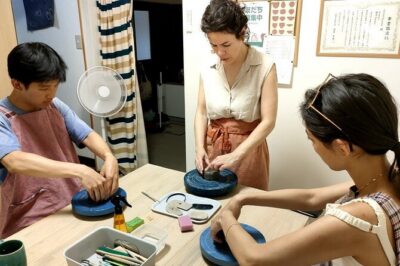 ★ 5.0Osaka: Private Japanese Traditional Ceramics ExperienceFrom $9429 reviews
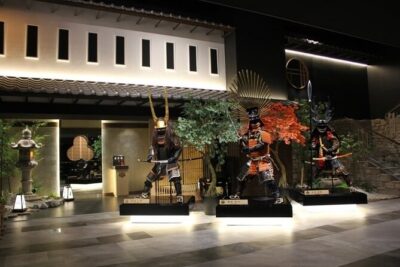 ★ 5.0Samurai dress-up and shows, plus Tea Ceremony & CalligraphyFrom $12327 reviews
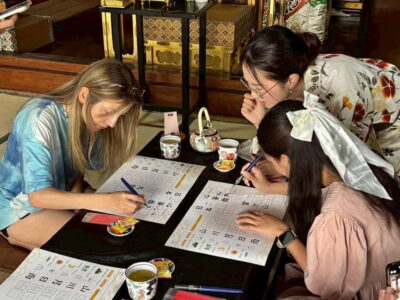 ★ 4.9Osaka: Temple Tour and Traditional Calligraphy LessonFrom $2024 reviews
Also worth a look in