
REVIEW · OSAKA SAMURAI, NINJA & KENDO EXPERIENCES
Experience Samurai and traditional Culture to the fullest
Sword and calligraphy in Osaka, in 3 hours. This experience pairs kimono dressing and calligraphy with a real katana trial and then ends with an armor photo near Osaka Castle, so you get Japanese culture from a few angles in one go.
I also like the pace, especially the hands-on coaching, from holding a brush and practicing strokes like tome, hane, and harai to handling the sword basics in English. A photographer documents the moments, so your final armor look is captured, not guessed.
One practical catch: there is no hotel or train pickup, and you need to arrive 30 minutes early to change and get set. It is also not designed for kids under 10.
Key points you will care about
- Kimono first, then calligraphy drills that actually teach grip and stroke order
- Samurai-themed calligraphy based on the idea of resignation, written as your final brush exercise
- Tea ceremony with etiquette focus, served as powdered green tea with Bushido-inspired emphasis on honor
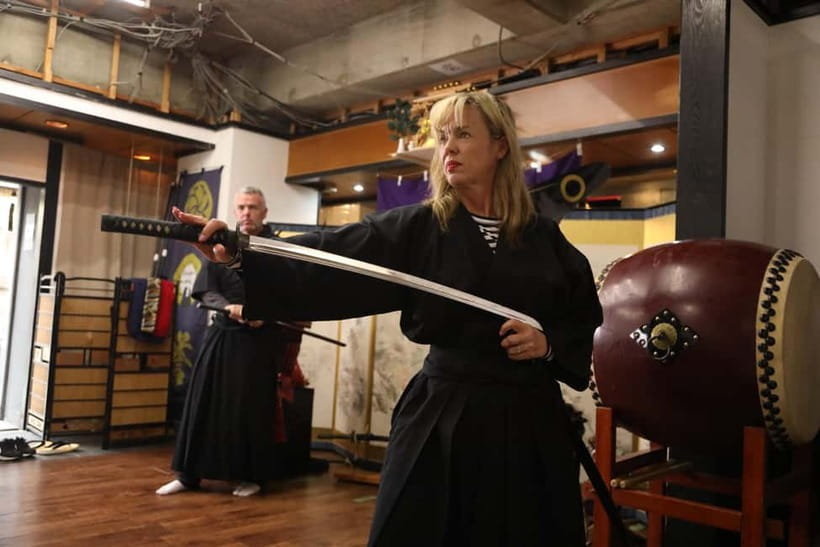
- Katana sword trial cutting, where you learn technique and also the responsibility of carrying a deadly weapon
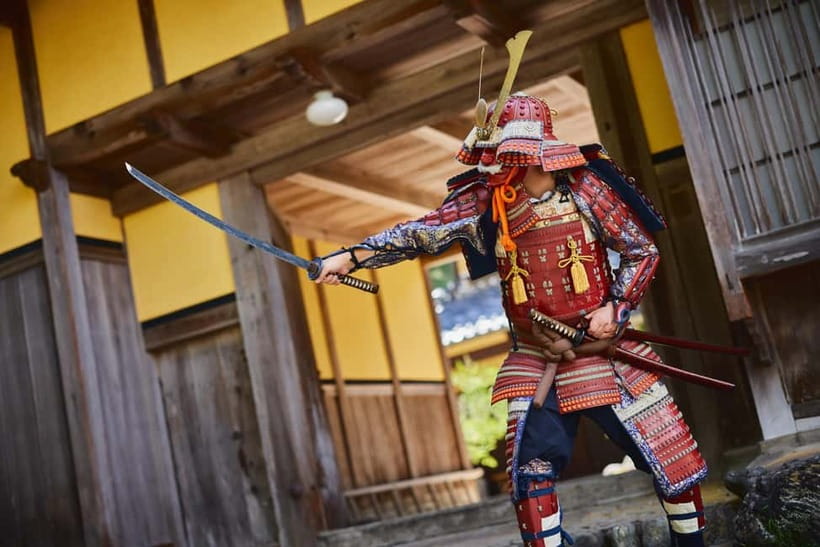
- Armor and Osaka Castle grounds photo, set during the Battle of Osaka story line in April 1615
Why This Osaka Samurai Session Feels Like Culture, Not Just Costumes
This is one of those Osaka experiences that does not stop at dressing you in armor and taking a picture. You work through a chain of skills that connect visually and emotionally: calligraphy as discipline, tea as courtesy, and sword practice as controlled action with a heavy mindset.
The big win is that the day is structured like a mini cultural training session. You start by changing into kimono, then shift into brush technique, then move into etiquette with tea, then end with movement and confidence during sword cutting and armor time. Even the photo moment is tied to a specific historical scenario, not just a generic reenactment.
The only thing you should plan around is that this is a hands-on program. You will be doing physical motions, wearing outfits, and following instruction closely. If you want a totally passive activity, this is probably not your best match.
More time in the dojo
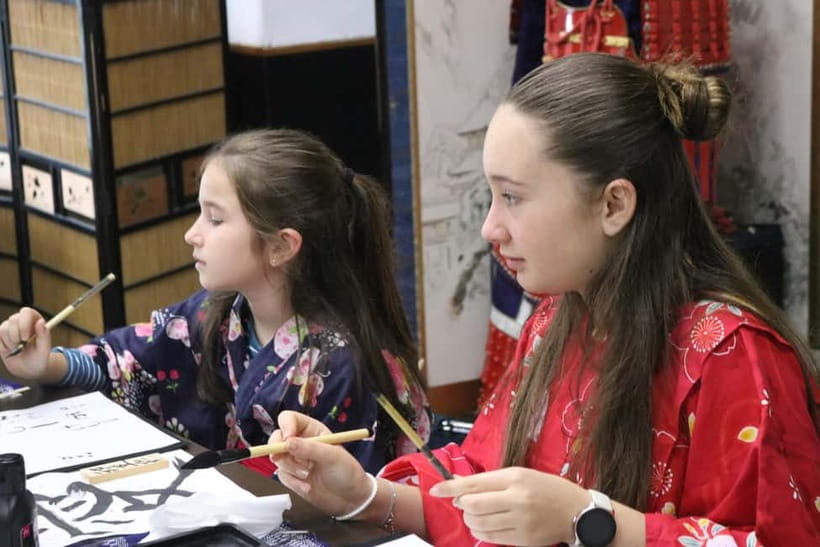
Kimono Up, Brush On: Calligraphy Strokes You Practice for Real
Your first step is learning Japanese traditional culture through the most classic gateway: changing into kimono. The instruction frames it as more than clothing. The idea is that the form helps you adopt the manners and gestures tied to Japanese arts.
Then you move into calligraphy practice with a professional instructor. You learn how to prepare yourself for calligraphy, including how to hold the brush and use the tools correctly. The training focuses on basic stroke technique, specifically tome, hane, and harai. That matters because a lot of calligraphy demos show finished characters, not the movements that make the character readable.
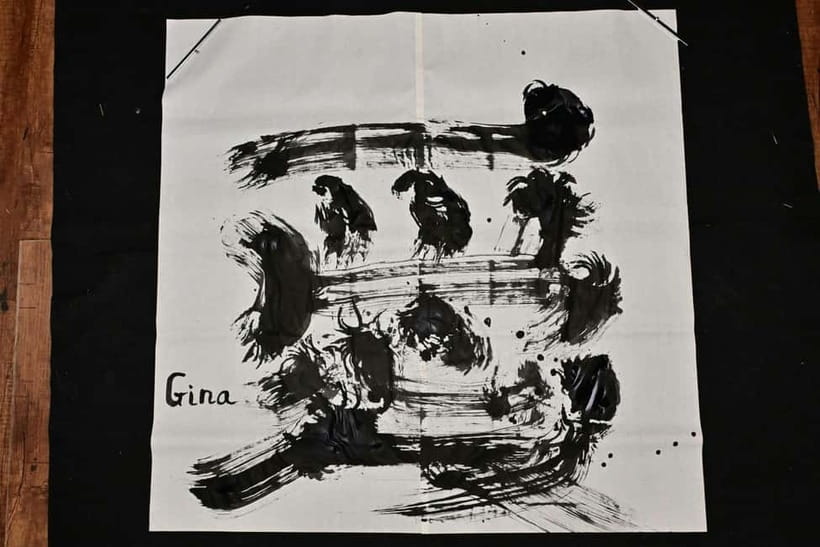
Next, you choose a kanji character and practice it while following the stroke order. You also get a chance to express yourself physically, not just mentally, which makes the character feel like something you made with your body.
This section is also time-boxed enough that you stay engaged. It is not a never-ending art class. It is a guided practice that gets you producing a real outcome by the end.
Samurai Calligraphy And Tea Ceremony, Courtesy Turned Into Movements
After standard calligraphy practice, the program turns more distinctly samurai-themed with Samurai Calligraphy (Words of resignation). The concept is explained as the idea of resignation from this world, written as words to say goodbye while preparing to die. The instructions then guide you to write your chosen kanji again, but this time with extra attention to technique and intent.
That framing is intense, and you should take it for what it is: a cultural storytelling element that influences how you hold your brush and how carefully you place each stroke. If you are the kind of person who likes history through symbolism, this part will land well.
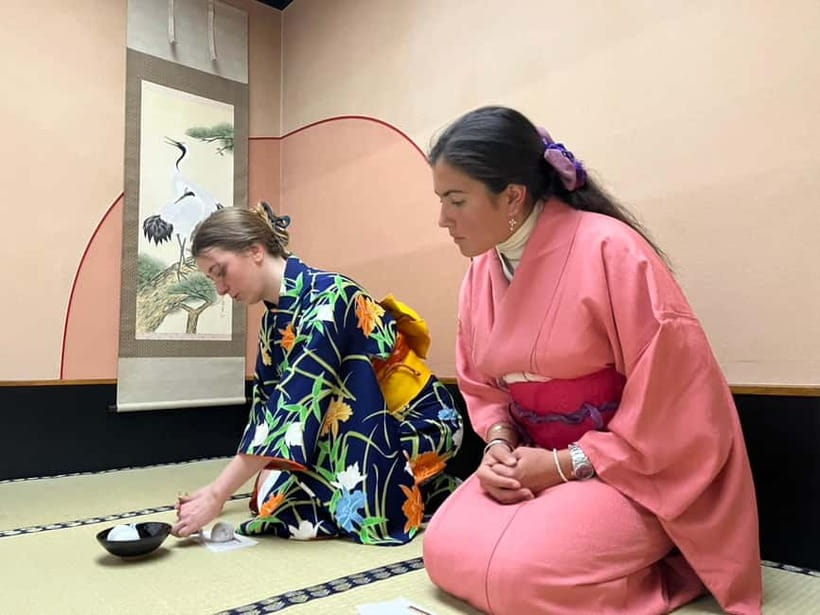
Then you shift into samurai tea ceremony. A master of the tea ceremony prepares and serves powdered green tea to participants. The focus is etiquette, manners, beautiful gestures, and the spirit of hospitality. The program explicitly ties this to Bushido through the emphasis on honor.
What I like about this pairing is that calligraphy and tea ceremony are both about control. One is control of line. The other is control of movement and attention. Together they feel like the soft skills behind the harder ones you get later.
Katana Trial Cutting: Self-Respect, Safety, And Controlled Swings
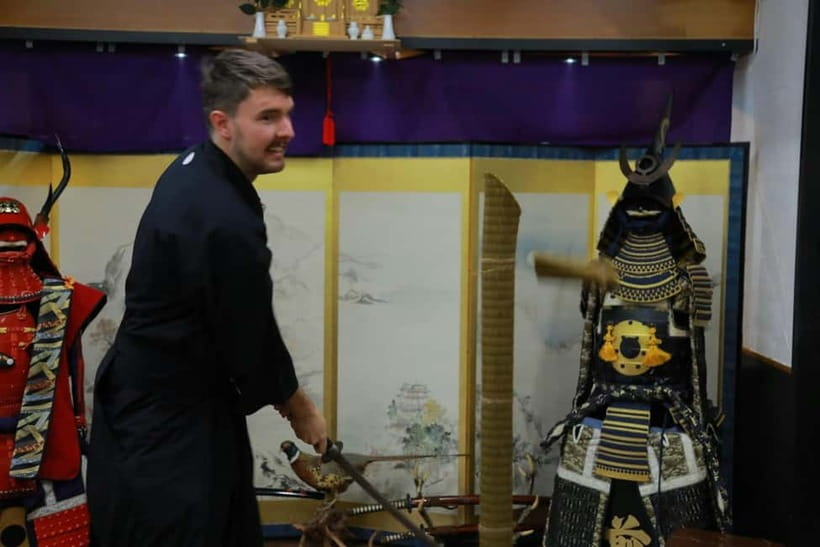
This is the part many people book for, and it is handled with a clear mindset: sword practice comes with responsibility. Before you start cutting, you learn how to use a sword and become aware of your self-respect and the responsibility of carrying a deadly weapon.
You will be allowed to wear a serious sword, and you will try your hand at cutting with a samurai sword trial cutting setup. The point is not to pretend you are a warrior in a movie. The point is to learn basic technique and feel the difference between swinging randomly and practicing with intent.
The program describes the feeling as top-tier cutting edge training, plus the message that there is no end to training. You can treat that as motivational branding, but the practical truth is that sword practice requires repetition, not just one dramatic swing.
If you get nervous about physical activities, you will still probably be fine, as long as you follow the instructor’s guidance. If you are looking for guaranteed power, speed, or perfect accuracy, do not. Instead, aim to learn how instruction changes your motion.
Armor At Osaka Castle Grounds: The Battle Scenario Photo
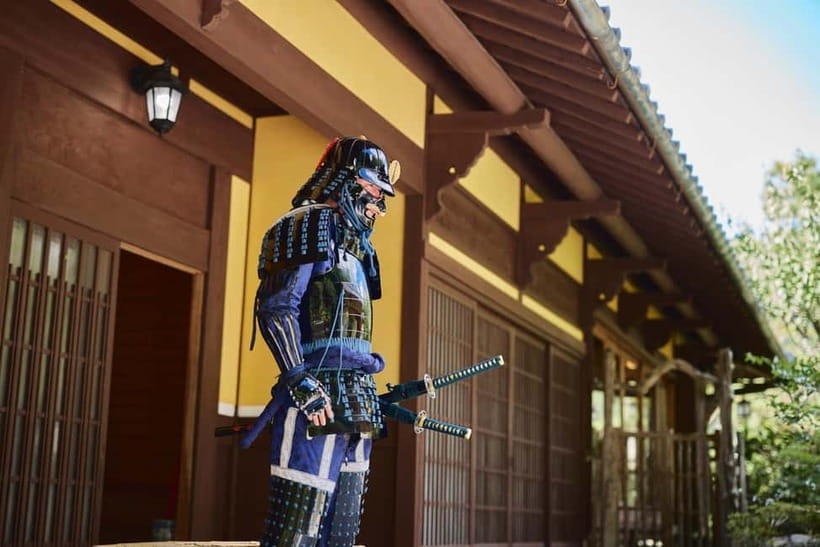
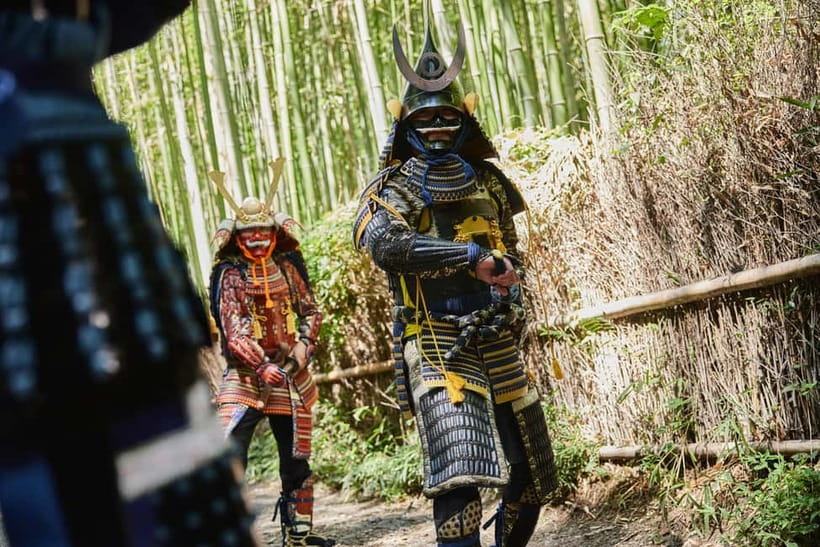
After the sword trial, the tour goes full theatrical, but with purpose. You put on samurai armor and join a battle scenario tied to Osaka’s story.
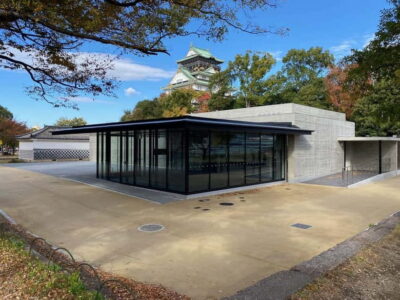
You are photographed on the grounds of Osaka Castle, pretending to be a soldier. The scenario is set as April 1615, with the Osaka Summer Battle beginning, and you are on Toyotomi’s side. That gives the photo context, so it does not feel like a random background.
This part is built around one clear highlight: the photo with Osaka Castle in the background while wearing armor. The program notes that the armor is part of the experience, and the photo is a key symbol of samurai power and warfare.
A practical detail I appreciate: there is a photographer covering the events, and you get the photo data sent to a designated email address. That means you are not stuck juggling your phone camera while also trying to look posed, safe, and authentic.
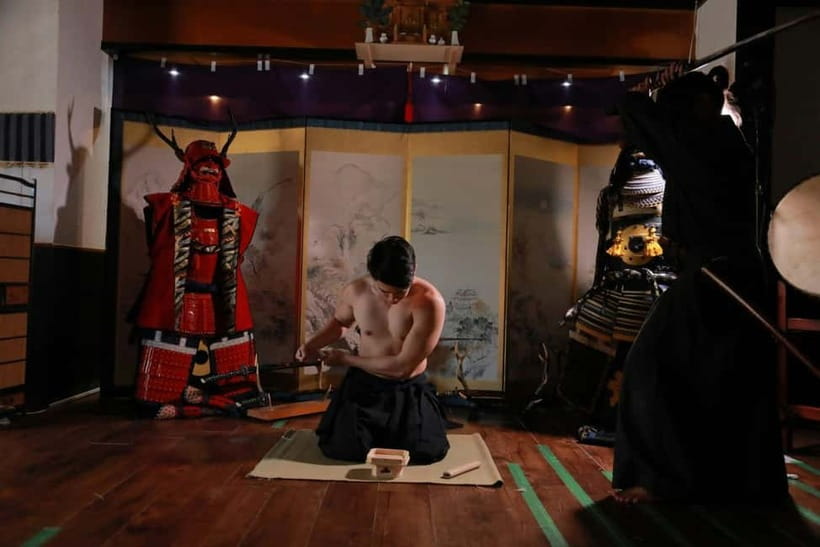
There is also an optional activity listed around seppuku or harakiri, described through Bushido language about dying with righteousness. The program frames it as something you are prepared to face in service of your lord. If that theme makes you uncomfortable, keep it in mind and skip any optional parts that do not fit your comfort level.

Price Value At $168 Per Person For A 3-Hour Hands-On Day
At $168 per person for about 3 hours, the big question is whether you are paying for a photo, or for real structured instruction.
Based on what is included, you are paying for a complete cultural sequence. You get:
- Samurai clothing and kimono experience
- Calligraphy practice and samurai calligraphy
- Tea ceremony
- Sword trial cutting
- Wearing armor
- English-speaking staff and a certified professional instructor
- Photo shooting, with tips and tax included
- A private group format
Also, the tour includes practical costs that add up on your own. Tips are included, taxes are included, and the photo is handled for you with digital delivery.
What is not included is just as important for value. There is no pickup or drop-off, so you will need to get yourself there. Transportation and personal expenses are on you. A paid movie shooting option exists, but it is not part of the core price.
So in value terms, this makes sense if you want the full package: culture lessons plus sword plus an armor photo tied to Osaka Castle. If you only care about one element, the price might feel steep. If you want multiple skills in one afternoon, it reads as good value.
Timing, Meeting Point, And What to Bring So You Stay Relaxed
This program is not a quick walk-in. You should arrive 30 minutes early to get instructions and change clothes. That matters because kimono fitting and prep take time, and sword plus tea plus calligraphy all happen back-to-back.
Meeting point is marked by a wooden sign reading Honor of the Samurai. It is described as a rack with Samurai Honor activity pamphlets in front of the store. Kimonos and hakama hanging to dry may be visible too, which can help you spot the place fast.
The address listed is: Excellence Takayama 1F, 2-3-19 Shiginonishi, Joto-ku, Osaka-shi, Osaka 536-0014.
What to bring is simple: a t-shirt. That is the only required personal item listed. You can wear comfortable clothes underneath if you want to make the kimono change easy.
If you plan your day, remember there is no pickup from hotels or train stations. You will want time to travel on your own so you do not show up stressed.
Language Help And Private Group Format: How You Get Through the Lesson
The default interpreter language is English, and English speaking staff are included. If you need another language, you can inquire for options like Spanish, Italian, French, Chinese, Thai, or Indonesian, but availability depends on staff schedule.
I like that this is a private group setup. That usually makes it easier to ask clarifying questions mid-lesson, especially during calligraphy technique or sword handling where you want feedback fast.
Also, the instructors are described as certified professional instructors. That is important when part of the session involves handling a deadly weapon, even during a trial. The tone is clearly safety plus technique plus mindset.
Who Should Book This Samurai, Culture, And Sword Experience
This is a strong match for you if you want:
- A hands-on Osaka culture session that mixes kimono, calligraphy, tea ceremony, and samurai sword practice
- A real photo moment with Osaka Castle as your backdrop
- Instruction in English, with the option to request other languages
It is also a good choice if you are the type who likes symbolism and ritual. The calligraphy includes a samurai-themed resignation concept, and the tea ceremony emphasizes Bushido honor. Those details make it more than just doing activities for fun.
Skip it or consider carefully if:
- You travel with very young children. The program lists not suitable for children under 10, and it also lists babies under 1.
- You are very elderly. People over 95 are listed as not suitable.
- You do not want any form of sword practice or intense cultural themes tied to death and righteousness.
Should You Book Samurai and Traditional Culture to the Fullest in Osaka?
Yes, you should book it if you want a compact, high variety experience that still feels structured. You get a full cultural loop: discipline through calligraphy, manners through tea, then movement through sword trial and armor. The Osaka Castle photo makes the finale feel like a real memory, not just a prop moment.
I would not book it if your travel style is purely sightseeing by foot with no structured activities, or if you dislike learning through physical practice and costume changes.
If you want my simple decision rule: book it when you want to walk away with both a photo and a set of skills you can describe. This is the kind of afternoon you will explain to friends later, because you did more than watch.
FAQ
How long is the experience?
It lasts about 3 hours.
What is included in the $168 per person price?
You get samurai clothing, kimono experience, practice calligraphy and samurai calligraphy, tea ceremony, sword trial cutting, wearing armor, an English speaking staff/instructor, and photo shooting with the data sent to your email. Tax and tips are included too.
What language is available for the instruction?
English is the default language. Other languages can be requested, such as Spanish, Italian, French, Chinese, Thai, or Indonesian, based on staff schedule.
Where is the meeting point, and when should I arrive?
Meet at the wooden sign landmark that reads Honor of the Samurai. Arrive 30 minutes early so you have time for instructions and changing clothes.
What should I bring with me?
Bring a t-shirt.
Is pickup or drop-off from a hotel or train station included?
No. Pick up and drop off are not included, and you will handle transportation on your own.
Are photos included, and how do I get them?
Yes, photo shooting is included. The tour will send the photo data to a designated email address.
Who is this experience not suitable for?
It is listed as not suitable for children under 10, babies under 1, and people over 95.
What is the cancellation policy?
You can cancel up to 24 hours in advance for a full refund.
More Tour Reviews in Osaka


More Hours in the Dojo


Latest out of Osaka


Osaka Samurai, Ninja & Kendo Experiences, side by side.
 ★ 5.0Samurai Training Experience KENDO in OsakaFrom $131515 reviews
 ★ 4.8OSAKA NIGHT FUSION Japanese Taiko Kabuki Samurai Dance ShowFrom $40155 reviews
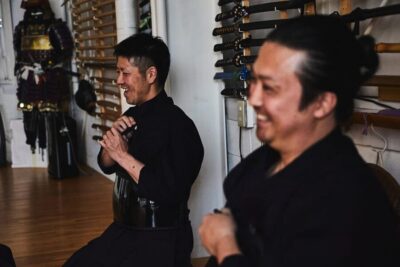 ★ 5.0Osaka: Samurai Training Experience KENDO in OsakaFrom $127111 reviews
 ★ 4.5Osaka: A Modern Samurai, Kabuki, Taiko, & Dance ShowFrom $1966 reviews
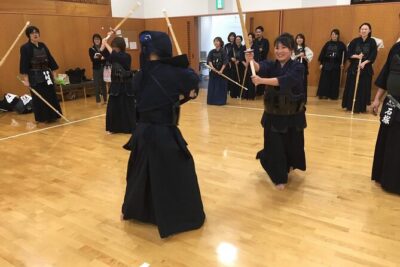 ★ 5.0Osaka 2-Hour Genuine Kendo / Samurai Experience In JapanFrom $11865 reviews
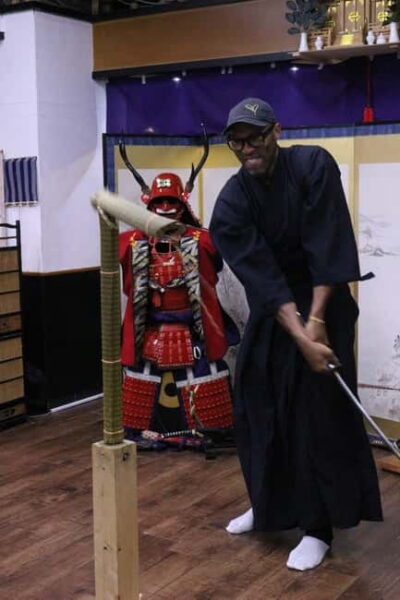 ★ 4.9Osaka: Learn Bushido – Trial Slashing with Samurai SwordFrom $9259 reviews
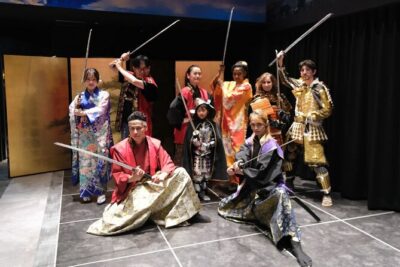 ★ 5.0Samurai Show, Tea Ceremony, Japanese Traditional ActivitiesFrom $4456 reviews
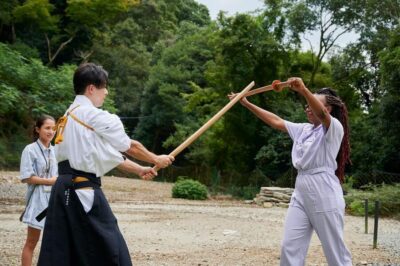 ★ 5.0Osaka: Private Samurai Experience – Train with Sword MasterFrom $15836 reviews
Also worth a look in