
REVIEW · OSAKA STREET FOOD CRAWLS
Umami Town Street Food Tour
Osaka’s street food gets a guided plan. I love the small-group pacing and the way guides like Miyo turn takoyaki and okonomiyaki into a clear umami lesson while you eat. I also like that you move through iconic areas with real local rhythm, from Kuromon Market to Dotonbori, without having to guess what to order. The main catch is the price, $175 for about five hours, so you’ll want to come hungry and ready to eat meals, not just snack.
You start at Minami-Morimachi Station and finish back at the same spot, which keeps the day simple if you’re juggling other plans in Osaka. The tour includes dinner, snacks, bottled water, and alcoholic beverages, so you’re not constantly doing the math at every stall. My other consideration is that the focus stays tightly on food, so if you want long, slow sightseeing stops, this may feel fast.
Key highlights to know before you go
- Umami lessons tied to what you’re tasting (you’ll learn how dishes like takoyaki and okonomiyaki get their flavor)
- Three major Osaka stops, in one organized loop from Tenmangu Shrine to Kuromon Market to Dotonbori
- Small-group size (max 7) so you can ask questions and move without chaos
- Food-forward inclusions like dinner, snacks, bottled water, and alcoholic beverages
- Guides who take extra care for comfort, flexibility, and smart food choices
Umami Town is really about taste, not just snacks
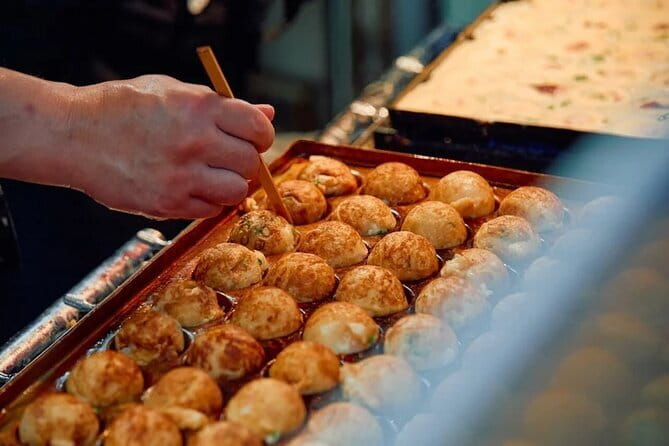
Osaka street food can be a lot. Lots of stalls, lots of smells, lots of people deciding in real time. This tour helps you convert all that noise into a clear theme: umami, the savory side of Japanese flavor that makes you keep taking bites.
The best part is that you’re not just sampling. You’re learning why these foods hit the way they do. The tour explains the ingredients behind dishes such as takoyaki and okonomiyaki, so later, when you see the same items on a menu, you’re not thinking, Sure, it tastes good. You’re thinking, Now I get what’s creating that savoriness.
And since it’s small group size, the guide can actually respond to you. That matters because Osaka street food is partly technique, not only ingredients. Ordering, timing, and knowing what to try next can be the difference between a fun afternoon and a frustrating line-planning exercise.
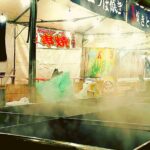
More plates on more streets
Price and what you get for $175 in Osaka
Let’s talk value like an adult.
At $175 per person, this isn’t a cheap “wander and eat” experience. What makes the price easier to swallow is what’s bundled in: dinner, snacks, bottled water, and alcoholic beverages. That turns the tour into a food-centered meal plan with a guide attached.
You’re also paying for three practical things that save you time and stress:
- A guide to help you navigate the areas without second-guessing routes.
- A planned structure that gets you variety in a single outing.
- Local recommendations you can use after the tour, when you’re back on your own.
One more value point: the tour includes iconic places with free admission noted for the main stops (Osaka Tenmangu Shrine and Kuromon Market). You’re not paying extra just to step inside those locations.
If you’re the type who loves to plan and pick your own stalls, you could spend less DIY. But if you want a guided, high-return food day, $175 can start to look like a reasonable fee for convenience plus a lot of eating.
Meeting point and timing, so your day stays on rails
This tour starts at 10:00 am at Minami-Morimachi Station (2 Chome-1 Minamimorimachi, Kita Ward, Osaka 530-0054, Japan). It ends back at the meeting point, which is handy when you’re matching it with other activities later in the day.
It runs about 5 hours, which is a sweet spot for street food. Long enough to feel like you had a real experience, short enough that you’re not trapped for an entire evening.
Two practical notes that matter:
- There’s no private transportation included, so you’ll be moving on foot and using public transit to reach the start.
- The group max is 7 travelers, so you’re not squeezed into a giant scrum.
Also, you get a mobile ticket, which is one less thing to manage on a travel day.
Osaka Tenmangu Shrine: a quiet reset before the street food sprint
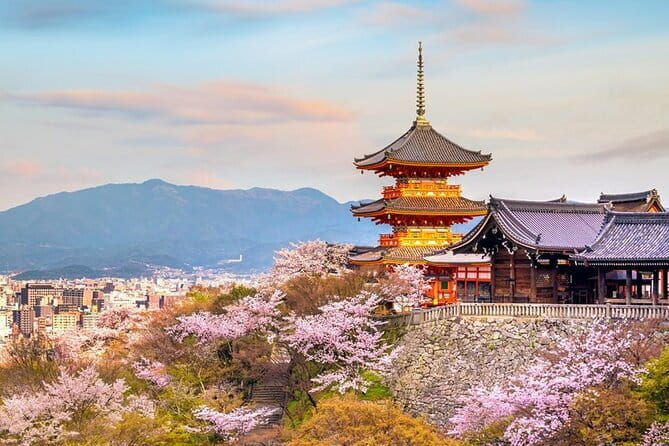
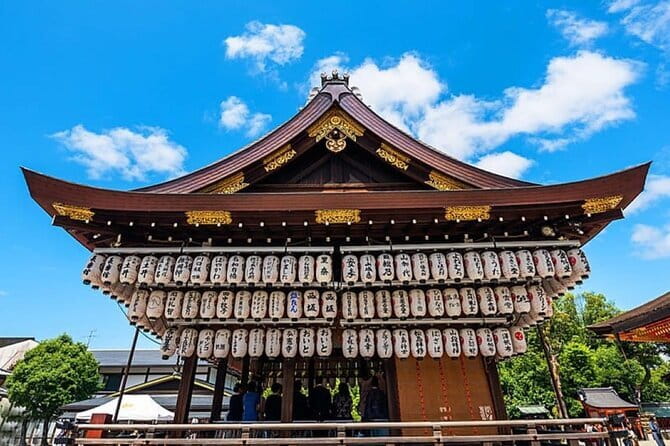
The day begins at Osaka Tenmangu Shrine, with about 1 hour at the site. It’s dedicated to Sugawara no Michizane, a scholar and politician from the Heian period, deified as Tenjin, the kami associated with learning, scholarship, and literature.
That might sound unrelated to food. But it actually works well. You start with something slower and more meaningful than the street-food rush. It gives you a mental reset before you transition into markets and neon streets. If you’re someone who likes to understand the places you’re eating around, this stop gives context and keeps the day from turning into only calories.
Admission here is listed as free, so there’s no extra cost shock. It’s also an easy way to start your Osaka day with your eyes open, not just your mouth moving.
Kuromon Market: Osaka’s Kitchen for takoyaki and sushi lovers
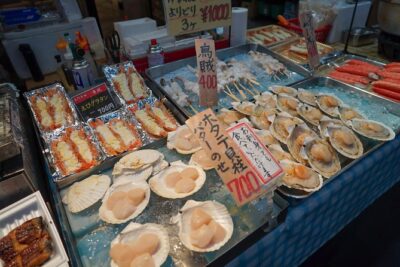
Next up is Kuromon Market, about 30 minutes. This is one of those Osaka spots food people talk about for a reason: it’s a dense, public showcase of what the city eats.
The market is known as Osaka’s Kitchen, with fresh seafood and meats plus street food favorites like takoyaki and sushi.
Why this stop is valuable on a guided tour is simple. In a market like this, you can get stuck. You’ll see a bunch of stalls that look tempting, but not know which ones to try first or how to order quickly while you’re hungry and people are moving around you.
A good guide helps you:
- Try a range instead of repeating the same thing.
- Keep the pace so you can enjoy your next stop, not just stuff yourself in one area.
- Understand what you’re eating beyond name recognition.
If you’re worried about missing out because you only have one short market window, don’t be. The tour’s whole structure is designed to get you variety efficiently.
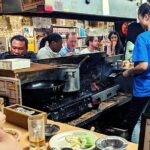
Plates worth crossing Osaka for
Dotonbori Tsuribori: neon signs, big energy, and okonomiyaki
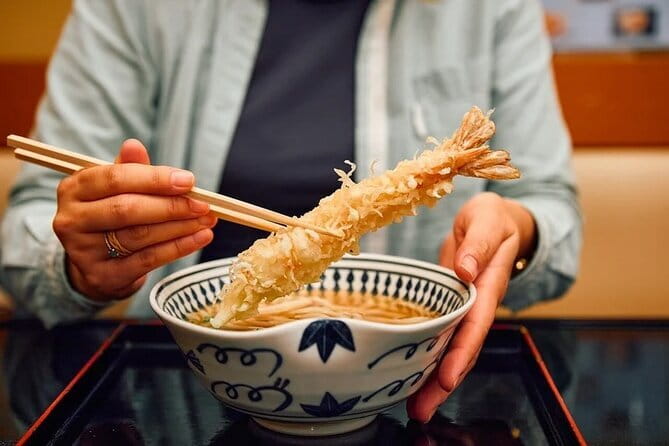
Then you head to Dotonbori Tsuribori, about 1 hour. This area is famous for neon lights and large signboards, plus street food staples like takoyaki and okonomiyaki.
A key thing to know: even if you’re there during daylight, Dotonbori still feels like a destination. The visual chaos is part of the experience, and your guide helps you focus it. Instead of getting lost in where to stand and what to order, you get directed to tasty options that fit the flow of the afternoon.
This is also where you’ll probably feel the “Osaka effect” most. Dotonbori is not shy. It’s loud, food-forward, and built for eating while you walk. If you like taking photos, this is the part of the day with the most obvious photo backdrops.
Just keep your expectations realistic: you’re not doing a long hangout session here. It’s food time, then back into motion.
The in-between tastings: dinner, snacks, and umami explanations that stick

The itinerary highlights three stops, but the experience is about what happens between them and after them: a string of tastings that add up to a full meal day.
That’s where the tour earns its reputation. You’re sampling from both street vendors and restaurants, so you get different styles of cooking and different ways food is served in Osaka. Some guides also share little facts that make the neighborhoods feel more human, not just scenic.
You’ll also learn about the ingredient side of the dishes, especially takoyaki and okonomiyaki. I like this approach because it turns your tasting into something you can remember. You might not remember every bite you had two hours later, but you can remember what made it taste savory and satisfying.
And yes, you’re eating a lot. The tour includes:
- Dinner
- Snacks
- Bottled water
- Alcoholic beverages
That inclusion matters for planning. You don’t have to build your day around finding meals. The guide is doing that work, and you’re just following the food map.
One more benefit: you can ask the guide for local recommendations during or after the tour. That turns your time into something more useful than a single afternoon of eating.
Guides who genuinely improve the day: Miyo, Miso, and Yuka
A tour is only as good as the person guiding it, and this one has a strong pattern in the feedback.
Guides like Miyo are praised for warmth and flexibility, including tailoring the flow for the group. That’s important when you’re dealing with food lines, crowd energy, and different comfort levels around eating.
Miso gets mentioned for sharing facts that go beyond food labels, like interesting details about the area, including hidden-tunnel style stories. Even if you don’t care about trivia, small neighborhood context can make your walking route feel more intentional.
And Yuka is highlighted for being an exceptional guide, especially for groups seeking a wide range of foods. One account specifically mentions tastings that included fugu along with okonomiyaki.
There’s also a practical theme: guides don’t just show up. People have talked about how the guide prepares, even taking steps like lining up ahead of time for a popular item. That is exactly what you want from a food tour. When the guide treats taste like a real priority, you feel it.
Who should book this Osaka street food tour, and who should skip it
This tour makes the most sense if you fall into one of these buckets:
- You’re visiting Osaka for the first time and don’t want to spend your vacation doing “where do I eat?” math.
- You love street food, but you want a guided plan so you taste more variety with less decision fatigue.
- You enjoy learning a bit about food, not only chasing famous dishes.
- You like small group experiences, not large buses or massive lines where questions get ignored.
You might want to consider skipping if:
- You’re on a strict budget and want the cheapest way to eat in Osaka.
- You prefer to wander at your own pace with zero structure.
- You’d rather spend your time in a single neighborhood longer than this 5-hour loop allows.
The tour is also marked as suitable for most travelers, but it’s still smart to be honest with your guide if you have dietary concerns. The experience style is personal and questions are part of it.
Practical tips for your 5-hour Umami Town day
Here’s how to get the most out of it without turning your stomach into a debate club.
Wear comfortable shoes. This is a walking experience, with market time, shrine time, and Dotonbori time stitched together.
Go in with an appetite. With dinner, snacks, and drinks included, you’ll be eating repeatedly across the route. If you show up full from a big breakfast, you’ll spend the tour watching other people eat and not enjoying your own bites.
Pace yourself. Savory bites are great, but your goal is to enjoy the full range. Take small breaks when you feel yourself tipping from hungry into overly full.
Ask questions. If the guide is discussing what creates umami flavors in dishes like takoyaki and okonomiyaki, ask for simple explanations you can remember. That’s what turns food into knowledge you can use later.
Use the guide’s recommendations. The tour is built to help you navigate Osaka more easily, and the best payoff often comes after you finish walking together.
Should you book Umami Town Street Food Tour in Osaka?
If you want an organized Osaka street food day with small-group attention, meaningful food learning, and a real meal plan built in, I’d say it’s an easy yes. You’re getting dinner, snacks, bottled water, and alcoholic beverages, plus a guided route through high-impact areas like Osaka Tenmangu Shrine, Kuromon Market, and Dotonbori.
The decision hinges on one thing: are you a food-first traveler? If you are, this tour is a strong value because it replaces planning time with tastings and local context. If you’re not, and you just want to wander freely, $175 could feel heavy for a few stops.
Also, since the experience is popular enough that it’s often booked about 50 days in advance, plan to reserve sooner rather than later if your dates are set.
FAQ
How long is the Umami Town Street Food Tour?
The tour lasts about 5 hours (approx.).
Where does the tour start, and what time does it begin?
It starts at Minami-Morimachi Station (2 Chome-1 Minamimorimachi, Kita Ward, Osaka 530-0054, Japan) and the start time is 10:00 am.
How many people are in the group?
The tour has a maximum of 7 travelers.
What is included in the price?
Included are dinner, snacks, bottled water, and alcoholic beverages.
Are admission tickets required for the stops?
Osaka Tenmangu Shrine and Kuromon Market list admission as free.
Is private transportation included?
No, private transportation is not included.
What is the cancellation policy?
You can cancel for free up to 24 hours in advance of the experience for a full refund. If you cancel less than 24 hours before the start time, the amount paid will not be refunded.
More Tours in Osaka




More Tour Reviews in Osaka

Eat Your Way Round Osaka
Latest out of Osaka


Osaka Street Food Crawls, side by side.
 ★ 4.8Osaka: Shinsekai Food Tour with 13-15 Dishes at 5 EateriesFrom $532,204 reviews
 ★ 5.0Osaka Food Tour: 13 Dishes at 5 Local EateriesFrom $732,149 reviews
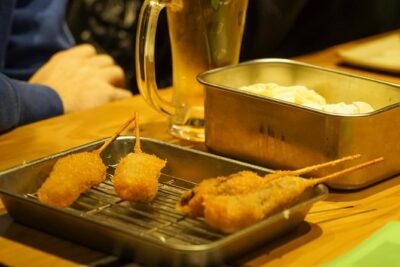 ★ 5.0Osaka Local Foodie Walking Tour in Dotonbori and ShinsekaiFrom $111985 reviews
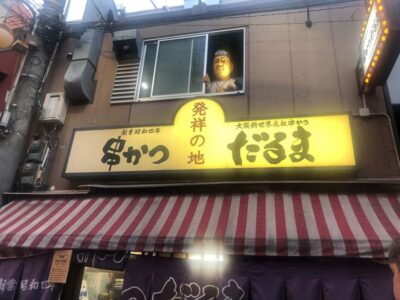 ★ 4.9Hungry Osaka Street Food Tour: 15 Dishes & 3 DrinksFrom $79694 reviews
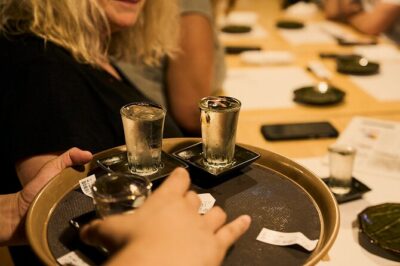 ★ 5.0Osaka: Guided Food Tour with 12 Dishes at 4 Local EateriesFrom $83533 reviews
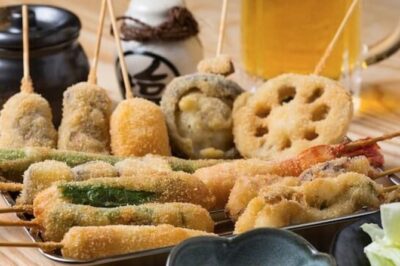 ★ 5.0Absolute Osaka Food TourFrom $231309 reviews
 ★ 4.5Osaka After Dark: Small-Group Night Food Tour (Max 6)From $116245 reviews
 ★ 5.0Eat, Drink & Cycle: Osaka Foodie Bike TourFrom $99224 reviews
Also worth a look in