
REVIEW · OSAKA STREET FOOD CRAWLS
Eat, Drink & Cycle: Osaka Foodie Bike Tour
Food and bikes, same morning. This tour turns South Osaka into a food-first ride, with tastings paired to big sights like Shitennoji temple. You also get a small-group pace, so the morning does not feel like a checklist.
I especially like how the stops mix flavors, from street snacks in Shin Sekai to a Tsuruhashi market snack session. I also like that the guide steers you toward practical local choices and can point you to places to eat after the tour.
The one thing to plan around is riding comfort. You need moderate fitness, and you will handle a few changes in terrain, plus it is not set up for kids under 12 or anyone under 140 cm.
Key highlights you will care about
- Small-group size (max 7) keeps the tour personal and makes it easier to ask questions
- Multi-stop tastings at 3 to 4 eateries mean you sample more than one meal
- A Shin Sekai start sets the tone with street-style bites like oden, tofu, or doteyaki
- Shitennoji plus market time (40 to 60 minutes) gives you both culture and real food wandering
- Hands-on Tower Knives stop adds a fun Osaka twist between eating stops
Turning South Osaka into a 3.5-hour ride-and-eat plan
This is a bike tour built for people who want to do more than stand in line and more than just eat one big platter. You start the morning in South Osaka, then you cycle between neighborhoods fast enough to cover real ground, but slow enough to taste along the way. The whole structure is simple: short rides, then food, then a sight, then food again.
The value is in the combination. A walking food crawl can be great, but bike time lets you reach farther areas without draining your energy early. And because the tastings are spread across several stops, you end up eating like you are moving with the city, not stopping only at a single “main event.”
You are also not stuck guessing what to do next. The guide adds context at each stop and typically throws in extra recommendations you can use during the rest of your stay. People often highlight guides by name, including Erik, Mako, Peter, Ruben, and Matt, and the common thread is how comfortably they translate local culture into something you can act on.
More plates on more streets
Getting set up near Tsutenkaku and sliding onto the route
You meet near Tsutenkaku tower, then you get escorted to the bike storage facility for a quick fitting and briefing. The tour includes bicycle and a safety helmet, and bottled water is part of the package. After that, you ride a short distance to the first food stop in Shin Sekai.
One practical thing: the tour start time can look inconsistent depending on what you see in your confirmation. The tour overview describes an earlier morning meetup, while the schedule details also show a later start. Do not guess based on any blog or screenshot. Your confirmation is what matters, so check the exact time and meeting instructions.
Also, bring a little patience for setup. A fitting takes a few minutes, and the group is small, so you are not waiting behind dozens of people. If you arrive a bit early, you will be in good shape before the tour starts moving.
Shin Sekai’s street food start: oden, tofu, or doteyaki
Your first tastings are designed to be easy and local, and they can vary with the group’s preferences. You might begin with street oden, or go for tofu-style bites, or try doteyaki (a classic Osaka street snack made with stewed ingredients). This part matters because it sets your stomach rhythm for the rest of the morning.
Shin Sekai is the kind of neighborhood where food is part of the atmosphere, not just an activity. Starting here works because you get immediate payoff, then you pedal onward with momentum. If you are the type who gets hangry without warning, this is the right place to start. You are not waiting long for your first taste.
The potential drawback is also the nature of street food. Expect flavors that are comforting and savory, but not necessarily mild. If you are very picky about texture or stronger seasonings, tell your guide early so they can guide you at tastings.
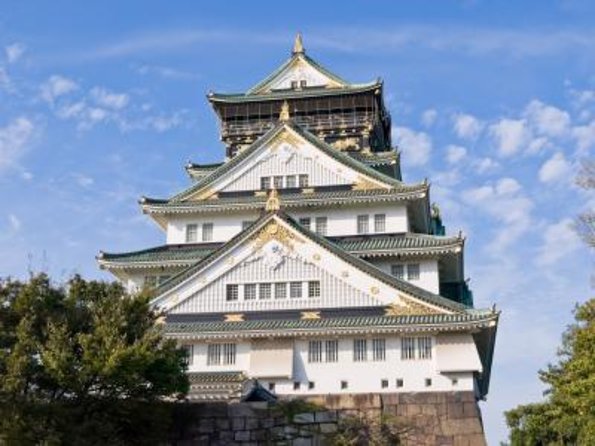
Cycling up to Shitennoji, Osaka’s oldest temple stop
After the Shin Sekai snacks, you ride up to Japan’s oldest temple, Shitennoji. You stop for photos and a short explanation of the area, then you head back down toward the next food stop. The ride between these points is a big reason to do the tour: the scenery changes quickly, and you get a sight stop without turning it into a long walking detour.
Shitennoji is one of those places that rewards even a short visit. In a few minutes you can pick up context about why it is important, then move on before the day gets too hot or too crowded. The guide helps with the “what am I looking at” part, so it does not feel like you are just posing and leaving.
A note on terrain: the itinerary includes riding up to the temple and then descending toward the market area. Osaka can be pretty flat in general, and riders describe it as easy, but there is still this up-and-down rhythm. If you have knee issues or you just prefer effortless pedaling, ask about e-bike options when you book or on the day of the tour.
Tsuruhashi market time: 40 to 60 minutes to snack with purpose
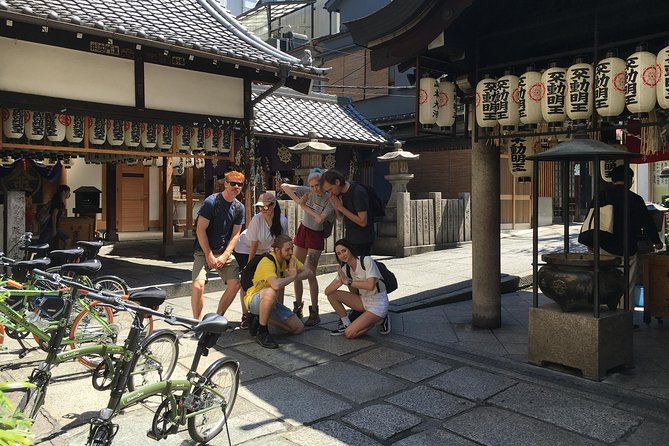
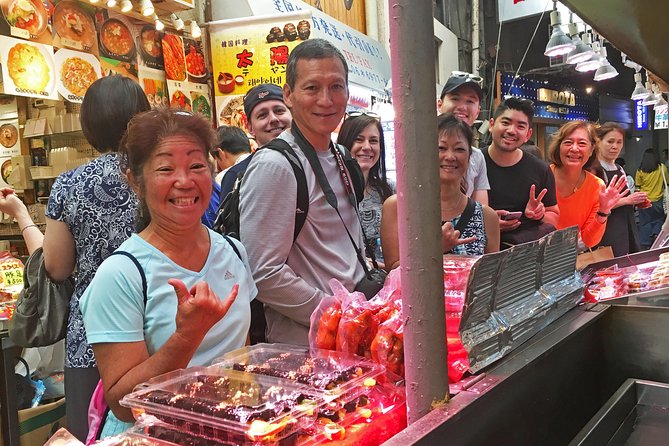
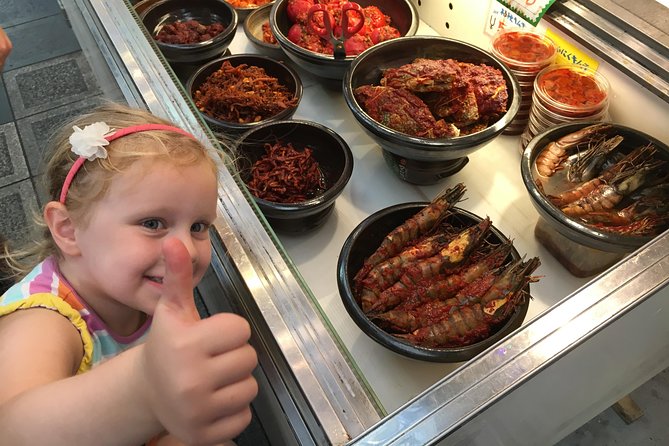
Next you head into the Tsuruhashi market for about 40 to 60 minutes. This is one of the best parts of the schedule because it gives you actual freedom inside a focused timeframe. You meet local stall holders, sample a range of market snacks, and you get to see how the food scene works at street level.
This stop is also where you pick up the “how do locals shop and snack?” feeling. You are not just eating in front of a menu. You are watching the rhythm of small stalls, then choosing bites guided by what makes sense in that moment.
One tip: pace yourself before the wagyu stop. It is tempting to go wide and try everything in sight. But since you have a sit-down wagyu taster later, you will enjoy the day more if you leave some room. Let your guide know what you want to prioritize, such as savory skewers versus sweet snacks.
Plates worth crossing Osaka for
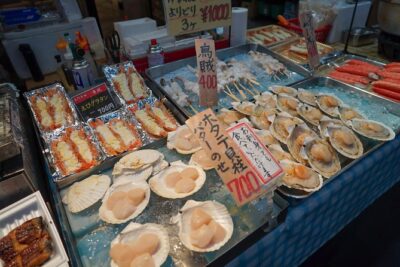
Wagyu beef taster: the sit-down payoff
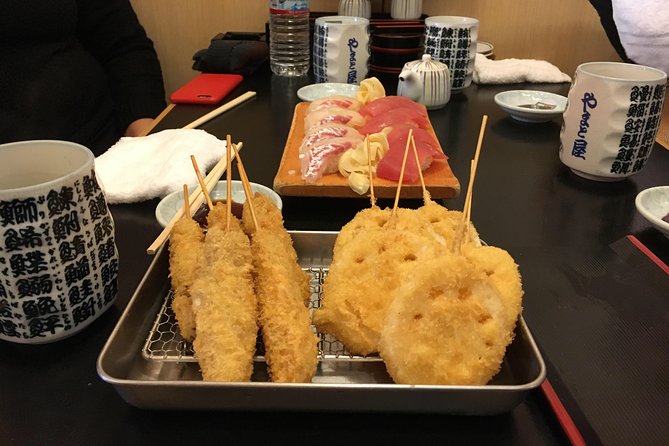
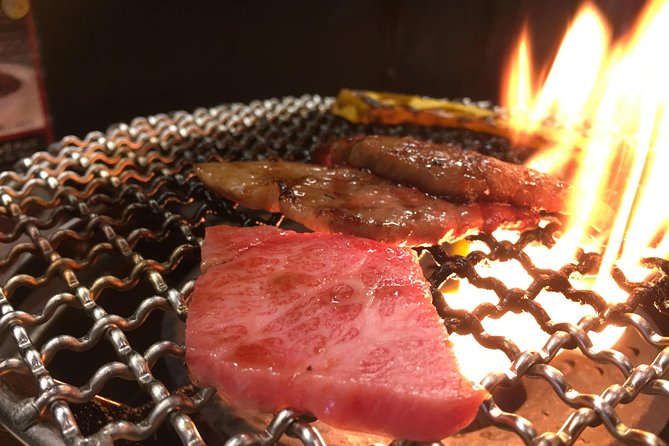
From the market, you head to a sit-down wagyu beef taster. This is not a full meal, but it is an intentional upgrade from street snacks. The goal here is balance: you get variety without feeling like you have eaten only heavy grilled foods all morning.
Why this works for your value math: you are paying for access to several different eateries, not just for one expensive tasting. Wagyu alone can be pricey in Japan, so even a small tasting feels like a meaningful piece of the tour’s overall cost.
If you have dietary needs, this is the moment to flag them early. The tour does not list full dietary accommodations in the provided details, so your best bet is to message ahead and confirm what will be possible at the restaurant stops.
Tower Knives stop: try Osaka’s sharp export
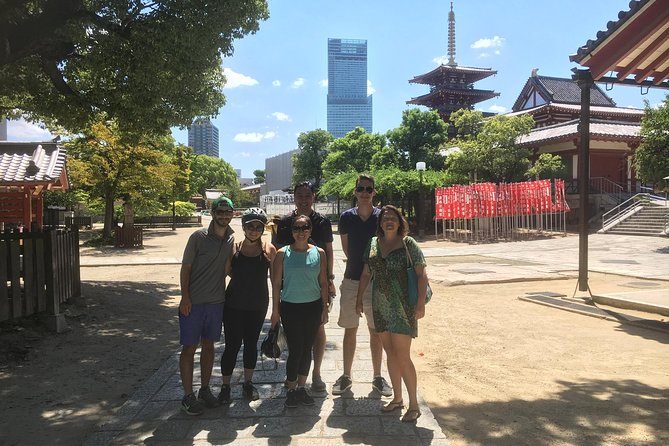
After wagyu, you ride back through the streets with one standout pause at Tower Knives. This stop is a fun break in the day because it is not only food. You get to try your hand with Osaka’s sharpest export, which means you are doing something hands-on and very local to the city’s craft reputation.
This is also a mental reset. After eating and walking through markets, a practical activity gives your energy a change of pace. You are still on a schedule, but the experience is different enough that the day does not blur together.
If you are traveling with friends who love souvenirs, this type of stop can help justify the tour even if they do not love every tasting. Even if you do not buy anything, you still leave with a clear Osaka-specific memory.
Final sushi shop and kushikatsu skewers on the side
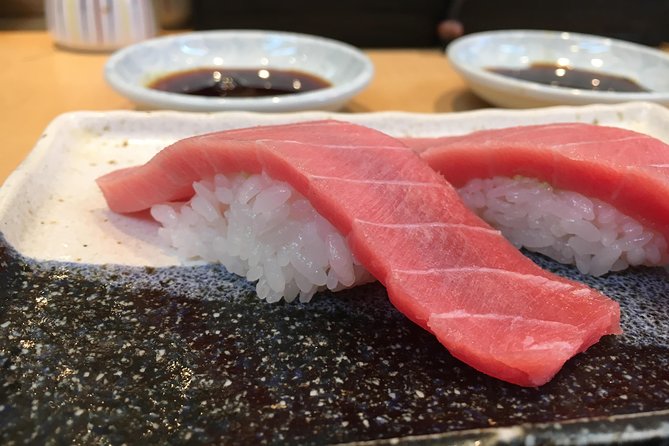
Your last food stop is a local-run sushi shop. The guide recommends a set of nigiri rolls, and you also get assorted kushikatsu skewers delivered from next door. That combo is a great closing move: sushi feels clean and satisfying after market snacks, then kushikatsu adds crunch and variety.
This is where the tour feels like a proper food circuit. You have tried neighborhood street bites, sampled market snacks, had wagyu, and then you finish with sushi plus skewers. It is hard to recreate this exact flow on your own without planning.
If you have a sensitive stomach, keep it simple here. Nigiri is often easier to digest than fried foods. Kushikatsu is fried, so go at a comfortable pace. You are not racing the tour clock beyond the ride back to base.
How hard is the ride, and what about e-bikes?
Osaka is described as mostly flat, and riders note the route is easy. That is a good sign for first-time cyclists. Still, you should not assume it is fully effortless. You will cycle between neighborhoods, handle a slope up to Shitennoji, and then descend toward the market.
The good news is that the tour supports different comfort levels. Some riders request e-bikes, and that can make the day feel like sightseeing with a little pedal assist instead of a workout. If you are older, newer to biking, or simply want to save energy for the food stops, e-bike requests are worth considering.
Helmets are included, and safety gear plus a guide who controls the pacing means you are not left to figure things out alone. With a small group size, you also tend to get more personal help if anyone needs to slow down or adjust.
Price and value: is $99.49 fair for this kind of day?
At about $99.49 per person for a roughly 3.5-hour experience, you are paying for three things at once: transportation by bike, guide time, and multiple paid tastings across different eateries. The value comes from distribution. You are not only paying for one restaurant bill. You are paying for access to several food stops, plus the sight component.
Many people like this tour because it feels like it pays for itself in saved time and better decisions. Instead of hunting for what to eat in each neighborhood, the tour hands you a path: Shin Sekai street snacks, Shitennoji, a market window, wagyu sit-down tasting, a craft stop, and then sushi and skewers.
Is it expensive compared to buying snacks one by one? Yes. But you are also covering more than food. You are getting a guided route that helps you see the city in a single morning without losing the thread. If you enjoy food and want structure, the price can feel fair. If you only want a couple bites and do not care about the sights, it may feel steep.
Pacing tricks so you do not get stuffed too early
This is a food tour, so build your strategy around the schedule. You start with a street snack tasting, then you do a temple sight stop, then you have market time, then wagyu, then Tower Knives, and then sushi and kushikatsu.
So you will likely get full before the finish if you eat everything at maximum speed. The market stop is especially “choose a few, choose well” territory. I recommend deciding what you want most in advance, then letting the guide guide you toward those picks first.
Also, use the bottled water. Taking small sips between bites makes it easier to enjoy flavors instead of just chasing saltiness. If you are a slow eater, tell the guide early. In a small group, that kind of adjustment is usually easy.
Weather, comfort, and what to bring
The tour requires good weather, so you should check the day before and morning-of. If rain is on the radar, plan like Osaka will do Osaka things. One rider noted the value of bringing a poncho for a rainy day, and that is smart advice for any outdoor bike activity.
For comfort, wear shoes you can pedal in all day. The stops include walking in market areas and moving through temple grounds, so sandals are a risk. Also bring sun protection even if you like shade. One guide was described as adjusting the route on hot days to keep riders comfortable, which is exactly the kind of thoughtful pacing you want.
Lastly, pack a small attitude adjustment. Bike tours move faster than walking tours. If you loosen your need for slow photo-taking at every corner, you will enjoy it more.
Should you book this Osaka foodie bike tour?
Book it if you want a one-morning plan that mixes real food stops with meaningful sights, and you want to cover more ground than you could comfortably do on foot. It is especially good if you like street food, you want market snacks guided by someone local, and you enjoy a relaxed group pace.
Pass or consider alternatives if you are hoping for a very short snack tour, you have very specific dietary restrictions that are not clearly handled by the listed stops, or you think $99.49 is only worth it for fewer, more substantial meals. Also skip it if your riding comfort is limited and e-bike options are not workable for you, since the day includes some up-and-down movement.
If you do book, do one smart thing: message or ask about e-bike availability and confirm the exact meeting time and location listed on your ticket. Then show up ready to pedal, eat, and let the guide stitch the morning into a single Osaka story.
FAQ
How long is the Osaka Eat, Drink & Cycle tour?
The tour lasts about 3 hours 30 minutes.
How many people are in the group?
The tour has a maximum of 7 travelers.
Where do we meet, and what time does it start?
You meet under the Tsutenkaku tower area, and your exact start time is shown in your booking confirmation. The tour details you receive at booking are the best source for the precise time and meeting instructions.
What food is included in the tastings?
The tour includes lunch or snacks at 3 to 4 eateries. You may start with street bites such as oden, tofu, or doteyaki, then you visit a market, try a wagyu beef taster, and finish at a sushi shop with kushikatsu skewers.
Is alcohol included?
No. Alcoholic beverages are not included.
What is included in the price besides food?
You get use of a bicycle and safety helmet, an English-speaking guide, bottled water, and the multi-stop food tour with tastings.
Do I need to be an experienced cyclist?
No cycling experience is required, but the tour expects moderate physical fitness. Osaka is mostly flat for much of the route, though there is at least some riding up to the temple and then down toward the market.
Can I bring a child?
The tour is not recommended for child aged 12 and under, and it is not possible for riders under 140 cm.
What happens if it rains?
The tour requires good weather. If it is canceled due to poor weather, you will be offered a different date or a full refund.
What is the cancellation window for a full refund?
You can cancel up to 24 hours in advance for a full refund. If you cancel less than 24 hours before the experience starts, the amount paid is not refunded.
More Tours in Osaka

More Tour Reviews in Osaka
Eat Your Way Round Osaka
Latest out of Osaka


Osaka Street Food Crawls, side by side.
 ★ 4.8Osaka: Shinsekai Food Tour with 13-15 Dishes at 5 EateriesFrom $532,204 reviews
 ★ 5.0Osaka Food Tour: 13 Dishes at 5 Local EateriesFrom $732,149 reviews
 ★ 5.0Osaka Local Foodie Walking Tour in Dotonbori and ShinsekaiFrom $111985 reviews
 ★ 4.9Hungry Osaka Street Food Tour: 15 Dishes & 3 DrinksFrom $79694 reviews
 ★ 5.0Osaka: Guided Food Tour with 12 Dishes at 4 Local EateriesFrom $83533 reviews
 ★ 5.0Absolute Osaka Food TourFrom $231309 reviews
 ★ 4.5Osaka After Dark: Small-Group Night Food Tour (Max 6)From $116245 reviews
 ★ 5.0[1 Group Only] Osaka Street Food Tour for FamilyFrom $66208 reviews
Also worth a look in