
REVIEW · SHOW
Traditional Japanese Music show & Experience Tour in Osaka
Osaka has a way of surprising you fast, especially with live music nearby. This small-group traditional Japanese music session focuses on hogaku, with pro musicians performing and teaching you what you are hearing in real time. I like that it is not a passive show, you get close to the sound and the people making it.
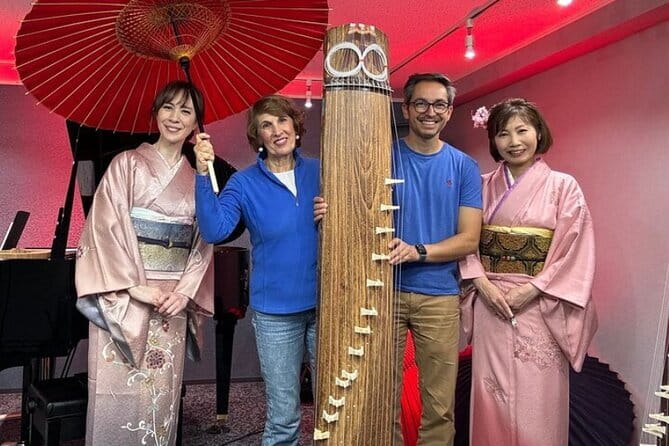
My favorite part is the hands-on playing time. After an authentic concert, you get to try traditional instruments yourself, including the shamisen, koto, and wadaiko, and you can ask questions while it is happening. The second thing I really like is the easy souvenir setup at the end, you get dedicated time for photos holding the instruments with the performers.
One thing to consider: the whole experience is only about 60 minutes, so if you want a long, deep lecture or a full evening concert, this may feel a bit short. Still, for a concentrated culture hit in the middle of your Osaka plans, it works well.
Key things to know before you go
- 60 minutes total, split into a concert, hands-on try-it time, then photos
- Professional musicians perform and answer your questions
- You try instruments, including shamisen, koto, wadaiko, and more
- Small group cap of 7, which keeps the experience personal
- Program varies by day, so Wednesday and Friday can feel different
- Photo time is built in, with time to hold instruments and pose
A 60-minute hogaku experience that feels personal
This is the kind of tour you book when you want culture, not a chore. You meet at a fixed spot in Minamisenba, Chuo Ward, then the session runs for about an hour and ends back where you started. There is no private transportation included, but it is noted as near public transportation, which is exactly what you want for a quick, focused activity.
The format is simple and efficient. You get three blocks: 25 minutes of live concert, 25 minutes where you can try playing traditional instruments, then 10 minutes reserved for photos with the performers and instruments. That timing matters. Instead of watching for a long time and hoping you get a chance to interact, you get both the listening and the hands-on parts.
And because it is hogaku, the whole point is traditional Japanese music culture, not a modern crossover show. You are hearing instruments that are central to this style, and you learn as you go.
Set this against a few other Osaka bookings:
The live concert segment: what you listen for
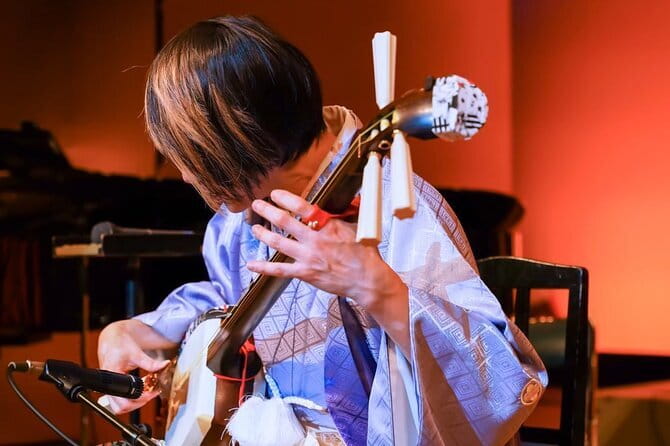
The first 25 minutes are an authentic Japanese music concert performed by professional musicians. The group is small, so you are not stuck in the back or fighting for sightlines. The instruments can include shamisen, koto, wadaiko, and more, and the set can vary depending on the day.
This is where you build your ear. Even if you do not know the instruments beforehand, you can follow the flow because the focus is on explanation plus performance. The tour also invites questions, so you can ask what something is, why it is played a certain way, or what you are hearing musically.
A practical tip: arrive with the mindset that you are there to listen closely, not to multitask. You do not get hours, so turn your attention on. If you want to learn quickly, asking one or two good questions will do more than trying to remember everything from the start.
Instrument try-it time: the best reason to book
After the concert, the mood shifts. For the next 25 minutes, you get to try playing traditional Japanese instruments yourself. The included item is an instrument for the experience, so you are not just watching a demo and taking notes.
The instruments mentioned include shamisen, koto, and wadaiko. That matters for value, because you are getting exposure to multiple families of traditional instruments, not just one. And the tour does not limit the experience to one single moment either. It is structured so you actually participate during a set block, not during a short, optional window.
What you should expect in practice is guided handling and playing time. You will also be able to ask professional musicians questions as much as you like. This is a huge part of why this feels more rewarding than many cultural shows. You are not guessing. You can clarify what you should do, how your hands should position, or what to focus on while you play.
One more reality check: since this is a short session, you are not being trained to perfection. Think of it as learning enough to have fun, understand what makes the instruments distinctive, and leave with a personal connection to the sound.
Photo time with instruments: a souvenir that actually fits the memory

The last 10 minutes are reserved for photos with the instruments and performers. This is one of those details that sounds small until you have tried other activities where photo time feels rushed or unclear. Here, you know it is coming, so you can plan to be ready.
You will be able to take photos holding the traditional instruments as souvenirs. That is the key practical point. It turns the experience into something you can show later, and you are capturing the moment you physically interacted, not just a distant performance shot.
A good strategy is to keep your phone charged and your camera settings simple. In a 10-minute photo block, you do not want to spend half the time fiddling. If there is more than one person in your group, coordinate quickly who wants which shot, then move on.
Where it is in Osaka: getting to the meeting point
The meeting point is at アルファ 心斎橋3-chōme-5-27 Minamisenba, Chuo Ward, Osaka, 542-0081, Japan. The activity ends back at the meeting point, so you do not need to plan a separate pickup or transfer.
Why this matters for you: Osaka is big, and your energy is limited. When an experience is centrally located and ends where it started, it is easier to slot into a day between other sights and meals. Since private transportation is not included, you will want to plan your route around public transit or walking.
If you are doing this on your arrival or on a busy day, build in a little buffer. The tour is about an hour, so being late can throw off the whole schedule.


Timing options: Wednesday 11:00 and Friday 18:30
There are two published times: Wednesday at 11:00 and Friday at 18:30. The nice part is that the experience is short enough to fit either into a morning or early evening plan.
Another detail to consider is that the concert content varies depending on the day. That means the Wednesday show can feel different from the Friday show, even though the overall structure stays the same. If you are deciding between days, treat it like a choice of vibe more than a choice of availability.
If you prefer daylight plans and fewer evening crowds, Wednesday at 11:00 is often easier. If you want something to break up dinner plans, Friday at 18:30 can work well. Either way, it is the same total time commitment.
Small group size capped at 7: why that changes everything
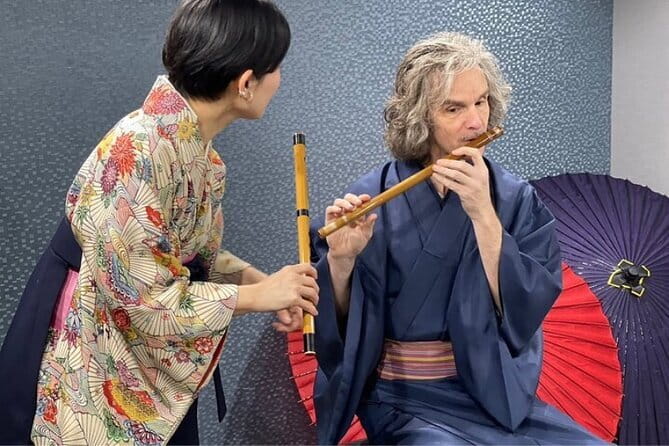
This activity has a maximum of 7 travelers. In a tour world full of rooms that feel crowded, this matters. A smaller group makes it easier to hear the instruments, ask questions, and participate in the hands-on segment.
It also changes the quality of the try-it time. With fewer people, you are more likely to get attention and guidance while you handle the instruments. You are not stuck waiting your turn for a long time, because the session itself is already tightly scheduled.
If you like interactive experiences, this small cap is one of the best reasons to choose this particular option.
Price and value: how $46.12 adds up in real terms
The price is $46.12 per person. For some cultural activities, you pay for a show, then you leave. Here, your money buys three things in one hour: a live concert by professional musicians, guided hands-on instrument playing, and a built-in photo moment holding instruments.
That is the value equation. You are not paying for a single passive segment. The try-it time is included, and the instrument needed for the experience is included too. When you weigh that against other short Osaka activities that only offer viewing, this tends to feel more worth it.
Also, the price is easier to justify when you are traveling solo or with a friend. A small group of up to 7 means you do not need a big party to make it feel personal.
If budget is tight, here is the decision rule I use: if you want at least one interactive moment, not just watching, then this price is reasonable.
Who should book this Osaka music session
I think this tour fits best if you want a clear cultural experience without committing to a long night out. It is also a good match if you like learning while you do something, since you can ask questions and try playing instruments.
You would especially enjoy it if:
- You like traditional arts and want to hear hogaku music live
- You are curious about shamisen, koto, wadaiko, and other instruments
- You want photos holding real instruments, not just from afar
- You prefer a smaller group setting with more interaction
It may not be ideal if you are looking for a long guided performance with deep theory, or if you want transportation handled for you. Private transportation is not included.
Practical expectations, so you are not surprised
Because this experience is structured into three time blocks, you can plan your energy. You will be listening first, then participating, then photographing.
Content can vary by day, so do not treat Wednesday and Friday as identical. The instruments and overall focus will stay within the traditional Japanese music theme, but the set can shift.
If you have never tried instruments before, do not worry. The experience is designed for participants, and most travelers can participate. Service animals are allowed, and that makes it easier for more people to attend.
Finally, confirmation is received at booking, and the ticket is described as mobile. That means you should have your phone ready at the start.
Should you book this traditional music and instrument tour?
Yes, if you want a one-hour Osaka activity that combines live performance, hands-on playing, and photos holding traditional instruments. The short length is not a weakness here, it is part of the value. You get three different moments instead of one.
Book it particularly if you are the type of traveler who likes to ask questions and learn through doing. The small group cap of 7 and the hands-on 25-minute instrument segment make it feel more personal than a typical concert ticket.
Skip it if you want a longer program or if you dislike environments where you must follow a tight schedule. Otherwise, this is a straightforward, high-satisfaction kind of experience.
FAQ
How long is the Traditional Japanese Music show and experience in Osaka?
The total duration is about 60 minutes, with 25 minutes for a live concert, 25 minutes to try playing instruments, and 10 minutes for photos.
What instruments can I expect to see and try?
You can experience a variety of traditional instruments, including shamisen, koto, wadaiko, and more.
Are photos included?
Yes. You will have time to take photos with the instruments and performers, and you can take photos holding traditional instruments as souvenirs.
How many people are in the group?
The group maximum is 7 travelers.
Where do I meet, and does it end nearby?
The meeting point is アルファ 心斎橋3-chōme-5-27 Minamisenba, Chuo Ward, Osaka, 542-0081, Japan. The activity ends back at the meeting point.
What times does it run?
Wednesday at 11:00 and Friday at 18:30 are listed options.
What is included in the price?
An instrument for the experience is included.
Is transportation included?
No. Private transportation is not included.
Can I cancel for a full refund?
Yes. You can cancel up to 24 hours in advance for a full refund. If you cancel less than 24 hours before the start time, the amount paid is not refunded.
A Night at a Osaka Show



More Tours in Osaka





More Tour Reviews in Osaka
Latest out of Osaka


Show, side by side.
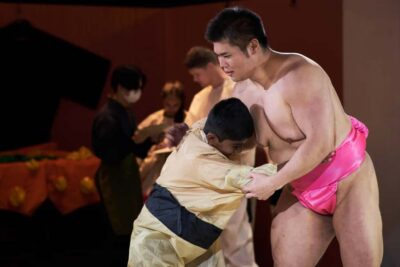 ★ 4.5Osaka: Sumo Show & Experience w/ Optional Kimono & Hot PotFrom $77609 reviews
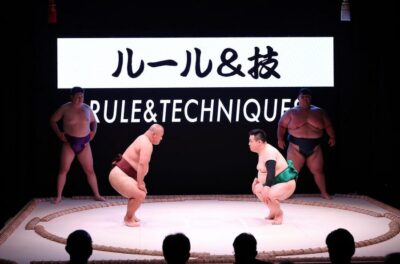 ★ 4.3Osaka: Sumo Stage Show with Bento or Snack + Fight & PhotoFrom $93364 reviews
 ★ 4.7Osaka: English Stand Up Comedy Show at Osaka Comedy ClubFrom $19203 reviews
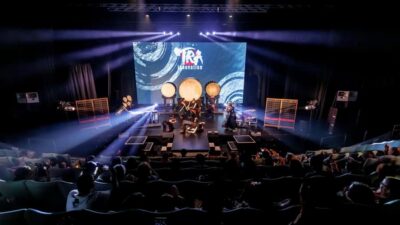 ★ 4.9Osaka: UTAGE Japanese Taiko Live ShowFrom $40167 reviews
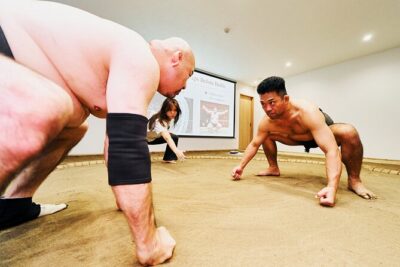 ★ 5.0Osaka Sumo Experience with Live Show and Audience ChallengeFrom $55162 reviews
 ★ 4.8OSAKA NIGHT FUSION Japanese Taiko Kabuki Samurai Dance ShowFrom $40155 reviews
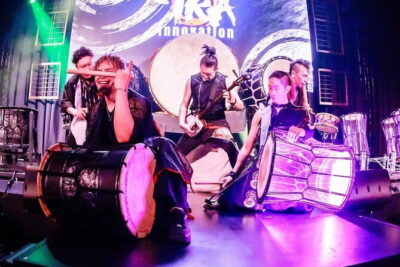 ★ 5.0Osaka: UTAGE Modern Japanese Taiko Live ShowFrom $1981 reviews
 ★ 4.5Osaka: A Modern Samurai, Kabuki, Taiko, & Dance ShowFrom $1966 reviews