
REVIEW · OSAKA CASTLE PARK TOURS
Ramen-Making Experience in the Osaka Castle Area with Souvenir
Turn noodles into dinner right near Osaka Castle. This small-group class teaches you ramen from scratch, step by step, with an English-speaking team and a studio that is easy to reach. I love the chance to make chashu with tender, juicy results, and I love picking your own soup base, including tonkotsu. The only real consideration is timing, since the class is about 2 hours and you’ll want to plan any Osaka Castle wandering separately.
You get a practical, hands-on experience in a group of up to 8 people, and the schedule works with morning or late afternoon sessions. Plus, it’s set up for real life, with a mobile ticket and a meeting point in the Higashitenma area, about a 20-minute walk from Osaka Castle.
Key highlights at a glance
- Choose your soup base: tonkotsu, shoyu, or miso, based on secret recipes from well-known ramen shops
- Make noodles from Japanese wheat flour designed for ramen, aiming for that classic chewy texture
- Learn chashu techniques using chicken simmered in the studio’s original broth
- Small-group coaching with English-speaking instructors who answer questions in real time
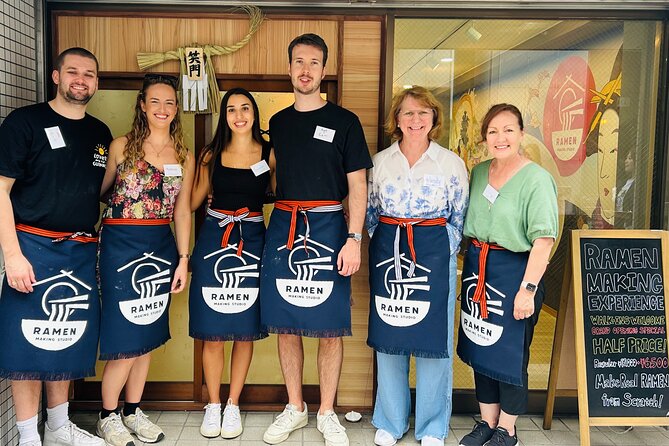
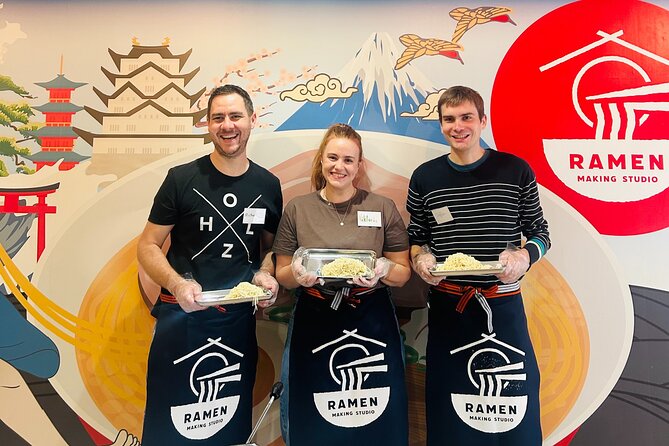
- A photo-friendly studio with ramen and Japanese motifs, plus a glass door said to be over 100 years old
- Take-home souvenir at the end of class, after you’ve made (and eaten) your bowl
Why this ramen class feels like real Osaka cooking
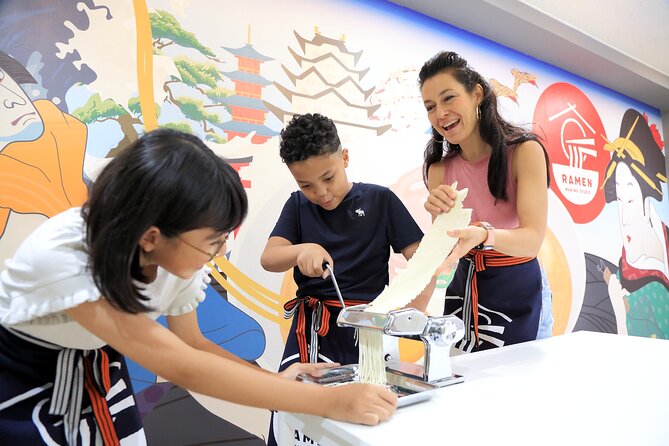
If you only eat ramen in Osaka, you miss the fun part: learning how the pieces come together. This class is built around doing, not watching, so you get to handle the dough, shape the noodles you’ll eat, and work on the soup itself. It’s the kind of activity that turns food into something you can recreate later, at home.
The biggest strength is that it covers the whole workflow. You’re not just “making noodles” or “making sauce.” You tackle noodles, chashu, and one of several soup styles, then put it all toward a finished bowl. That full loop is great for first-timers because you understand what each step contributes to flavor and texture.
Another plus is the teaching style. The instructors are English-speaking and stay interactive, so if something feels confusing, you can ask right away. And because the group is limited to 8 travelers, you’re less likely to get lost in a crowd.
Other ways up the keep
Getting to the studio near Osaka Castle without stress
Location matters, and this one is practical. The studio is within walking distance of Osaka Castle, about a 20-minute walk, which makes it easy to pair with a sightseeing morning or afternoon. If you prefer trains, it’s also convenient, with multiple stations less than 10 minutes away.
Here are the closest options listed for the area:
- Tenmabashi Station, Exit 13, about 10 minutes
- Minamimorimachi Station, Exit 6, about 10 minutes
- Tenmangu Station, Exit 7, about 5 minutes
It’s also well placed for broader Osaka plans. You can reach places like Umeda Sky Building and Namba in about 20 to 30 minutes by train. That helps if you want to do a “big Osaka” day, then come back for ramen class without wasting hours on transit.
One more logistics detail to keep in mind: the class uses a mobile ticket. You’ll want your phone charged and easy to access so you can check in smoothly.
The small-group format and what you actually get coached on
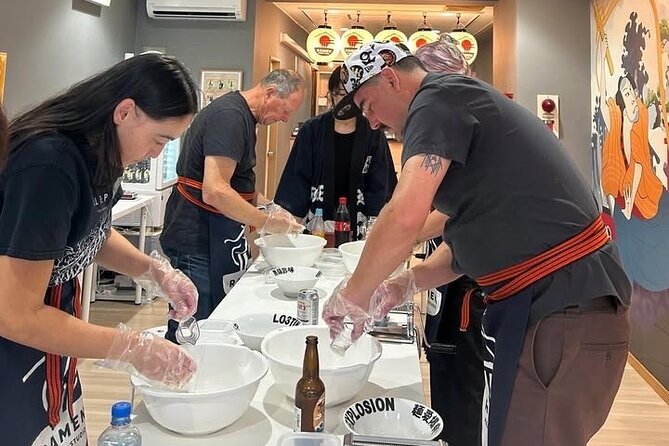
This is a family-friendly class open to all skill levels, so you do not need to arrive as a confident cook. The setup matters: with a maximum of 8 people, the instructor can check in while you’re working and keep the pace manageable. That also tends to make the experience feel less rushed, since questions can be answered during the process rather than at the end.
In the class, you’ll get real-time answers to questions from the English-speaking instructors. That’s useful because ramen is one of those foods where tiny details affect everything, like how the noodles handle or how the soup flavor balances out.
Also note the venue approach. It’s not just a cooking space. The studio has cultural touches, and you’ll learn about Japanese culture during your visit. Even if you’re there purely for ramen, these small bits help the meal feel more connected to place, not just an activity.
Noodle making: chewy ramen starts with the right flour
The noodle session is a core highlight. You’ll use Japanese wheat flour made specifically for ramen, and you’ll make your own original noodles. The goal is the chewy, springy texture that makes ramen feel like ramen rather than “just soup with pasta.”
In practical terms, this part is where you learn the most by doing. You’ll experience how dough behaves, how shaping changes what you eat, and why ramen flour exists for a reason. It’s one of those skills that makes a big difference when you try again later.
The class also aims for a satisfying result, not just a science experiment. Freshly made noodles are described as chewy and incredibly delicious, and that’s exactly what you’re after when you’re standing at the station creating your own bowl.
If you’re traveling with kids, this is often the most exciting piece because it feels hands-on and immediate. If you’re traveling solo or as a couple, it’s still engaging because you can see what you’re making evolve into something edible.
Chashu time: tender slices built from simmered chicken
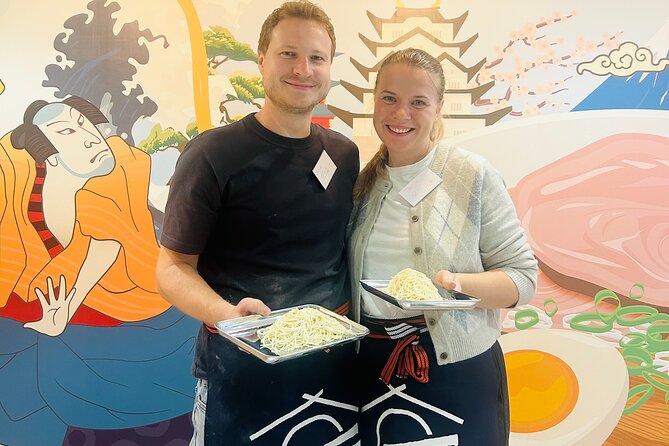
Next up is chashu. You’ll prepare tender, juicy chashu using chicken simmered in the studio’s original broth. The experience is basically training wheels for one of ramen’s most important toppings, so you can understand what makes chashu flavorful beyond the final presentation.
This is also a strong spot for value. A lot of food tours stop at tasting, but here you learn the component itself. Once you know how chashu is built and seasoned through simmering, it’s easier to recognize what you liked in restaurant bowls and what you might want to recreate.
The teaching emphasis is on authenticity and technique. You’re guided by professionals in a clean, organized kitchen setting, which helps a lot when you’re learning something new. And the result is not just instructional. You get to eat the ramen you helped create.
More broth and more pleats


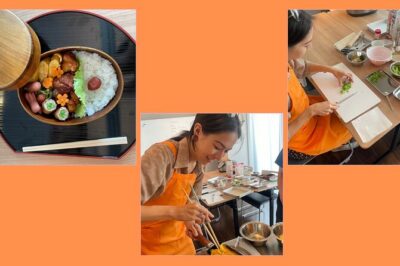
Soup making: tonkotsu, shoyu, or miso based on shop-style recipes
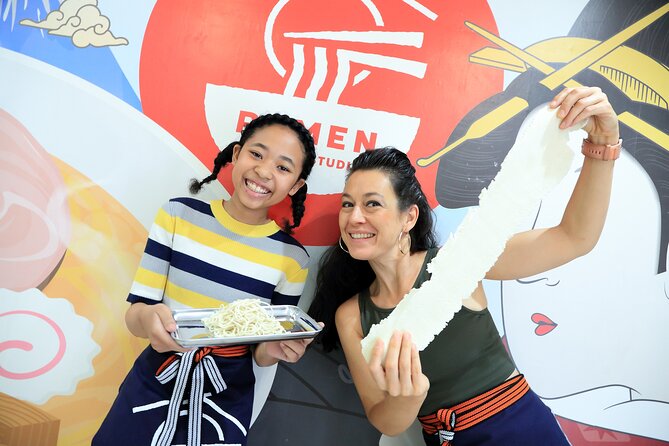
The soup is where ramen identity lives, and you get to choose. You’ll pick from tonkotsu, shoyu, or miso. Each style is based on secret recipes from well-known ramen shops, and that makes your choice feel more specific than just “different flavors.”
Here’s how this helps you as a cook and eater:
- Tonkotsu style connects to rich, pork-forward ramen character
- Shoyu style centers on soy sauce depth and seasoning balance
- Miso style leans toward hearty, fermented warmth
Even if you don’t cook at home often, choosing the soup base gives you a real understanding of how taste changes with ramen style. And since you’re making the soup in class, you’ll likely remember the differences much better than if you only compare bowls at restaurants.
One practical advantage: because the instructors are present and can answer questions, you can ask how the soup base is expected to taste and adjust your approach while you work. That kind of feedback is hard to get from a purely self-guided food workshop.
The studio details that make the experience feel Osaka
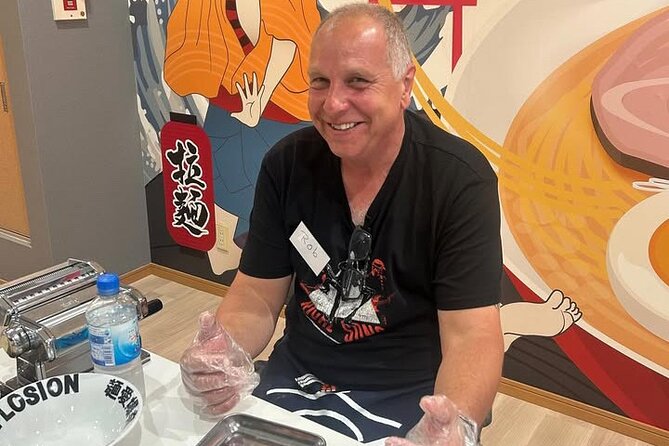
A cooking class can be generic, but this venue looks designed for the moment. Walls are decorated with ramen and Japanese motifs, which makes photos easy without needing special planning. There’s also an entrance glass door made more than 100 years ago using a technique no longer exists, which gives the place a sense of history even though the activity is modern and hands-on.
Inside, there are many items that reflect Japanese culture, and the instructors introduce parts of that during your visit. That matters because it turns the cooking into a small cultural experience, not only a meal lesson.
If you like taking travel photos, you’ll probably appreciate the setting. It’s the kind of place where your camera has something to catch while you wait for your station to open or while staff explains the next step.
Your finished bowl, plus the souvenir
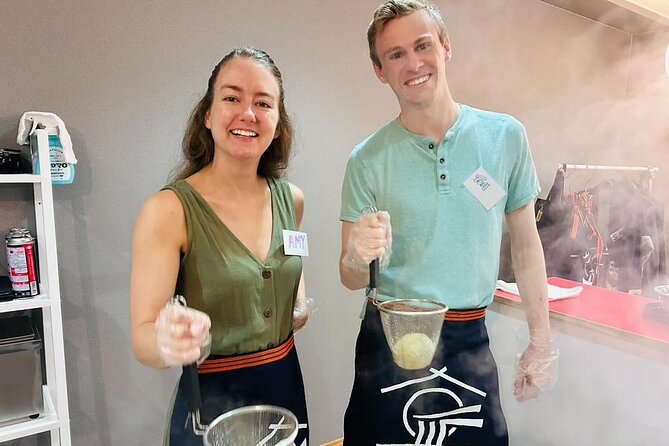
This class is designed so you end with something satisfying, not just skills. You make ramen from scratch and learn the steps that lead to a bowl you can eat. That’s the part that makes it feel complete.
Then you get a wonderful souvenir to take home. The exact item isn’t listed, but the fact that you receive something adds to the sense that you’re leaving with a memory, not just a full stomach.
In reviews, a few themes show up again and again: people love how hands-on the process is, and they highlight that the instructions hit the right balance of interaction and explanation. I’d take that as a sign that this is not the kind of class where you feel like you’re on your own with a cookbook.
Price and value: $85.39 for 2 hours of ramen know-how
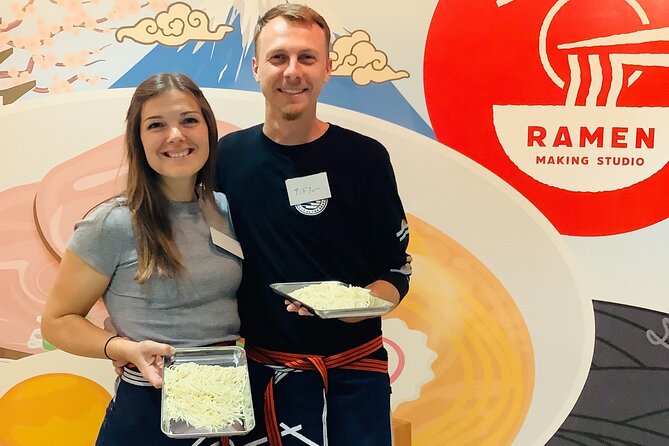
At $85.39 per person for about 2 hours, this is not a budget snack. But it can be a strong value if you care about learning how ramen works. You’re paying for several things at once:
- a small-group class capped at 8 travelers
- English-speaking instruction and real-time Q and A
- hands-on noodle making, chashu preparation, and soup base choice
- a meal you helped make
- a take-home souvenir
- a venue geared for culture and photos
If you were to recreate this on your own, you’d spend money on ingredients and still miss the coaching part, especially for texture work like noodles and for topping like chashu. That coaching is exactly where travel cooking classes can justify the cost.
A fair consideration: if your main goal is Osaka Castle sightseeing or you want a full-day food crawl, this is time-boxed. It’s about 2 hours, so you’ll want to pair it with a nearby plan rather than trying to cram too much into the same window.
Who should book this ramen-making experience
This experience is a good match if you want an Osaka food moment that feels more local and skill-based than eating your way through town. You’ll likely enjoy it most if you fall into one of these groups:
- Families looking for a hands-on activity that welcomes all skill levels
- Food lovers who want more than tasting, they want the process
- Beginner cooks who want a guided introduction to noodles, chashu, and soup base styles
- Couples or small groups who prefer small classroom energy over a larger tour bus vibe
If you’re the type who likes to cook back home, this is also the kind of class that gives you a clearer mental recipe. You’ll understand what you did and why, so it’s easier to reproduce later.
When this class may not be your best fit
Even good classes have limitations. The main one is pace. You’ll be learning and working in a structured session, so you might not have the freedom to linger like you would at a restaurant.
Another consideration is your travel style. If you’re hoping to spend most of your time on-site at Osaka Castle itself, this class takes about 2 hours plus travel to the studio. It’s still close, but you’ll want to plan so you don’t feel rushed.
Finally, if you are extremely sensitive about photos, note that staff may take photos and videos that could be used on social media or for advertising. If you’d rather not have that, you should tell the staff before the experience begins.
Should you book this ramen-making class near Osaka Castle?
I think you should book it if you want a guided, hands-on way to learn ramen, with a small group, English-speaking instructors, and a clear payoff at the end: a bowl you built plus a souvenir. The mix of noodle making, chashu, and soup base choice gives you real ramen depth, not just one component.
Skip it only if you want a purely sightseeing-focused day or you’re not interested in doing the cooking work. If that sounds like you, a restaurant meal might fit better.
If you do want to bring something home besides photos, this class gives you the kind of skill that sticks.
FAQ
How long is the ramen-making experience?
It takes about 2 hours.
Where is the meeting point?
The start point is Japan, Osaka, Kita Ward, Higashitenma, 1-chōme4 東天満ハイツ.
Is the studio close to Osaka Castle?
Yes. The studio is about a 20-minute walk from Osaka Castle.
What is the group size?
The class has a maximum of 8 travelers.
What soup bases can I choose from?
You can choose tonkotsu, shoyu, or miso.
Can I take the class if I am traveling with kids or I am a beginner?
Yes. The class is family-friendly and open to all skill levels.
Are the instructors English-speaking?
Yes. English-speaking instructors guide the class and can answer questions in real time.
Will I get to eat what I make?
Yes. You learn to make ramen from scratch and end with a bowl you made yourself.
Do they provide a souvenir?
Yes. You receive a souvenir at the end of the class.
What is the cancellation policy?
You can cancel for a full refund if you cancel at least 24 hours in advance. If you cancel less than 24 hours before the start time, the amount you paid will not be refunded.
More Tour Reviews in Osaka



Broth, Pleats and Second Helpings

Around the Moat: More Castle Days




Latest out of Osaka


Osaka Castle Park Tours, side by side.
 ★ 4.5Osaka Castle: Museum and Tower Entry TicketFrom $72,380 reviews
 ★ 5.0Osaka Castle Walking Tour and Castle Tower AdmissionFrom $23561 reviews
 ★ 5.05-Hour Osaka Bike Tour to the Neighborhood of Osaka CastleFrom $87319 reviews
 ★ 4.7Osaka Castle Guided TourFrom $43249 reviews
 ★ 4.9Osaka: Castle History Walking Tour / Castle Tower AdmissionFrom $33230 reviews
 ★ 4.7Osaka: Osaka Castle Guided Tour with Local GuideFrom $4878 reviews
 ★ 5.0PRIVATE 6hr, Food tour from Osaka Castle, Kuromon, Dotonbori.From $15568 reviews
 ★ 4.5A Tour to Explore the Symbol of Osaka: Osaka CastleFrom $8356 reviews
Also worth a look in