
REVIEW · OSAKA STREET FOOD CRAWLS
Osaka Michelin Food Tour Experience Kaiseki and Local dishes
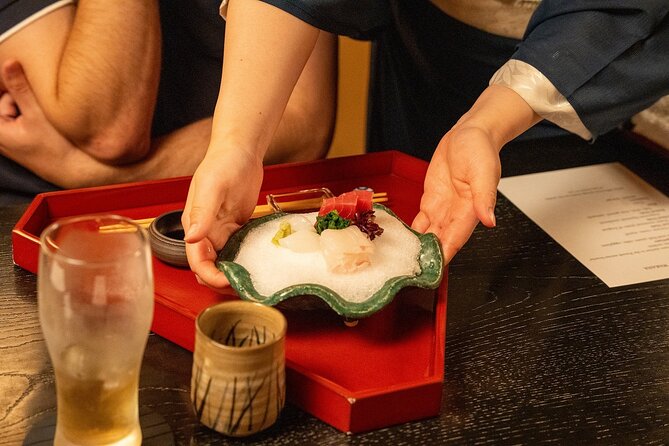
Osaka food, with Michelin-level polish and street joy. This 3.5-hour tour pairs a refined kaiseki meal with iconic takoyaki, then ends on a sweet note with matcha dessert. I also like the small group setup, capped at 6 people, so the English-speaking guide can actually explain what you’re eating and why it matters.
If you care about Japanese dining etiquette, this mix of high-end and everyday food is a smart way to understand Osaka in one sitting.
One consideration before you book: takoyaki is not adjustable. It contains dashi (fish broth) and octopus, and the tour notes it cannot be substituted, with extra matcha offered instead for people who cannot eat it.
Key Highlights You Should Know Before You Go
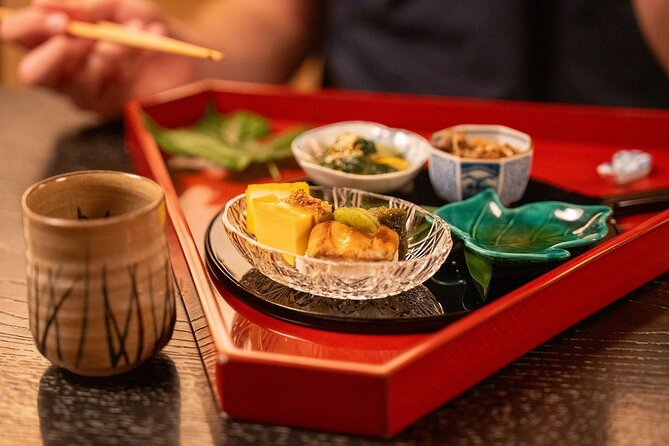
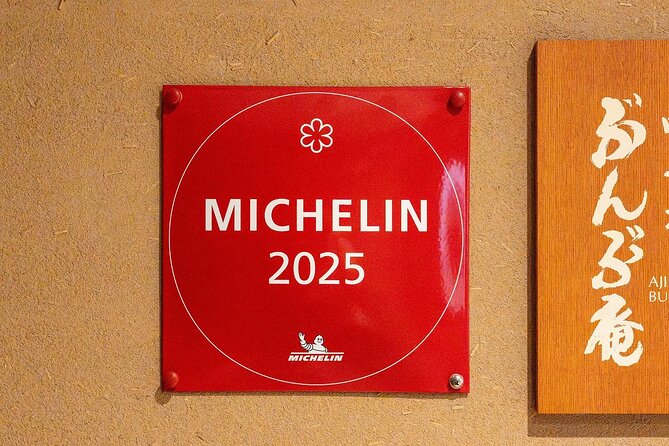
- Michelin-starred kaiseki meal at Ajikitcho Bunbuan with seasonal ingredients and artistic presentation
- Bib Gourmand–recognized takoyaki in Amerikamura, with that classic crispy outside, soft inside texture
- Hibuse Pottery Shrine stop to connect Osaka dining with local ceramic traditions
- Max 6 guests plus an English-speaking guide, with complimentary tour photos
- Matcha dessert finale near Shinsaibashi or Nanba Station
- Rain or shine tour with about 2–3 km of easy walking
Michelin Kaiseki Meets Osaka Street Food, In One Tight Plan
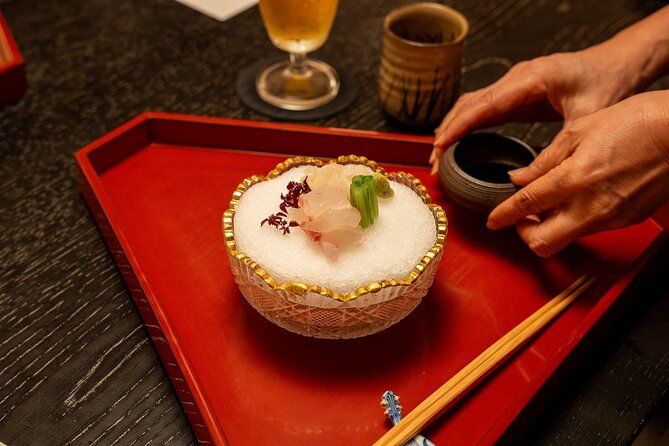
This isn’t a slow, museum-style food tour that drags on. It’s a focused route that hits three different sides of Osaka eating: formal kaiseki, neighborhood street snacks, and a final sweet stop. You also get the cultural thread that links food to place, starting with a pottery shrine tied to protection and prosperity in ceramics.
The strongest part of this experience is the contrast. You begin with something refined, then you move to Amerikamura for the louder, faster energy of takoyaki stands. That contrast is exactly what helps you understand how Japanese dining can be both ceremonial and casual, often on the same day.
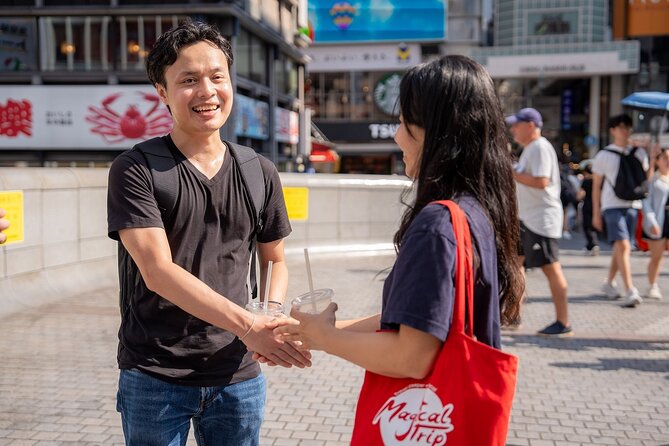
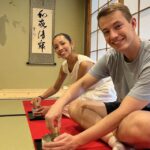
And yes, the guide adds value beyond standing next to you. In one recent tour experience, the guide Chie went beyond the menu and taught participants how to write their names in katana-style characters. That kind of personal touch is why small group tours can feel more memorable than a big bus ride full of people.
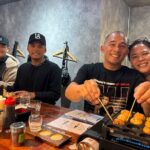
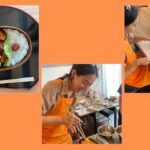
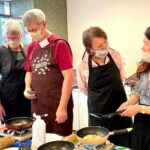
More plates on more streets
The 11:30 Start, the Route Logic, and the “Small Group” Advantage
You meet at a very practical location, 7-Eleven Osaka Kutarōmachi (Osaka Kutarocho 4-chome, Chuo Ward), at 11:30 am. The tour ends near Shinsaibashi Station, around 3 Chome-12 Minamisenba, Chuo Ward, with matcha dessert served near Shinsaibashi or Nanba Station.
The group size matters here. The tour is limited to 6 guests plus the guide, which keeps pacing comfortable and lets you ask questions about ingredients and etiquette without feeling rushed. Expect about 2–3 km of walking at a leisurely pace, so comfortable shoes are a bigger deal than you might think, especially if you’re visiting on a day when the sidewalks feel warmer than you expected.
One more practical note that you’ll want to respect: the tour starts on time. If you arrive late, the tour says you cannot join, reschedule, or get a refund, so plan your route a little early and build in a buffer.
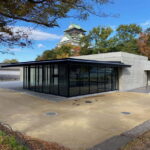
Stop 1: Hibuse Pottery Shrine, Why Ceramics Show Up in Food Culture
The tour kicks off with a quick visit to Hibuse Pottery Shrine for about 20 minutes. This is not just a photo stop. The shrine is tied to the old idea of praying for protection from fire and prosperity in ceramics, which connects beautifully to why Japanese food is so tied to what you eat from.
In kaiseki restaurants, the tableware and presentation are part of the experience, not decoration. Seeing a pottery shrine early gives context for why ceramic craft and everyday dining can overlap in Japan.
Since the admission for this stop is listed as free, it’s also a good low-cost way to add meaning to the rest of your meal. You get a cultural warm-up before you sit down to something Michelin-level.
Stop 2: Ajikitcho Bunbuan Kaiseki in Honmachi
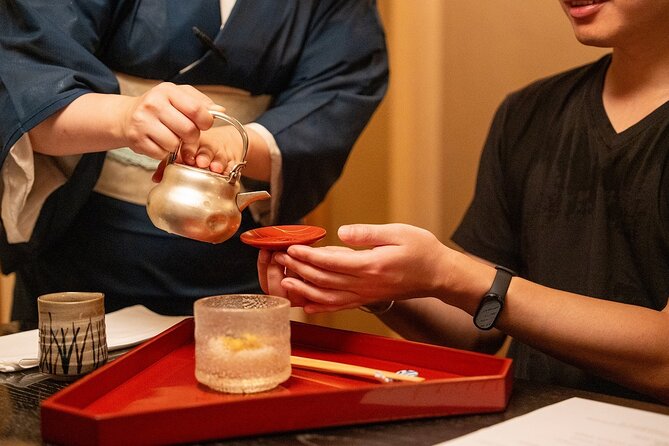
Next comes the main event: a refined kaiseki meal at a Michelin-starred restaurant, Ajikitcho Bunbuan, located in Honmachi. This stop runs about 1 hour, and the meal admission is included.
Kaiseki is Japanese seasonal dining, where the pace and presentation are part of the point. Even when you do not know every ingredient, the structure usually makes sense: you move through courses that aim for balance, temperature, and texture. That’s the moment when an English-speaking guide earns their keep, because they can explain what you’re seeing and what the seasonality means in plain language.
One practical tip for your comfort: the tour requests moderate attire for kaiseki restaurants, and specifically asks you to avoid off-shoulder tops. You don’t need formal clothes, but you do want to look like you can sit through a multi-course meal without needing to re-adjust your outfit every five minutes.
Also, tea and water are included during the kaiseki portion. Alcohol and other drinks are available to purchase, but you can keep this part simple and still feel fully taken care of.
Stop 3 and 4: Shinsaibashi Shotengai and Imari Ware Shopping
After dinner time begins, the tour shifts to walking culture. First, you head through Shinsaibashi and a lively shotengai area, which is basically a covered shopping street style you’ll recognize across Japan. This is the “work the legs a little, then snack and explore” stage.
Then comes the optional shopping stop at a ceramics-focused shop specializing in Imari ware and antique-style tableware. The tour says this can depend on whether the shop is open, and your guide may suggest alternatives if it’s closed.
This is one of the smartest inclusions on the itinerary because it turns what could be a random shop visit into something tied directly to the theme of the day. You’re not just browsing shiny objects. You’re seeing how traditional ceramics can fit into everyday table life, which makes the earlier shrine stop feel less like a detour.
If you do end up buying something, plan your shopping with your walking route in mind. Even in a short tour, you’ll be moving. A small gift or tableware accessory is realistic, while big items may be more of a hassle on your next train ride.
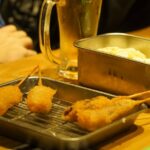
More time at the hot plate
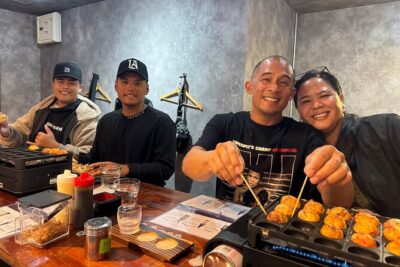
Stop 5: Amerikamura Takoyaki, Crispy Outside, Octopus Inside
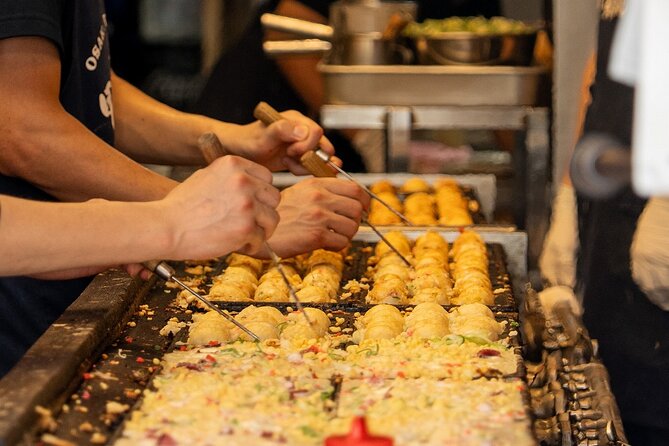
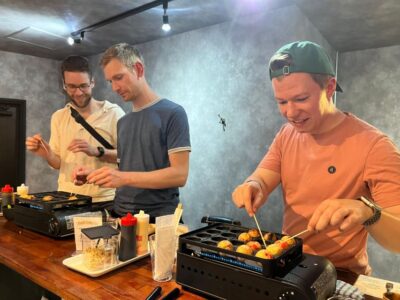
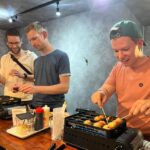
Amerikamura is where Osaka gets playful. This stop lasts about 40 minutes, and the highlight is takoyaki from a shop recognized as Bib Gourmand–level by Michelin.
The tour emphasizes the texture and the flavor profile: freshly grilled takoyaki with a crisp exterior and a soft center. It’s filled with octopus, and the outside gets that signature savory coating that makes it hard to eat just one piece.
Now for the big “read this twice” part: takoyaki here contains dashi (fish broth) and octopus, and the tour notes it cannot be substituted. If you can’t eat it, the alternative offered is extra matcha desserts instead.
If you’re food sensitive for reasons other than this (like cross-contact concerns), the tour also warns that meals are prepared by partner restaurants and not by the tour operator, so allergy-free guarantees are not stated. So this stop is best for people who can eat standard takoyaki without needing menu swaps.
Stop 6: Matcha Dessert Near Shinsaibashi or Nanba Station
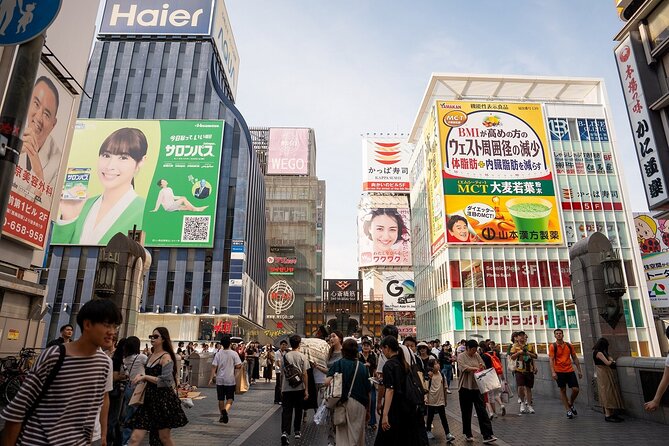
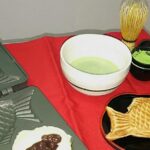
You end with a sweet, about 30 minutes, with matcha dessert served near Shinsaibashi or Nanba Station. This timing is great because it cools the palate after savory snacks and the heavier kaiseki meal.
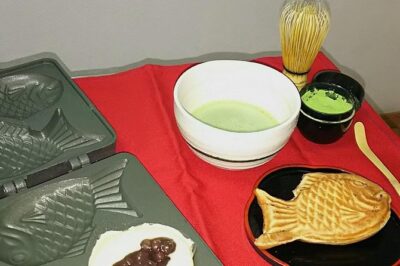
Matcha is also the kind of dessert where Japanese tea culture shows up in a way that feels accessible. You don’t have to be a tea expert to enjoy it, but it does help to notice how matcha tastes can range from creamy to more bitter depending on the preparation. The guide is there to help you order and understand what you’re getting, especially if you’re dealing with a menu written in Japanese-only.
If you were not able to eat the takoyaki due to dietary limits, this is the part that helps balance the experience. The tour’s alternative plan is to offer additional matcha desserts instead of swapping the takoyaki.
Price and Value: What $162.58 Actually Buys You
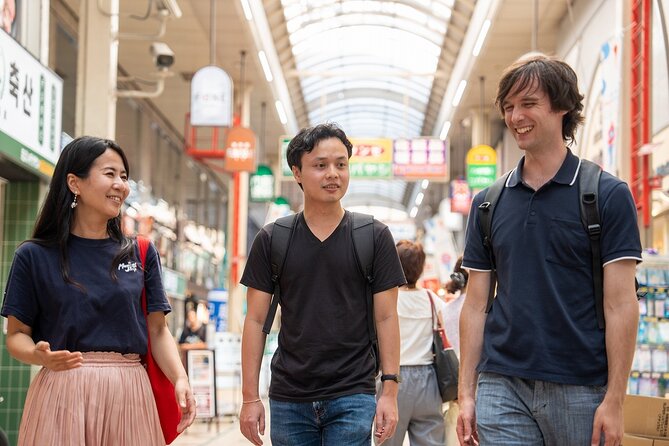
At $162.58 per person, you’re paying for more than walking and translation. The value is in the included meal structure.
You get:
- A Michelin-starred kaiseki meal at Ajikitcho Bunbuan (a major cost driver)
- Takoyaki from a Michelin-recognized shop
- Matcha dessert included at the end
- Tea and water included during the kaiseki restaurant portion
So you’re not just paying for street food. You’re paying for a curated path that includes a formal multi-course style meal plus Osaka classics.
The tour is also capped at 6 participants, which means less crowding and more guide attention. Add in complimentary tour photos and the fact that it includes an English-speaking guide, and the pricing looks more reasonable than it would for a standard sightseeing walk where you’re mostly on your own.
Dietary Limits, Substitutions, and What You Can Control
This tour is not positioned as an all-diet comfort-food program. It’s a food-and-culture experience with specific menu items.
What you should know:
- Vegetarian course is available only with advance request, and same-day requests cannot be accommodated.
- Vegan, gluten-free, and shellfish allergy requests are not accommodated.
- Takoyaki contains dashi (fish broth) and octopus, and cannot be substituted.
- For people who cannot eat the takoyaki, the tour may offer extra matcha desserts instead.
If you have dietary needs, your best move is to decide early whether your needs can be met without full menu substitutions. Because partner restaurants handle the meals, the tour cannot guarantee allergy-free food or complete adjustments for dietary restrictions, even if alternatives are sometimes possible.
It’s also smart to check with the operator after booking if your situation is complex. The tour notes they will make every effort to provide alternatives at other stops, but substitutions might not always be possible.
Who This Tour Is Best For (and Who Might Feel Frustrated)
This tour is ideal if you:
- Want one Osaka food experience that covers both formal and street food
- Like the idea of a guide who explains dining traditions in English
- Enjoy small group tours where you can ask questions
- Appreciate tableware and craft enough to shop carefully for ceramics
It might not be the best fit if you:
- Need vegan, gluten-free, or shellfish allergy accommodations
- Must avoid all fish-based ingredients, since takoyaki includes dashi
- Get nervous about multi-course restaurants where attire and pace matter
For families, the tour states it is kid-friendly, with complimentary tour photos included. Children aged 3 and under may join, but meals are not provided for them.
Should You Book This Osaka Michelin Kaiseki and Local Dishes Tour?
If your goal is to experience Osaka food culture in a compact, high-quality way, I think this tour deserves a serious look. The big selling point is the combination of a Michelin-starred kaiseki meal with iconic takoyaki, plus a matcha finish, all in a small group format.
I’d book it if you can comfortably eat standard takoyaki and you want the guide to help translate etiquette and course structure. The ceramic shrine and the Imari ware shopping stop make the itinerary feel themed instead of random, which is rare for short tours.
I would hesitate if your diet requires guaranteed substitutions or if takoyaki is a hard no. In that case, you could still enjoy the matcha dessert finale, but the core street food moment would be off the menu.
Overall, this is a good value move for people who want one afternoon that feels like Osaka, not just like a list of places.
FAQ
How long is the Osaka Michelin Food Tour Experience Kaiseki and Local dishes?
It lasts about 3 hours 30 minutes.
How much does the tour cost?
The price is $162.58 per person.
What is the meeting point and start time?
You meet at 7-Eleven Osaka kutarocho 4-chome (4-chōme-3-1 Kyūtarōmachi, Chuo Ward, Osaka) and the tour starts at 11:30 am.
Where does the tour end?
The tour ends near Shinsaibashi Station (3 Chome-12 Minamisenba, Chuo Ward, Osaka). The matcha dessert is served near Shinsaibashi or Nanba Station.
How many people are in the group?
The maximum group size is 6 guests plus the guide.
What food is included in the tour?
The tour includes a Michelin-starred kaiseki meal, Michelin-recognized takoyaki, and matcha dessert. Tea and water are included at the kaiseki restaurant.
Is the pottery shrine admission included?
Yes, the Hibuse Pottery Shrine stop is listed with a free admission ticket.
Can I request a vegetarian course?
Vegetarian course is available only with advance request, and same-day requests cannot be accommodated.
Are vegan, gluten-free, or shellfish allergy requests supported?
No. The tour says it cannot accommodate vegan, gluten-free, or shellfish allergy requests.
What is the cancellation deadline for a full refund?
You can cancel up to 24 hours in advance for a full refund. If you cancel less than 24 hours before the experience starts, the amount paid is not refunded.
More Tour Reviews in Osaka




More Time at the Hot Plate

Eat Your Way Round Osaka
Latest out of Osaka


Osaka Street Food Crawls, side by side.
 ★ 4.8Osaka: Shinsekai Food Tour with 13-15 Dishes at 5 EateriesFrom $532,204 reviews
 ★ 5.0Osaka Food Tour: 13 Dishes at 5 Local EateriesFrom $732,149 reviews
 ★ 5.0Osaka Local Foodie Walking Tour in Dotonbori and ShinsekaiFrom $111985 reviews
 ★ 4.9Hungry Osaka Street Food Tour: 15 Dishes & 3 DrinksFrom $79694 reviews
 ★ 5.0Osaka: Guided Food Tour with 12 Dishes at 4 Local EateriesFrom $83533 reviews
 ★ 5.0Absolute Osaka Food TourFrom $231309 reviews
 ★ 4.5Osaka After Dark: Small-Group Night Food Tour (Max 6)From $116245 reviews
 ★ 5.0Eat, Drink & Cycle: Osaka Foodie Bike TourFrom $99224 reviews
Also worth a look in