
REVIEW · FOOD & DRINK
Osaka Food Quest: Self-Guided Culinary & History Adventure
Dotonbori turns into a game board. I like the self-paced smartphone puzzle format and the way it points you at real food landmarks while tying them to Osaka’s past. The only real drawback is that you are relying on your phone for directions, so if the app feels sluggish, you may need patience and a backup plan.
This is a short, one-hour-leaning walk (roughly), but it feels less like a lecture and more like solving little moments as you wander. You’ll cover iconic spots such as Ebisu Bridge, Hozenji Temple, the National Bunraku Theater area, and Kuromon Market, with 10 clue-based challenges stitched through the route.
At $7.85 per person, it’s hard to beat as a low-stakes way to explore, especially if you like doing things on your own schedule. Just plan around extra time if you stop for snacks, because that is where the experience really pays off.
Key Highlights You’ll Actually Feel While Walking
- 10 puzzle challenges turn sightseeing into a scavenger hunt you can pause and restart.
- Dotonbori-focused route hits the food streets people come for, without needing a human guide.
- Food stops tied to Osaka identity like takoyaki and horumon beef offal, not generic sightseeing.
- Temple and theater history beats from Hozenji Temple to Bunraku at the National Bunraku Theater.
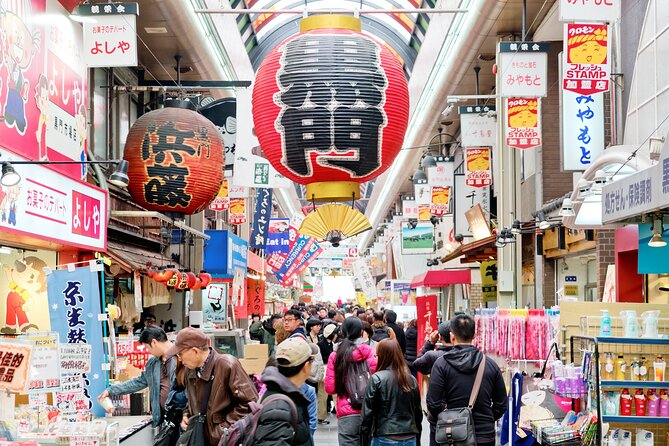
- Kuromon Market has a story behind the fish-market roots and the Enmyo Temple link.
- Flexible timing for real meals since you control when you walk versus when you eat.
What This Osaka Quest Feels Like in Dotonbori
Think of this as a guided-feeling walk, minus the guide. You move through Osaka’s best-known food corridor, then your smartphone nudges you from one clue to the next. Each puzzle asks you to look closely, not just walk past things. That small change makes the streets feel smarter, like you’re reading the city instead of staring at it.
The route leans heavily into classic Kansai food culture. You’ll hit spots connected to everyday dishes and cooking rituals, then you get a historical angle so the snacks make more sense. Ebisu Bridge is not just a photo spot, it’s tied to a local legend and links two major shopping streets. Hozenji Temple is not just pretty at night, it’s tied to Fudo Myoo and the entertainment energy of the Namba and Dotonbori area.
One more thing I like: the experience is truly self-guided, which means you can slow down if you want to shop, taste, or just stand and watch street life. The flip side is that there is no person to interpret the city for you. If you’re someone who wants a live explanation, you may find yourself doing more reading yourself than you expected.
Plates worth crossing Osaka for
Price and What You Get for $7.85
At $7.85 per person, you’re not paying for a private escort or a long formal tour. You’re paying for a structured route plus a set of 10 puzzle-based challenges and story content. In practical terms, that’s the value: you get a plan that keeps you walking efficiently through the right neighborhoods.
Also, a big part of value here is cost of “dead time.” In many cities, if you wander without a plan, you spend time figuring out what’s where and what matters. This quest gives you a flow, starting in Dotonbori and moving through nearby landmarks like Ebisu Bridge, the museum-style takoyaki stop, the temple theater zone, then Kuromon Market and onward toward Namba Yasaka Shrine.
You do need your phone and the mobile access code to start. And because there’s no physical guide, you’re responsible for your own pacing and questions. But if you’re comfortable exploring independently, this is a budget-friendly way to get structure without feeling locked into a group schedule.
How the Smartphone Puzzle System Works (and When It Might Frustrate You)
The whole experience runs through your smartphone. You’ll use a mobile access code, then follow the quest through 10 clue challenges. The tour is designed for you to pause and resume anytime, which matters in Osaka because you’ll inevitably stop for food, photos, or simply to avoid getting caught in peak crowds at the wrong moment.
That “pause and resume” feature is also your built-in safety net. If you step into a busy area and need a minute to regroup, you can do it. If you decide to eat first and solve later, you can.
Here’s the practical consideration: because your phone provides direction, you want it ready to go. Keep your battery charged, and don’t wait until the last second to load everything. If the app feels slow or your orientation gets confusing, fall back on plain street navigation and then continue the puzzles when you’re oriented again. The route is in central Dotonbori, so you usually won’t be far from where you need to be.
Also, note the listing highlights mobile ticket support. That means you should expect a mobile-based experience rather than paper confirmation and a person meeting you with a clipboard.
Ebisu Bridge to Konamon Museum: Starting Your Clues Right
You start at 1 Chome-6 Dotonbori, Chuo Ward. That’s a great place to begin because Dotonbori is already your theme park: bright lights, food smells, and nonstop street energy. From there, you get your first “look closer” challenge at Ebisu Bridge.
Ebisu Bridge matters for two reasons. Story-wise, it’s tied to a legendary curse involving Osaka’s Hanshin Tigers baseball team. Practical-wise, it’s a link between the Shinsaibashi-suji and Ebisubashi-suji shopping districts. Your puzzle at the bridge is essentially a warm-up: look around, find the right answer, then move forward.
Then you head to the Konamon Museum, a takoyaki-focused spot where you can eat, learn, and make takoyaki. Even if you don’t plan to make it yourself, this stop fits the Osaka theme well. Takoyaki is one of those dishes that feels like a city signature, and the museum concept helps you understand the why behind the bite.
One reality check: this part of the route is where you’ll feel the temptation to stop for snacks immediately. If you take too long here, the whole quest can stretch. That’s not a flaw, it’s just you choosing the “eat first” version of sightseeing.
Horumon, Hozenji Temple, and the Bunraku Theater Zone
After the takoyaki center, your quest shifts into a more layered Osaka rhythm. You’ll pass Showa Taishu Horumon Dotonbori, specialized in beef offal. That’s a bold choice, and it’s also very Osaka. Horumon is part of the Kansai comfort-food story, and connecting it to a specific restaurant makes the experience feel grounded instead of abstract.
Next comes Hozenji Temple, built in 1637. This stop has real religious weight. The temple pays homage to Fudo Myoo, one of Buddhism’s five guardians. And it’s not only spiritual trivia. The area around Namba and Dotonbori was a major entertainment center in the 1600s, with dramatic performances of kabuki and bunraku running through the district. In other words, you’re walking through a place that historically mixed faith, performance, and street life.
Then you hit the National Bunraku Theater, established in 1984 as the Kansai home of bunraku. The theater’s main hall has 753 seats, and the small hall has 159 seats. Even if you don’t watch a show, the fact that this theater exists right here helps explain why bunraku is a living cultural thread rather than a museum artifact.
Best part of this whole middle stretch: it turns Osaka’s food walk into an arts-and-ritual walk. If you’re the type who likes your travel to connect dots, this sequence is the payoff.
More days made easy by a guide
Kuromon Market: Fish-Market Origins Under a Snack Timeline
The quest then brings you to Kuromon Market. The name literally means black gate, and the market started as a fish market around 1822. It became an official market in 1902. There’s also a neat historical detail tied to the name: the black gate connection is said to relate to Enmyo Temple, which stood in the area until 1912 (the last year of the Meiji Period).
This is where the experience shifts from puzzle solving to full-on eating energy. Kuromon is famous for lots of small bites and quick shopping. Your challenge here is another “look and answer” moment, but practically, this is your chance to convert the stories into taste.
One practical note: the route includes admission ticket free time at this stop, so you’re not paying extra just to be there. That makes it easier to treat the market like a food playground rather than a ticketed attraction. If your goal is to understand Osaka through flavors, this is the most satisfying place to slow down.
If you’re short on time, prioritize just a few stalls instead of trying to taste everything. The quest format can give you a false sense that you must speed through. You don’t. Your phone keeps the structure, not your stress.
Namba Yasaka Shrine Finish: How the Route Lands You
Your quest continues toward Namba Yasaka Shrine. The shrine is said to have been commissioned by Emperor Hanzei in honor of his father, Emperor Nintoku. The original site is connected to what is now Kawachi Matsubara City, and the shrine was moved to its current location after Hideyoshi Toyotomi began construction of Osaka Castle.
This stop feels like a calmer ending compared to Kuromon and the nonstop Dotonbori lights. It gives you context for why the area isn’t only food. It’s also where power, religion, and city planning left their marks.
You finish at 2-chome-9-19 Motomachi, Naniwa Ward. The ending point is different from where you start, which is a big part of the value. Instead of returning to the same street corner, you walk through a meaningful path and end closer to the next things you might want to do.
Best Timing, Walking Pace, and Who This Suits
The tour is listed as about 1 hour. But the real-world pace depends on how you handle the “look around and answer” format and whether you stop for food at places like the takoyaki area and Kuromon Market. I recommend you plan more like 2 to 3 hours if you want a relaxed experience with time to eat. If you rush, you can probably finish sooner, but you’ll miss the joy part.
Who suits this best?
- Solo travelers who like exploring freely and want a route that keeps them from wandering aimlessly.
- Couples who want a playful activity, not just a dinner reservation.
- Families who can keep kids engaged with short tasks, as long as everyone is okay with a smartphone-based adventure.
- Food-first people who still want historical context, without sitting through a long explanation.
Who might find it less ideal?
- If you strongly prefer a human guide to answer questions on the spot, this is missing that layer because there’s no physical tour guide.
- If you hate using your phone as the main instruction source, you’ll likely get frustrated.
Small Practical Tips That Make It Run Smooth
Here’s how to get the most out of this kind of quest without turning it into a tech problem.
Charge your phone before you start. You are using a mobile access code and solving 10 puzzle challenges, so run-time battery matters.
Plan where you’ll eat. This quest points you at food touchpoints, including takoyaki and a horumon specialty restaurant. Don’t try to snack at every single moment. Choose a couple of meaningful stops so you enjoy them.
Start in daylight if you can. Dotonbori is amazing at night, but the clue-solving is easier when you can read and look around comfortably.
Carry light and wear comfy shoes. You’re walking through multiple stops, including temple and theater areas. Even if the quest duration feels short on paper, your legs will tell the truth.
Use pauses strategically. The experience lets you pause and resume, so stop when you want, not when you feel forced.
Should You Book the Osaka Food Quest?
I’d book it if you want a low-cost, structured walk that makes you look at Osaka like an insider. At $7.85, the value comes from the combination of a Dotonbori path, 10 puzzle challenges, and story content that links food stops to places like Hozenji Temple and the National Bunraku Theater.
Skip it if you expect a traditional guided tour with a person explaining everything. Also skip it if you know you’re likely to have phone trouble, because this experience runs on your smartphone for the quest flow.
If you’re the type who likes turning travel days into small adventures, this is a smart way to get more from your time in Osaka without overpaying or getting stuck on a fixed schedule.
FAQ
How long is the Osaka Food Quest?
The duration is listed as about 1 hour. In practice, you can go at your own pace and pause and resume anytime, and some people spend longer if they take time to eat and explore.
What do I need to participate?
You need a smartphone and a mobile access code for the quest. You’ll also complete 10 puzzle-based challenges as you walk.
Do I need a physical tour guide with me?
No. This activity is self-guided and does not include a physical tour guide.
Where do I start the quest?
The meeting point is 1 Chome-6 Dotonbori, Chuo Ward, Osaka, 542-0071, Japan.
Where does the quest end?
The end point is 2-chome-9-19 Motomachi, Naniwa Ward, Osaka, 556-0016, Japan.
Is Kuromon Market included, and is there an admission ticket?
Kuromon Market is part of the route, and the listing notes admission ticket free for that stop.
Are there food-related stops on the route?
Yes. The route includes a takoyaki-focused stop at the Konamon Museum and also includes Showa Taishu Horumon Dotonbori, which is specialized in beef offal.
Is the tour private or shared?
This is listed as a private tour or activity, so only your group participates.
What’s included in the price?
Included are the mobile access code, 10 puzzle-based challenges, the Osaka food and history story content, and the ability to pause and resume.
Is free cancellation available?
Yes. You can cancel for a full refund up to 24 hours in advance of the experience start time, with no refund if you cancel less than 24 hours before.
What dates and hours can I use it?
The opening hours are listed as 12:00 AM to 11:59 PM, with the active date range shown as 01/21/2021 to 06/16/2026 (Monday through Sunday).
Easier with a Guide


More Good Eating in Osaka

More Tour Reviews in Osaka
Latest out of Osaka


Food & Drink, side by side.
 ★ 4.8Osaka: Shinsekai Food Tour with 13-15 Dishes at 5 EateriesFrom $532,204 reviews
 ★ 5.0Osaka Food Tour: 13 Dishes at 5 Local EateriesFrom $732,149 reviews
 ★ 5.0Osaka Local Foodie Walking Tour in Dotonbori and ShinsekaiFrom $111985 reviews
 ★ 4.9Hungry Osaka Street Food Tour: 15 Dishes & 3 DrinksFrom $79694 reviews
 ★ 5.0Kuromon Market Food Walking Tour in Osaka (6 stops, 6 tastes)From $50550 reviews
 ★ 5.0Osaka: Guided Food Tour with 12 Dishes at 4 Local EateriesFrom $83533 reviews
 ★ 5.0Absolute Osaka Food TourFrom $231309 reviews
 ★ 4.9Osaka: Traditional Mochi Pounding Experience with TastingFrom $31306 reviews
Also worth a look in