
REVIEW · DOTONBORI NEON & STREET FOOD WALKS
Nostalgic Osaka, walk in totally different from Dotonbori
Karahori feels like Osaka’s time machine. I like how the tour swaps the bright Dotonbori vibe for old mercantile streets and hidden alley mazes. I also love that you see daily life in a part of town that still holds on after WWII. One drawback to plan for: some lane sections are close to private areas, so you must walk quietly and not disturb residents.
This is a 2 hour walk in Karahori, about three stops from Namba, but the mood is very different. The neighborhood survived the big WWII fires, so you get streets that feel aged and lived in, not themed.
With a small group limited to 6, plus English or Korean guide support, it’s easier to move at a human pace. You also get bottled water and a small snack, but you’ll pay for meals and shopping along the way.
Key things to know before you go
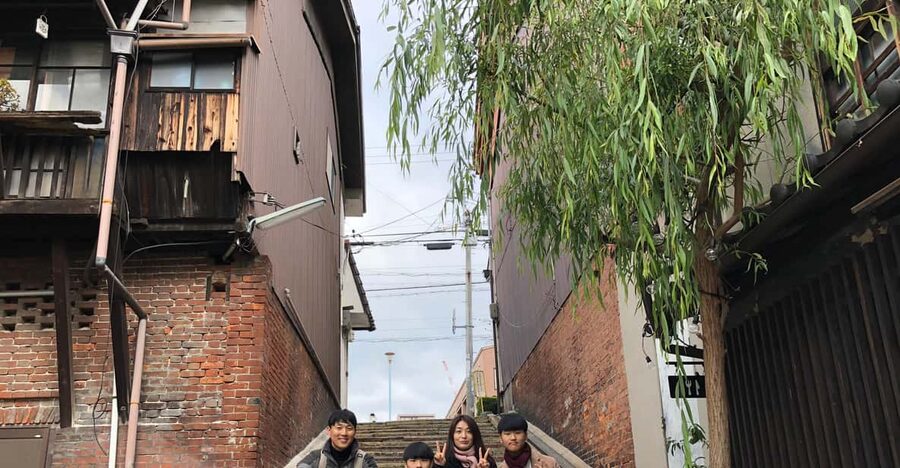
- Karahori, not Dotonbori: a quieter Osaka shaped by WWII survival, with older streets and houses still standing
- Hidden alleys with a local guide: you’ll reach lanes and passages most people miss
- Old shop types, still active: including a Japanese tatami mat shop and traditional mercantile buildings
- A chance to rest when you need it: your guide factors in break time plus cozy cafe and restaurant suggestions
- Small group pace: limited to 6 participants, so you are not stuck behind a crowd
- Respectful walking rules: some alley areas can be private even if there is no sign, so keep noise down
Karahori’s old Osaka vibe, and why it feels so different
Osaka is famous for big energy. You see it in neon, in crowds, and in the constant flow around Dotonbori. Karahori is the opposite mood. It’s still Osaka, just a quieter version, with older streets that feel like they have been holding steady for generations.
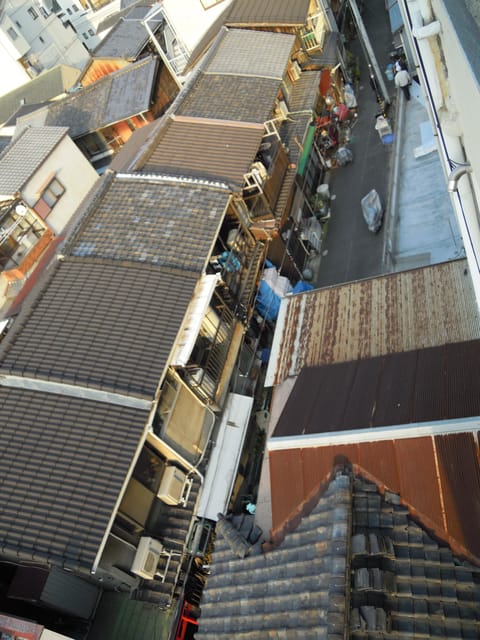
The big reason this tour works is simple: Karahori gives you the in-between side of the city. This area survived the massive fires of World War II, so parts of it kept the shape of older Osaka. That means you are walking among traditional mercantile houses that are described as 100 to 200 years old, plus narrow lanes that act like little corridors.
I also like that you are not just looking at buildings from the sidewalk. Your guide helps you enter off the main footpaths and follow a route that’s more like how locals would move through the neighborhood. It turns “sightseeing” into a light, real-world stroll.
Price is $35 per person for 2 hours, small group, and a local guide leading you through alleys, markets, and several targeted stops. Meals and drinks at cafes or restaurants are on you, and that’s normal for this kind of tour. Still, the value comes from access and context, not from a long list of generic photo ops.
More of the canal after dark
Meeting at Tanimachi-6Chome, and how the walk is paced
You meet at Osaka Metro, Tanimachi-6Chome Station, Exit No. 3 (street level). The station is on the Tanimachi Line, and Exit No. 3 sits on that line side. It’s a straightforward meeting point, and it helps you start without a lot of guessing.
The schedule moves in chunks. You get welcome refreshments early, then a quick photo stop. After that, you spend a meaningful stretch in local market areas, then transition into the quieter maze-like lanes. There are also additional photo stops, plus a break window where your guide can point you toward places to sit and eat.
That structure matters because Karahori is not a “see it in 10 minutes” neighborhood. The charm is the sequence: street, alley, shop, back street, then a calm pause. If you rush it, you miss why it feels nostalgic.
One practical rule: if you are late by more than 15 minutes, joining can be difficult. The group is small, and it’s tight enough that the guide has to keep everyone moving.
The start: welcome refreshments and quick orientation
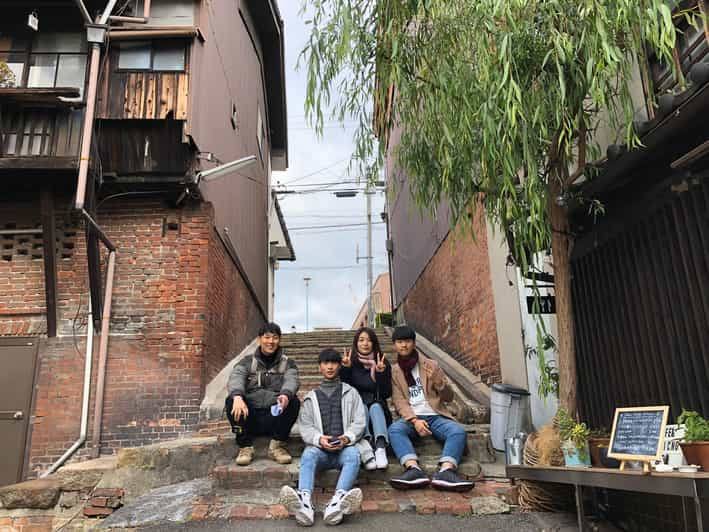
Right after you gather at the station, you’ll get welcome refreshments. It’s a small detail, but it sets the tone. You’re not starting a tour that feels like a race. You’re starting a neighborhood walk.
Then comes the first photo stop and a short sightseeing stretch. This early moment is useful even if you love walking tours. You get your bearings fast, and the guide can show you what to look for as you move from the main street into the older lanes.
Tip: if you care about photos, this is when you want to take a couple early shots before the route gets narrower and more directional. Later on, you’ll be in places where moving carefully matters more than framing the perfect picture.
Local market street time: see day-to-day Osaka
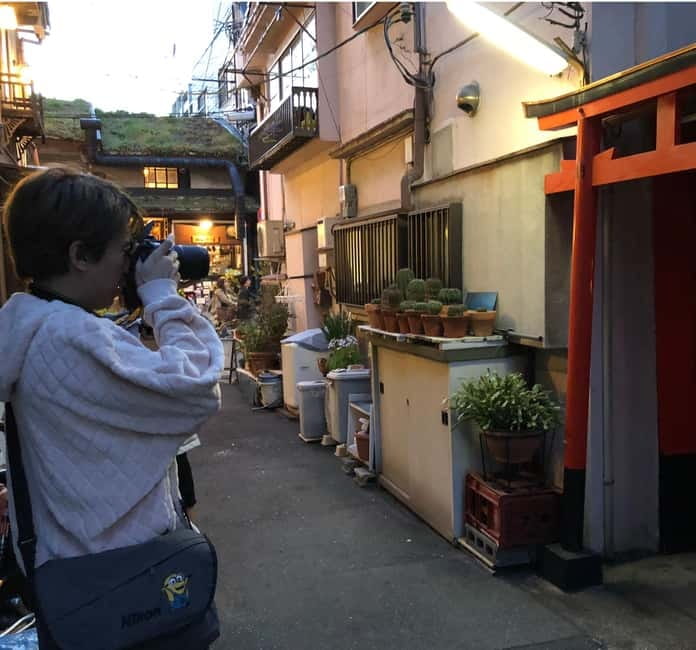
One of the best parts of this experience is the local market street portion, including about 1 hour of food market visiting. This is where the tour shifts from “pretty streets” to “real city life.”
In market areas, you notice practical things: how people shop, how storefronts operate, and what kind of items keep showing up. Even without going deep into food commentary, it makes Osaka feel normal and human. You are not just reading signs and admiring architecture. You are watching a neighborhood run.
There is also a planning angle here. Market time is a good moment to decide what you want to eat. The tour includes a small snack and water, so you’re not going in empty. But when you see something that looks good, you can choose to try it and pay yourself at the stall.
Possible drawback: markets can mean more people, more smells, and more noise than the quiet alley stretches. If you’re sensitive to crowds, pace your time there. Wear comfortable shoes and stay patient.
Off the beaten paths: walking the “maze” lanes
The heart of this tour is getting off the obvious routes. Karahori is described as having hidden alleys that feel like a maze, and that is exactly what your guide helps you experience.
The guide knows the local map well and leads you into off-the-book lanes that are not typically listed in basic guides. Some passages may be private even without a sign, and the tour specifically asks you not to disturb inhabitants while walking through hidden paths.
This is one of the things I consider most important about the tour. It’s not just about access. It’s about etiquette. If you keep your voice down, don’t block doorways, and move steadily, you will get a much better experience and you will be respecting the people who live there.
You’ll also encounter “sudden transitions” in the streetscape. Traditional mercantile houses can sometimes give way to remodeled spaces, cute shops, or cafes that appear between older facades. It feels a bit like turning a corner in a film set, except it’s real life, and real life includes tiny surprises.
Osaka at walking pace, a few more

Hidden shops stop: select retail, cafes, and what still matters
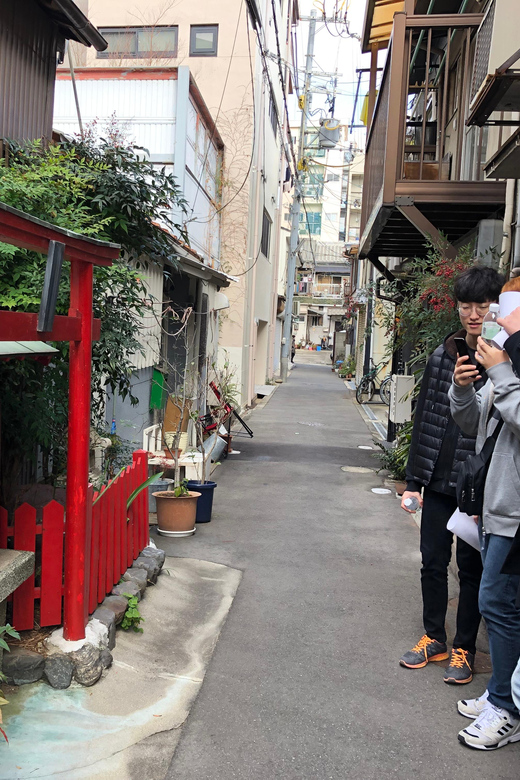
Along the route, you visit hidden shops and small places that are described as easy to miss on your own. The stops include a mix of retail and cafes, so you can get a feel for how this neighborhood supports itself.
A key point for expectations: these shop visits are not included shopping sprees. You can browse, and your guide may help you find what’s interesting, but if you buy anything, you pay yourself. Same goes for cafe stops where you want a drink or snack.
What I like about this part is the variety. You’re not only seeing “traditional” and “old.” You’re seeing how older structures are used today. Some merchant houses still have residents. Others are remodeled into cafes or charming shops. That mix is part of the charm and also part of why Karahori feels more authentic than a fully staged district.
If you are traveling with a “I only want the best stuff” mindset, this tour helps because the guide’s route filters out the boring wandering.
Tatami mat shop: one of the most practical cultural stops
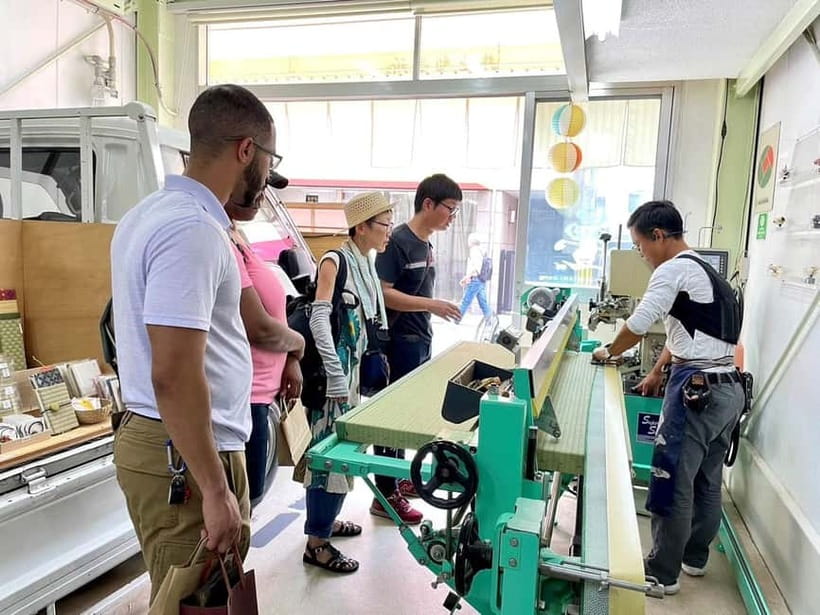
A standout stop is the Japanese tatami mat shop. Even if you have zero interest in interior design, this kind of shop visit adds weight to the tour.
Tatami is not just a decorative idea in Japan. It’s tied to materials, craft, and daily household routines. When you see it in a shop context, it connects the visual idea of old Japan to something tangible. You get a sense of what continues to be made, sold, and maintained.
You might not be buying anything, and that’s fine. The value is in seeing a working type of business inside an older neighborhood fabric.
If you are prone to shopping fatigue, set a quick plan for yourself: enjoy the shop, take photos if allowed, and move on. That way you keep the tour feeling fun rather than tiring.
Osaka Castle moat remains in an alley: small, specific, memorable
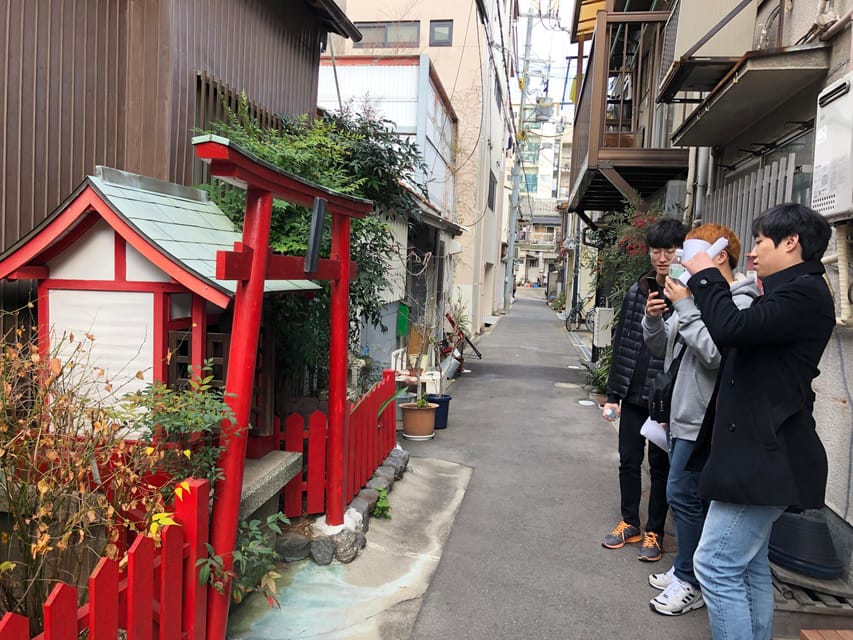
Near the later portion of the walk, you’ll find the ruin of Osaka Castle moat hidden inside an alley. The remains are described as having no water, plus tiny shrines.
This is the kind of stop that makes a neighborhood tour feel worth it. The “ruin in an alley” idea sounds simple, but it works because it forces you to slow down and notice details. This is not a big ticket monument with a wide viewing platform. It’s tucked into the street logic of Karahori.
Also, shrines in small spaces feel different than shrines in major tourist zones. They feel like they are part of the local rhythm, not only part of a sightseeing checklist.
Practical note: because it’s a ruin and a small area, the space may feel tight. Move carefully, and don’t stop in a way that blocks others who are walking behind you.
Break time and where to rest, eat, and reset
The tour includes a break time window, with a photo stop plus time for shopping. If you need a breather, this is when to take it. The guide can point you toward cozy cafes and yummy restaurants, where you can rest and eat. Food costs are not included, so you pay what you order.
I like that the break is built into the route. Too many walking tours stack one long walk after another. Here, you have a moment to sit, hydrate again, and decide what you want to do next without feeling pressured.
If you want to keep your budget tight, treat this as a water and snack moment. If you want to splurge, this is your moment to do it.
Rules that actually affect your experience
This tour is respectful by design, and a few rules matter because you’re in residential lanes.
Do not disturb inhabitants during the hidden-path walking. Some alleys can be private even without signage, and that means you should avoid sudden stops, loud talk, and blocking private entrances.
Other restrictions listed include:
- No drones
- No intoxication
- No smoking indoors
- No feeding animals
- No skateboards
- No making noise
- No making fire
If you like walking tours that feel considerate and calm, you’ll probably love this format. If you tend to be loud on purpose, or you hate quiet rules, you might find the atmosphere challenging.
How to judge the $35 price: value in access, not just walking
At $35 for 2 hours, this isn’t a bargain that feels “too good to be true.” It’s priced like a focused neighborhood guided experience.
Here’s where the value comes from:
- Small group size (limited to 6). You get a guide’s attention and easier pace control.
- Access to maze-like lanes that can be hard to find on your own.
- Targeted stops that are specific, not generic, including a tatami mat shop and the Osaka Castle moat remains.
- Practical context for what you’re seeing, especially how older mercantile houses are used today.
You do pay for your own food and shopping. That means you control your total spend, which can be a good thing. If you keep meals modest, you can keep the whole day reasonable. If you snack at every cafe, it’s going to add up quickly, same as anywhere.
Also, you get water and a small snack included, so the basics are covered. It’s not a full meal, but it’s enough to keep you comfortable for 2 hours.
Who this tour is best for (and who should skip it)
You should strongly consider this tour if you:
- Want a different side of Osaka than neon Dotonbori
- Like old streets, small shops, and quieter neighborhoods
- Enjoy walking tours where you learn how a place really works
- Prefer small groups and a guide who can navigate narrow lanes safely
You might want to skip or swap if you:
- Only want big, famous landmarks with lots of open viewing space
- Get frustrated in areas where you have to move carefully and keep noise low
- Are expecting a fully food-based tour, since meals and drinks are on you
This is a great option for your first Osaka trip day if you already know you will do the high-energy attractions later. Or, do it as a reset day, after a crowded stretch, when you want to slow down.
Quick checklist before you go
- Wear comfy shoes. You will be walking and turning into narrow paths.
- Bring your patience for small, quiet spaces.
- Plan for extra spending if you eat at cafes or buy items at shops.
- Keep your voice down in alley areas where residents live.
- Try to arrive on time, since being late by more than 15 minutes can make joining hard.
- If you use a wheelchair, note that wheelchair accessibility is listed, so it’s designed with mobility needs in mind.
Should you book Nostalgic Osaka in Karahori?
I’d book it if you want Osaka with texture. This tour gives you the neighborhood side, the old house side, and the lane-finding side. You’re paying for access, guidance, and a route that’s more than “walk and take photos.” The small group limit and the focus on hidden alleys are exactly what make it feel personal.
I would not book it if you are chasing big-city spectacle only. Karahori is quieter, slower, and more about daily life than showmanship. But if that sounds like your style, this is a strong, good-value way to see real Osaka.
FAQ
How long is the Nostalgic Osaka tour in Karahori?
The tour lasts 2 hours.
How much does the tour cost?
The price is $35 per person.
Where do I meet the guide?
You meet at Osaka Metro Tanimachi-6Chome Station, Exit No. 3, street level.
What group size is this tour?
It is a small group limited to 6 participants.
Which languages are offered for the live guide?
The live tour guide is available in English and Korean.
What is included in the tour price?
The tour includes a bottle of water and a small snack.
Are meals or shopping included?
Meals and drinks at shops and cafes are not included, and shopping is also paid by yourself.
Osaka on Foot: More Walks





More Tour Reviews in Osaka





The Canal After Dark, Continued
Latest out of Osaka


Dotonbori Neon & Street Food Walks, side by side.
 ★ 5.0Osaka Local Foodie Walking Tour in Dotonbori and ShinsekaiFrom $111985 reviews
 ★ 5.0Ultimate Osaka Walking Tour: Castle, Dotonbori & Hidden GemsFrom $73862 reviews
 ★ 5.0Tea Ceremony Experience in Osaka DoutonboriFrom $20754 reviews
 ★ 5.0Osaka: Ramen and Gyoza Cooking Class in DotonboriFrom $70378 reviews
Osaka: Dotonbori River Cruise with Glico Sign & Neon ViewsFrom $12376 reviews
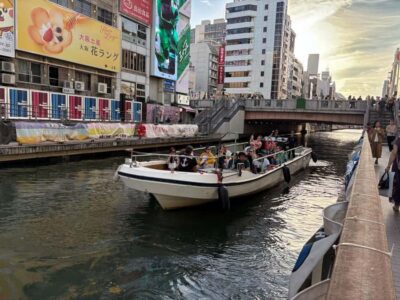 ★ 3.9Osaka: Dotonbori’s Bridges 20-Minute CruiseFrom $12303 reviews
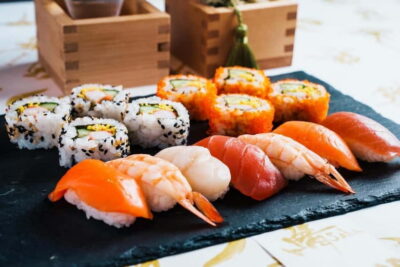 ★ 4.9Osaka: Roll and Authentic Sushi Making Class in DotonboriFrom $45239 reviews
 ★ 5.0Osaka Local Bar Crawl in Dotombori & Uranamba AreaFrom $26199 reviews
Also worth a look in