
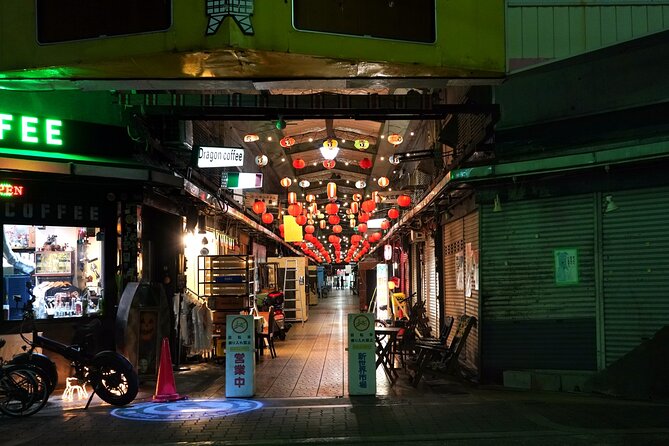
REVIEW · OSAKA BACKSTREETS & HIDDEN GEMS WALKS
The Dark Side of Osaka Walking Tour
Osaka has a side that stays after dark. The Dark Side of Osaka Walking Tour pairs street-level city atmosphere with clear social-history context, from Shinsekai’s retro glow to the area around Tobita Shinchi. I like that you get a guided story, not just a photo walk, and you also get free access to the stops. One possible drawback, especially if you want lots of polished sights, is that the tour includes walking through grittier urban areas where the main show is daily life, not shiny landmarks.
This is a 2-hour evening walk with a small group (15 people max), starting at MEGA Don Quijote Shinsekai and ending near Tsutenkaku. Expect respectful discussion around Japan’s shadowy corners, plus a good pace that lets you ask questions (guides like Jay, Matt, and RICO show up in recent experiences for their helpful explanations). If you are sensitive to adult-industry topics or uncomfortable with tightly controlled red-light streets, go in with your head up, not your phone down.
Key Takeaways Before You Go
- Small-group pacing (max 15) means you actually hear the story, not just follow a crowd.
- A guide-led social history angle turns neighborhoods like Nishinari and Tobita Shinchi into something you can understand, not just photograph.
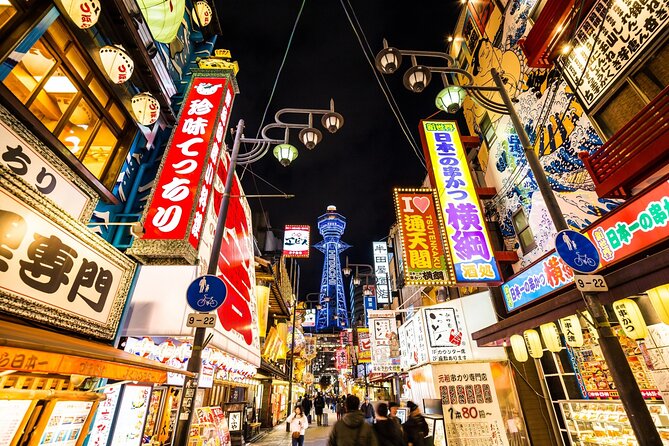
- Shinsekai by day-to-night contrast gives you retro streets plus the lived-in Osaka behind them.
- Tobita Shinchi is explained respectfully, including what makes the district feel different in layout and rules.
- Free-fee stops keep your budget steady for a night out, even without included snacks.
- Bring weather-proof plans because this tour runs in good conditions and can shift if the weather is rough.
Entering Shinsekai at 5:30 pm, with a Night-First Mindset
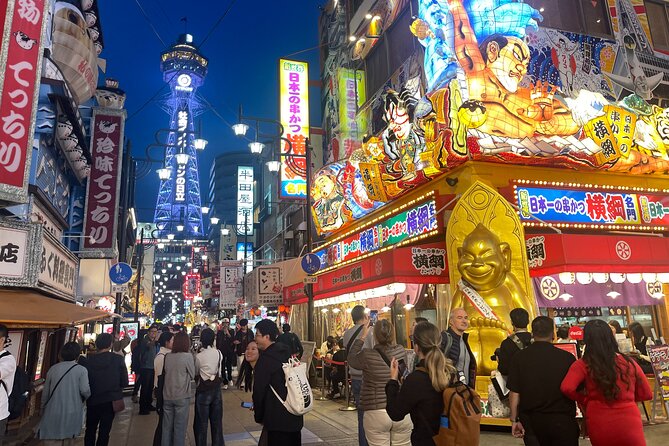
Meet your group at MEGA Don Quijote Shinsekai around 5:30 pm, then walk toward Tsutenkaku by the end of the tour. That timing matters. Osaka at night has more texture, and the streets in Shinsekai and nearby neighborhoods start telling their real story after daylight fades.
I like how the tour frames Shinsekai as more than a postcard. You’re shown a district that blends nostalgic streets with everyday local movement, so it feels like you are seeing Osaka as a place people actually live in, not a stage built for tourists. And the guide’s job is not just to point, but to connect what you see to how the city developed.
You will be on your feet for about 2 hours. Wear shoes you can trust. This is a walking tour, and the value comes from what you notice as you go, not from quick, hop-on hop-off stops.
Further off the arcade
Price and What $25 Buys You (All Fees Included)
At $25 per person, the big win is that the tour price covers all fees and taxes. Each stop is listed as admission-free in the plan, so you are not paying extra ticket after ticket. That makes it easier to budget for an evening, even when you add a drink or a snack on your own.
Snacks are not included, so if you get hungry, you will need to buy something yourself. That is not a deal-breaker, but it is a heads-up. My practical advice: bring water, and be ready to grab a bite before the tour if you tend to snack early.
Also, with a 15-person max, you are paying for a guided explanation in a setting where it would be easy to get lost or misunderstand what you are looking at. In other words, the cost is for interpretation and direction, not just access.
How the Route Feels: Walking Pace, Weather, and Sensitivity
The tour runs for about two hours, and the itinerary is built around several short stops. That usually means you get time to look, time to ask, and time to move before everyone gets restless.
The itinerary includes areas that some people describe as gritty. That is not a marketing gimmick, it is part of why the tour exists. If your goal is only neat streets and dramatic views, this may feel less like sightseeing and more like learning how Osaka works on the ground.
Two practical tips based on the tour design and the kind of stops you will see:
- Wear comfortable shoes. You will be walking through multiple neighborhoods.
- Go in ready for cultural context, especially around the red-light district, Tobita Shinchi.
The tour also states it requires good weather. If poor weather cancels it, you should expect a different date or a full refund. When you book, pick a day you can flex if the forecast looks shaky.
Stop 1: Shinsekai and Tsutenkaku Area, Retro Streets with Meaning
Your first stop is Shinsekai, a district called New World, with roots going back to 1912. That date gives you a clue about the tour’s approach. This is not just about where to take photos, it is about how places in Osaka were shaped to feel modern, lively, and different.
Why Shinsekai works for a Dark Side tour:
- It looks playful at street level, so the contrast is stronger when you later move into darker or more sensitive areas.
- It is a neighborhood with strong identity, so the guide can explain how that identity links to wider social history in the city.
If you pay attention here, you start to see Osaka as layers: nostalgia on the surface, and social realities underneath. That makes later stops easier to understand, because you already have a mental map of the area’s mood.
Stop 2: Nishinari Dobutsuen-mae, Working-Class Osaka on Real Streets
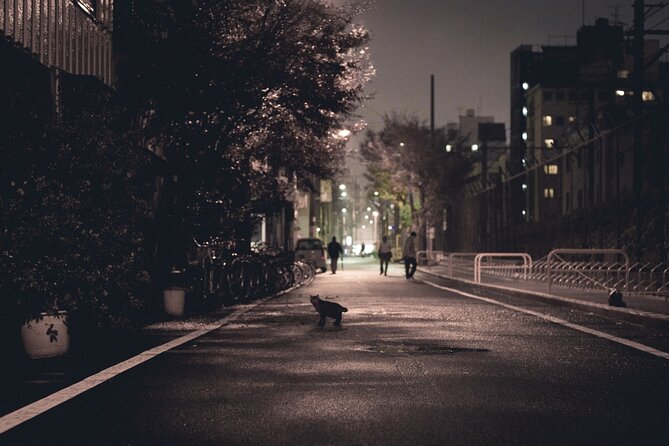
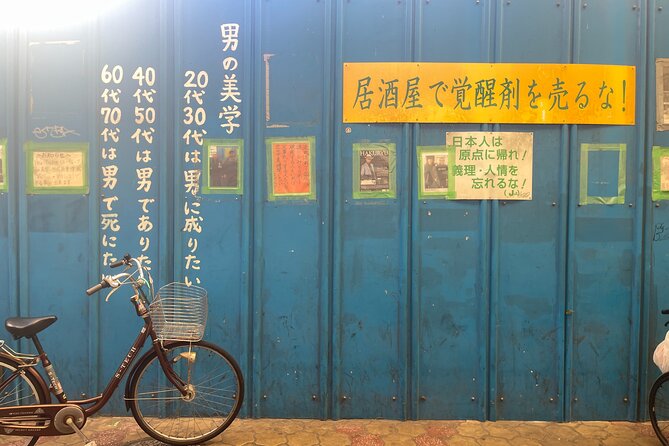
Next up is Nishinari Dobutsuen-mae Deep Osaka Street, in southern Osaka. The tour description frames Nishinari as a place with raw, authentic character, shaped by a past that included working-class life and day laborers.
This is likely the portion that can split opinions. A lower rating in the feedback notes that parts of the walk can feel like wandering in the slum areas, with not enough to do if you expect constant visual highlights. That is a fair consideration.
But here is why this stop can be valuable if you are the right type of traveler: Nishinari helps you understand that Osaka is not only shopping lanes and big attractions. It is also neighborhoods built around labor, survival, and the everyday routines of people who are not part of the tourist highlight reel.
Practical mindset shift: treat this stop like an anthropology walk, not a points-of-interest hunt. If you enjoy reading the street with the help of your guide, this part can hit hard in the best way.
Osaka at walking pace, a few more
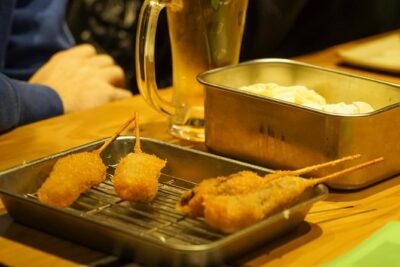
Stop 3: Jan Jan Yokocho, the Narrow Alley Where You Slow Down
Then you get Jyanjyan Yokocho (Jan Jan Yokocho), also described as the Nanyodori shopping street near Tsutenkaku Tower. This is the part where the tour becomes more visually fun, because it is a narrow alley with retro charm, built for strolling and discovering.
The value of Jan Jan Yokocho on this specific route:
- It gives your eyes a break from the heavier topic areas.
- It keeps the theme of Osaka’s layered identity, showing how local food and shopping culture sits next to harder realities.
If you want a night tour that mixes tone, this is one reason the itinerary works. You get narrative, then a street you can enjoy without feeling like you are being lectured.
Stop 4: Tobita Shinchi, Osaka’s Red-Light District Explained Simply
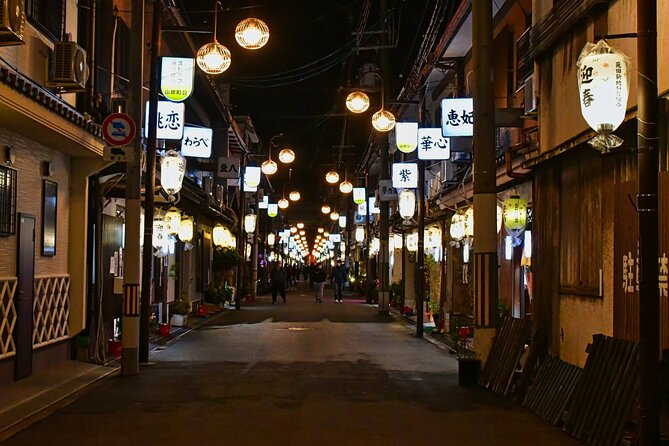
The heart of the tour is Tobita Shinchi, described as Osaka’s most famous and largest red-light district, with history stretching over a century. This is where your guide’s role becomes especially important.
The tour description emphasizes that the area has unique architectural style and a tightly regulated environment. In plain terms, you are walking through a space that has its own rules, layout, and social boundaries. The guide can help you understand what you are seeing without turning the walk into shock value.
Here is how to make the most of this stop:
- Keep your questions respectful. The whole point is context, not spectacle.
- Watch the street patterns and boundaries. In districts like this, the layout often explains more than any sign.
Because this segment can involve adult-industry content, it is smart to check your personal comfort level before booking. If you are uneasy with discussions tied to nightlife and sex work, this may not be the best fit.
Stop 5: Tsutenkaku Hondori Shopping Street at the Tower’s Foot
Finally, you finish at Tsutenkaku Hondori Shopping Street, a lively arcade at the foot of Tsutenkaku Tower in Shinsekai. This is a classic Osaka end point because it is active, dense, and easy to orient yourself around.
Why this ending works after Tobita Shinchi:
- You leave with a sense of what life looks like around the edges of the district.
- You end in a place that makes it easy to continue your own night plans, whether that means grabbing a drink, browsing shops, or just taking in the tower area at slower speed.
The tour ends at Tsutenkaku, so you are already in the right neighborhood to extend the evening without extra travel.
Guides Who Can Answer the Hard Stuff, and Actually Do
The most praised aspect of this tour is the guide quality. Multiple recent experiences mention guides such as Jay, Matt, and RICO, with compliments focused on a few themes.
What you should look for, and what these guides seem to do well:
- They connect what you see to social history, including why districts developed the way they did.
- They answer questions in a thoughtful way, not with vague platitudes.
- They keep a pace that feels right for both storytelling and walking.
I also like that the better reviews highlight the feeling of stepping out of the tourist travel bubble and into the real working streets of Osaka. That does not mean it turns into chaos. It means the guide helps you understand the difference between a destination and a neighborhood.
If you are the kind of traveler who likes to ask why something exists, or how a community shaped a city block, a strong guide is the whole point of paying for a tour like this.
Who Should Book This Night Walk (And Who Might Skip)
This tour is best for you if:
- You want an Osaka night walking tour that goes beyond the usual shopping streets.
- You enjoy learning how neighborhoods form around work, regulation, and social life.
- You like guided context, especially around topics most tourists avoid.
It may be less satisfying if:
- You want nonstop entertainment with lots of landmarks every five minutes.
- You prefer cleaner, more polished areas and do not want to spend time in places that feel like local neighborhoods with rougher edges.
- You are not comfortable with adult-industry discussions, even if they are handled respectfully.
A small practical note: the group is capped at 15 travelers, which helps. But it is still a shared walk, so bring patience if your group includes people with very different expectations.
Should You Book the Dark Side of Osaka Walking Tour?
If your idea of a great trip is understanding a city as a real place, not a theme park, I think this tour is worth booking. The combination of short stops, strong guide explanations, and the way Shinsekai and Tobita Shinchi are connected by story is exactly the kind of evening activity that pays off later when you look at Osaka on your own.
I would hesitate only if you expect constant visual spectacle, or if you know you will be uncomfortable with red-light district subject matter. If that sounds like you, you might enjoy a more standard night tour instead.
When it is a good fit, it is good in a memorable way. You walk away with a clearer map of how Osaka neighborhoods function, and you understand the city’s shadows with your eyes open, not your head buried.
FAQ
What is the duration of the Dark Side of Osaka Walking Tour?
The tour lasts about 2 hours.
How much does the tour cost?
The price is $25.00 per person.
Where does the tour start and where does it end?
It starts at MEGA Don Quijote Shinsekai (3-chōme-4-36 Ebisuhigashi) and ends at Tsutenkaku (1-chōme-18-6 Ebisuhigashi), both in Osaka.
What time does the tour start?
The start time is 5:30 pm.
Is a mobile ticket provided?
Yes, the tour uses a mobile ticket.
Are entrance fees included for the stops?
All fees and taxes are included in the tour price, and the itinerary stops are listed as admission ticket free.
Are snacks included?
No, snacks are not included.
How large is the group?
The tour has a maximum of 15 travelers.
Is the tour affected by weather?
Yes. The experience requires good weather. If it is canceled due to poor weather, you will be offered a different date or a full refund.
Are service animals allowed?
Yes, service animals are allowed.
Is it easy to get to the meeting point by public transportation?
Yes, the meeting point is listed as near public transportation.
More Tours in Osaka



More Tour Reviews in Osaka

Off the Arcade Again

Latest out of Osaka


Osaka Backstreets & Hidden Gems Walks, side by side.
 ★ 5.0Osaka Kickstart: Hotspots & Hidden Gems TourFrom $311,306 reviews
 ★ 5.0Deep Backstreet Osaka Tours (Option to add Dinner)From $531,290 reviews
 ★ 4.9Osaka: Deep Backstreets Walking Tour with Dinner OptionFrom $40902 reviews
 ★ 5.0Ultimate Osaka Walking Tour: Castle, Dotonbori & Hidden GemsFrom $73862 reviews
 ★ 5.0Private Osaka Walking Tour: Highlights & Hidden GemsFrom $81569 reviews
 ★ 4.9Osaka: Dark Side of Osaka Night Walking TourFrom $2589 reviews
 ★ 4.5Retro Osaka Street Food Tour: ShinsekaiFrom $21777 reviews
 ★ 4.7Osaka: Highlights & Hidden Gems Private Walking TourFrom $6738 reviews
Also worth a look in