
REVIEW · DOTONBORI NEON & STREET FOOD WALKS
Osaka: Private Vibrant Nighttime Photoshoot (Dotonbori)
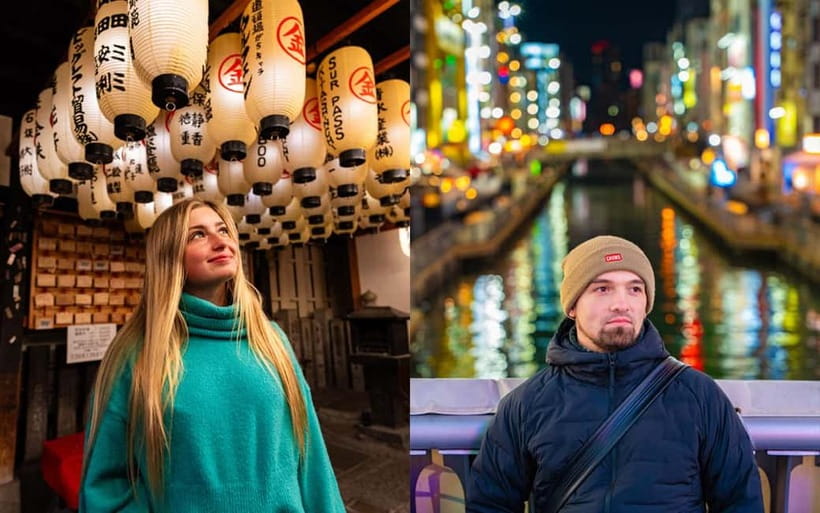
Neon streets, small alleys, and a camera that knows where to point. This private Dotonbori nighttime photoshoot is all about getting you sharp, well-posed photos in Osaka’s most photogenic pocket. I like that you are guided step-by-step through the sights, not just dropped at a landmark.
Two things I really like: you get strong posing guidance (so your photos look intentional, not accidental), and you visit a mix of big neon icons plus quieter lanes like Hozenji Yokocho. Mina and Josh are repeatedly praised for being friendly and supportive, and for bringing people to angles they would probably miss alone.
One drawback to consider: while you get plenty of images fast, the edited photos are only an aim for within 24 hours, and delays can happen in busy seasons. Also, the raw files cost extra, so if you want everything unedited, check that budget early.
Key things I’d pencil into your Osaka plan
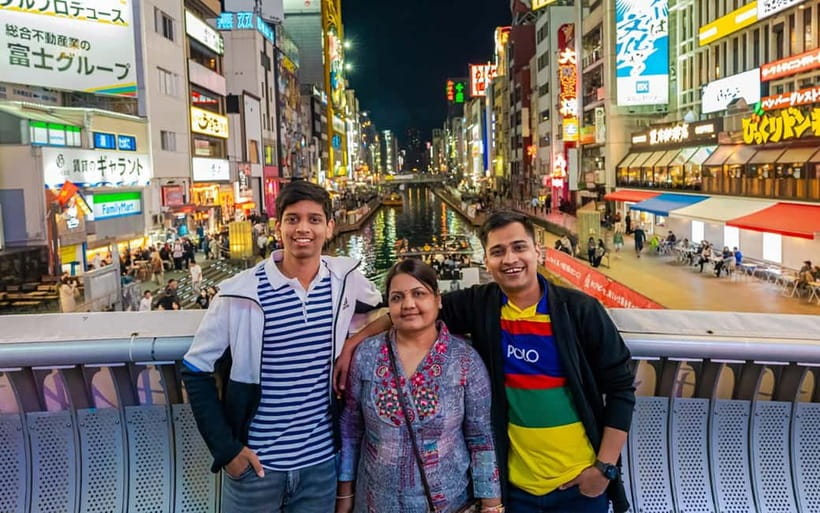
- Glico Sign and Ebisubashi Bridge as your neon anchors, with help positioning for camera-ready shots
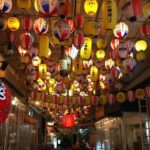
- Hozenji Yokocho lantern lanes for traditional texture next to the modern glow
- America-mura street-culture visuals that work well for fashion-forward photos
- A personal selection of small side streets around Dotonbori to avoid only repeating the same postcard angles
- Mina and Josh style of guidance, friendly and patient, focused on getting the pose and framing right
Dotonbori at night, with a photographer who handles the hard parts
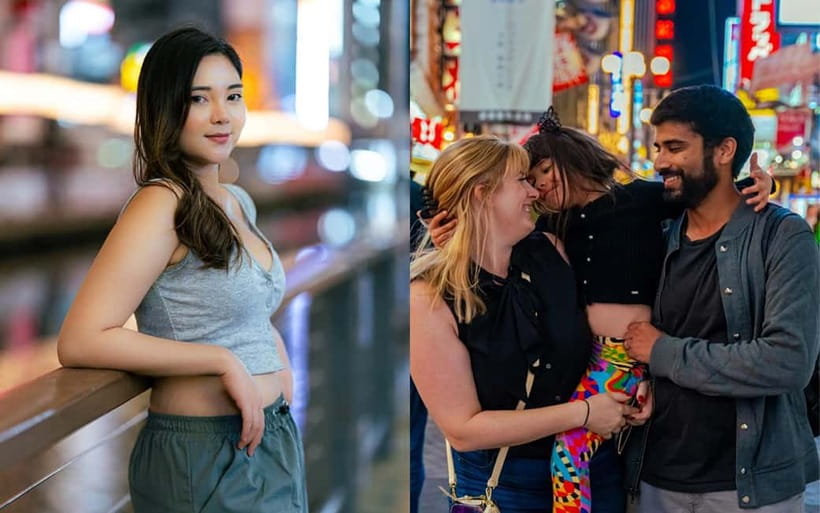
Osaka at night has a special look. You get bright signs, glossy sidewalks, and that mix of neon energy with old-street detail. This photoshoot leans into that mix hard, which is exactly why it works better than another evening stroll with your phone.
The private setup is the key. You are not waiting for a group. You move at a pace that makes sense for your comfort level. You also get to ask for the vibe you want, whether that’s classic Dotonbori neon, a romantic couple feel, or something more artsy and moody.
And yes, the photos are the point. But the bigger value is what gets you there. A good photographer turns chaos into a plan. They know where the light falls, how to frame crowds or avoid them, and how to get your body in the right place without making you feel awkward.
More of the canal after dark
The 90-minute to 4-hour walk plan, and how stops usually stack
The shoot time ranges from 90 minutes up to 4 hours. In the common flow, you typically hit about five iconic locations in roughly 1.5 hours, and the guide can adjust the route around what you want most.
You can think of the session as a rhythm:
- Walk to the next spot.
- Quick break or regroup moment.
- Photo stop with guidance on angles and poses.
- A bit of free time built in along the way.
That structure matters because nighttime photography is physically demanding. Your eyes are also doing two jobs: tracking street signs and scanning for light. Having someone handle the sequencing keeps you from losing time to second-guessing.
Also, the walk starts at the Osaka City Fire Department Central Fire Station Dotonbori branch, listed as 大阪市消防局中央消防署道頓堀出張所. The route then focuses on Dotonbori around Ebisubashi Bridge and ends at a popular street food spot, where you can enjoy Osaka specialties like takoyaki.
Starting at the Osaka firehouse, then hitting Osaka’s neon center
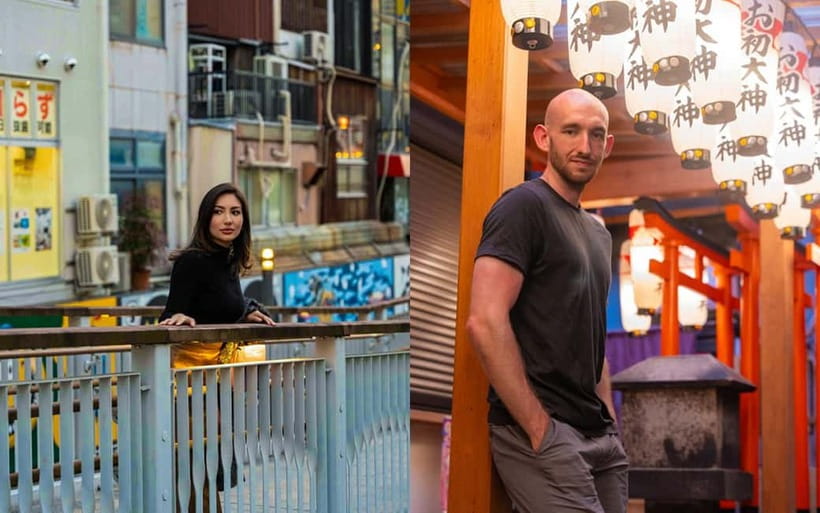
The meeting location may look unexpected at first glance, but that’s a practical choice. Fire stations and official buildings are easy to spot and reliable meeting points when you are navigating crowded nightlife streets.
From there, the focus quickly shifts to the core of Dotonbori. You are not wandering aimlessly. You are moving toward the places that define the neighborhood’s nighttime look.
The best part of ending at a street food stop is that you finish in a place where you can actually enjoy Osaka. You are still in the photoshoot mood, but you can also switch gears to eating. That makes it a stronger use of your evening than treating dinner as a separate plan.
If you like to travel light, this is also a good match. You can walk the route without needing extra time for transit between distant areas. Dotonbori is walkable, and this keeps your energy for the camera moments.
Glico Sign and Ebisubashi Bridge, your neon photo anchors
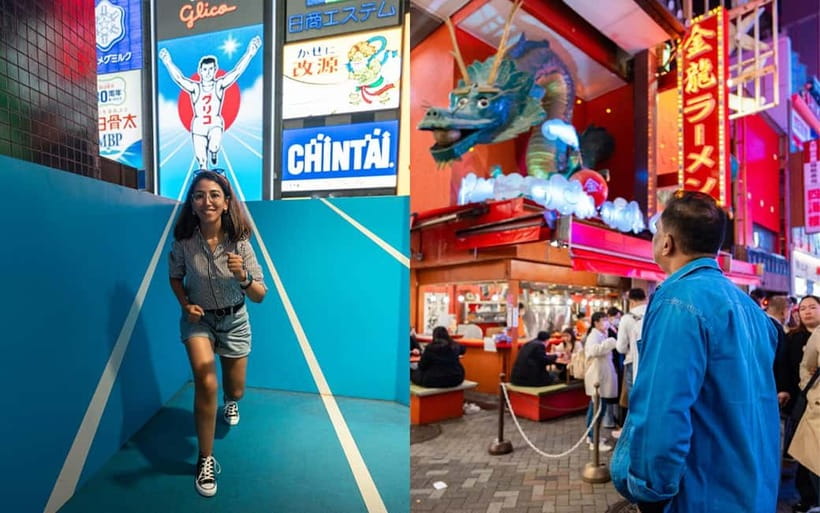
Two names come up again and again because they work on camera.
Glico Sign
The Glico Sign is the headline neon. It’s bright, instantly recognizable, and it gives you that classic Osaka feeling. What you are really buying here is positioning help. With signs like this, small changes in where you stand and how you tilt your body can make the difference between a flat snapshot and a photo that looks like it belongs in a poster.
Later nights in Osaka
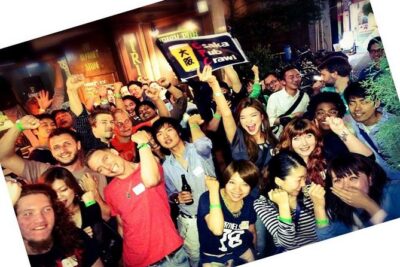
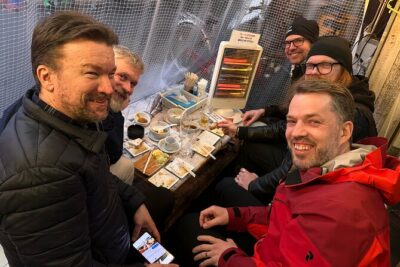
Ebisubashi Bridge
Then comes Ebisubashi Bridge, often treated as the heart of Dotonbori’s nightlife. It’s a natural photo hub because it gives you layered background details: reflections, lighting, and people moving through the scene.
This is also where a guide’s ability to manage timing becomes important. If the frame gets too crowded at one angle, you try a nearby viewpoint. If the lighting shifts, you wait a moment. That sort of micro-adjustment is where professional photographers earn their fee.
Hozenji Yokocho and the lantern-lane contrast that makes your photos pop
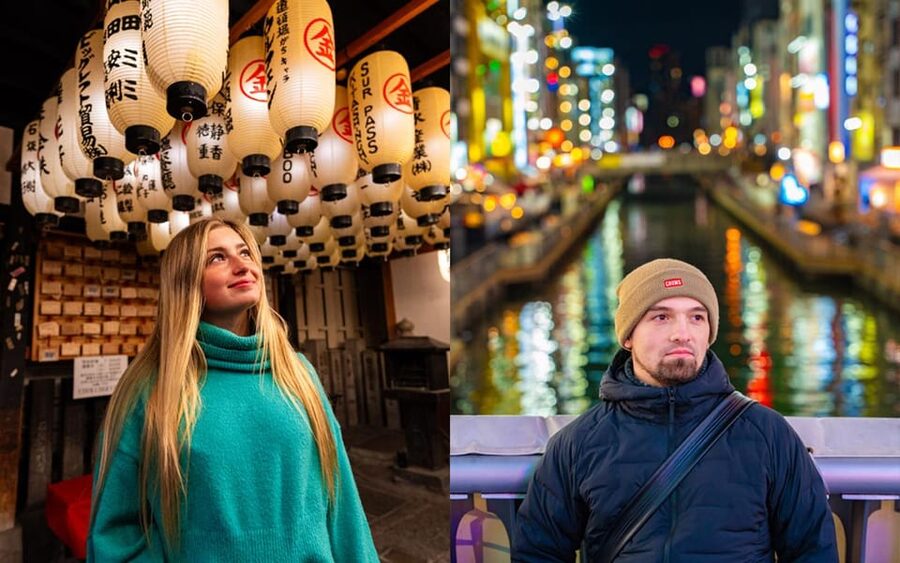
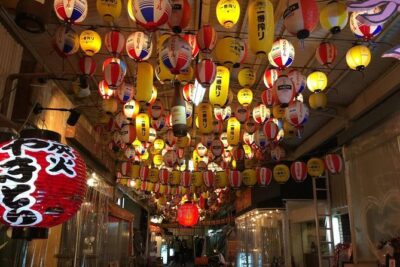
After the neon anchors, you get a change of texture in Hozenji Yokocho, a traditional alley with lantern-lit charm. This is where the photos stop looking like generic neon pictures and start looking like Osaka, specifically.
Why this stop matters:
- You get warm lantern light that feels more intimate than bright sign glow.
- The narrow alley creates a natural frame around you.
- It adds a historic, human-scale mood right next to the modern district.
If you care about variety in your set of photos, this is one of the smartest places to include. Neon is great, but neon alone can become repetitive. Hozenji breaks it up so your photo series has a beginning, middle, and emotional shift.
One practical consideration: narrow alleys mean tight spacing. Wear shoes you can walk in comfortably, and be ready to stand still while your photographer sets framing.
America-mura photos, street style, and younger Osaka energy
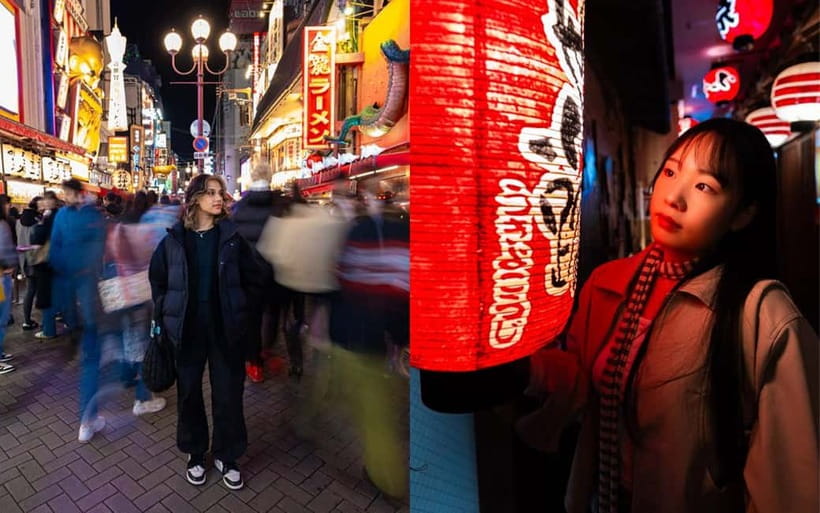
America-mura is about attitude, style, and that different rhythm of street culture. In photos, it tends to deliver more fashion-forward visuals, signage variety, and interesting textures from shop fronts and side streets.
This is also a good area for couples and solo travelers who want photos that look less like a landmark souvenir and more like a portrait in a specific place. A photographer can use the environment as a backdrop without making you disappear into it.
If you tell your guide what vibe you want, this stop is often where that becomes visible. Want bold and edgy? Want soft and cinematic? You can usually steer the session with simple preferences.
The side streets around Dotonbori, where your camera actually slows down
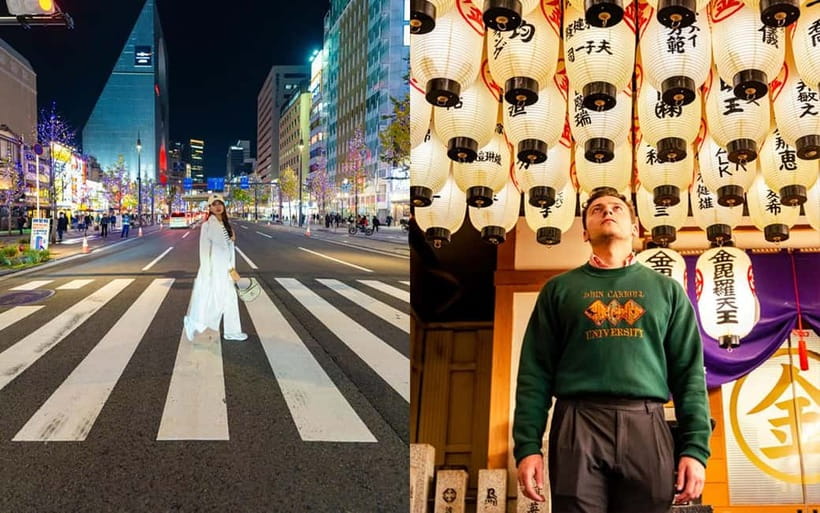
One of the most praised parts of this activity is the idea of a personal selection of smaller, cozy streets around the Dotonbori area. That matters because most people only know the big lights.
Side streets can give you:
- Cleaner backgrounds when the main areas are busy
- Different signage and alley angles
- More variety in lighting and mood from one frame to the next
It also keeps the session from feeling like you are repeating the same pose in the same spot. A strong guide builds a route that gives you progression.
And yes, you’ll still see iconic sights like Dotombori street. But the route is meant to balance famous views with corners that feel more lived-in.
Posing help that keeps you comfortable, even if you hate cameras
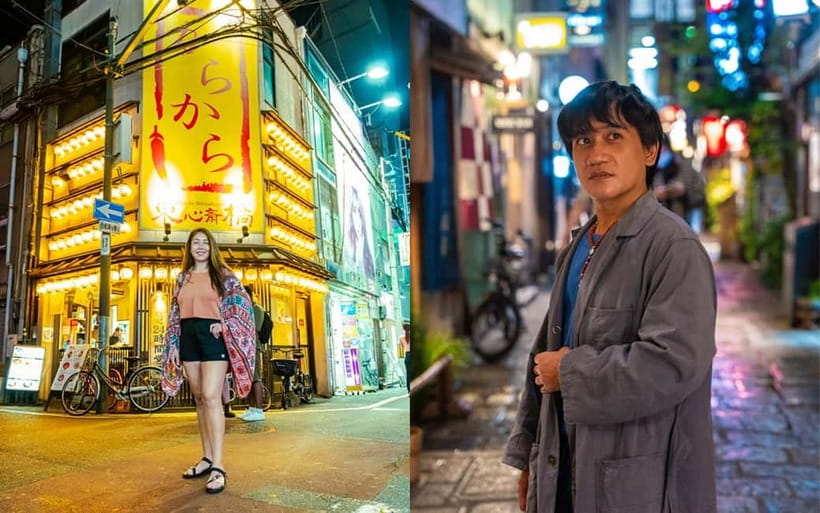
Let’s be honest. A lot of people are nervous about nighttime photos. You worry about looking stiff. You worry about being awkward with your hands. You worry about crowds.
The photographers in this experience, including Mina and Josh, are repeatedly described as friendly, supportive, and patient. That’s not just personality fluff. It changes the whole session.
When a photographer tells you exactly what to do, you stop overthinking. When they’re patient, you don’t feel rushed. When they help with angles, you end up with photos where you look like you meant to be there.
If you want to get the most out of the posing guidance, here’s what helps:
- Tell them what feels natural for you (walking poses, standing portraits, couple cuddles, solo charisma).
- Let them know if you have areas you want to emphasize or avoid.
- Bring one or two outfit options that photograph well under mixed light, bright sign glow and warm lantern light.
Also, this shoot is private, which means you can take a quick breath when you need it. That’s the difference between a fun photo session and a stressful one.
What you receive after the shoot: hundreds of JPGs plus 30 edited keepers
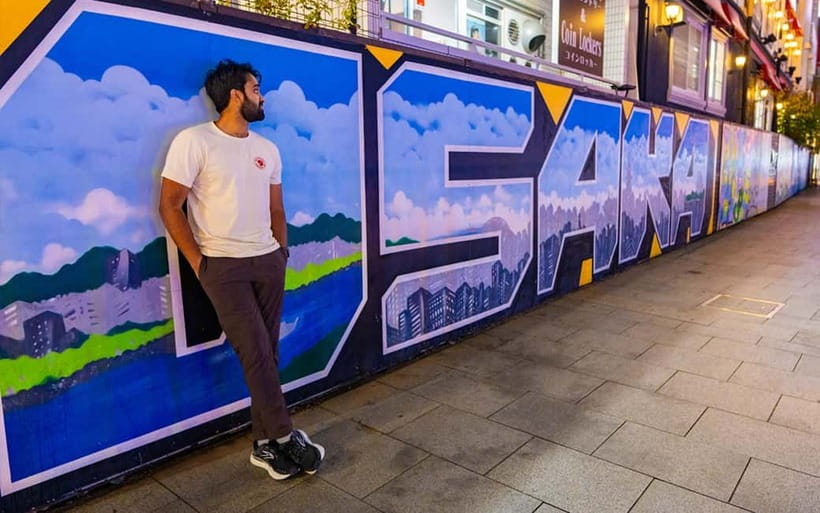
You get two layers of images.
All photoshoot images
You receive all the standard-quality JPG images, estimated at about 200 per hour. That means you have plenty to choose from, even if you end up with a few frames where you blink.
Edited photos
You also receive 30 professionally edited, high-quality JPG photographs. These are the ones you’ll likely share right away.
Delivery is a target, not a promise. The plan aims for edited photos within 24 hours, but delays can happen during busy seasons. I like this setup because it’s honest: you still get quick turnaround most of the time, but the expectation is realistic.
Download window
Your downloadable link stays available for 2 weeks after it’s sent. After that, the photos are deleted. So once the link arrives, save them right away to your phone and computer.
Raw files
Raw files are not included. If you want them, there’s an extra charge of ¥10,000 per booking. If you are a serious editing person, factor that cost into your decision.
Rain, crowds, and the realities of nighttime shooting
Night photography is always weather-dependent. The good news is that the session is built for the street reality of Osaka. One of the strongest bits of feedback is that the shoot keeps moving even in tougher conditions, like rain, and the photographer stays focused on getting the best possible frames.
Crowds can also be part of the game in Dotonbori. The workaround is angle changes and timing. A guide who knows the neighborhood can often shift you a few steps and keep you shooting without turning the whole night into a wait-and-hope session.
If you want a smoother experience, wear comfortable shoes and plan to walk a lot. Also, keep your phone and camera bags protected. Night streets can get slick.
Languages, private groups, and who this is best for
This is offered as a private group experience, with English, Arabic, Japanese, and Spanish available. That matters if you want to communicate your vibe clearly, whether it’s romantic, playful, or fashion-forward.
It’s also listed as wheelchair accessible. So if mobility is a concern, this is worth considering.
This format fits:
- Solo travelers who want photos that look like they are part of the city and not just photos of the city
- Couples who want both shared shots and individual portraits
- Families who need a calm guide, patience, and clear direction so kids or mixed ages don’t melt down
In the feedback, families and solo travelers are both highlighted as feeling well taken care of, especially with posing help and a route that introduces Dotonbori beyond the obvious spots.
Price and value: $109 for a full night of guidance and edited output
The price is listed as $109 per group up to 1, so check the exact person limit for your booking. In return, you get a guided photo walk in one of the most photo-friendly parts of Osaka, plus actual deliverables, not just a session.
What makes it feel like value:
- You get about 200 standard JPG images per hour, so you can choose favorites without worrying you only got a handful.
- You get 30 edited, high-quality JPGs, which saves you time and effort after the trip.
- Government tax is included in the listed price.
- You also get a walk that includes multiple stops, rather than one location.
The big tradeoff is that raw files cost extra. If your goal is professional-grade editing with raw files, budget the extra ¥10,000. If your goal is simply to leave Osaka with beautiful photos for social and keepsakes, the included files are usually plenty.
Should you book the Dotonbori nighttime photoshoot?
Book it if you want a simple plan for an evening in Osaka, and you care about photos that look well-composed. This is especially worth it if:
- You have limited time and want multiple key areas like Glico Sign, Ebisubashi Bridge, and Hozenji Yokocho
- You want posing help so you do not end up with only shaky selfies
- You like the idea of mixing neon icons with traditional lantern lighting
Skip it or plan extra if:
- You specifically want raw files included in the price
- You dislike walking and street photography environments, even with a private pace
- You are the type who prefers to take photos at your own rhythm with no guidance
If you book, my best advice is to tell your photographer your photo goals up front, and wear shoes you can stand and walk in for a while. Then let them do what they’re good at, turning Osaka’s night energy into pictures you actually want to keep.
FAQ
How long does the photoshoot last?
The duration is listed as 90 minutes to 4 hours, depending on availability and your chosen timing.
Where does the tour start?
The starting location is 大阪市消防局中央消防署道頓堀出張所.
What areas or landmarks are included?
Stops can include the Glico Sign, Dotombori street, Ebisubashi Bridge, Hozenji Yokocho (lantern-lit alley), America-mura, and additional hidden spots around the area.
How many locations do we visit?
Typically you visit 5 iconic locations within about 1.5 hours, and the route can be adjusted based on your preferences.
What photos do I receive, and how many?
You receive all photoshoot images (about 200 per hour) in standard-quality JPG format, plus 30 professionally edited high-quality JPG photographs.
When will I get the edited photos?
Delivery is aimed for within 24 hours after the shoot, though delays may happen during busy seasons.
How long can I download the photos?
The photos are downloadable for 2 weeks after the link is sent, then they are deleted.
Are raw files included?
Raw files are not included. They are available for an extra ¥10,000 per booking.
What languages are available?
The live guide is offered in English, Arabic, Japanese, and Spanish.
What is the cancellation and payment policy?
Free cancellation is available up to 24 hours in advance for a full refund. There is also a reserve now and pay later option, so you can book without paying immediately.
More Tour Reviews in Osaka
After the Last Train


The Canal After Dark, Continued
Latest out of Osaka


Dotonbori Neon & Street Food Walks, side by side.
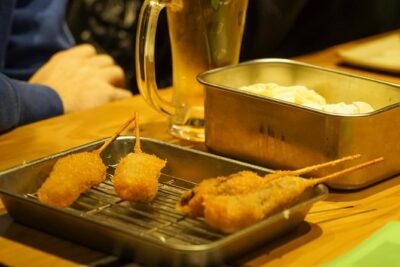 ★ 5.0Osaka Local Foodie Walking Tour in Dotonbori and ShinsekaiFrom $111985 reviews
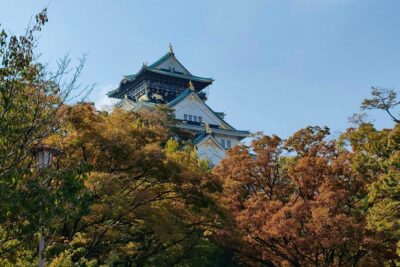 ★ 5.0Ultimate Osaka Walking Tour: Castle, Dotonbori & Hidden GemsFrom $73862 reviews
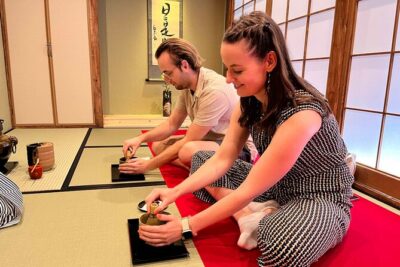 ★ 5.0Tea Ceremony Experience in Osaka DoutonboriFrom $20754 reviews
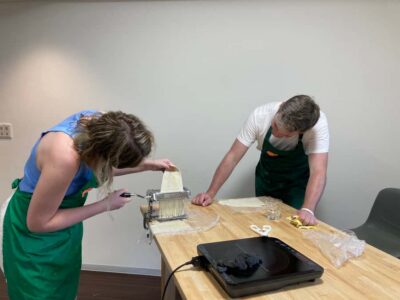 ★ 5.0Osaka: Ramen and Gyoza Cooking Class in DotonboriFrom $70378 reviews
Osaka: Dotonbori River Cruise with Glico Sign & Neon ViewsFrom $12376 reviews
★ 5.0Osaka: Ramen and Gyoza Cooking Class in DotonboriFrom $70378 reviews
Osaka: Dotonbori River Cruise with Glico Sign & Neon ViewsFrom $12376 reviews
 ★ 3.9Osaka: Dotonbori’s Bridges 20-Minute CruiseFrom $12303 reviews
 ★ 4.9Osaka: Roll and Authentic Sushi Making Class in DotonboriFrom $45239 reviews
 ★ 5.0Osaka Local Bar Crawl in Dotombori & Uranamba AreaFrom $26199 reviews