
REVIEW · OSAKA TEMPLE & SHRINE VISITS
Osaka: Japan’s Oldest Temple & Bone Buddha Walking Tour
Osaka has ancient roots you can actually walk. This 2-hour temple tour takes you from Shitennoji, one of Japan’s oldest officially established Buddhist temples, into Isshinji, famous for its striking “Bone Buddhas” made from cremated ashes. I especially like how the guide explains what the architecture and garden symbolism mean, not just what to photograph, and I also like the contrast between early, formal temple design and a very personal urban tradition.
One thing to consider: you are moving between two temple areas and spending time outdoors, so plan for the weather and wear comfy walking shoes.
Key highlights you will care about
- Shitennoji’s oldest-established status ties Buddhism to early Japanese society and government influence.
- Pure Land Garden symbolism connects setting sun ideas to rebirth in Amida’s paradise.
- Isshinji’s modern main gate shows how tradition and design can change over centuries.
- Bone Buddha tradition is grounded in remembrance, using cremated ashes respectfully.
- A professional guide in English helps you connect the details to real Japanese life.
Osaka’s quiet spiritual side, and why this tour is worth your time
Most people come to Osaka for food, shopping, and neon energy. That stuff is great, but it can crowd out the deeper layer of the city. What I like about this tour is that it gives you a slower, more grounded way to understand why Buddhism took hold in Japan, and how it changed as Osaka grew into a major urban center.
The pace also feels manageable. Two hours is long enough for real explanation, but short enough that you do not lose half your day to transit. And because it is a private group, the guide can adjust the flow to your pace and questions, rather than rushing through key ideas.
You do, however, need to be comfortable with a walking format. You are inside temple grounds and moving between spaces, so if you want a strictly sit-down experience, you might find the outdoor time a bit more than you expected. Still, the payoff is that you get context you miss when you only read signs.
Quieter courtyards nearby
Meeting at Shitennoji, and what to look for before the tour starts
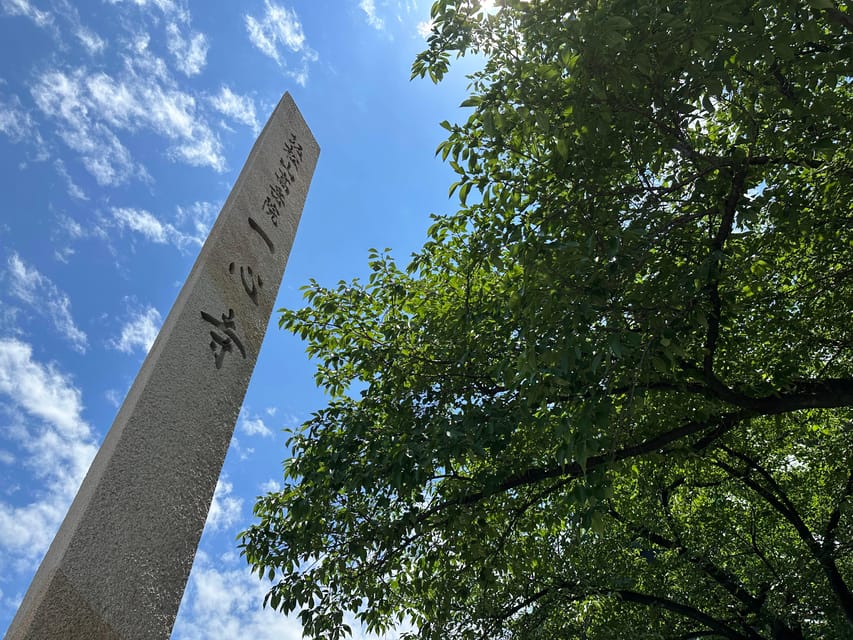
The tour meets at the stone torii gate (Ishidori) at the main entrance of Shitennoji Temple. Your guide will be holding a sign with your name. This is the kind of meeting point that keeps things simple, especially if you are not fluent with Japanese directions.
The meetup is a short walk from Shitennoji-mae Yuhigaoka Station, which matters because it reduces your stress level before you even start. When you get that part right, you can spend more attention on what you are about to see.
One practical note: temples can have rules about quiet behavior and where you should stand or pass. The tour is guided, so follow your guide’s instructions and you will have a smooth time.
Shitennoji Temple: Four Heavenly Kings, symmetry, and the story behind the oldest roots
You start at Shitennoji, and that sets the tone immediately. This temple is known for being one of the oldest officially established Buddhist temples in Japan, founded in 593 by Prince Shotoku. That detail is not trivia, it is the foundation of the whole experience. It marks the moment Buddhist ideas became integrated into society, not just practiced privately.
The temple also honors the Four Heavenly Kings (Shitenno), guardian deities believed to protect the nation. Your guide will explain these figures and how that protective theme fits into early Buddhist influence in Japan. Even if you do not know a lot about religion, this framing makes the symbols feel practical, not mysterious.
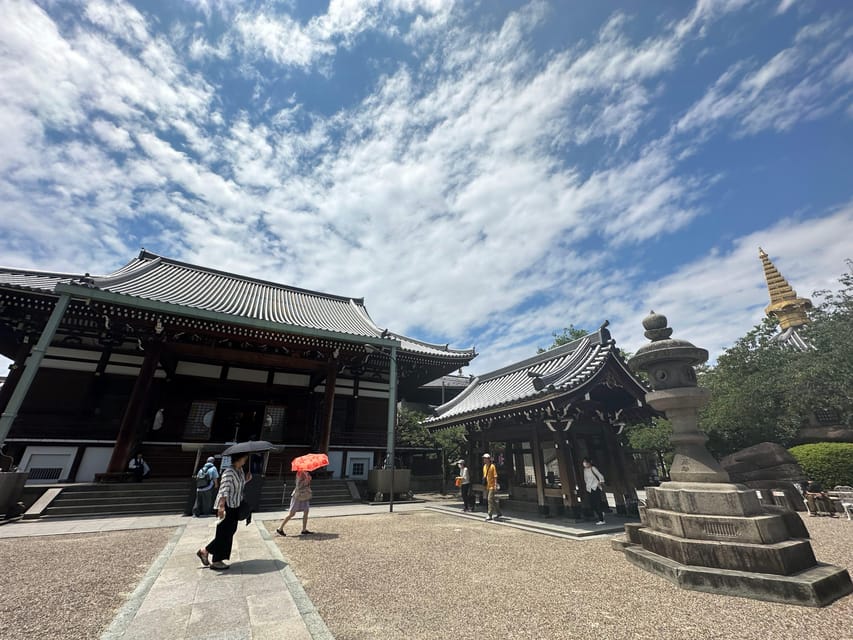
What I really like here is the focus on layout. As you move through Shitennoji’s central precinct, your guide points out why the design is symmetrical. Early Japanese Buddhist temple planning often followed strict, meaningful patterns, and understanding that structure helps you see the place like a designer, not just a tourist.
You will also learn how Shitennoji has endured fires, wars, and repeated reconstruction. That can be emotionally heavy to hear, but it is also part of why the site matters. Temples are not frozen museum pieces. They survive because communities rebuild, maintain, and keep the spiritual purpose alive.
What to watch for inside Shitennoji
- How the symmetry shapes your movement through the central precinct
- Where key guardian symbolism shows up around the main areas
- How the guide connects rebuilding to continuity of belief
The Pure Land Garden: Amida’s paradise and why the setting sun matters
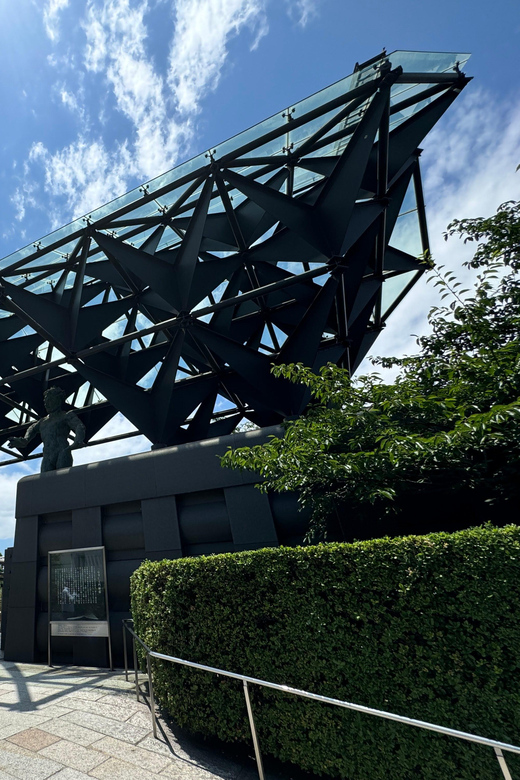
After the main precinct, the tour includes the Pure Land Garden. This section is a strong choice for travelers who like meaning tied to everyday experiences. Pure Land thought centers on visions of a Western Paradise, and your guide explains how that belief shaped religious ideas and practice.
A particularly interesting detail is the symbolic relationship between the setting sun and the promise of rebirth in Amida’s paradise. That matters because it turns a simple daily event into a religious cue. In many religions, light and time become metaphors for salvation. Here, the sunset is not decoration, it is part of how people understood hope and spiritual return.
If you tend to skip garden sections because they seem quiet or slow, this one is worth leaning into. Your guide’s explanations give the space a purpose. You start noticing alignment, mood, and transitions as you would in a designed ritual.
And because Shitennoji connects the early spread of Buddhism to later devotional thought, the garden feels like the bridge between “Buddhism arrives” and “Buddhism becomes personal.”
Osaka at walking pace, a few more


Isshinji Temple’s modern gate, and why tradition can look new
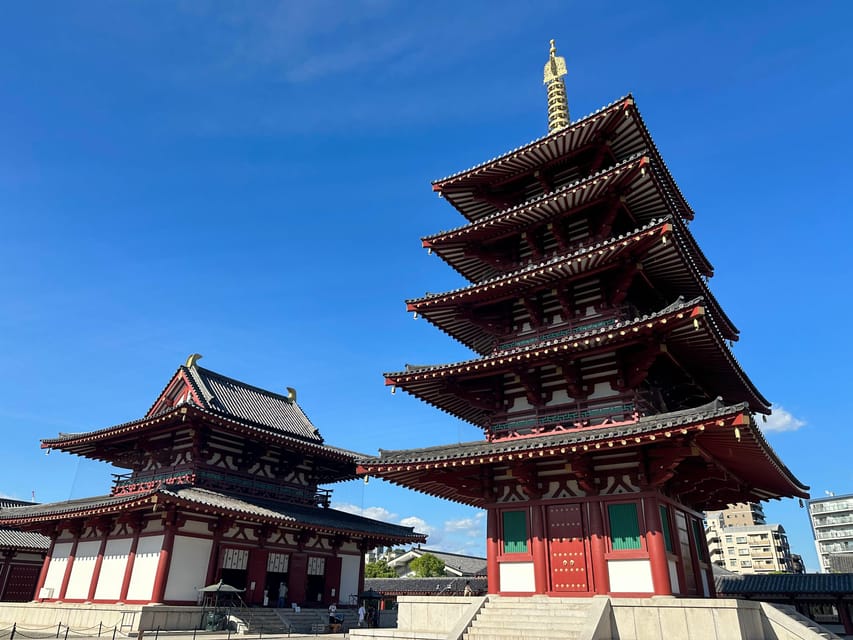
Then the tour shifts. You go from the early, formal temple world of Shitennoji into Isshinji Temple, where the main gate has a modern feel. The gate is designed by the current head priest, and that detail immediately signals something useful: tradition is not stuck in one aesthetic.
Isshinji is nearly 900 years old, and the tour helps you hold both ideas at once. You can respect the age and the practices while still seeing design choices that make space for the present.
This contrast is one of the best parts of the experience, because it prevents the common mistake of assuming all temple visits are identical. Japan’s religious architecture varies a lot by era and purpose, and Isshinji gives you a clear example of that range.
Bone Buddhas at Isshinji: remembrance made visible in cremated ashes
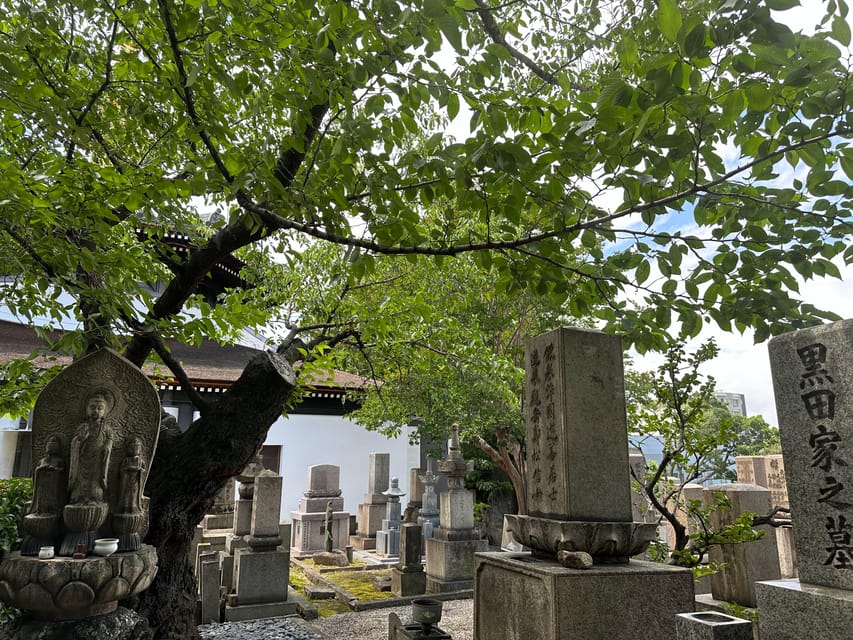
The highlight at Isshinji is the tradition of the Bone Buddhas (Kotsubotoke). Your guide explains that Isshinji holds the ashes of more than two million ancestors of Osaka residents. Those remains are respectfully combined, and the result is the bone-ash statues.
This is not “spooky sightseeing.” The tour frames it as communal memory and devotion. You learn how the practice began and how it continues as a place of remembrance for families across generations. Even if you are not religious, you can understand the human need behind it: to honor those who came before, in a setting built for continuing care.
What I like about having this explained during the visit is that it changes how you view the artwork or objects. Instead of treating the Bone Buddhas like a strange cultural oddity, you understand the intention behind them: grief, gratitude, and continuity.
A respectful way to think about what you are seeing
- Remember that this practice is about family remembrance, not spectacle
- Let your guide set the tone for what is meaningful here
- Take your time with the explanation, because the symbolism lands better when you know the story
How the guide turns temple facts into real understanding
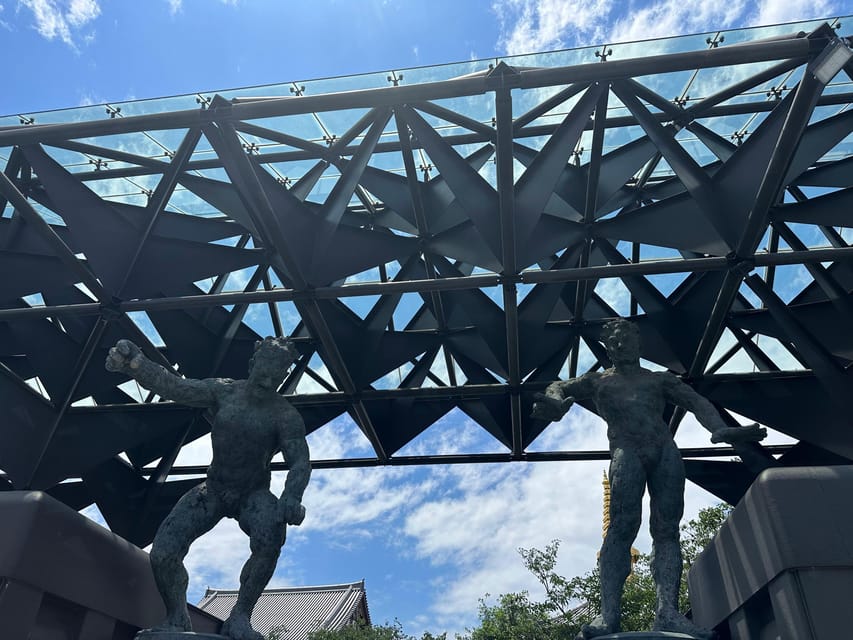
A big part of the value here is the professional English-speaking guide. The tone you want from a guide is not just facts, but connections. That is exactly what makes this tour work: you leave with ideas you can use to interpret Osaka and Japan beyond these two stops.
In the Shitennoji section, the guide connects early Buddhism with national protection themes, temple layout, and survival through reconstruction. In the Isshinji section, the guide connects faith with urban life and family remembrance, then ties it to a visible tradition made of cremated ashes.
The tour’s structure also supports learning. In about two hours, you see two different expressions of Buddhism in Osaka. One is tied to state-level origins and formal temple planning. The other is tied to how people carry devotion inside a dense city, over centuries.
That is how you get more than a checklist of sites. You get a sense of evolution: Buddhism changes in how it looks, how it is organized, and how people relate to it personally.
Price and value: is $65 fair for 2 hours?
At $65 per person for about 2 hours, the main question is value, not just cost. Here is why the price makes sense based on what is included.
You get:
- A professional guide
- Guided temple time at both Shitennoji and Isshinji
- Admission to Shitennoji’s main temple complex
- Admission to the Pure Land Garden
If you have ever tried to piece together a temple day solo, you know how often the “cheap” option turns into time-wasting research, imperfect timing, and paying multiple admissions without context. This tour is priced for convenience plus interpretation.
Also, a private group format often increases value because you are not just receiving an audio guide. You are getting human explanation and the chance to ask for clarity in English (and the guide also works in Japanese).
So unless you want a completely self-guided day, this is one of those deals where the guide’s effort is the product.
Practical tips for a smooth temple walk in Osaka
To make the most of the experience, keep a few practical things in mind.
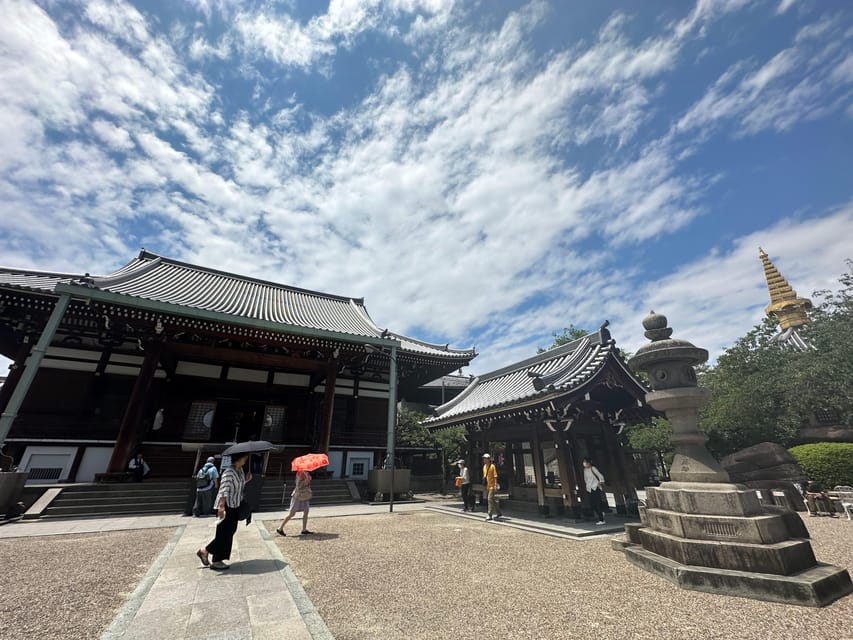
First, wear comfortable shoes. Temple precincts involve walking on varied ground, and you will be moving through central spaces and garden areas. If your feet are hurting, you will miss the guide’s explanations.
Second, keep your phone camera ready but do not let it steal attention. Some of the most important parts are the meanings behind layout and symbolism. You will understand more if you listen first and capture images second.
Third, go in with a flexible mindset. Buddhism here spans state roots and personal remembrance. That can feel like two different worlds, but the tour is designed to show their connection.
Finally, keep your expectations balanced. This is not a performance. It is a guided cultural experience focused on religious context and architecture.
Who this tour is best for
This works especially well if you:
- Want to see Osaka beyond street food and entertainment areas
- Like structured explanations of religious symbolism
- Enjoy architecture, gardens, and the meaning behind design choices
- Prefer a shorter, high-focus experience rather than a full-day temple marathon
It may be less ideal if you:
- Want only modern city sights
- Dislike walking or outdoor garden time
- Prefer purely self-directed travel without a guide
Should you book Osaka’s oldest temple and Bone Buddha walking tour?
Yes, if you want a clear, guided story of how Buddhism took root in Japan and how it still shows up in Osaka today. The combination of Shitennoji’s Prince Shotoku era significance, the Pure Land Garden symbolism tied to Amida’s paradise and the setting sun, and Isshinji’s Bone Buddhas tradition makes the tour feel focused, not random.
Book it when you have about two hours to spare and you want cultural depth without overcommitting your day. If you are the type who learns best through explanation, you will likely appreciate the guide-led pacing and the respectful, meaning-first approach.
FAQ
Where do I meet the guide for the tour?
You meet your guide in front of the stone torii gate (Ishidori) at the main entrance of Shitennoji Temple. The guide will be holding a sign with your name.
How long is the tour?
The tour is about 2 hours.
What temples are visited during the experience?
The tour includes Shitennoji Temple and Isshinji Temple.
What is included in the price?
Admission to Shitennoji’s main temple complex and the Pure Land Garden is included, along with a professional English-speaking guide and guided visits to Shitennoji and Isshinji.
What is not included?
Transportation to and from the meeting point, food and drinks, and personal expenses are not included.
How much does the tour cost?
The price is $65 per person.
Is this tour private or shared?
It is listed as a private group tour.
What languages are offered?
The live tour guide is available in English and Japanese.
Is there a cancellation option?
Free cancellation is offered up to 24 hours in advance for a full refund.
More Tours in Osaka





More Tour Reviews in Osaka
Quieter Courtyards in Osaka
Latest out of Osaka


Osaka Temple & Shrine Visits, side by side.
 ★ 4.9Osaka: Minoh, Katsuoji Temple, & Minoh Falls Full-day TourFrom $135172 reviews
Full Day Kyoto Tour : Bamboo Forest, Golden Temple, Fushimi InariFrom $10584 reviews
 ★ 4.9Osaka Temple Cool Foot Bath & Matcha Experience〈45min〉From $3482 reviews
 ★ 5.0Osaka: Mind & Spirit Balance Temple Reiki HealingFrom $16141 reviews
 ★ 4.0Katsuo-ji Temple, Arashiyama Forest, & Nara ParkFrom $9137 reviews
 ★ 4.7Osaka: Minoh Waterfall & Katsuo-ji Temple Half-Day TourFrom $4727 reviews
 ★ 5.0Osaka Half-day E-bike Adventure: Minoh Falls & Katsuoji TempleFrom $3425 reviews
 ★ 5.0Osaka Temple Head Spa &Matcha Facial – Refresh & Glow〈90min〉From $14124 reviews
Also worth a look in