
REVIEW · DOTONBORI NEON & STREET FOOD WALKS
Osaka Highlights Walking Tour: Castle, Dotonbori & Hidden Gems
Neon Osaka, on a four-hour stroll. This tour is a smart way to get your bearings fast because it strings together the big, recognizable sights with quieter local lanes. I especially like that it starts by the Osaka Castle area and ends in Shinsekai, two very different vibes in one morning walk.
Two other things I like are the mix of shopping, food culture, and street scenes, plus the fact that you get guided context for each stop. You’re also not leaving hungry, since you get a box of takoyaki and a drink along the way.
One consideration: you do not enter Osaka Castle itself. So if your top priority is touring inside the castle complex, this is more of an “outside views and area orientation” stop than a full castle visit.
Key Highlights You Should Know
- Small group format (max 12 people) keeps the pace friendly and the guide easier to hear.
- No castle admission but you still get major orientation around the Osaka Castle symbol area.
- Takoyaki and one drink included, so the food stops feel easier to handle.
- Dotonbori neon and photo stops paired with calmer lanes like Hozenji Yokocho.
- Kuromon Market seafood focus gives you a plan for where to look and what to notice.
- Retro finish in Shinsekai with Tsutenkaku and classic street energy.
Osaka Castle to Shinsekai, in One Logical Walk
The biggest value of this Osaka highlights walking tour is how efficiently it helps you understand the city. Osaka can feel chaotic if you arrive with no plan. Here, the route moves in a way that makes sense: you start near the city’s iconic castle symbol, then gradually transition into the most famous entertainment and street-food zones, and finally land in a retro neighborhood that feels like a time capsule.
I like that the tour design doesn’t pretend Osaka is only one thing. You get the modern-city shine of Dotonbori and Shinsaibashi-suji, the old-street calm of Hozenji Yokocho, and the food-market intensity of Kuromon. Then you wrap it up at Tsutenkaku and Shinsekai, where the photos are easy and the atmosphere is pure Osaka.
Timing also helps. The walk is around four hours, which is long enough to feel like you did something meaningful, but short enough that you still have energy left for your own wandering afterward. The tour runs at 10:30 am, which can be a sweet spot for seeing daytime crowds, grabbing lunch later, and not burning your whole day.
One more practical point: this is a mobile ticket tour, and it’s near public transportation. That means you can focus on meeting your group, not on complicated ticket processes.
More of the canal after dark
Price and Value: What $84.70 Buys You
At $84.70 per person, this is not a “cheap and cheerful” walk. But it does have value baked in if you care about getting more than a list of sights.
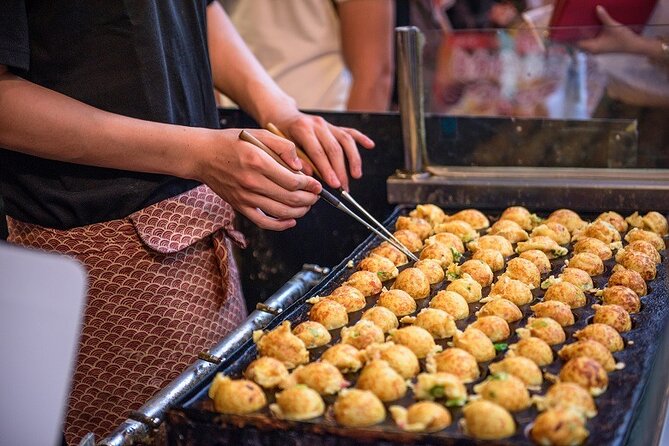
Here’s where the math becomes reasonable. You get a local guide for about four hours, and that guide role matters in Osaka, where you’ll quickly hit language barriers and signage that’s more visual than explanatory. The tour also includes a box of takoyaki plus one drink, which takes one common worry off your mind: where to stop and what to order when you’re busy learning directions and street layouts.
On top of that, most stops are marked as free for admission ticket purposes. Even though Osaka Castle itself is not entered, the overall structure still reduces the cost and time drag that comes with planning tickets in a new city.
So who is this best for? If you’re going to Osaka as a first-time visitor and want your bearings with minimal planning, the guide-led route is a big part of the value. If you’re a repeat visitor who already knows every neighborhood in your sleep, you might find the price harder to justify unless you really want the specific mix of photo stops and food-market guidance.
Osaka Castle Area: The Start That Sets the Tone
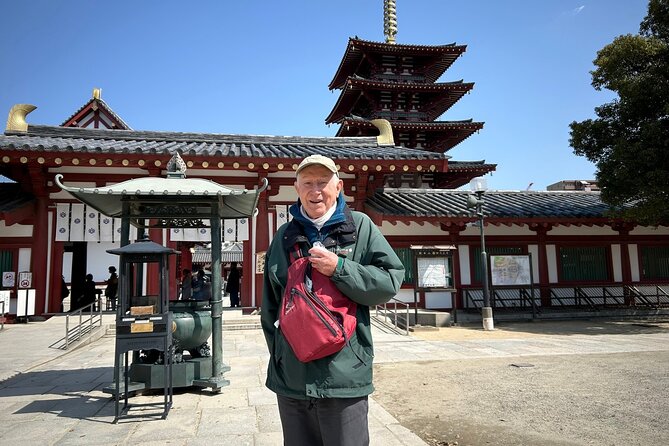
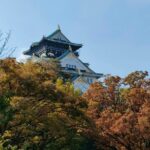
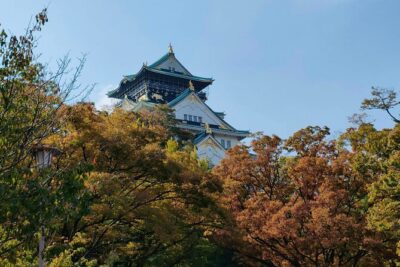
You kick things off at 3-1 Ōsakajō, Chuo Ward, near Osaka Castle. The key detail is that you do not enter Osaka Castle. What you do get is time to orient yourself with the area and understand why it matters in the Kansai region and Japan’s samurai era of the sixteenth century.
This works well for most people because the castle symbol is one of those anchors that helps the rest of the city click. You’re not buying a ticket to feel “official.” You’re using the castle area as a starting point to learn the story behind the city’s identity.
The practical benefit is timing. A tour that doesn’t require castle entry keeps the flow smooth and helps you reach the food and neon sights while the energy is still high. If your group includes people who want photos but not museums, the outside orientation model is a win.
If you are the type who wants to spend serious time inside historic buildings and exhibits, this might feel like a missed opportunity. But even then, the trade-off is that you gain more time for Dotonbori, Kuromon Market, and Shinsekai, which are the parts that many visitors remember most.
Dotonbori and Shinsaibashi-suji: Osaka’s Street-Power Duo
After the castle start, you move into Dotonbori, one of Osaka’s must-see entertainment corridors. Think neon riverside scenery, intense street energy, and endless storefronts that make you feel like you could spend hours just walking without aim. Dotonbori is loud in a fun way, and it’s the kind of place where a guide can save you from wasting time.
You don’t just pass through. You get a structured stop so you can actually absorb it, take photos, and understand the rhythm of the area. The result is that you’ll know what you’re seeing, instead of just seeing lights.
Then it shifts to Shinsaibashi-suji, Osaka’s famous shopping arcade. This is where you trade neon spectacle for modern street shopping. Expect a packed arcade feel, with Japanese fashion and quirky gadget culture showing up around you. If you like browsing rather than buying, the arcade is still worth it because it teaches you how Osaka blends everyday shopping with entertainment.
Two good reasons to appreciate this sequence:
- You get the iconic energy of Dotonbori before your eyes get overloaded by shopping.
- Shinsaibashi-suji is easier to enjoy when you’re not hungry and rushed, which is helped by the way the tour is paced.
If you hate crowds, you may still find these stops busy at a normal time of day. The upside is your guide can steer you to the best angles for photos and help you avoid the longest detours.
Hozenji Yokocho: Lantern Lanes That Cool the Mood
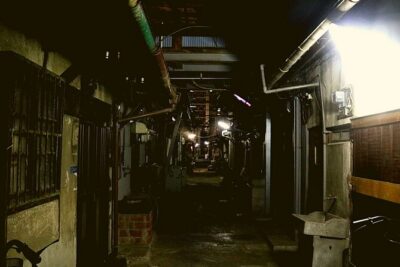
Right after the shopping arcade comes a sharp turn in atmosphere: Hozenji Yokocho. This is an area of narrow, cobblestone alleys with old-Osaka charm. The vibe is quieter and more atmospheric than the shopping streets, which makes it a perfect reset.
Hozenji Yokocho feels designed for people who enjoy small details. You’re walking through lantern-lit lanes where the streetscape looks like it has its own memory. Even if you’re not a history buff, the physical atmosphere tells you what kind of neighborhood Osaka can be, not just what it sells.
The guide’s role matters here because the best part of lanes like this is not the destination, it’s the sequence of views. A good guide helps you notice the corners, the textures, and the angles you’d otherwise walk past without realizing they were the point.
You should also treat Hozenji Yokocho as your moment to slow down. This stop gives you a breather before the food-focused intensity of Kuromon Market. If you’re traveling with someone who gets overwhelmed in big crowds, this is the kind of stop that keeps the mood balanced.
Further off the arcade
Kuromon Market: Seafood Watching With a Plan
Next is Kuromon Market, a place that’s easy to get lost in if you don’t know what you’re looking at. The good news is the tour sets you up for success.
The market stop focuses on seafood, especially stalls that may look simple from the outside but open into an impressive display of fresh fish. You also get a chance to watch skilled chefs handle seafood in real time. The descriptions include examples like fugu (pufferfish) preparation and tuna cutting, which tells you the tour isn’t just about shopping bags. It’s about understanding food craftsmanship.
You should expect a lively market feel. This is where Osaka’s food culture becomes practical. You can watch technique, learn what’s happening, and get comfortable with the idea that a market is both a place to eat and a place to observe.
One more smart detail: since the tour includes a box of takoyaki and a drink, you can approach the market as a viewing experience too. You can taste if you want, but you don’t have to solve lunch from scratch in the middle of a crowd.
If you’re someone who gets anxious about ordering in a food market, a guide-led stop can turn stress into curiosity. Even if you don’t buy much, you’ll still leave with a clearer sense of what seafood culture looks like here.
Tsutenkaku and Shinsekai: Retro Osaka to End the Tour
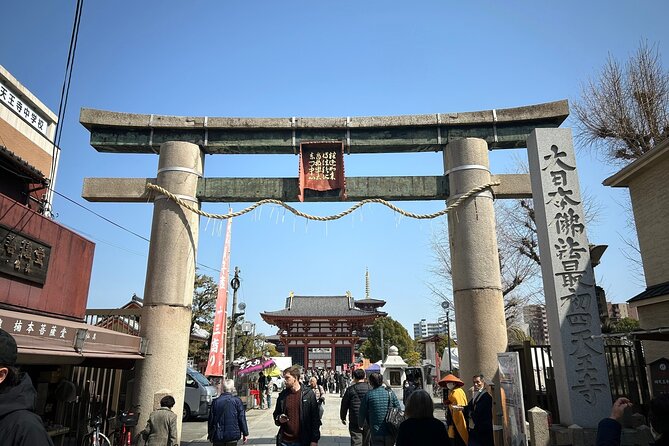
The last stretch is where the tour turns cinematic. Tsutenkaku is described as one of Osaka’s iconic landmarks and the symbolic heart of the Shinsekai district. It was first built in 1912 and inspired by Paris’s Eiffel Tower, which adds a fun layer to what you see when you’re standing there. It’s a structure that communicates Osaka’s love of mixing foreign influence with local style.
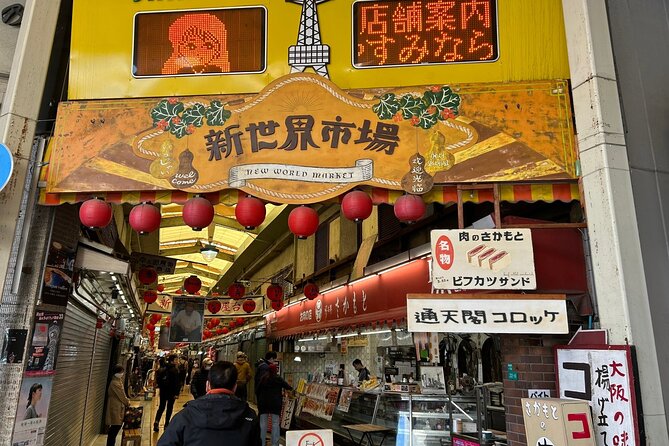
Then you finish in Shinsekai, a journey through retro Osaka. This district is known for its photogenic mix of retro charm and modern city energy, with neon lights and street-life atmosphere that makes it easy to feel like you’re in a different era.
This ending works because it’s the kind of place you want to explore after the tour. Your guide gives you the highlights, and then you can wander at your own pace to continue the fun without feeling behind schedule.
If you’re the type who likes to end tours with a strong photo location, this is a good call. Shinsekai is made for pictures, and it’s also a neighborhood you can keep using later in your trip if you want a second look.
Guide Style, Pace, and Small-Group Advantage

This is a small-group tour with a maximum of 12 people, which changes the experience in a noticeable way. In a city full of people and signs, having a guide you can hear matters. Smaller groups also help with pacing, which the tour notes as flexible depending on group size and interests.
One review highlight I found especially useful: Ben was described as friendly and energetic, with strong English, and he knew good picture locations. That’s the kind of skill that makes a walking tour worth it. You’re not just being herded from stop to stop. You’re learning where the angles are and how to make the photos look like Osaka, not just like a random street.
Another reason this style works: Osaka changes block by block. With a guide, you learn how the city shifts. You go from castle symbolism to neon riverside to shopping arcade to lantern alleys to market food culture, then into retro neon streets. That sequencing is hard to build on your own in a way that feels smooth.
If you dislike group tours because you hate waiting, the four-hour length and small size are in your favor. If you dislike group tours because you love long, unstructured wandering, you might still enjoy this, but you’ll likely use it as an opener, then switch into solo wandering after.
Practical Tips That Make the Tour Easier
Here are the practical points I’d focus on before you book, based on how this tour is structured.
First, treat this as a walking tour with multiple neighborhoods packed into one session. Wear shoes you can handle comfortably, and keep your plan open for short transitions between scenes.
Second, plan to spend time taking photos at Dotonbori, Tsutenkaku, and Shinsekai. Those stops are built for visual impact, and you’ll want a minute or two to slow down rather than rushing through.
Third, consider your food strategy. You’ll already have takoyaki and a drink included, and then you’ll pass through Kuromon Market. That makes it easier to snack without feeling like you must buy a full meal every time you see a stall.
Finally, remember the castle detail. You do not enter Osaka Castle. If you want an inside visit, you’ll need a separate plan. If you just want the orientation and the significance, this tour delivers it without ticket logistics weighing you down.
Should You Book This Osaka Highlights Walking Tour?
Book it if you want a clear Osaka first look with local context and a smooth neighborhood flow. It’s a strong choice for first-time visitors who want Dotonbori, Shinsaibashi-suji, Hozenji Yokocho, Kuromon Market, Tsutenkaku, and Shinsekai all in one half-day. The included takoyaki and drink also makes it feel more complete than a pure sightseeing walk.
Skip it, or at least consider a different style of tour, if entering Osaka Castle inside is a must for you. This tour is about getting your bearings and maximizing time in the areas that feel most alive on foot.
Overall, I think this is good value for people who like guided structure, solid photo stops, and food culture without turning the day into ticket math. If you’re trying to make Osaka click quickly, this is one of the more practical ways to do it.
FAQ
How long is the Osaka highlights walking tour?
It runs for about 4 hours.
What time does the tour start?
The start time is 10:30 am.
Where do I meet the group?
The meeting point is 3-1 Ōsakajō, Chuo Ward, Osaka, 540-0002, Japan.
Where does the tour end?
The tour ends at Shinsekai2 Chome-5 Ebisuhigashi, Naniwa Ward, Osaka, 556-0002, Japan.
Is there a group size limit?
Yes, it has a maximum of 12 people.
What food and drinks are included?
You get a box of takoyaki and 1 drink.
Do you enter Osaka Castle during the tour?
No. The tour includes Osaka Castle as a stop, but it does not enter Osaka Castle.
Are tickets or admissions included for the stops?
The tour lists admissions as free for the stops.
Is it a mobile ticket tour?
Yes, it uses a mobile ticket.
Can I cancel for a full refund?
Free cancellation is available. You must cancel at least 24 hours in advance for a full refund.
The Whole City in a Day

Off the Arcade Again



The Canal After Dark, Continued


Latest out of Osaka


Dotonbori Neon & Street Food Walks, side by side.
 ★ 5.0Osaka Local Foodie Walking Tour in Dotonbori and ShinsekaiFrom $111985 reviews
 ★ 5.0Ultimate Osaka Walking Tour: Castle, Dotonbori & Hidden GemsFrom $73862 reviews
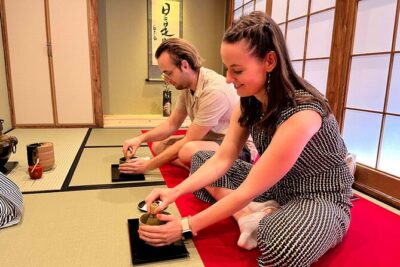 ★ 5.0Tea Ceremony Experience in Osaka DoutonboriFrom $20754 reviews
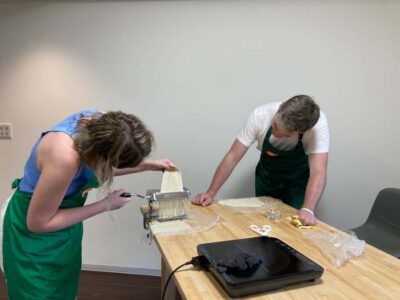 ★ 5.0Osaka: Ramen and Gyoza Cooking Class in DotonboriFrom $70378 reviews
Osaka: Dotonbori River Cruise with Glico Sign & Neon ViewsFrom $12376 reviews
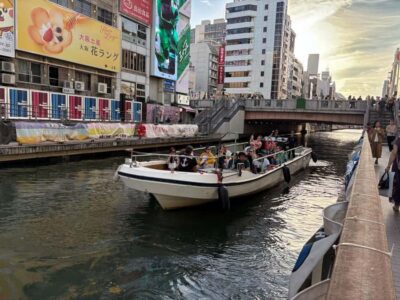 ★ 3.9Osaka: Dotonbori’s Bridges 20-Minute CruiseFrom $12303 reviews
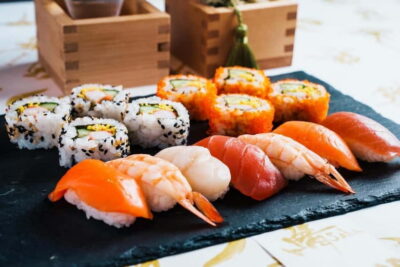 ★ 4.9Osaka: Roll and Authentic Sushi Making Class in DotonboriFrom $45239 reviews
 ★ 5.0Osaka Local Bar Crawl in Dotombori & Uranamba AreaFrom $26199 reviews