
REVIEW · OKONOMIYAKI & TAKOYAKI EXPERIENCES
Experience Cooking Takoyaki in its Birthplace, Osaka
Osaka’s takoyaki lessons feel like real food culture. In a 2-hour class at 369 Kitchen Studio, I like that you cook on a rotating takoyaki machine built for that crispy outside, soft inside texture, and I like that you can personalize the filling with options like cheese or crab sticks rather than being stuck with octopus. One possible drawback: the experience requires good weather, and since it is a small session, availability can be limited.
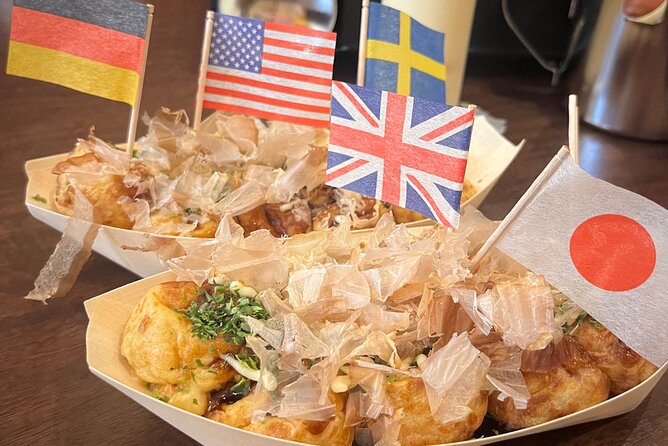
You also get the full ritual, not just the cooking. Takoyaki is typically eaten with a toothpick while it’s hot, and you’ll pair it with ramune, the Japanese carbonated drink that has a glass ball inside the bottle. It’s the kind of activity that works whether you’re traveling solo for food, or you’re joining family time.
The teaching approach comes up again and again in the way the class is run. Instructors such as Zen and Lisa, and also Masa and Risa, are praised for being patient, clear, and practical, with tips and tricks focused on technique. If you’re the type who gets overwhelmed by steps, this is one of the calmer, friendlier ways to learn.
Key Highlights You’ll Feel Immediately
- Rotating takoyaki machine technique for the classic crispy outside and tender inside
- Fill-your-own philosophy, with cheese and crab sticks available, and octopus not required
- Ramune included, with the signature glass ball bottle experience
- Small group size with a maximum of 12 people
- A family-friendly, safe format, with kids able to join in
Getting Oriented at the Sonezakishinchi Meeting Point
This experience starts in Osaka’s Kita Ward, at the address listed for Sonezakishinchi (Umeda area). The good news for logistics is simple: the meeting point is near public transportation, and the activity ends right back where you start, so you do not have to worry about a long follow-up plan after class.
Practically, I’d treat this as a morning or early afternoon kind of activity. You want to arrive not rushed, because you’ll be learning how to handle the machine and timing matters when the batter hits the tray. If you like to travel light, do so, but also plan to have a phone handy for your mobile ticket since the ticket is delivered digitally.
One more detail that matters: the total group is kept small (up to 12). That size changes the whole vibe. It tends to feel more like a shared kitchen table than a factory line, and it makes it easier for the instructor to correct technique while you’re cooking.
More time at the hot plate
Why the 369 Kitchen Studio Setup Makes Takoyaki Click
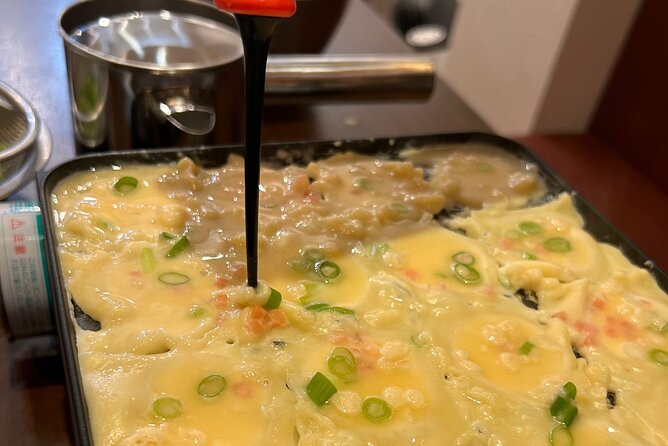
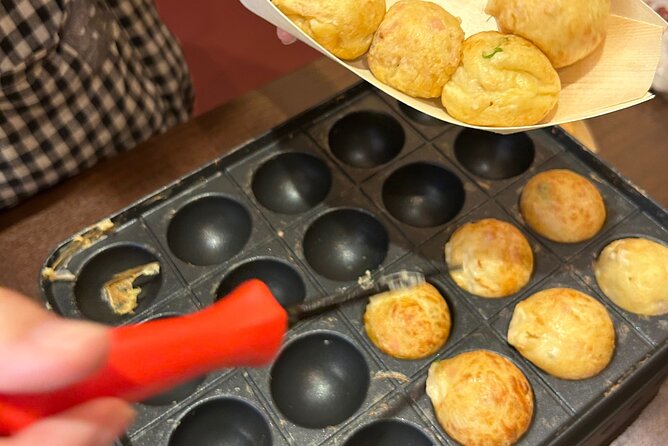
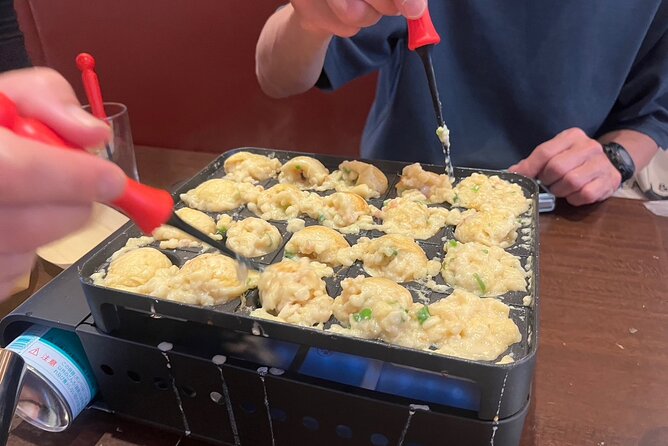
The heart of the class is the equipment. You’ll cook at 369 Kitchen Studio using a special takoyaki machine that rotates. That rotation is not a gimmick. It is what helps you get the uneven, lacy edges and the right shape, so the finished balls look like real Osaka takoyaki and not just fried batter blobs.
The class is designed around speed and feedback. You’re told takoyaki can be ready in about 20 minutes after you start cooking, which means you’re not waiting forever while others finish. That matters because takoyaki is texture sensitive, and timing is half the lesson.
Also, Osaka’s take on food is usually about doing it with others. The class emphasizes that takoyaki is a home-style snack people gather around with family and friends. You’re not just learning a recipe, you’re learning the rhythm of how locals eat it: cook, turn, and serve hot, with the toothpick as part of the ritual.
The Rotating Machine Lesson, Step by Step
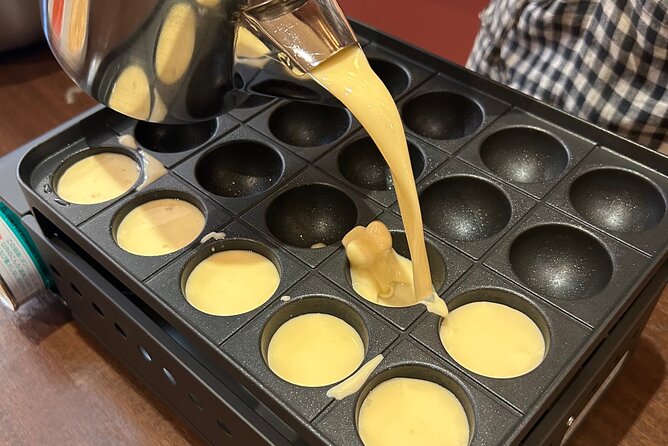
You’ll learn the core method for making takoyaki on the rotating grill. While the exact sequence can vary by class flow, the structure is consistent: you’ll work with the takoyaki machine, then practice turning and shaping the balls until you get that crisp outside and soft inside.
Here’s what I’d focus on during your turn, because it is usually what makes the difference between good takoyaki and excellent takoyaki:
- Pay attention to how quickly batter sets on the hot surface.
- Watch how the instructor recommends turning for shape and even browning.
- Aim for consistency in size, since even cooking is the main texture goal.
The class is also built to be beginner-friendly. People cooking their first batch can still end up with tasty results because the teaching is hands-on. In past sessions, instructors were described as patient and practiced, with clear guidance and tips and tricks to refine technique. If you’ve ever tried to copy takoyaki videos at home, you know the real challenge is timing, not ingredients. This addresses that.
And because the class finishes with freshly made, hot takoyaki, you do not end up with lukewarm disappointment. That freshness is part of why street takoyaki works, and the same logic applies here.
Choosing Fillings Without Octopus Pressure
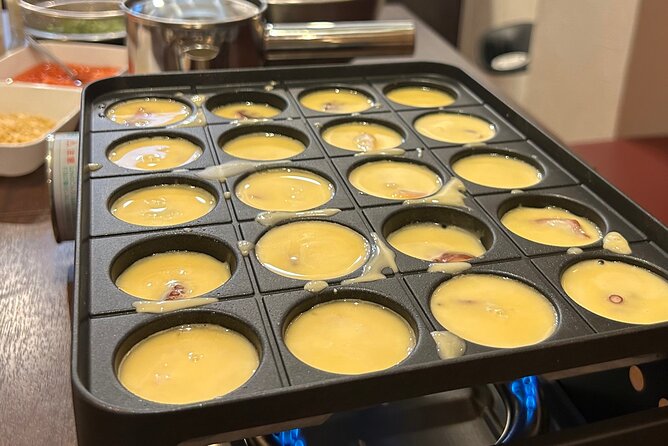
Takoyaki’s fame comes from its classic octopus filling, but the class makes a key point: you do not have to use octopus. That’s a big deal for travelers with dietary preferences, seafood concerns, or just a plain desire to try different flavor combinations.
You’ll have options such as cheese and crab sticks, so you can build original takoyaki that still follows Osaka-style cooking. This approach also helps you understand something important about takoyaki: the flavor is not only in the filling. It’s in how the filling behaves inside the batter as the ball cooks and sets.
If you want a simple strategy, go for one filling theme per person (or per small group) so you can compare textures and flavors. You’ll quickly see how the filling changes the bite, and you’ll leave with ideas you can actually use later.
One more note: there’s evidence the instructors can accommodate different needs, including a vegetarian participant being looked after. That does not automatically mean every ingredient will work for every diet, but it suggests the team is attentive. If you have strict dietary requirements, your best move is to communicate them when you arrive.
Ramune With the Signature Glass Ball
Eating takoyaki is fun, but the pairing makes it feel like a proper Japanese food moment. Alongside your takoyaki, you’ll drink ramune, a carbonated drink people often recognize from Japanese stores and soda kiosks.
The signature part is the glass ball inside the bottle. The visual detail makes the drink feel like an event, not just a beverage. For visitors, it also adds a small culture cue. You’re not only eating a dish with local roots, you’re participating in a classic Japanese drink ritual too.
There’s also a practical angle: ramune gives you a cool, fizzy counterpoint to hot, savory takoyaki. That contrast helps when you’re eating multiple pieces in a single sitting. And since takoyaki is eaten with a toothpick, a drink alongside it makes the experience smoother.
More kitchen tables to sit at
Eating Takoyaki Like You Mean It, With a Toothpick
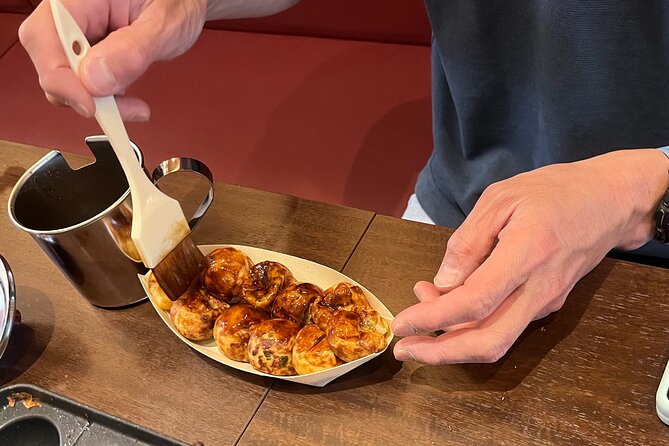
Takoyaki is usually held with a toothpick and eaten while hot, and this class follows that reality. That matters because the best takoyaki taste and texture come from the moment it’s cooked. If you wait too long, the crust softens and the inside loses that soft-hot feel.
The class is also framed as a group food party. The idea is that people gather around, cook together, and share what they make. Even if you are traveling solo, the small size and shared cooking setup usually makes it easier to chat during the process rather than just quietly stand there.
Kids can join in too, and the format is described as safe even for small children. That’s not a guarantee for every situation, but it’s consistent with a hands-on activity that is designed for a range of ages.
Group Size, Timing, and Finding the Classroom Fast
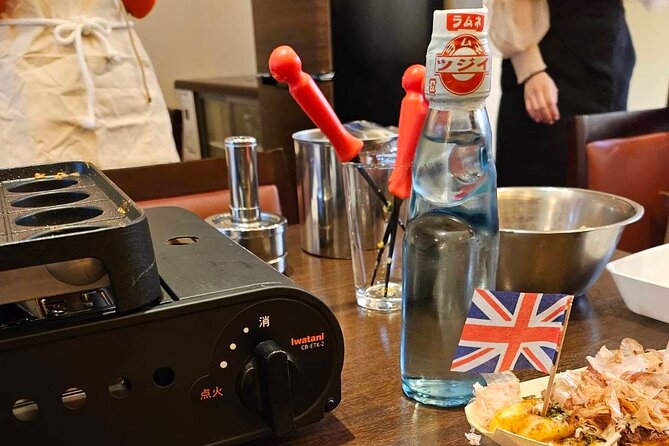
This class runs about 2 hours. That time window is long enough to teach the technique and short enough to keep energy high. You’ll have a clear start and finish, and because it ends back at the meeting point, you can plan the rest of your Osaka day with confidence.
The maximum group size is 12, which I like for two reasons. First, you’re less likely to feel lost or ignored. Second, the instructor can give practical corrections without turning it into a lecture.
You’ll also receive a mobile ticket, which is the kind of simple setup that reduces stress. You do not need to chase paper vouchers across town. Add in that it’s near public transportation, and the whole plan stays accessible even if your Japanese is basic.
As for timing before your trip, the experience is often booked about 15 days in advance on average. If your schedule is tight, booking earlier is a good move, especially when you want a specific day.
Price and Value: What $42.35 Really Buys
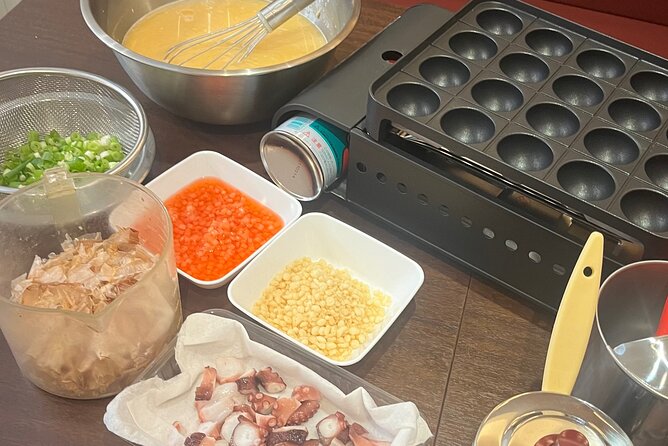
The price is $42.35 per person. On its face, that’s not the cheapest way to eat takoyaki in Osaka. But I think it represents good value for what you’re actually getting: instruction, hands-on technique practice, and a plated tasting experience you can’t easily recreate on your first try at home.
Here’s what you’re paying for beyond ingredients:
- Access to a takoyaki machine setup designed for shaping and cooking the balls
- Step-by-step technique and tips and tricks focused on real texture outcomes
- A small-group environment where you can learn without feeling rushed
- A full snack moment, including freshly made takoyaki and ramune
If you’ve ever bought takoyaki on the street and then wondered why it’s so good, this is the bridge. Street takoyaki is fast, but the cooking method is where the magic lives. The class gives you that method in a structured way.
Also, if you’re traveling with a friend or family member, the value tends to feel even better. You’re creating a shared memory that’s tied to a skill, not just eating something and moving on.
Who This Osaka Takoyaki Class Is Best For
This experience is a strong fit if you want Osaka food culture in a hands-on format. You get the practical cooking method, plus the social ritual of eating together, plus the ramune pairing that makes the whole thing feel like a real Japanese break.
I’d especially recommend it for:
- Families, since kids can enjoy it safely and the learning is simple and tactile
- Food lovers who want more than a food stop, you want a skill you can repeat later
- First-time cooks who benefit from patient, clear teaching
- People who are curious about takoyaki but do not want octopus required, since fillings like cheese and crab sticks are available
If you’re on a strict schedule, the 2-hour duration is manageable. If you want a flexible, social activity rather than a sit-down meal, cooking together hits the sweet spot.
Should You Book This Takoyaki Experience?
I’d book it if you want the quickest path to real technique, not just a tasting. The rotating takoyaki machine, the focus on getting texture right, and the option to customize fillings all work in your favor. You also end up with a complete snack experience, hot takoyaki and ramune, eaten in the traditional way.
Skip it or reconsider if you know you cannot plan around weather constraints, or if you prefer purely casual eating with zero structured activity. Otherwise, this is one of those Osaka experiences where you leave with both knowledge and something you can mentally recreate the next time you crave takoyaki.
FAQ
What is the duration of the takoyaki cooking experience?
It takes about 2 hours.
How much does the experience cost?
The price is $42.35 per person.
Where is the meeting point in Osaka?
The meeting point is at Japan, 〒530-0002 Osaka, Kita Ward, Sonezakishinchi, 2-chōme−1−13 巽住宅 梅田ビル.
Will the activity end where it starts?
Yes, it ends back at the meeting point.
Is an octopus filling required?
No. You can make takoyaki with other fillings, and options mentioned include cheese and crab sticks.
What do you drink during the experience?
You’ll have ramune, a traditional Japanese carbonated drink with a glass ball inside the bottle.
How many people are in each class?
The experience has a maximum of 12 travelers.
Do you need a mobile ticket?
Yes, you’ll use a mobile ticket.
When will you get confirmation after booking?
Confirmation is received within 48 hours of booking, subject to availability.
What is the cancellation policy?
You can cancel for a full refund up to 24 hours in advance. The experience also requires good weather, and if it is canceled due to poor weather, you’ll be offered a different date or a full refund.
More Tour Reviews in Osaka


More Kitchen Tables to Sit At

More Time at the Hot Plate

Latest out of Osaka


Okonomiyaki & Takoyaki Experiences, side by side.
 ★ 5.0Osaka Cooking Class: Okonomiyaki &Japanese cuisines experienceFrom $104261 reviews
 ★ 5.0Osaka Sake Tasting with Takoyaki CookingFrom $70156 reviews
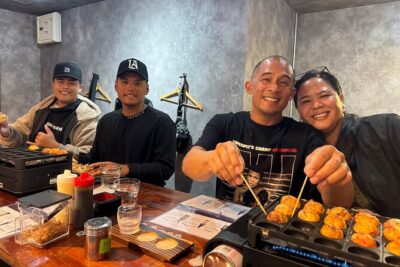 ★ 5.0Osaka Sake Tasting & Takoyaki Cooking ExperienceFrom $72149 reviews
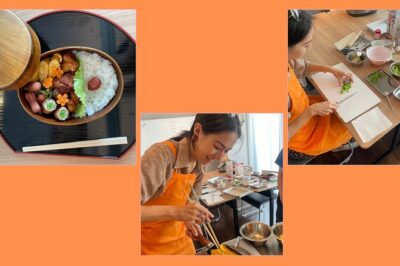 ★ 5.0Cooking Ramen&Gyoza/KatsuCurry/Bento/Okonomiyaki+Store Tour@OsakaFrom $85138 reviews
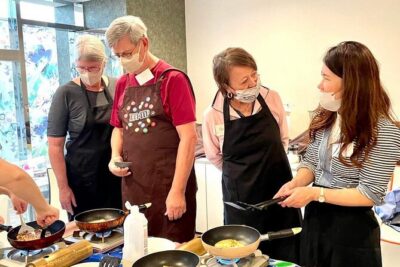 ★ 5.0Osaka Okonomiyaki Cooking Experience!From $4979 reviews
 ★ 4.2Osaka:SUMO BEATS SHOWCASE: Taiko Drum and Wagyu burger!From $6737 reviews
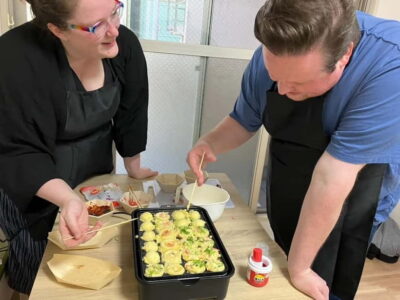 ★ 4.9Osaka : Cooking Class Okonomiyaki & Takoyaki course in NanbaFrom $7025 reviews
 ★ 5.0Osaka Okonomiyaki Cooking Class “Learn here and make it at home”From $7020 reviews
Also worth a look in