
Osaka food tastes better with a pro guide. This small-group evening mixes 13 Japanese tastings with a chef guide who explains what you’re eating and how to order local drinks like sake and shochu. It is designed to steer you away from the loud, obvious tourist stops and into the kind of places you would only find by following someone who actually works kitchens.
You also get real variety across four different venue styles: a standing bar start, a grilled yakitori stop, an old-house izakaya, and a calmer side-street bar. One possible drawback is that some venues use floor seating in older homes, and a few places may allow indoor smoking, so comfort matters.
Key highlights you will actually feel
- Up to 6 people keeps the night relaxed and conversation-friendly
- 13 tastings plus 4 included drinks spread across four Osaka food spots
- Former-chef storytelling so you understand technique, not just the menu
- Local drink education with options like sake, shochu, umeshu, and chu-hi
- Cheaper and easier than piecing it together yourself, since food and one drink per stop are built in
- Expect pay-on-site for extra orders and plan to carry about 5,000 JPY in cash
Why this chef-led Osaka night makes sense
This tour is built for people who want more than a food list. You get a chef guide, so the night turns into practical learning: why a dish tastes the way it does, what to try next, and how to navigate bar culture without feeling lost.
For me, the best part is the structure. You are not wandering from place to place hoping someone will explain what you ordered. Instead, you get a clear rhythm, and each stop adds another piece of Osaka’s food identity.
You also get small-group value. With a max of 6 people, it is easier to ask questions, get dietary notes handled early, and actually talk to your guide instead of waiting your turn.
More of the canal after dark
TachiNomi Meganedo: the standing bar warm-up
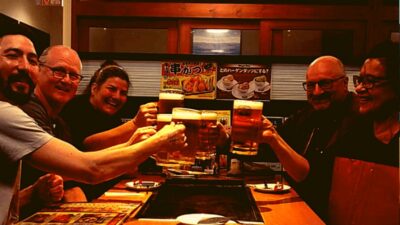
You start at a tachinomiya, an Osaka-style standing bar. The vibe is casual and local, and that matters because you are practicing the first rule of the Osaka bar scene: keep moving, keep ordering small, and enjoy the moment.
At this first stop, you will try 5 small dishes and get 1 included drink. The goal here is to loosen you up fast, then set you up for the later izakaya style meals.
Practical note: standing bar culture can be loud and crowded, and you will likely spend more time upright than seated. If you know you need a lot of sitting breaks, plan to pace yourself and tell the guide early.
Karahori street yakitori: grilled chicken and late-night energy
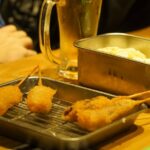
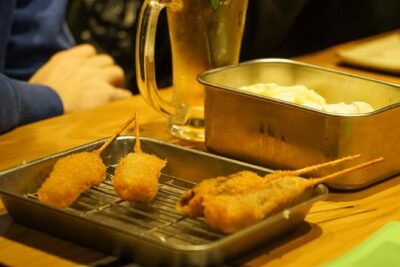
Next comes yakitori, with a restaurant that stays open late. This stop is about grilled chicken at its best, built from fresh chicken and cooked with an eye for texture and timing.
You will receive 5 food items and 1 included drink here, and the atmosphere tends to feel more animated than your first bar. One extra plus is that this is the kind of setting where a guide can help with the order flow, so you do not end up stuck staring at choices while everyone else is eating.
There may also be a drinking game element during this stop, which can add laughter if you are comfortable joining in. If you are not, you can usually keep it light and focus on the food.
Karahori-Momodani Park old-house izakaya: 105 years of atmosphere
Then you step into a 105-year-old house izakaya, the kind of place that feels like it has its own mood. This is a kominka style experience, and you will notice the difference right away: lower-key energy, older architecture, and a sense that locals have been coming here for a long time.
You get 3 included food items at this stop. Drinks work a bit differently, too. You can order more, but you pay on-site, so the included drink is a base while extras are optional.
This is also where the tour’s small-group feel helps. If you have questions about what you are eating or why it tastes a certain way, your guide has time to answer. One practical consideration: floor seating in old houses may not be great for knee or back problems.
If that is your situation, you can still enjoy the food, but go in with expectations and speak up early so the guide can point you to the most comfortable spot.
Uemachi quiet-bar finish: low lighting, pay-on-site drinks
The final stop is a quieter bar in Uemachi, with a calm, low-light interior focus. After three different venue styles, this ending works because it slows things down and lets you digest everything you ate.
At this last stop, you will have another included drink, then you can pay for additional drinks on-site if you want to keep going. This is a good place to try something slightly different from your earlier choices, since the guide can help you pick without you having to translate everything.
If you are sensitive to crowds, this part is often the most comfortable. If you prefer a loud, party-like setting, you might find it more mellow than earlier stops, but that contrast is part of why the tour feels balanced.

What you truly get for $151.54
The headline is easy: 13 Japanese tapas and 4 included drinks, guided by a professional chef. The value is not just the total quantity, it is how it is packaged.
You are paying for:
- Chef guidance that helps you order and understand the food instead of guessing
- Four different venue types in one evening, which would be hard to coordinate on your own
- Small-group access to places you might miss, especially bars and counter spots
- Built-in pacing for a 3.5-hour night, so you are not rushing between stops
Also, you are not stuck with one fixed menu. You can ask your chef guide for recommendations, and you can adjust your orders based on what you like. If you are the type of traveler who wants to talk while you eat, this format fits well.
Extra cost expectations are simple. Food and included drinks are handled by the tour, but additional orders are at your expense. You are smart to bring cash for extra rounds and snacks, and the guidance suggests carrying around 5,000 JPY.
The role of your chef guide, especially if it is Keigoh
Many of the standout reviews name the guide as Keigoh, and the consistent theme is hands-on competence. The guide orders for you, which is a big deal when you are in tiny places with fast service and less English on the walls.
Keigoh is also praised for steering the group toward restaurants and bars people often walk past. That is exactly what you want on an Osaka food tour: direction that feels specific, not generic.
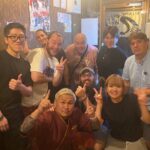
Another recurring good sign is the pace and friendliness. People like the way the tour group connects, and how the guide keeps things moving without feeling like a production. If your departure ends up being small that night, you might even get a more one-on-one vibe, which can make ordering and questions feel easy.
Tips to make the tasting night smoother
First, arrive ready to snack. This is not a single sit-down meal, it is an evening of smaller tastings. Go a bit hungry, then let the guide handle the order rhythm.
Second, plan for extra ordering. The tour includes drinks, but if you fall in love with something, you will likely want more. That is where cash helps, and it keeps you from awkward moments when a venue is pay-on-site.
Third, tell the host about allergies or dietary restrictions when booking. The tour explicitly asks you to share needs ahead of time, and that is the right move for a food-focused night.
Fourth, comfort counts. If you have knee or back issues, the floor seating in the old-house izakaya is the main point to consider. If you smoke, or if you are sensitive to smoke, know that some local venues may allow indoor smoking.
Who should book this Osaka food tour
This is a great fit if you:
- Want local bar and izakaya culture without guessing what to order
- Prefer a small group up to 6 people
- Like learning from a chef, not just collecting photos
- Plan to spend your evening around quieter Osaka streets rather than only the most famous areas
You might think twice if you:
- Need lots of seated comfort, since floor seating is part of the old-house stop
- Strongly dislike the possibility of indoor smoking
- Want a fully high-end sit-down dinner feel, since several stops are counter and standing style
If you are traveling solo, this format can still work well because the guide keeps things coordinated. If you are traveling as a couple, the pacing and sharing of dishes tends to be easy too.
Should you book Escape Dotonbori?
Yes, if your goal is an Osaka food night guided by a chef and organized around tastings, drinks, and local atmosphere. The price makes sense when you factor in 13 dishes, 4 included drinks, and the real value of having someone competent explain what you are eating and how to order in each style of venue.
I would especially recommend it if you want a calmer, more local-feeling evening and you like the idea of four different places rather than one meal repeated four ways. Just go in with the mindset of small tastings, plan for pay-on-site extras, and treat comfort and smoke sensitivity as part of your pre-trip check.
FAQ
What is included in Escape Dotonbori’s $151.54 price?
The tour includes dinner made up of 13 Japanese tapas, plus 4 drinks included (one drink at each venue). You also get a professional chef experience with storytelling at each stop.
How long is the tour and when does it start?
It runs about 3 hours 30 minutes and starts at 5:30 pm.
How many people are in the group?
The maximum group size is 6 travelers.
Where does the tour start and where does it end?
It starts at TachiNomi Meganedo, 6-chōme-2-24 Tanimachi, Chuo Ward, Osaka, 542-0012, Japan. The tour ends back at the same meeting point.
Is alcohol included, and what if I am under 20?
Alcoholic drinks are included, and you can choose options such as sake, shochu, umeshu, chu-hi, or soft drinks. The legal drinking age is 20, and if you are under 20, you will be served non-alcoholic drinks.
What should I do if I have food allergies or dietary restrictions?
Let your host know when booking. The tour also notes that you can ask for adjustments based on what you need, and extra orders are available on-site at your own expense.
More Tour Reviews in Osaka


The Canal After Dark, Continued
Latest out of Osaka


Dotonbori Neon & Street Food Walks, side by side.
 ★ 5.0Osaka Local Foodie Walking Tour in Dotonbori and ShinsekaiFrom $111985 reviews
 ★ 5.0Ultimate Osaka Walking Tour: Castle, Dotonbori & Hidden GemsFrom $73862 reviews
 ★ 5.0Tea Ceremony Experience in Osaka DoutonboriFrom $20754 reviews
 ★ 5.0Osaka: Ramen and Gyoza Cooking Class in DotonboriFrom $70378 reviews
Osaka: Dotonbori River Cruise with Glico Sign & Neon ViewsFrom $12376 reviews
 ★ 3.9Osaka: Dotonbori’s Bridges 20-Minute CruiseFrom $12303 reviews
 ★ 4.9Osaka: Roll and Authentic Sushi Making Class in DotonboriFrom $45239 reviews
 ★ 5.0Osaka Local Bar Crawl in Dotombori & Uranamba AreaFrom $26199 reviews
Also worth a look in