
REVIEW · OSAKA IZAKAYA & SAKE BAR CRAWLS
Sake “Omakase” in Osaka : Guided Tasting by a Active Sake brewer
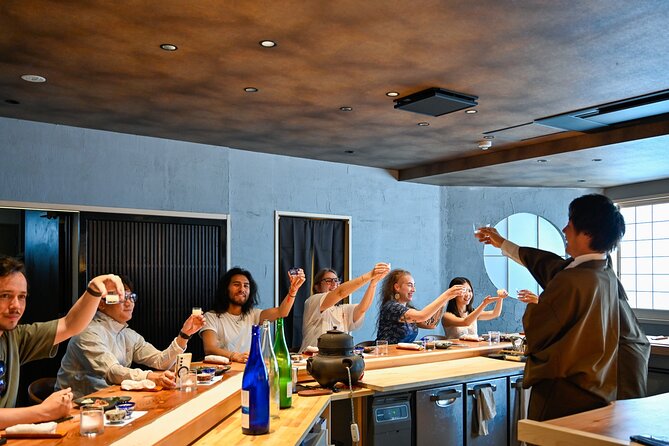
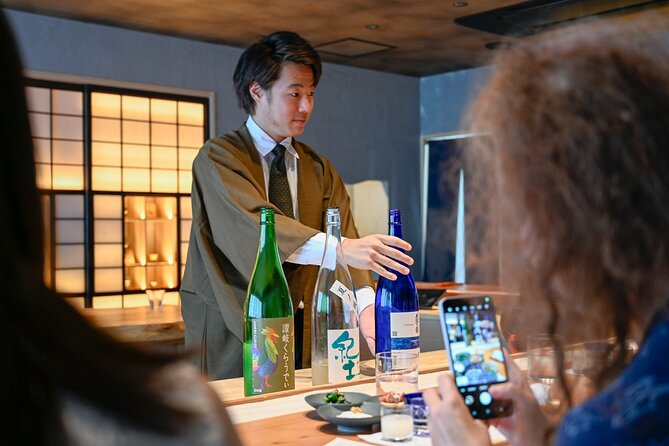
Sake gets personal fast in Osaka. This guided session at Sake Pairing Bar Potan is hosted by Yuki, an active sake brewer, and it turns a typical tasting into a hands-on lesson with a small group and a real comparison of styles, rice, and serving temperatures.
What I like most is the focus on craft from someone who brews today, not just someone who pours tomorrow. I also love the structure: you taste 7 sakes and fill out a tasting sheet that helps you figure out what you actually like, not what you think you should like.
One consideration is that you are paying for an intimate workshop. At $71.54 per person, it is pricier than basic bar tastings, so it makes the most sense if you plan to enjoy the full 1 hour 30 minutes and ask questions.
Key highlights you should not miss
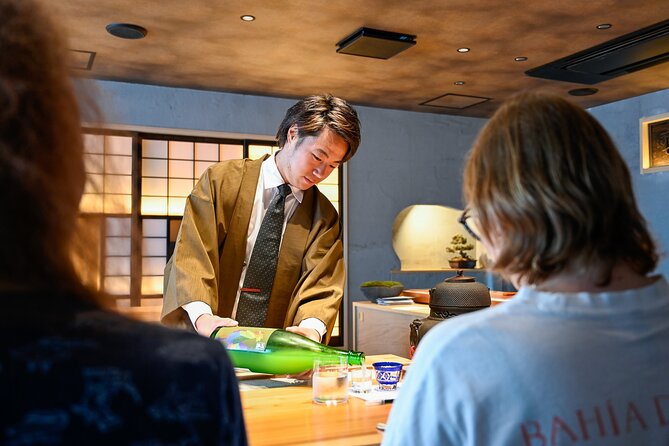
- Active brewer host (Yuki), trained at a sake brewery in Osaka
- 7-sake guided tasting, including different sake styles, different rice types, and the same sake at two temperatures
- Tasting sheet plus Sake Preference Diagnosis so you can order smarter later
- Small group size (maximum 10) with time for Q&A and relaxed conversation
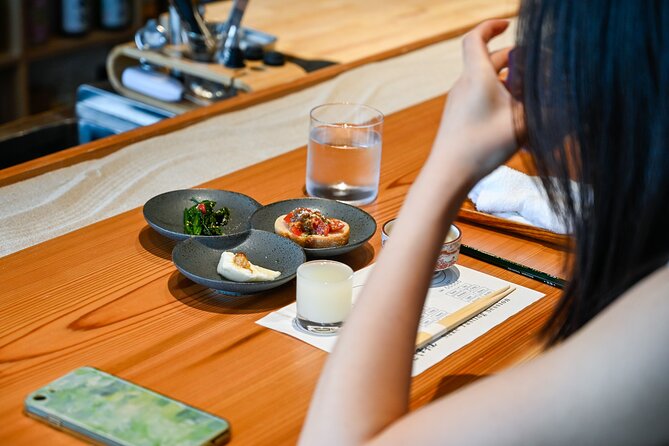
- Three seasonal Japanese pairing dishes included to show how sake and food work together
- Traditional Japanese bar setting at Sake Pairing Bar ぽたん in Fukushima
Entering Yuki’s Osaka Sake Classroom, Not a Standard Tasting
If you have ever tried sake in a bar and thought, I like this one, but why, this session is built for that question. The host, Yuki, is not just the owner of the bar. He is an active sake brewer, and he trained for a year at a sake brewery in Osaka. That matters because the talk is grounded in what changes on the brewing side, and what you can notice on the tasting side.
You get a “masterclass style” flow: history and culture, how sake is made, then guided sampling that connects the science to the glass. The tone is friendly, not stiff. Based on how the experience is described, the goal is for you to leave able to talk about sake like you have done it for years, even if you started from zero.
Two big wins here are pace and comparability. The session is short enough (about 1 hour 30 minutes) to stay focused, but it still gives you multiple comparison points so you can actually see differences instead of collecting random tastes.
Another round of counters
Where to Go in Fukushima: Sake Pairing Bar Potan (ぽたん)
The session meets at Japanese Sake Pairing Bar Potan, 553-0003 Osaka, Fukushima Ward, Fukushima, 2-chōme724 NANEI Fukushima building 4F. It is in Fukushima, just minutes from central Osaka, which helps if you are doing other sightseeing the same day.
The bar is described as refined, with traditional Japanese architecture. In practice, that kind of setting tends to make the tasting feel slower and more intentional. You are not racing through shots. You are sitting down, learning, and tasting with context.
It is also near public transportation. That matters because sake tasting is the kind of thing where you do not want extra stress before you even start. You will likely want to build in a small buffer, because you have a full sequence to go through and you do not want to arrive out of breath.
The 1.5-hour Schedule: Exactly What Happens and When
The session runs about 1 hour 30 minutes. The sample schedule shows a clear path from basics to comparisons to your own personal results.
Here is how the flow typically goes:
13:00 to 13:30, Introduction to sake brewing and etiquette
You start with the foundations: sake history, key brewing inputs like rice, water, and koji, and practical basics like polishing ratios. There is also simple sake etiquette. This is not meant to make you feel tested. It is meant to remove the guesswork so your tasting has a frame.
13:30 to 14:20, Three tasting modules
Next come the comparisons, and they are intentionally grouped:
- Style-based tasting (3 sakes): you taste three different sake styles back to back, so you can spot how direction changes flavor and aroma.
- Rice variety comparison (2 sakes): you compare two sakes made with different rice varieties. This is one of the fastest ways to learn why “sake tastes different” is not just hype.
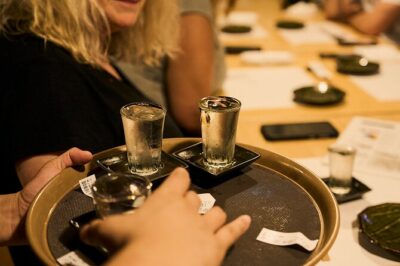
- Temperature comparison (2 sakes): you taste the same sake at two temperatures. This is where many people realize how much the glass changes your perception.
Plates worth crossing Osaka for
14:20 to 14:40, Questions and open conversation
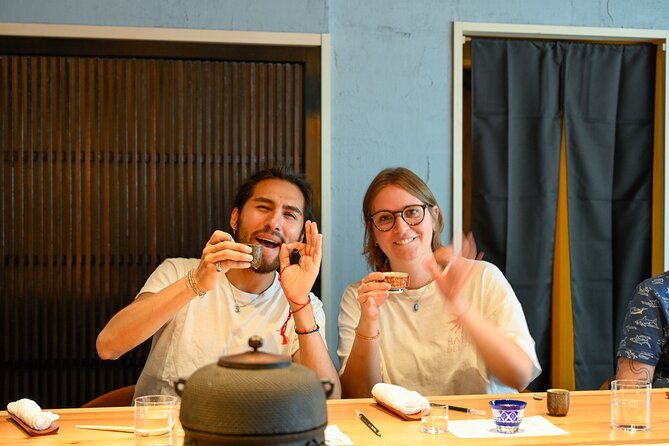
You get Q&A and open conversation. Since the host loves cross-cultural exchange, it is not only sake talk. You might discuss Japanese culture and travel themes while you are still in tasting mode, which keeps things lively.
14:55 onward, Sake Preference Diagnosis and closing
You fill out a tasting sheet and get your personal “Sake Preference Diagnosis.” This is the part that makes the experience practical. Instead of remembering random impressions, you leave with a way to order and choose later.
What You Actually Taste: 7 Sakes, Big Differences in a Small Time
This is not a “pick one flight and call it a day” situation. The tasting is engineered to make comparisons obvious.
The 3-style tasting teaches what changes first
When you sample three sake styles in a row, you learn how each style steers aroma and flavor. I like this part because you can pick up patterns quickly, even if you are new. It also gives you a vocabulary for later: when you find a style you like, you can start narrowing choices.
The rice comparison shows why ingredients are not interchangeable
Rice variety may sound like a nerdy detail, but it shows up in real taste cues. By comparing two sakes made with different rice varieties, you learn that sake differences are not only about branding. The host also walks you through what to listen for and notice as you taste.
The temperature comparison is a practical superpower
Two temperatures for the same sake is one of the smartest ways to learn because it turns one variable at a time. Warm or chilled service can shift aroma lift, sweetness feel, and how the finish lands. You do not need to memorize anything complicated. You just need to taste, then connect what you noticed to the idea that serving temperature is a real ingredient.
7 sakes plus snacks means you can stay comfortable
You also get 3 seasonal Japanese pairing dishes included. That matters because sake is easier to enjoy when you are not just tasting on an empty, overwhelmed palate. The pairings are meant to complement what you are drinking, helping you recognize how flavor profiles interact.
The Food Pairings: Simple, Seasonal, and Useful
The pairing component is included, and that is a good sign. Food does not distract from sake here. It helps you understand the range.
With three seasonal pairing dishes, you get multiple food contexts across the tasting. Even if you are not a formal food person, you can learn something immediately: some pairings make a sake taste cleaner, while others make it feel rounder. Over time, this trains you to think like a chooser, not a collector.
This is also where the learning feels less academic. Instead of just hearing how sake works, you taste it next to food and see what changes in your perception.
Your Sake Preference Diagnosis: How to Use It After the Tour
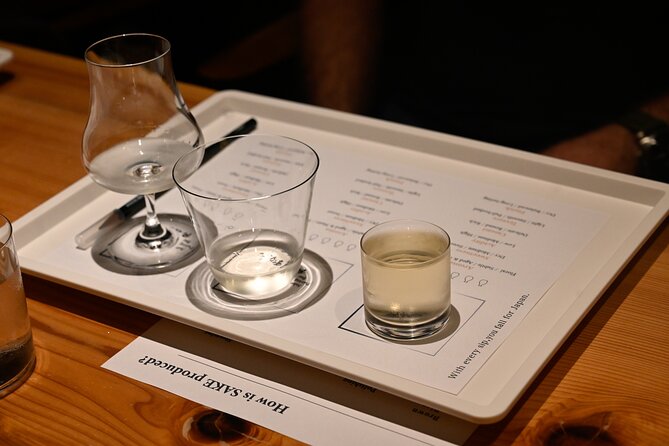
The tastings are only half the value. The other half is what you do with your notes.
You fill out a tasting sheet during the session, then you receive a personal “Sake Preference Diagnosis.” I like this feature because it keeps the experience from becoming a single evening memory. It is meant to give you a shortcut for ordering later.
When you are back in Osaka, or anywhere else in Japan, you will be able to pick sake based on your preferences instead of relying on vague descriptions. And if you return to Sake Pairing Bar Potan, you have a starting point for conversation.
If you are worried you might forget details, the tasting sheet solves that. If you enjoy keeping a travel journal, this is also an easy way to turn a tasting into a lasting reference.
Price and Value: Is $71.54 Fair for This Workshop?
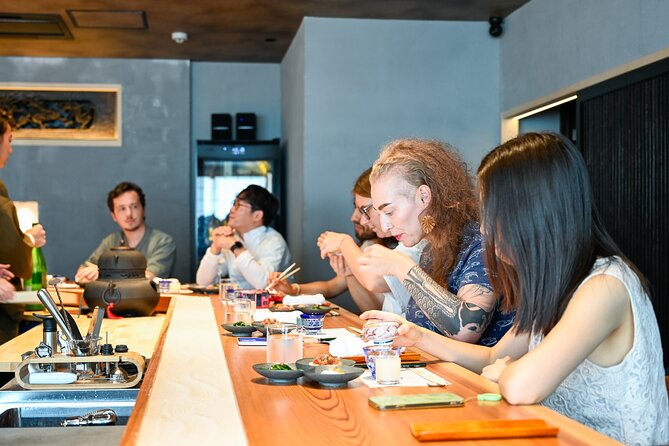
At $71.54 per person, this is not the cheapest sake option. But it is also not a basic tasting flight.
Here is why the pricing can feel fair:
- You get 7 guided sake tastings, with comparisons across style, rice type, and temperature.
- The host is an active brewer who trained at a sake brewery in Osaka.
- You get three seasonal pairing dishes included.
- You get a structured learning flow plus the Sake Preference Diagnosis tool.
When you translate that into “hours of a specialist” plus multiple servings plus food, it starts to look less like paying for alcohol and more like paying for instruction that sticks. If you are the type who hates vague food tours, this one is built around measurable comparisons.
Also, there is a note about group discounts. If you are traveling with friends, booking as a group may lower the effective cost per person.
Who This Osaka Sake Omakase Session Suits Best
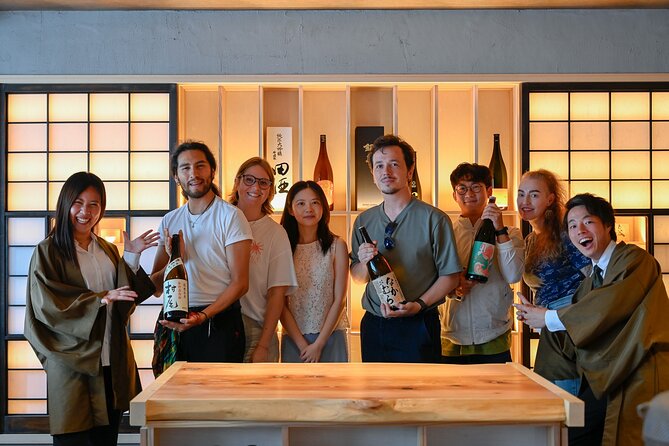
This works especially well if you fit one of these profiles:
- You are in Osaka for a short time and want one high-quality food and drink experience.
- You are new to sake and want a clear path to understanding without getting overwhelmed.
- You enjoy asking questions and talking with locals, not just standing near a bar.
- You like tasting flights, but you want more than taste repetition. You want meaning.
It may be less ideal if you only want casual sampling. If you are looking for a quick, low-cost bar stop with no structured learning, you might prefer something simpler.
Practical Tips So You Get More From the Tasting
A few small things can make a big difference:
- Pace yourself during the temperature comparisons. Warm and cold can shift aroma fast, so take a moment before you decide what you think.
- Use the tasting sheet seriously. Even if it feels like work at first, it becomes your “ordering cheat code” later.
- Ask at least one question during Q&A, even if you think it might be basic. The whole session is designed to handle beginners.
- If you do not know Japanese sake terms, start by asking what ingredient you should pay attention to next. Rice, water, and koji are the core topics here.
Should You Book This Sake Omakase Session?
I think you should book it if you want more than a drink. This experience is built for people who want to understand what they taste and take that knowledge home.
Book it if:
- You like small groups and a calm atmosphere.
- You want to learn from Yuki, an active brewer with real training in Osaka.
- You want a structured tasting across 7 sakes, including temperature and rice differences.
- You want the Sake Preference Diagnosis to help you order confidently later.
Skip it if:
- You want a cheaper, more casual bar stop.
- You are not interested in learning the basics of how sake is brewed.
- You prefer experiences with more time to linger, because the format is focused and timeboxed.
If you are hoping to make Osaka taste like something real, not just convenient, this is a strong choice.
FAQ
How long is the Osaka sake tasting experience?
The session lasts about 1 hour 30 minutes.
How many sake tastings are included?
You taste and compare 7 sakes during the guided experience.
Is food included, or just sake?
Food is included. You get snacks made up of 3 seasonal Japanese pairing dishes, along with the sake.
What is the group size?
The experience has a maximum of 10 travelers, so it stays small.
Where do I meet the host in Osaka?
You meet at Japanese Sake Pairing Bar Potan in Fukushima Ward (Fukushima, 2-chōme), Osaka, at NANEI Fukushima building 4F.
Can I cancel and get a full refund?
Yes. You can cancel for a full refund if you cancel at least 24 hours before the experience start time.
More Good Eating in Osaka
More Tour Reviews in Osaka
Osaka by the Cup

Latest out of Osaka


Osaka Izakaya & Sake Bar Crawls, side by side.
 ★ 5.0Osaka Bar Hopping Night Walking Tour in Namba (3 bars, 6 tastes)From $98958 reviews
 ★ 4.9Osaka: Namba Pub Bar Crawl with a Local GuideFrom $30424 reviews
 ★ 4.9Osaka: Izakaya Bars Guided Walking TourFrom $19385 reviews
 ★ 5.0Osaka Local Bar Crawl in Dotombori & Uranamba AreaFrom $26199 reviews
 ★ 5.0Osaka Sake Tasting with Takoyaki CookingFrom $70156 reviews
 ★ 5.0Osaka Sake Tasting & Takoyaki Cooking ExperienceFrom $72149 reviews
 ★ 5.03Hour Osaka Pub Crawl Bar Hopping Nightlife Guided Tour in NambaFrom $46122 reviews
 ★ 5.0Osaka Cooking Class and Sake Tasting with Local Supermarket VisitFrom $9279 reviews
Also worth a look in