
REVIEW · NARA DEER PARK EXCURSIONS FROM OSAKA
Private Tour to Nara from Osaka with English speaking Driver
Nara looks like a maze until you have wheels and a calm plan. I like the comfort of a private vehicle and the freedom to pick your own 3 to 4 stops instead of doing a rigid checklist. The trade-off is you do not get a licensed local guide, so the depth of explanations depends on what your driver covers.
This is a great day-trip match for independent travelers who want tradition without public-transport stress. In practice, it also works well for time-sensitive days, like Osaka port schedules, when a driver keeps things on track and still finds small extras along the way. One consideration: the car seats are limited, so if you need child or booster seats, you will want to confirm early.
Key things I’d watch for before you book
- Private vehicle, English-speaking driver means you skip transit confusion and keep a steady pace
- Your choice of 3-4 sites lets you focus, rather than sprint temple to temple
- Many stops show admission as free, but entrance fees are listed as not included, so double-check
- Tour timing feels flexible but not sloppy, and return timing can be managed well for day schedules
- No mixing with other groups, since this is truly just your party
Why this private driver plan beats hunting buses to Nara
If you have ever tried to piece together bus routes in Japan while also paying attention to temple hours, you already know why this format works. The key value is simple: your English-speaking driver takes you between sites, so you spend your energy looking up at historic architecture and down at your next turn.
Nara is close enough to Osaka for a satisfying day, but far enough that the logistics can get annoying. Here you get pickup offered, plus a private vehicle that keeps you in control of the day. You also get a mobile ticket, which helps on busy days when you just want everything in one place.
One more practical advantage: this is designed for small parties. Your group is up to 5, and your vehicle is reserved for you, not shared with other tour groups. That matters in Nara, where waiting around for others can ruin your flow.
More days handed over to a local
8 hours in the car and on foot, with room to breathe
The tour runs about 8 hours. That is long enough to see multiple landmarks, but short enough to avoid the temple fatigue that comes with squeezing in too much.
What makes the day feel good is the structure. You choose 3 to 4 sites from a longer menu of highlights. So instead of a rushed sprint through the biggest names, you can actually linger where you want and keep moving when you do not.
Also, you should know what is not included. There is no licensed local English-speaking guide included. In other words, the storytelling and context come from the English-speaking driver, not a separate guide. For many visitors, that is totally fine, especially if you enjoy a friendly explanation while you move through town. If you are hoping for deep, specialized art-historical commentary at every stop, you might want to plan to ask your driver lots of questions.
Todai-ji and Nara Park: big temple, sacred deer
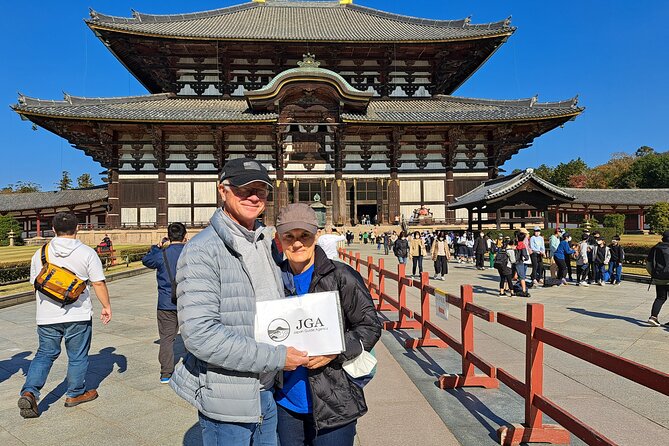
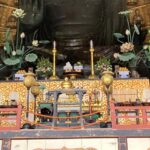
If you do only one temple, Todai-ji is the one you do. It is one of Japan’s most famous and historically significant temples, built in 752 and known as the Great Eastern Temple. Standing in a place with that kind of timeline behind it makes the day feel weighty in a good way.
Todai-ji is scheduled for about 1 hour and admission is listed as free for this stop. That works nicely for pacing. You are not stuck paying extra or losing time to ticket lines before you even see the main sights.
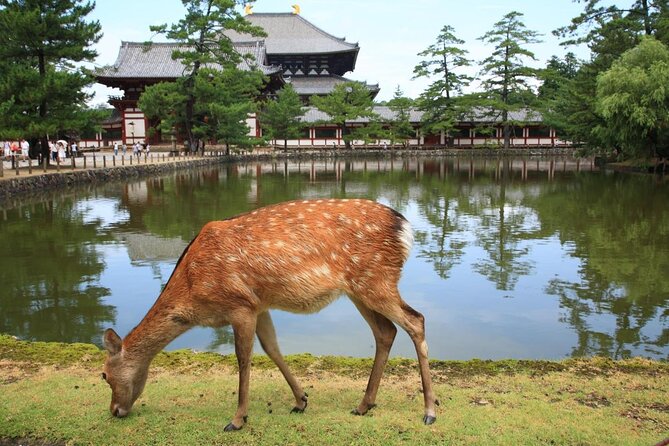
Right after, Nara Park is the obvious companion stop. It is a large central park established in 1880, and it is where you find many of Nara’s main attractions, including Todaiji, Kasuga Taisha, Kofukuji, and the Nara National Museum. You also come here to meet the deer, which are sacred to the area.
You have about 20 minutes here in the plan. That is short enough that you will not get bored, but long enough to wander, take photos, and get your bearings. Practical note: wear comfortable shoes. Even on a “short” stop, Nara Park encourages walking.
Possible drawback? This combo is so classic that it can attract crowds. A private vehicle helps with arrival timing, but you still need to expect busy pockets.
Kasuga Taisha and Wakakusayama: shrine time plus viewpoint views
Kasugataisha is Nara’s most celebrated shrine, and it has that sense of a living place tied to local belief. It was established at the same time as the capital and dedicated to the deity responsible for protecting the city. It also has a full Nara-day feel because it sits right in the area that visitors naturally explore.
You spend about 1 hour at Kasugataisha, and admission is listed as free. For a lot of people, this is where the day turns from famous landmark sightseeing into something calmer. You get space to slow down, look up, and notice how people move through the grounds.
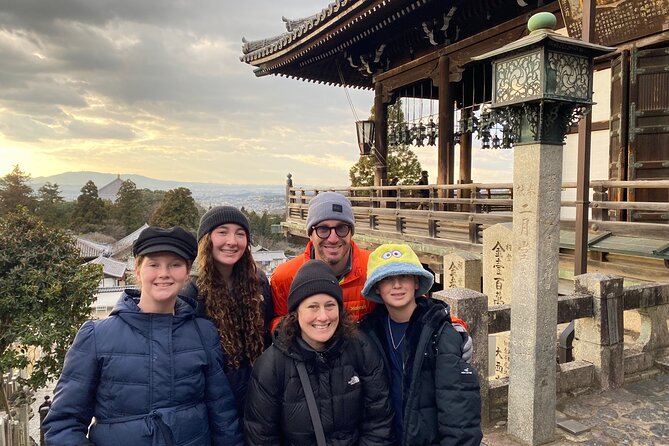
Then you add Mount Wakakusayama, the grass-covered hill behind Nara Park, about 350 meters tall. The point is views. It is positioned between Todaiji Temple and Kasuga Shrine, so it acts like a natural connector between the big temple and the shrine area.
Wakakusayama is scheduled for about 20 minutes with admission listed as free. Even with a short time, it can give you a sense of how these sites relate to each other across Nara. It is a good “reset stop” when you want a break from temple interiors.
If weather turns, you might still enjoy the stop for the walking and scenery, but the viewpoint payoff can vary.
Horyu-ji and the early Buddhism story you can stand in
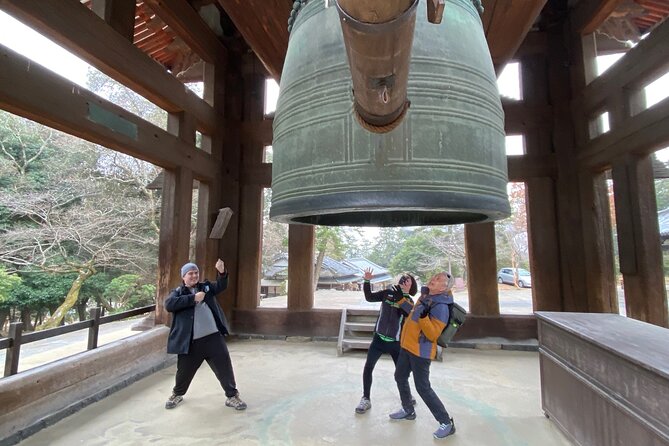
To experience Nara beyond the central temple-and-park circuit, Horyu-ji is a strong choice. It was founded in 607 by Prince Shotoku, and it is one of the country’s oldest temples. The description also notes it contains the world’s oldest something, which is part of why people treat it as a must.
This stop is about 1 hour, and admission is listed as free. Horyu-ji is a different mood from the big, dramatic Nara center. If Todai-ji makes you think of scale, Horyu-ji tends to feel like a “how did this all start?” moment.
The value of including it on a day trip is that it gives your brain a timeline. You are not just collecting buildings, you are comparing eras of Buddhist influence.
A practical caution: when you choose Horyu-ji as one of your 3 to 4 stops, it can shift how much walking you want to do back near Nara Park. That is why the flexibility matters. With a private setup, you can match the route to your energy level.
More runs out to the deer park
Kofuku-ji, Yakushiji, and Toshodai-ji: pick the temple style you want
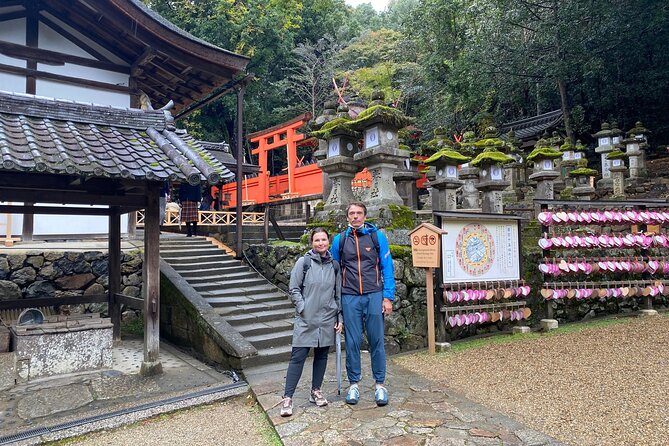
This tour includes several temple options that feel different even though they are all “temple time.” The big advantage is that you can shape your day around the kind of Nara you want.
Kofuku-ji is tied to the Fujiwara, described as the most powerful aristocratic clan during the Nara and Heian Periods. It is listed as a 30-minute stop with admission free. If you like political history translated into sacred spaces, this is a smart pick.
Yakushiji is another option, built by Emperor Tenmu in the late 7th century for the recovery of his sick wife. It is described as having a strictly symmetric layout, including its main hall. That symmetry angle is a good reason to visit if you enjoy architecture that feels carefully planned rather than purely dramatic. Yakushiji is scheduled for 30 minutes, admission free.
Shin-Yakushiji is related in theme, founded during the Nara Period (710 to 794) by an empress for an ailing emperor. It is devoted to Yakushi Buddha, noted as the patron of medicine. This is about 20 minutes, admission free. If you are the type who likes meaning, this stop gives you a clear “why it was built” thread.
Toshodai-ji rounds out the temple-focused options. It was founded in 759 by Ganjin, a Chinese priest invited by the emperor to train priests and improve Japanese Buddhism. It is scheduled for 30 minutes, admission free. That cross-cultural angle can be compelling, especially if you like how Buddhism traveled and changed as it took root.
Possible drawback with so many temple choices: you might want to see everything. The private format helps because you can choose only what fits your interests and energy for the day.
Museums, gardens, old-town Naramachi, and the Heijo Palace site
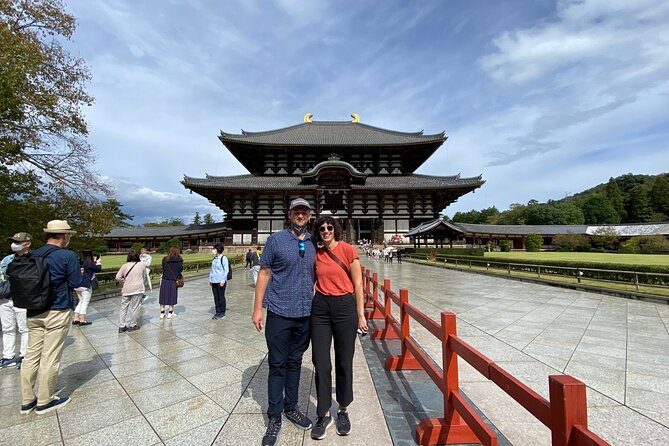
Not every great Nara moment is a temple interior. If you want variety, this tour gives you options that shift the mood.
Nara National Museum is located in Nara Park and focuses on Japanese Buddhist art. It was established in 1889 and is described as primarily displaying Japanese Buddhist art. It is scheduled for 30 minutes, admission free for this stop. This can be a great choice if you want context after looking at buildings, or a break if temples start to feel repetitive.
If you prefer outdoor, scenic time, you have several garden options. Isuien Garden uses Todaiji’s Nandaimon Gate and Mount Wakakusayama as “borrowed scenery,” a Japanese garden technique built into the viewing experience. It is about 20 minutes and admission is listed as free. Yoshikien is another garden, named after the Yoshikigawa River beside it. It is about 20 minutes, admission free. Both can be a refreshing “pause” between bigger stops.
For old-town wandering, Naramachi is a strong choice. It is the former merchant district of Nara with preserved traditional residential buildings and warehouses open to the public. It is scheduled for 20 minutes and admission is listed as free. Expect boutiques, shops, and cafes in the kind of lanes where you can slow down and watch daily life.
Then there is the Heijō Palace Site Historical Park, tied to the Nara Period when Japan’s capital was Nara, known as Heijo-kyo. The description notes the palace extended about 1 kilometer wide and 1 kilometer long, with the site serving as the location for the government. It is scheduled for 1 hour, admission free.
This stop is especially useful if you want your day to feel bigger than individual temples. It gives a “place where the country ran” perspective, which adds depth to the religious sites you visit.
Price and value for a group up to 5 from Osaka
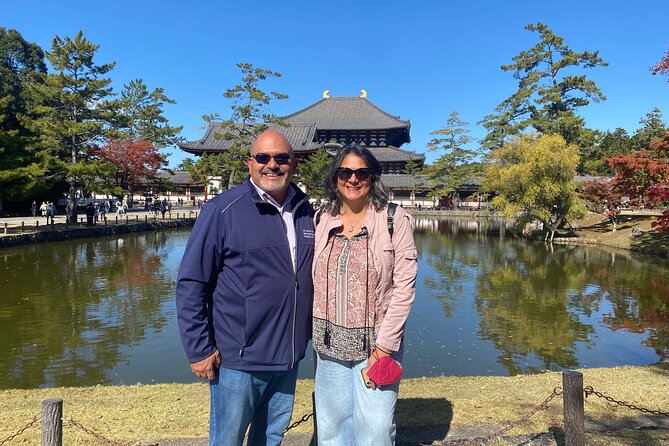
The price is $848.72 per group, up to 5 people. That means the best value happens when you fill the group. If you book with 5 people, you are roughly around $170 per person. With fewer passengers, the per-person cost goes up, so it makes the most sense for small families or friend groups.
What you are paying for is not just a car. You are paying for avoiding public-transport hassle, having pickup offered, and getting an English-speaking driver who can keep the day organized around your interests. The fact that the plan is built around 3 to 4 selected sites also protects your time. That is part of the value. You are less likely to waste half a day on moving between things you do not care about.
One detail I appreciate: this is booked on average 86 days in advance, which suggests demand. If your dates are fixed, I would not wait too long. Also, this is a private tour, and you cannot combine multiple tour groups, so you are reserving a consistent setup for your party.
Also keep in mind what is not included: entrance fees, lunch, and other personal expenses. Even though many listed stops show admission ticket free, the tour listing still labels entrance fees as not included, so plan to cover anything that ends up costing money on the day.
Who this private Nara day trip suits best
This is ideal if you fit at least one of these:
You want Nara highlights but you do not want to fight transit systems. You get comfort, a driver, and the freedom to wander.
You are traveling in a small group and want value. Up to 5 people makes private more affordable than it looks at first glance.
You prefer a plan with choice. Your driver can help you build a day around 3 to 4 priorities from the options provided.
You have schedule constraints. One strong example is how a port-day outing was handled, with the group back by 3:30 and the driver adding a short loop around the Osaka port on the way back. That kind of practical timing is the reason people rate this kind of private day so highly.
If you need a car seat or booster seat, plan ahead. Car seats are limited, rear-facing car seats are not available, and you must contact the provider directly if you need them.
Should you book this Osaka to Nara private day trip?
I would book it if you want Nara in a way that feels easy. The private vehicle plus English-speaking driver is the big win, and choosing 3 to 4 stops keeps the day from turning into a blur.
I would think twice if you are the type who needs a licensed local English-speaking guide at every stop, or if you want to see a long list of sites regardless of walking time and timing. In that case, you might feel the day is limited by how you choose stops.
For most independent travelers, especially groups up to 5, this is a practical way to get the big Nara hits without turning your day into a navigation project.
FAQ
How long is the private tour from Osaka to Nara?
It is about 8 hours.
How many people are included per booking?
The group size is up to 5 people.
Is pickup available in Osaka?
Pickup is offered, and you travel in a private vehicle.
Can I choose which places to visit?
Yes. The tour is customizable so you pick 3-4 sites from the provided list of Nara highlights.
Is there a licensed local English-speaking guide included?
No. The included service is an English-speaking driver, and a licensed local English-speaking guide is not included.
Are temple admission fees included?
Entrance fees are listed as not included, and lunch is also not included. Many of the listed stops show admission ticket free, but you should still be prepared for any that are not free.
What about child seats and booster seats?
There are a limited number of car seats and booster seats. Rear-facing car seats are not available, and you need to contact the provider directly if you require them.
What is the cancellation policy?
You can cancel for a full refund up to 24 hours in advance of the experience start time. If you cancel less than 24 hours before, the amount paid is not refunded.
More Tour Reviews in Osaka



More Mornings with the Deer
Hand the Day to a Local



Latest out of Osaka


Nara Deer Park Excursions from Osaka, side by side.
 ★ 4.5Ancient Capital Tour: Kyoto and Nara Highlights from Kyoto/OsakaFrom $90332 reviews
 ★ 4.0Kyoto and Nara Day Trip from OsakaFrom $198175 reviews
 ★ 3.5From Osaka or Kyoto: Kyoto and Nara 1-Day Bus TourFrom $64141 reviews
 ★ 5.0Discover Himeji, Kobe and Nara from OsakaFrom $91101 reviews
 ★ 4.5Kyoto & Nara Private customized tour with English speaking GuideFrom $54999 reviews
 ★ 4.5From Osaka/Kyoto: Kyoto & Nara Day Trip with Optional LunchFrom $6879 reviews
 ★ 4.5Kyoto and Nara UNESCO Highlights Full-day Tour From OsakaFrom $6250 reviews
 ★ 5.0From Osaka: Nara Private Tour with Meet-Up at Your HotelFrom $14049 reviews