
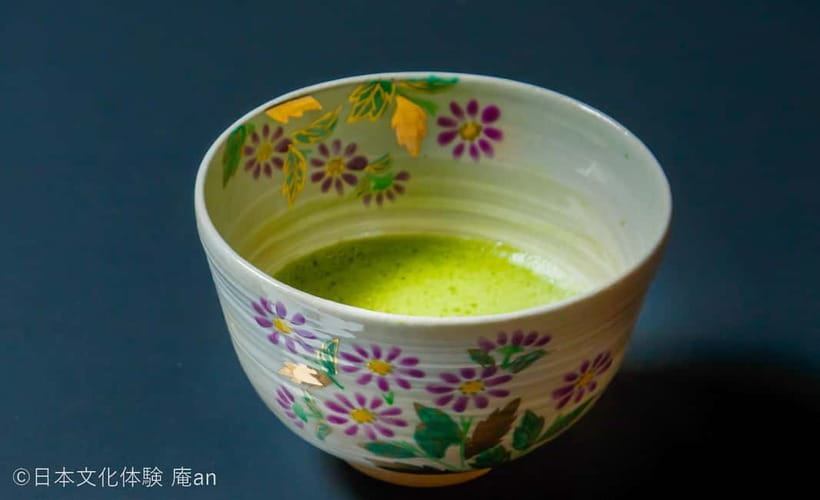
REVIEW · TEA CEREMONY & MATCHA SESSIONS IN OSAKA
Osaka: Traditional Tea Ceremony Experience
Matcha time can be your best Osaka break. This 30-minute Osaka tea ceremony lets you learn the flow of Otemae and then drink what you make, with single-origin special Matcha and Japanese sweets included. The whole experience is built for people who want something cultural, but not time-consuming, and it runs in a calm, easy pace.
What I like most is that you do more than watch. You get the grinding process explained and then try your own tea, and the teacher focuses on clear guidance with English support when possible. One thing to consider: there is no elevator, so you will be taking stairs in the building to reach the venue.
Key things to know before you go
- Hands-on Otemae-style experience: you practice the steps, not just observe
- Single-origin special Matcha: you taste a more specific, intentional matcha, not just generic powder
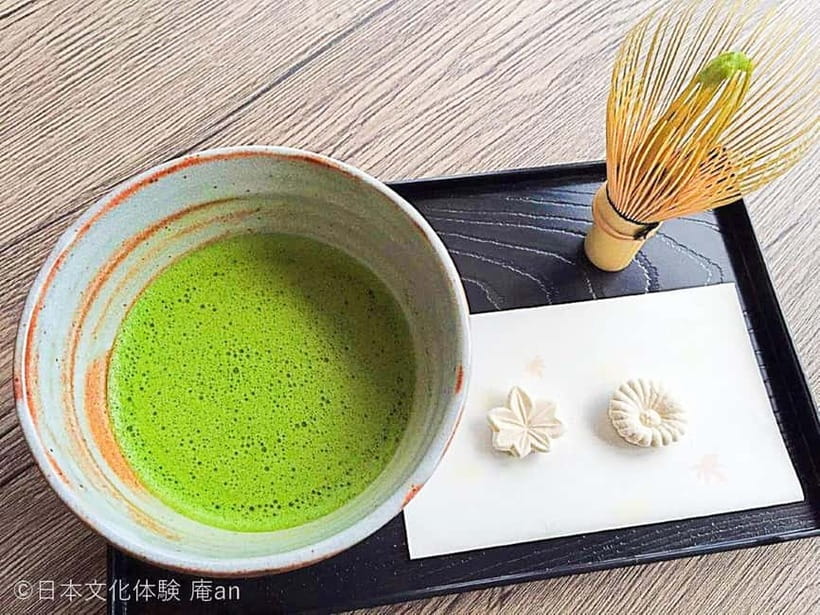
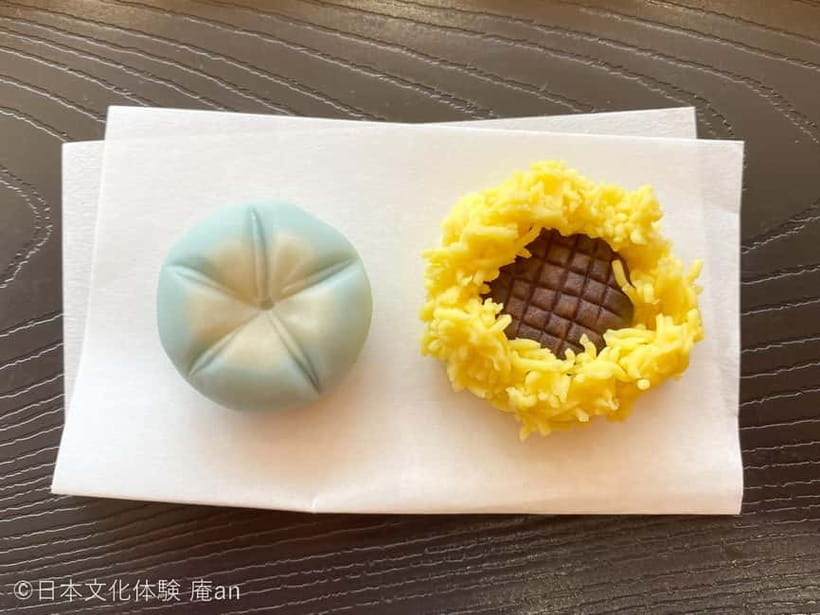
- Ohigashi included: Japanese sweets come with your tea so you experience the pairing
- A tight 30-minute format: explanation, making, tasting, and time for photos
- English translation as much as possible: the instructor teaches in Japanese, with support where they can
- Stairs only: plan for steps to reach the room
A 30-minute Osaka tea ceremony that fits real sightseeing
If your Osaka plan is packed, this is the kind of cultural stop that still feels meaningful. You get a short lecture, a matcha moment you can actually do yourself, and then you taste it with sweets. It is designed to be a break you can squeeze in between neighborhoods without turning the day into a schedule-management project.
I also like that it is not trying to be high-pressure or overly formal for beginners. You can enjoy matcha casually, guided by a Japanese instructor, while you learn what to look for in the tea experience. This is a good fit if you are curious about Japanese culture, but you do not want a half-day commitment.
The vibe is simple: learn, make, drink, and move on. That matters in Osaka, where you can easily spend all day hopping between food streets, temples, and waterfront views. A short ceremony keeps you refreshed, not rushed.
Quieter hours: more tea rooms
Finding the room near Higobashi and Yodoyabashi
Location is one of the main practical wins here. The meeting point is walkable from several train lines, so you can choose based on where you are already headed.
By train, the closest options are:
- 1 minute walk from Exit 10 of Osaka Metro Yotsubashi Line Higobashi Station
- 5 minutes walk from Exit 7 of Keihan Nakanoshima Line Watanabebashi Station
- 7 minutes walk from Exit 10 of Osaka Metro or Keihan Line Yodoyabashi Station
- 10 minutes walk from Exit 11-5 of JR Tozai Line Kitashinchi Station
- 15 minutes walk from South Central Gate of Osaka Station
If you are driving, the guidance is to use nearby coin parking. That usually means you should expect a couple minutes walking from the car, depending on what is available.
One more note I take seriously: there is no elevator, so wear shoes that work well on stairs. It is not about fitness, it is about comfort. Osaka stations can be slippery and hectic, and you do not want to arrive already tired.
What happens in the first 10 minutes: tea basics and grinding demo
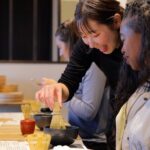
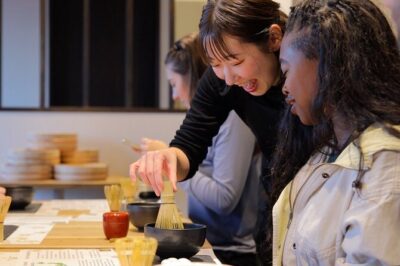
The flow is clear and timed, which helps you stay relaxed. When you start, you begin with an explanation about tea, then you watch the matcha grinding process demonstrated. After that, you move into the hands-on part.
Think of this first stage as your setup. You are learning the basics so the steps later make sense, not just mimicry. Even if your Japanese is limited, the experience is structured with instruction you can follow, and English support is provided as much as possible.
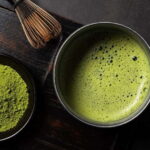
This early explanation is valuable because matcha is not just a drink you order. It is powder that gets whisked into a specific texture, and the ceremony includes attention to steps. When you understand the why behind the movements, the tasting feels more intentional.
Also, you get to see the grinding and how the process looks before you try it. That reduces the usual beginner stress of wondering if you are doing something wrong. You will feel more confident when it is your turn.
Your Otemae moment: make matcha and learn the casual rhythm
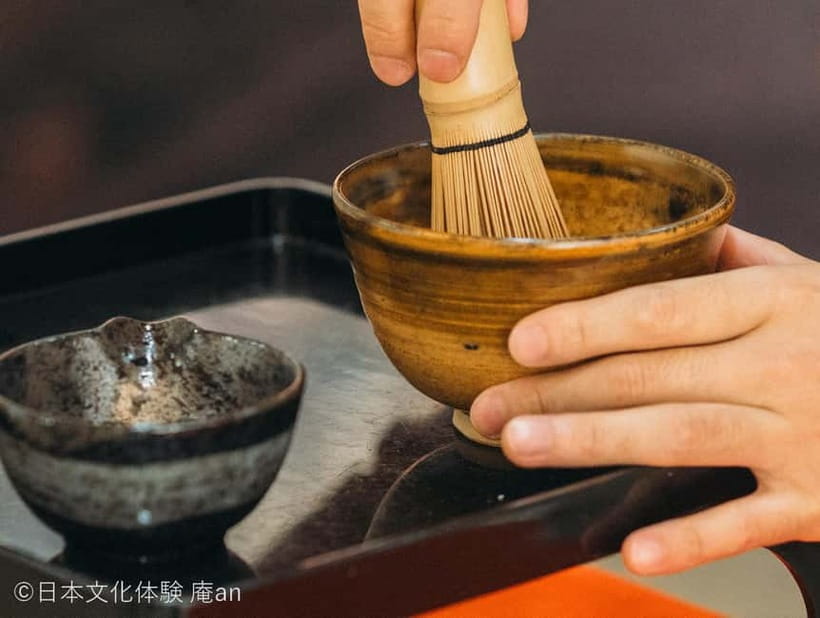
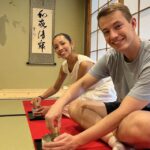
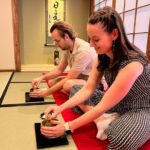
This is the heart of the experience: you do an OTE-MAE style tea ceremony set and make matcha yourself. The format is friendly and beginner-friendly, and the goal is that you leave having actually participated.
From what I look for in cultural classes, hands-on work is where the value lives. Watching a tea bowl pass from hand to hand is nice, but grinding and whisking is what turns the lesson into a memory. This is especially true with matcha, because you can see and feel the texture change.
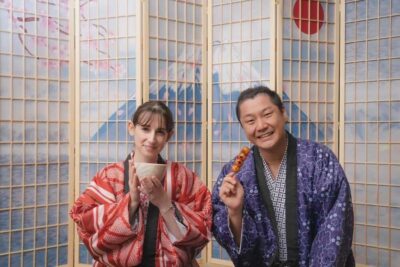
Your class also includes a picture time moment. That is useful if you want a simple visual keepsake of the activity without turning your session into a photo shoot. Bring your phone ready, and you will not have to scramble once instructions shift.
And here is the practical part: the ceremony is short. So instead of overloading you with information, it gives you enough teaching to enjoy the experience and still finish with time to taste properly.
Ohigashi and matcha tasting: what to pay attention to
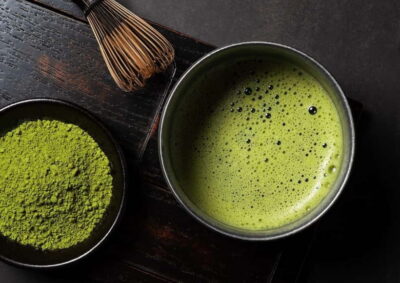
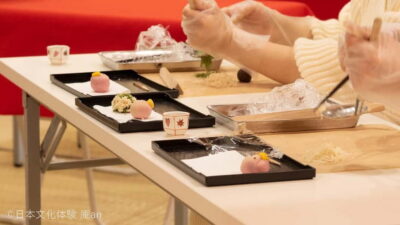
At the end, you do the best part, drinking and eating. You get Ohigashi, Japanese sweets, and you pair them with the matcha you prepared. This pairing is part of why tea ceremonies feel different from just ordering dessert and a drink.
Matcha itself is usually where people focus, but I like using the sweets to guide my attention. When the sweet flavor meets the tea, you start noticing how matcha can taste differently depending on the moment you take a sip. Some matcha experiences can feel intense if you only drink it straight, but pairing helps you experience it more comfortably.
The tasting phase is also the time you can slow down. The class structure gives you a break after the making steps, so you can enjoy what you created rather than rushing out immediately.
If you like food and you like simple rituals, this part makes the whole experience feel complete. It is not just technique, it becomes an actual sensory snack break in the middle of sightseeing.
Language, pace, and photos: how the class feels in practice
This is taught in Japanese, but English translation is provided as much as possible. If you want extra English support, you are told to contact in advance. In other words, you should not assume perfect translation at every moment, but you also should not feel stuck.
The teaching style seems patient and organized. In particular, the instructor’s guidance is described as thoughtful, with explanations that help you prepare and drink matcha in English support. That matters because tea ceremony steps can look like choreography, and beginners benefit when someone tells you what you are supposed to do in plain language.
Also, the session length is tight at about 30 minutes total. That helps if you have limited time, but it also means you should arrive ready to go. The experience is not designed for late arrivals, and they say they will not accommodate the event to delays.
So my practical advice is simple: plan to reach the meeting point a little early. Osaka trains can be reliable, but walking times add up, and stairs are involved once you arrive.
Price and what you actually get for your $7
At $7 per person, this is one of those experiences that feels like a value play, not a big splurge. What you get is not only a tasting. You get the OTE-MAE style participation, matcha grinding components, and the drinking and eating time with Ohigashi.
The included experience is what matters most. The base price covers the class and the set experience, so you are not paying extra for entry into a room and then discovering you have to buy everything separately. You also get the single-origin matcha element, which is a nice step up from matcha experiences that use whatever is on hand.
One small cost consideration: there is no mention that a completion certificate is included. The info specifically notes that an experience completion certificate is 300 JPY. If you want a souvenir certificate, budget for that add-on. If you do not care, you can treat the tasting and participation as the souvenir.
If you are doing Osaka on a budget, this also works well as a mid-day reset. Spending a small amount for a cultural moment can be more satisfying than spending more for an activity that does not involve you directly.
Should you book this Osaka matcha experience?
I think you should book it if you want a real Osaka tea moment without committing half your day. It is ideal when you are curious about how tea ceremonies work, but you still want your sightseeing to stay flexible. The short format, the hands-on matcha making, and the included Ohigashi pairing make it feel complete for the price.
You might skip it if you are looking for a long, deep tea immersion with lots of extended history and advanced ritual training. This is short by design, and you will not spend hours in a formal setting.
It is also a smart choice for groups and solo travelers. The experience is described as easy for one person to a group, and the session has a calm rhythm. If you are traveling with someone who is not that interested in tea, this format still gives them a tangible activity, grinding and tasting, that feels interactive.
Finally, if you book, plan around the practical realities. There is a set operation window from 10:00 to 17:00 and you need to arrive on time. And remember, no elevator means stairs. If that is fine for you, you are set.
FAQ
How long is the Osaka tea ceremony experience?
It lasts about 30 minutes.
What is included in the experience?
The experience includes a set of OTE-MAE (Japanese tea ceremony). You also get to enjoy matcha and Japanese sweets called Ohigashi.
Does it include single-origin matcha?
Yes. The experience uses single-origin special matcha.
Is the completion certificate included in the price?
No. The experience completion certificate costs 300 JPY.
Where do I meet for the tea ceremony?
The meeting point is a short walk from multiple stations, including 1 minute from Exit 10 of Higobashi Station, and about 7 minutes from Exit 10 of Yodoyabashi Station, among other options.
What are the operation hours?
Operation hours are 10:00 to 17:00.
Is there an elevator at the venue?
No. There is no elevator, and you will need to take stairs.
Is English translation available?
English translation is provided as much as possible. If you want to add it, you are advised to contact in advance.
More Tour Reviews in Osaka

More Tea Rooms Worth Booking
Latest out of Osaka


Tea Ceremony & Matcha Sessions in Osaka, side by side.
 ★ 4.9Osaka: Tea Ceremony ExperienceFrom $251,426 reviews
 ★ 5.0Tea Ceremony Experience in Osaka DoutonboriFrom $20754 reviews
 ★ 5.0Matcha Making Class in Osaka with Authentic Japanese Sweets SetFrom $21509 reviews
 ★ 5.0Osaka: Matcha Making Experience with Japanese SweetsFrom $22146 reviews
 ★ 4.7Osaka: Japanese Traditional Sweets Making and Tea CeremonyFrom $18118 reviews
 ★ 4.9Osaka Temple Cool Foot Bath & Matcha Experience〈45min〉From $3482 reviews
 ★ 5.0Samurai Show, Tea Ceremony, Japanese Traditional ActivitiesFrom $4456 reviews
 ★ 5.0Osaka: Private Tea Ceremony and Calligraphy ExperienceFrom $6450 reviews
Also worth a look in