
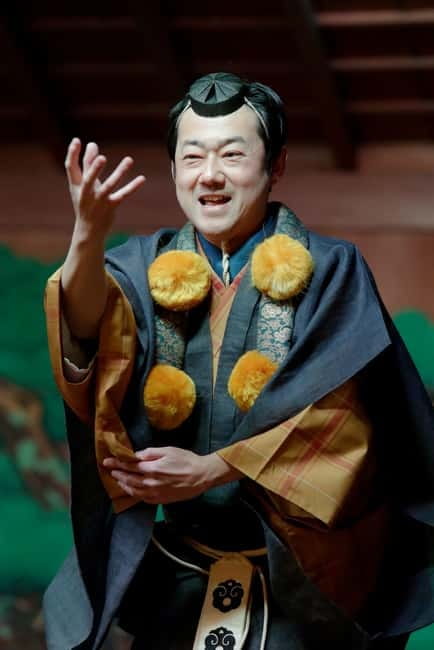
REVIEW · OSAKA AFTER-DARK TOURS
Osaka Traditional Performing Arts Heritage Night
A stage show that teaches as it entertains. In Osaka, this 2-hour Traditional Performing Arts Heritage Night packs a surprising mix of forms, from Noh and Kyogen to Rakugo and even music like Chikuzen Biwa, all with multilingual explanations. I especially like the way the program gives you a clear path through unfamiliar styles, and I also like the hands-on moments that make the arts feel less untouchable and more human.
One thing to weigh up is the house rules: video recording and photography inside are not allowed, so plan on enjoying it with your ears and eyes, not your camera. Also, it is not suitable for children under 7.
Key highlights worth circling
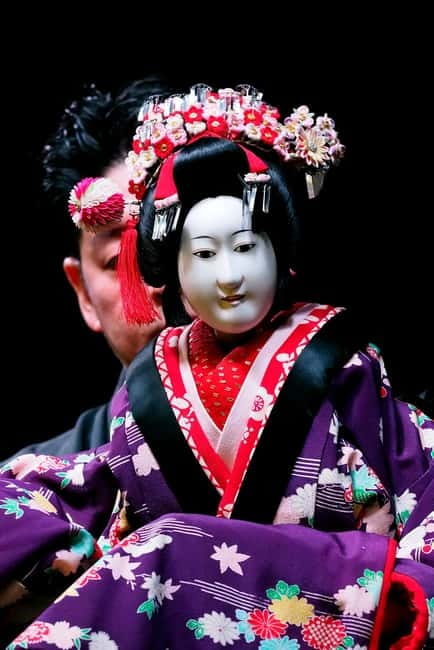
- A one-night sampler of Osaka arts: Noh, Kyogen, Bunraku, Rakugo, and more in a single 2-hour program
- Hands-on participation: you may even see audience members invited onto the Noh stage, with a couple wearing white socks
- English and Japanese support: multilingual explanations, subtitles, and printed materials so you are not guessing what you are watching
- Multiple performance styles, different rhythms: from storytelling comedy to music and dance, the pace keeps shifting in good ways
- A real theater setting at Yamamoto Noh Theater: the program is built for both learning and entertainment
What you get from Osaka’s Traditional Performing Arts Heritage Night
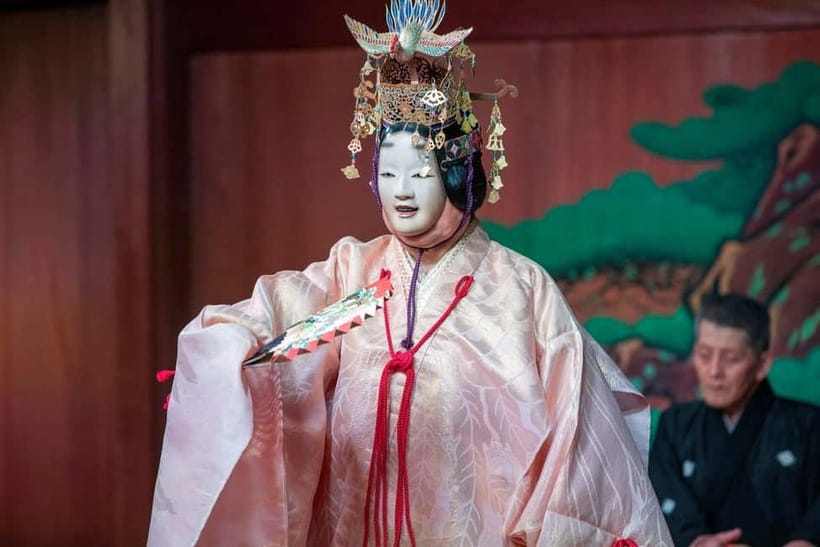
If you have only limited time in Osaka, this is a smart way to get value without bouncing between venues all week. Instead of choosing one art form, you watch a full program that moves across traditions and shows you how many ways Japanese performing arts can communicate, from drama to comedy to music.
I like the practical focus. You are not just handed a spectacle. You get guidance before the smaller items, plus subtitles and materials, so the changes between Noh, Kyogen, and the comic storytelling feel like a progression rather than random variety.
The other big win is that the show uses participation, not just observation. There is an invitation system for hands-on moments, including audience members going up to the Noh stage, with a couple wearing white socks for that segment. That turns a 2-hour session into something more memorable.
Later nights in Osaka
Inside the 2-hour show, Noh to Kyogen to Rakugo
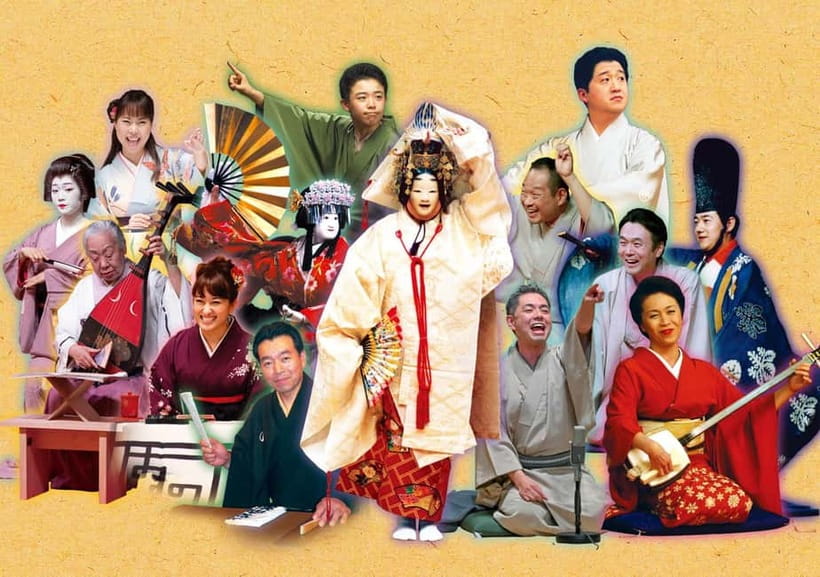
The main experience is an omnibus performance that highlights traditional performing arts tied to Osaka culture. The program includes a wide set of styles, and the schedule is built to keep each segment distinct so you can notice what makes each form special.
Here is what you should expect to see mentioned as part of the performance lineup:
- Noh and Kyogen
- Bunraku
- Rakugo
- Rokyoku and Kodan
- Kamigata Mai
- Gagaku
- Onna Doraku
- Chikuzen Biwa
That list looks long, and it is. But the value comes from how the night is explained and paced, so you can follow along even if you are starting from zero.
Noh and Kyogen: formal drama meets comic counterbalance
Noh is one of the most recognizable names on the list, and it is also the one that tends to feel most intimidating at first. Here, you get enough context through the multilingual explanations and subtitles to understand what you are watching before the next segment starts.
Kyogen often works as the relief valve. It tends to feel more grounded and comic compared with the slow, stylized gravity of Noh. Seeing them paired in one evening helps you learn that Japanese theater traditions do not move in one direction. They balance mood, tone, and storytelling style.
Bunraku and Rakugo: stories told with different bodies and voices
Bunraku is often a wow moment because it mixes puppetry with performance seriousness. Even if you do not know the background, the presentation benefits from the same support system built into the night, including subtitles and explanations.
Rakugo is the opposite kind of stage power: one performer, audience attention, storytelling timing. It can be hilarious, and it can also teach you how humor, history, and social detail fit into performance. If you want a fast way to connect to Japanese culture without needing technical background, this style usually does the job.
Music and narration segments: Rokyoku, Kodan, and Chikuzen Biwa
Not all the night is theatrical drama or comedy. You also get musical and narrated forms, including Rokyoku and Kodan, plus the string sounds of Chikuzen Biwa.
These segments matter because they show a different kind of communication. Instead of plot-first storytelling, you get rhythm, mood, and tradition carried through sound. It is a good reminder that “performing arts” in Japan includes music and spoken forms just as much as staged drama.
More drums, more ring
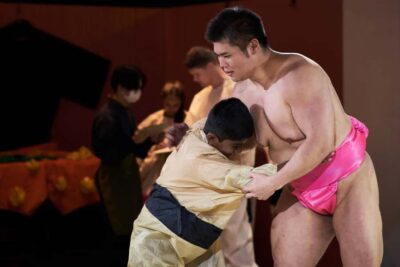
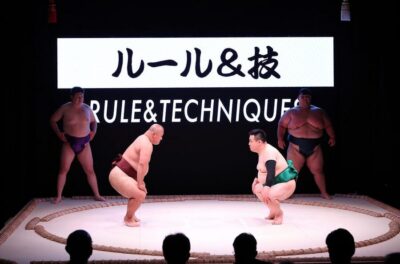
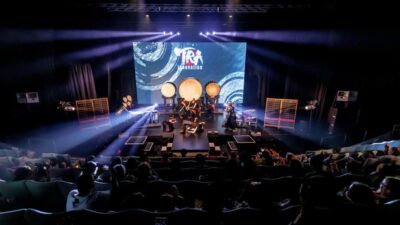
Dance and court-linked performance: Kamigata Mai and Gagaku
You will also see Kamigata Mai and Gagaku in the lineup. Those choices help the night feel distinctly Osaka and Japan-wide at the same time.
Kamigata Mai connects to the Osaka cultural sphere, so it helps you understand that different regions developed different performance identities. Gagaku brings in a more courtly, formal tradition, which can slow your pulse in a good way right before the night shifts again.
Hands-on experiences on the Noh stage (and why that matters)
One of the most talked-about elements is the hands-on portion. This is not a random demo where you watch from far away.
Instead, a couple of audience members wear white socks and go up to the Noh stage for an Osaka traditional performing arts experience. That is a detail that tells you how interactive it is, since they are putting participants into the performance space rather than letting you try something from your seat.
Why this is worth your time: it short-circuits the intimidation factor. When you handle something physical, even briefly, you start to understand how movement, posture, and stage rules shape the meaning of the performance.
Also, it helps you learn with your body, not only your eyes. Noh and related forms can look like pure style, but hands-on moments give you a chance to feel the logic behind the form, even in a simplified participation segment.
How the multilingual explanations and subtitles actually help
This kind of show can be hit or miss for non-Japanese speakers, because the difference between you understanding and you guessing is often everything. Here, you get multilingual explanations, subtitles, and materials.
That matters because the program includes many shorter segments, each with its own background. If you only get general information at the start, you can lose the thread. With subtitles and pre-segment context, you can follow what is happening and why it matters.
One practical benefit: it also helps you notice the tonal shifts. You can start to tell when a segment is meant to feel solemn, when it is meant to land comedic timing, and when the goal is to appreciate sound and movement as tradition.
In English versions of the show, some portions may be fully in English, which can make the night feel even more approachable. If you like learning while still enjoying a story or joke, that mix is a strong fit.
Venue and on-site expectations at Yamamoto Noh Theater
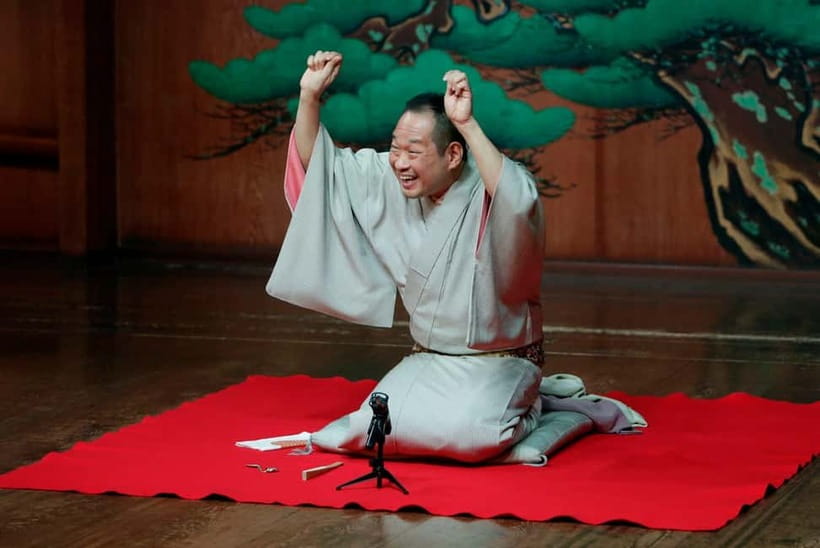
You’ll be at Yamamoto Noh Theater, and the format is clearly designed for a live stage experience. Expect a theater atmosphere where attention matters, not a casual performance space where people wander around.
Plan for the basic house rules: no photography inside and no video recording. This can feel strict, but it also protects the viewing experience. It means you can focus on the performers and the subtitles without screens popping up in your line of sight.
You should also note the age guidance. The activity is not suitable for children under 7. If you are traveling with kids near that range, it can still work well, since at least one family shared that children with good attention spans enjoyed the variety and the explanations.
Price and value: is $32 fair for this much variety?
$32 for a 2-hour evening show in a theater setting is usually not bad, especially because you are not paying for one art form. You are paying for an organized sampler that includes multiple disciplines in one sitting.
Here is what makes the price feel justified:
- You get an omnibus lineup, not just a single performance
- You get hands-on participation, which usually adds extra value compared with passive shows
- The night includes support for non-Japanese speakers, through subtitles and materials
- The program spans drama, comedy, puppetry, storytelling, and music
If you are comparing it to paying separately for multiple events, this single ticket can save both money and time. It also reduces the risk of picking the wrong single style for your interests.
The only real price concern is your personal tolerance for rules like no recording. If you rely on photos or videos to remember trips, you might feel limited. If you are happy to remember with your notes and your brain, this is the kind of show that earns its ticket.
Who should book this night in Osaka
This works best for people who want cultural context without needing prior knowledge. If you are curious about Japanese tradition but do not know where to start, the structure is designed for beginners and foreigners.
It also fits families better than you might think, as long as you follow the age rule. One family reported success with kids aged 8 and 6, and both enjoyed the mix. Still, if your child is under 7, this activity is not suitable.
It is also a good option for teens. One verified booking described the night as educational, and they enjoyed it. If your teenagers like humor and story moments, Rakugo and the tonal variety can be a strong match.
For culture nerds, the value is in exposure. You see many forms in one night and come away with a better map of what to seek next in Japan.
Should you book Osaka Traditional Performing Arts Heritage Night?
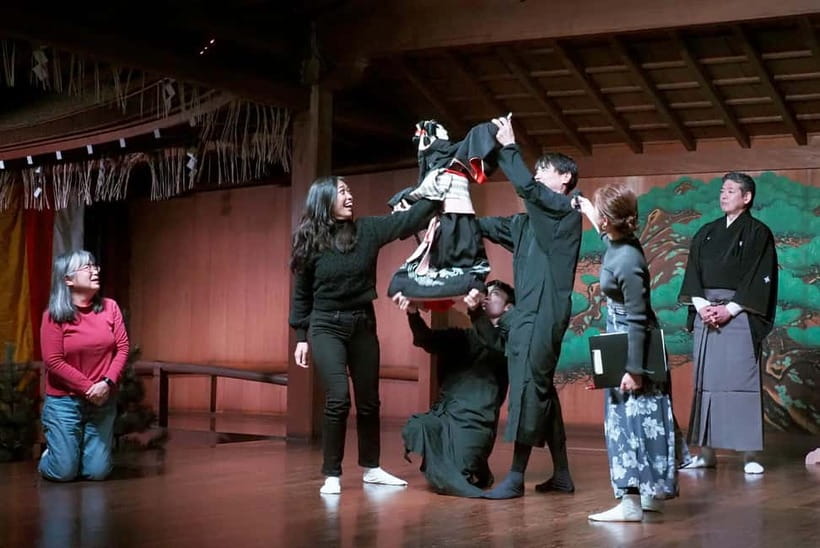
I think you should book it if you want a well-supported introduction to Japanese performing arts, in a single evening. The multilingual subtitles and explanations remove the biggest barrier, and the hands-on Noh stage segment makes it more than a sit-and-watch show.
Skip it if you need photo or video capture inside to enjoy yourself, since the rules prohibit both. Also, if you are traveling with children under 7, the age note makes it a no.
If you are short on time in Osaka and you want something authentic that still feels approachable, this is a strong choice.
FAQ
How long is Osaka Traditional Performing Arts Heritage Night?
The experience lasts 2 hours.
How much does it cost?
It costs $32 per person.
Where is the experience held?
It takes place in Osaka, on Honshu, Japan.
What kinds of performances are included?
The show includes highlights of Noh, Kyogen, Bunraku, Rakugo, and more, including Rokyoku, Kodan, Kamigata Mai, Gagaku, Onna Doraku, and Chikuzen Biwa.
Is there hands-on participation?
Yes. You may be able to participate in hands-on experiences, including a segment where audience members wearing white socks go up to the Noh stage.
What languages are available?
English and Japanese are available, with multilingual explanations, subtitles, and materials.
Are video recording or photos allowed?
No. Video recording and photography inside are not allowed.
Is it wheelchair accessible?
Yes, it is wheelchair accessible.
Is it suitable for children?
It is not suitable for children under 7.
What is the cancellation policy?
You can cancel up to 24 hours in advance for a full refund.
More Tour Reviews in Osaka





A Night at a Osaka Show




After the Last Train




Latest out of Osaka


Osaka After-Dark Tours, side by side.
 ★ 5.0Osaka Bar Hopping Night Walking Tour in Namba (3 bars, 6 tastes)From $98958 reviews
 ★ 5.0Osaka Nighttime tourFrom $198270 reviews
 ★ 4.5Osaka After Dark: Small-Group Night Food Tour (Max 6)From $116245 reviews
 ★ 5.0Osaka: 2-Hour Nightlife District Walking & Local Food CultureFrom $31199 reviews
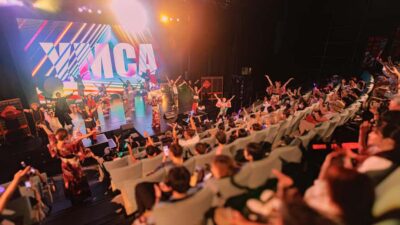 ★ 4.8OSAKA NIGHT FUSION Japanese Taiko Kabuki Samurai Dance ShowFrom $40155 reviews
 ★ 5.03Hour Osaka Pub Crawl Bar Hopping Nightlife Guided Tour in NambaFrom $46122 reviews
 ★ 4.7Osaka: Bar-Hopping Night Tour in NambaFrom $112117 reviews
 ★ 4.9Osaka: Dark Side of Osaka Night Walking TourFrom $2589 reviews
Also worth a look in