
REVIEW · OSAKA TEMPLE & SHRINE VISITS
Osaka: Sumiyoshi, Osaka’s Most Iconic Shrine – Private Tour
Sumiyoshi Taisha has a sea-sense you can feel. This private tour gives you the story behind Sumiyoshi Taisha Shrine in Osaka, with guided stops that make you notice what most people walk past. You’ll also connect the shrine to the Osaka Bay setting and Japan’s older trading routes, so the place feels less like a postcard.
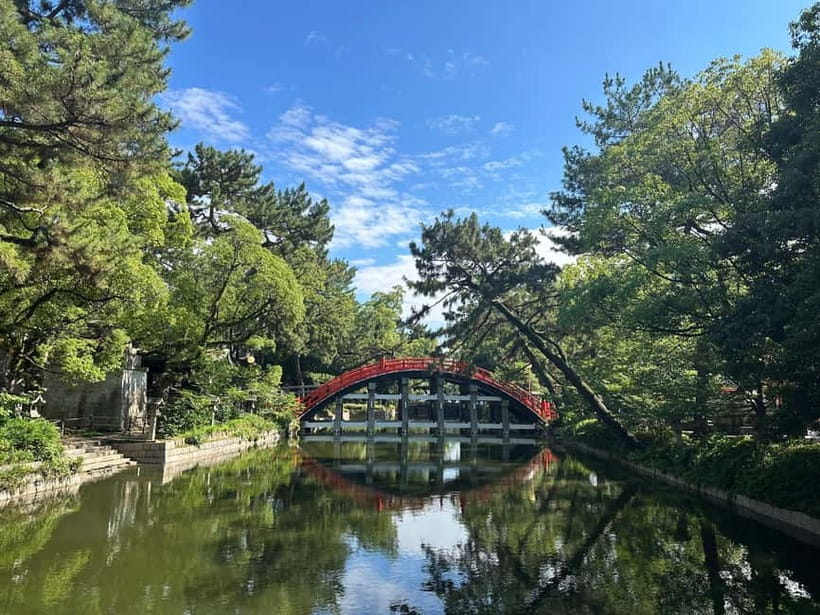
I like two things right away: the focus on fortune-telling stones (including the One-Inch Boy) and the chance to frame a photo at the steeply arched Taiko Bridge. With a live guide, you’re not just looking, you’re learning what to look for.
One consideration: at $72 per person for a 90-minute private tour, it’s best if you want interpretation, not just time on your feet. If you’re happy wandering with a map and a few signs, this may feel pricier than you need.
Key highlights to look for
- West Grand Torii Gate start: meet at 住吉大社 西大鳥居 with your guide holding a yellow DeepExperience sign
- Guided Sumiyoshi Taisha (1 hour): learn the meaning behind the shrine’s main elements
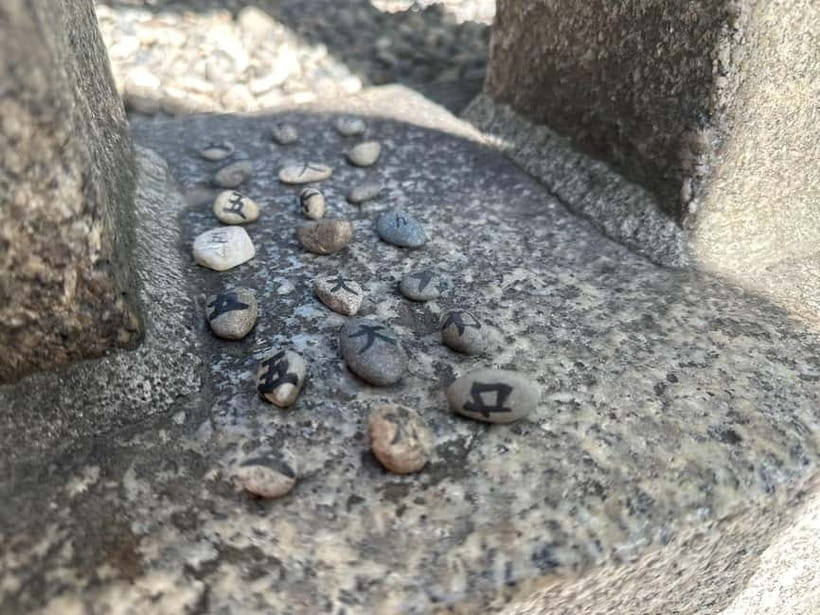
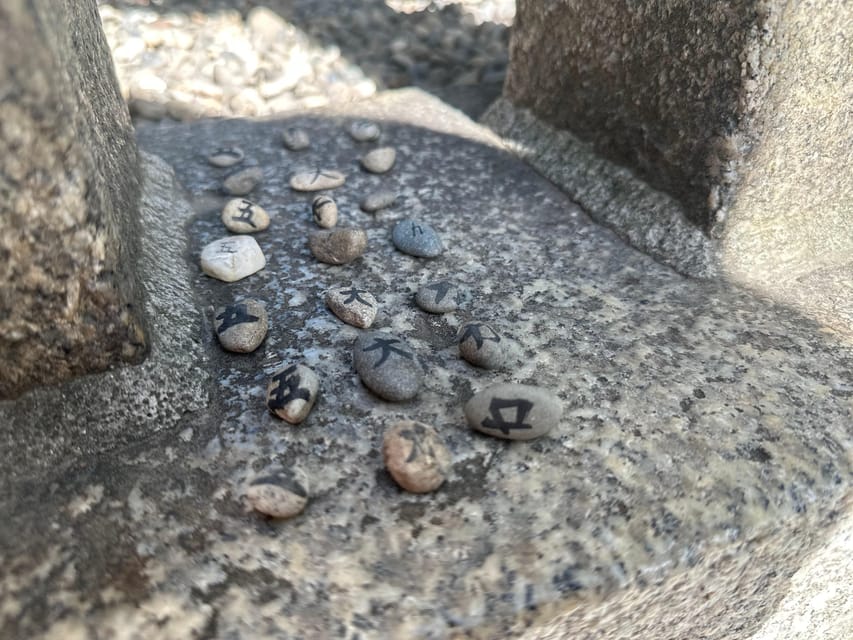
- Fortune-telling stones: search out the One-Inch Boy and other stones tied to worship
- Taiko Bridge photo stop: commemorate your visit on the steeply arched bridge
- Osaka Bay context: the area’s sea-god connections and older trading links are part of the story
- Finish at 大海神社 石鳥居: wrap up at the stone torii at the end point
Why Sumiyoshi Taisha feels like Osaka’s spiritual anchor
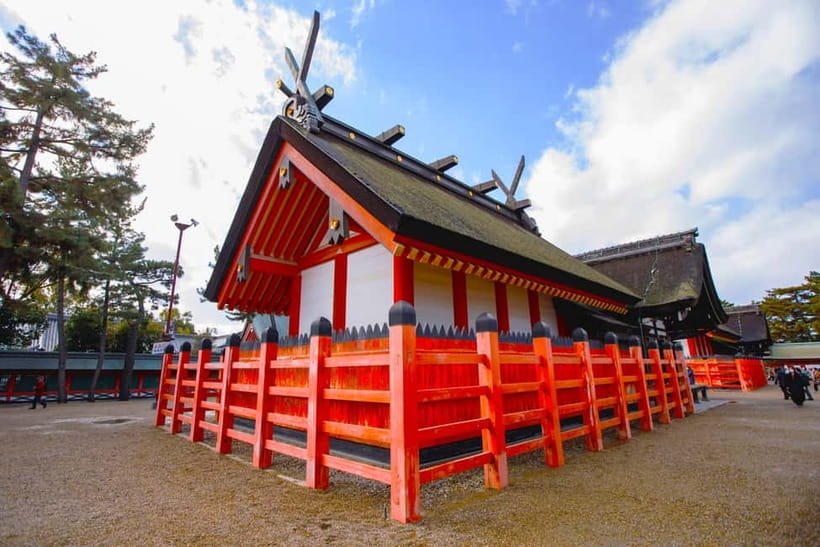
Osaka gets labeled as food, nightlife, and quick hits of sightseeing. Sumiyoshi Taisha nudges you onto a different track. This shrine is tied to the god of the sea, and that matters because the site sits near Osaka Bay, where trade and travel have shaped daily life for a long time.
It’s also one of those places where timing changes the whole vibe. During the first three days of a year, the shrine draws more than 2 million visitors who come to make New Year wishes. That kind of crowd can turn a normal shrine visit into a test of patience. The upside is that the intensity says something real about how important this place is to people. Outside those peak days, you still get the local devotion, just without the festival energy.
What I especially appreciate here is that the tour doesn’t treat Sumiyoshi Taisha like a single landmark you rush through. You get the shrine’s spirituality of Shintoism, plus how the surrounding area developed as a trading center connected to Nara and Kyoto. When you understand that flow of people and goods, the shrine feels less “randomly ancient” and more like a living part of local history.
Quieter courtyards nearby
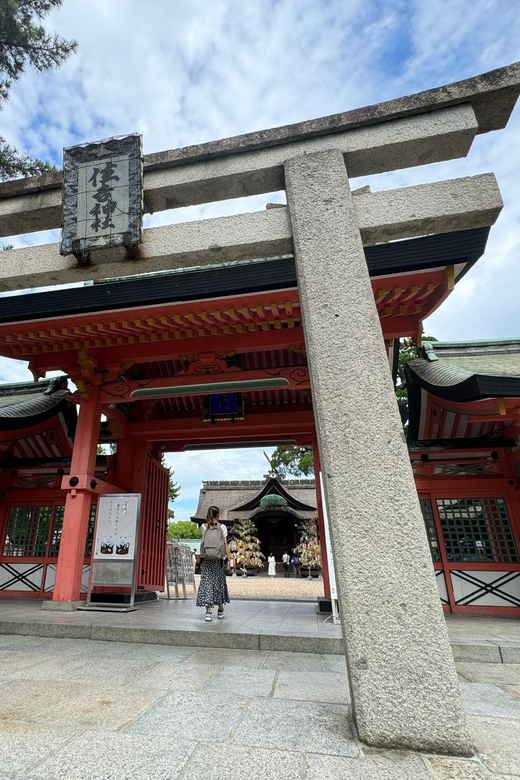
Meeting at 住吉大社 西大鳥居, and why starting matters
Your tour starts at 住吉大社 西大鳥居, the West Grand Torii Gate. That’s a smart setup because torii gates are not just decoration. They mark the threshold into a sacred space, and this gives you a clean beginning point for your visit.
The guide is easy to spot, holding a yellow sign with the DeepExperience logo. For a private tour, this saves you stress. You do not waste time scanning faces or guessing which meeting point is right. You’re already oriented, and you can focus on the shrine itself.
The tour runs 90 minutes total and is a private group, with a live guide in English or Japanese. That private format changes how you’ll experience the place. You get room to ask questions when something catches your eye, like what a stone actually represents or what a specific ritual moment is meant to signal. Even if you’re not a “ritual person,” having guidance helps you understand what you’re seeing, without forcing you to pretend you already know.
Sumiyoshi Taisha in 1 hour: what the guide helps you notice
The main block is the guided tour at Sumiyoshi Taisha for 1 hour. This is where you benefit most from a guide, because shrines can look straightforward until you realize you are missing the language of the place.
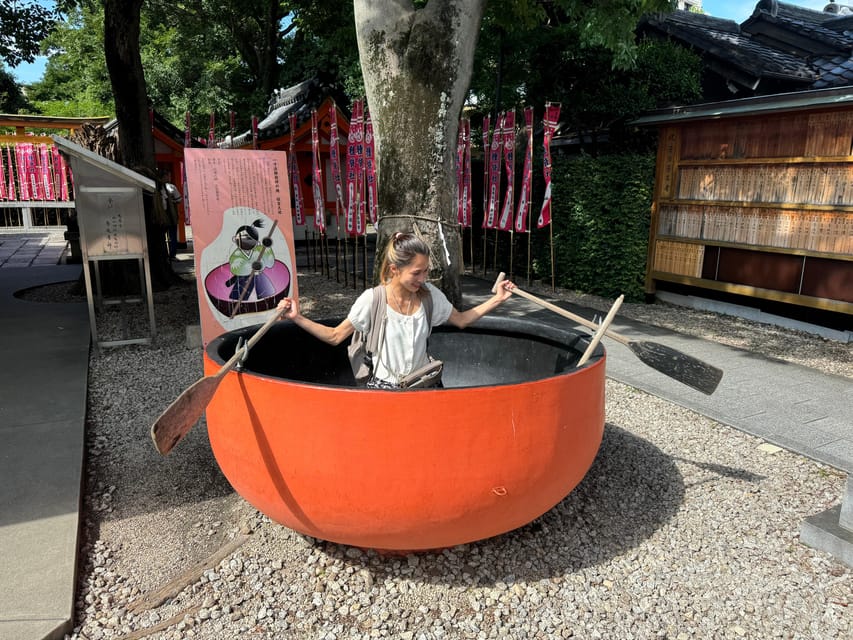
You’ll learn the charms and details you might otherwise overlook. The shrine’s architecture is tied to older building styles, and the tour also includes a close look at small, meaningful elements such as the cute divine rabbit messenger. That sort of detail is exactly what makes Shinto feel human, not just ceremonial.
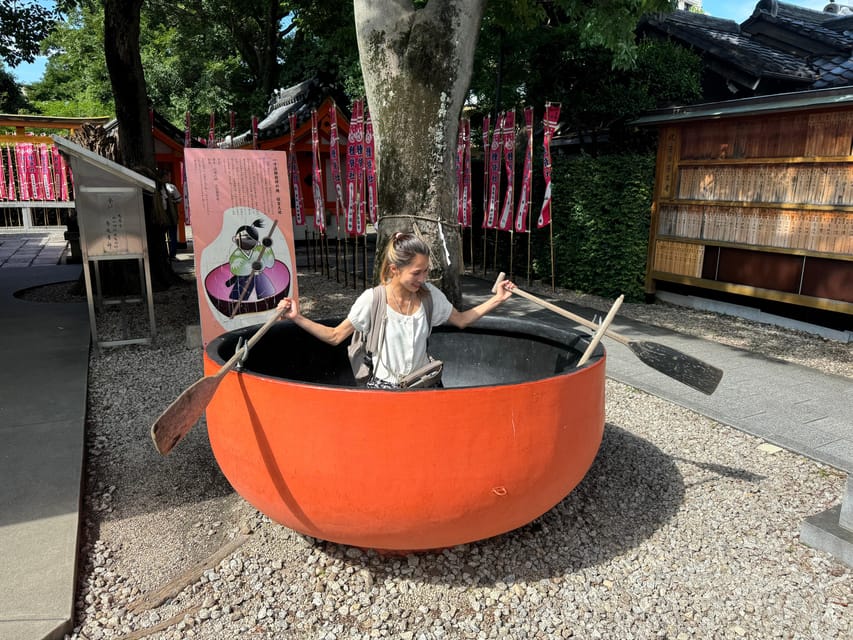
Then there are the fortune-telling stones. The highlight here is the One-Inch Boy, plus other stones connected to wish-making. With a guide, you’re more likely to understand what each element is for and what kind of attention worshippers pay to them. If you’re used to reading plaques like a checklist, this part feels more like a conversation with the site. You’re not just collecting photos, you’re practicing observation.
A subtle but important point: learning takes less time when someone directs your eyes. If you try to self-tour, you might wander between buildings and miss the “why this matters” pieces. Here, the 1-hour guided portion is built to get you oriented quickly, so you leave with real understanding, not just a pile of shrine photos.
Taiko Bridge: a photo stop with spiritual meaning
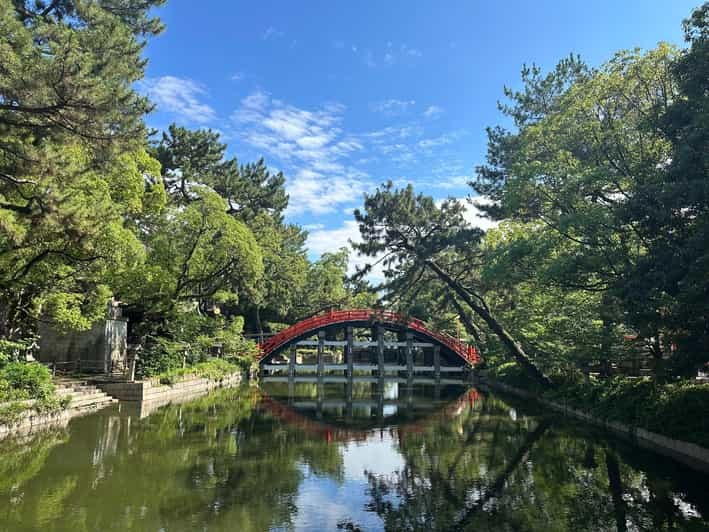
One of the tour’s most memorable moments is the photo opportunity on the steeply arched Taiko Bridge. This is not random picture time. The bridge is part of the shrine’s overall approach and worship atmosphere, so the photo feels like a conclusion to what you’ve learned, not just a scenic interruption.
A steep arch has a way of changing how you frame a shot. From certain angles, it can make the shrine feel taller, older, and more dramatic. From other angles, it emphasizes the crossing itself, like you are moving through a threshold. That’s why it works so well for a quick commemorative moment.
Practically, the photo stop is also a breather within the flow. You get a chance to slow down, check your camera, and reset. And because it comes after you’ve gone through the key shrine details, you’ll likely understand what you are photographing rather than just pointing and snapping.
If you care about photos, go into this stop with one plan: decide where you want the arch to sit in your frame before you raise your camera. Guides usually help you find workable viewpoints, but you still control the final composition.
Viewpoint and Osaka photo stop: connect the shrine to the bay area
After Sumiyoshi Taisha, the tour includes a viewpoint visit for 15 minutes, plus an Osaka photo stop with a brief guided segment for another 15 minutes. These short segments do a job that long museum tours often do poorly: they translate place into context.
Because Sumiyoshi Taisha sits near Osaka Bay, the surrounding area historically functioned as a trading center connected to Nara and Kyoto. That means people passed through. Goods moved through. Ideas moved through. When you step back at a viewpoint, you start to understand how a sea-related shrine could stay central to local identity over centuries.
The Osaka photo stop likely helps you connect what you saw at the shrine to what the neighborhood feels like today. Even without getting lost in street-level details, this kind of stop gives your brain a reference point. You’re not only thinking about religious elements like stones, torii, and bridges. You’re also thinking about the city around them and how the shrine fits into Osaka’s geography and daily life.
One caveat: with a total of 90 minutes, every stop is compact. If you want long sightseeing breaks, build your day with extra time after the tour ends. This experience is designed for learning and orientation, not for extended wandering.
Other one-day sweeps of the city
Finishing at 大海神社 石鳥居: a clean wrap-up
The tour ends at 大海神社 石鳥居. Ending at a stone torii is a satisfying close because it echoes the start. You are once again aware of thresholds, transitions, and the sense of moving through sacred space.
This also reinforces the tour’s theme: the god of the sea and the shrine area’s identity. Even if you do not know the names and meanings in advance, finishing at the related shrine torii gives you a stronger mental map. You don’t just visit one location and leave. You complete a guided circuit that ties together the symbolism and the setting.
For practical travelers, a guided ending point is also a relief. You know where the tour concludes, and you’re not stuck trying to figure out your next step right away. If you plan to keep exploring after, treat the end as a restart point, not a final stop.
Price and value: is $72 per person worth it?
At $72 per person for a 90-minute private tour, you are paying for interpretation plus time efficiency. You’re not paying just for standing near a shrine. You’re paying for a guide who can explain what you’re seeing, including the fortune-telling stones such as the One-Inch Boy, and the smaller symbolic details like the divine rabbit messenger.
Is it “cheap”? No. But it can be good value if you fall into one of these groups:
- You want to understand Shintoism basics instead of only photographing.
- You are visiting for the first time and want your eyes guided at the right moments.
- You care about the meaning behind ritual objects, not just the big buildings.
- You’re traveling with someone who gets impatient when they have to “figure it out.”
If you are the type who loves reading quietly and mapping your own route, you might find self-guided works. But even then, a guide can still be worth it for the story and for decoding elements like the fortune stones. These are the kinds of details that signage alone often cannot explain clearly.
Private also means the pace is yours. If a question pops up while you’re near the stones or the bridge, you can ask. That’s harder in a larger group setting, and it’s a big reason people choose private tours at all.
Who this Sumiyoshi tour fits best
This tour fits best if you want a guided Shinto experience without getting lost in too much information. It’s also a good match if you like iconic sites but hate feeling like you missed half of what they mean.
You’ll likely enjoy it if:
- You are in Osaka for a short stay and want high-return sightseeing in under two hours.
- You’re curious about spirituality and want the “what and why,” not just the “where.”
- You want a photo moment at the Taiko Bridge that feels connected to the shrine, not tacked on.
- You visit during busy times, including early January, when the shrine is under heavy New Year demand.
If you prefer long, unstructured wandering, plan something else alongside this tour. Think of this as a guided visit that sets you up for better independent exploring afterward.
Should you book the Sumiyoshi Taisha private tour?
I’d book this if your goal is understanding, not just visiting. The combination of Sumiyoshi Taisha’s standout elements, fortune-telling stones like the One-Inch Boy, and a Taiko Bridge photo stop makes it more than a quick checklist shrine visit.
Skip it only if you already know how to interpret shrine details and you are comfortable exploring without guidance. Also, if you dislike paying for private guiding, you may prefer a more general walking tour option.
For most people who want their Osaka day to include meaning as well as photos, this is a strong use of time. It’s short enough to slot into a busy schedule, but guided enough that you leave with the feeling that you actually learned the place.
FAQ
Where do I meet my guide for the tour?
Please meet your guide in front of the West Grand Torii Gate of Sumiyoshi Taishae, at 住吉大社 西大鳥居. Your guide will be holding a yellow sign with the DeepExperience logo.
How long is the private tour?
The tour duration is 90 minutes.
Is this tour private?
Yes, this activity is listed as a private group.
What languages are the live guides available in?
The live tour guide is available in English and Japanese.
What is included in the price?
The guide is included.
Where does the tour start and where does it finish?
It starts at 住吉大社 西大鳥居 and finishes at 大海神社 石鳥居.
Can I cancel and get a full refund?
Free cancellation is available up to 24 hours in advance for a full refund.
Is there a reserve now, pay later option?
Yes, you can reserve now and pay later, and keep your travel plans flexible.
More Tour Reviews in Osaka




The Whole City in a Day

Quieter Courtyards in Osaka
Latest out of Osaka


Osaka Temple & Shrine Visits, side by side.
 ★ 4.9Osaka: Minoh, Katsuoji Temple, & Minoh Falls Full-day TourFrom $135172 reviews
Full Day Kyoto Tour : Bamboo Forest, Golden Temple, Fushimi InariFrom $10584 reviews
 ★ 4.9Osaka Temple Cool Foot Bath & Matcha Experience〈45min〉From $3482 reviews
 ★ 5.0Osaka: Mind & Spirit Balance Temple Reiki HealingFrom $16141 reviews
 ★ 4.0Katsuo-ji Temple, Arashiyama Forest, & Nara ParkFrom $9137 reviews
 ★ 4.7Osaka: Minoh Waterfall & Katsuo-ji Temple Half-Day TourFrom $4727 reviews
 ★ 5.0Osaka Half-day E-bike Adventure: Minoh Falls & Katsuoji TempleFrom $3425 reviews
 ★ 5.0Osaka Temple Head Spa &Matcha Facial – Refresh & Glow〈90min〉From $14124 reviews
Also worth a look in