
REVIEW · NARA DEER PARK EXCURSIONS FROM OSAKA
Osaka-Nara: 2-Day Discovery Pass
One QR code, two days, Osaka to Nara. What makes the Osaka-Nara Discovery Pass interesting is that it turns a big sightseeing plan into a simple scan-and-go rhythm, with free entries across many Osaka and Nara stops using the same digital special ticket. I especially like the base location in HEP FIVE Mall, so you can bundle city views, towers, and entertainment without wasting time hopping neighborhoods.
I also like that the pass covers both the fast, modern Osaka side and the slower Nara side, from Umeda’s sky deck ideas to World Heritage stop Gangoji Temple, plus museums and even aquarium-adjacent finds like Nara Goldfish Museum. The main drawback to plan around is the strict timing rule, especially the 5:00 PM cutoff for Floating Garden Observatory free admission, which can turn into surprise extra costs if you arrive late.
Key points to know before you go
- One QR code for many attractions: you use the same pass to get free entry at each listed facility, one entry per facility.
- Clock rules matter: Floating Garden Observatory is free only before 5:00 PM, and you must wait at least 30 minutes after one facility before entering the next.
- No re-entry, even within two days: you cannot use the same facility twice with the pass.
- Choose your route based on logistics: northern route is easier city-style; southern route needs a rental car booked separately.
- HEP FIVE Ferris Wheel has a scheduled outage: it will be out of service Thursday, August 7, with no set reopening time after inspection.
- Public transport fares are not included: the pass covers admission, not train and bus tickets.
Price and value: when $24 actually feels worth it
At $24 per person, this is designed for people who want to stack several admissions without doing a spreadsheet every day. The value comes from the simple math of one free entry per facility, across dozens of listed stops, rather than paying cash for every museum, tower, and temple site.
But the pass only pays off if you plan like this is a system, not a buffet. You cannot return to the same facility again, and you have to respect the spacing rule between entries. If you show up late for a time-sensitive free admission window, you may end up paying most of a ticket price anyway. That exact kind of mismatch is part of why the pass has a mixed rating.
So the good way to think about it is this: the pass is a deal if you treat your day like an itinerary with boundaries. If you want wandering freedom with no deadlines, you might feel stressed by the rules.
More runs out to the deer park
Where the pass starts: HEP FIVE and the Osaka convenience factor
The pass is located in HEP FIVE Mall, which is a huge practical advantage. Instead of starting your day scattered across Osaka, you can make this mall area a home base for skyline views, quick transfers, and a steady stream of entertainment. It also makes it easier to pace yourself, because you can take breaks between attractions without traveling far.
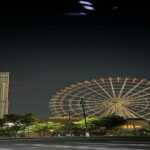
HEP FIVE itself is tied to multiple pass highlights, including Tsutenkaku Tower, and the HEP FIVE Ferris Wheel (noting the scheduled outage on Thursday, August 7). The pass summary even calls out a short ride experience around 15 minutes, which is the kind of timing that works well if you want big views without giving up your whole afternoon.
In real terms, starting from HEP FIVE helps you do one thing you should do in Osaka, move efficiently. You will spend less energy figuring out where to be next, which matters when the pass also has time windows.
Northern Route: Umeda Sky, Tsutenkaku, and the Osaka-to-Nara mix

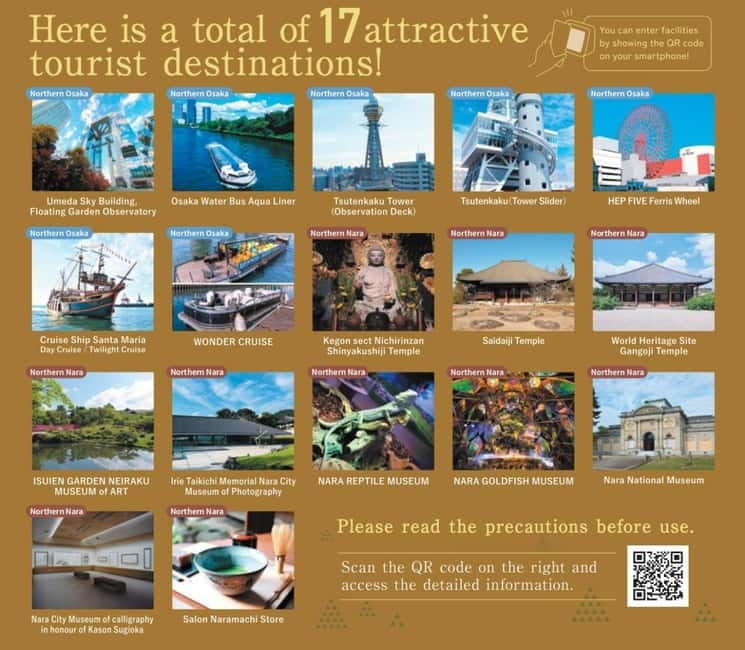
The northern route includes admission to 17 attractions and is the most city-friendly list. I like this approach because it can combine iconic Osaka energy with classic Nara stops without needing a rental car.
Umeda area: observation views and fast skyline time
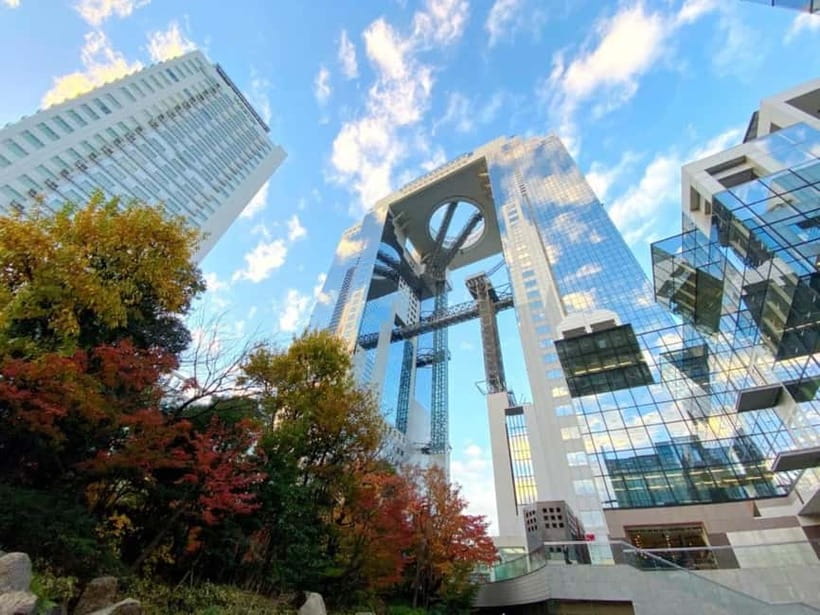
This route begins with the Umeda Sky Building and specifically the Floating Garden Observatory. Here is the key rule you must plan around: free admission using the pass is valid only before 5:00 PM. That means you should aim for this stop earlier in your afternoon, not right before dinner.
If you miss that cutoff, you could face a big gap between the pass expectation and what you pay at the door. That’s not a small detail, it is the difference between a bargain day and a frustrating one.
HEP FIVE Ferris Wheel: the quick view payoff, with an outage on Aug 7
The Ferris Wheel is part of the northern lineup. The pass notice says it will be out of service Thursday, August 7, due to scheduled inspection, with operations resuming after inspection and no set time. If you are traveling around that date and the Ferris Wheel is a key part of your plan, check closer to your visit before you lock in your schedule.
Set this against a few other Osaka bookings:
Tsutenkaku and the tower thrill factor
You also get Tsutenkaku Tower and Tsutenkaku (Tower Slider). Even if you only do one of the tower experiences, it’s a strong Osaka snapshot: a recognizable skyline stop that keeps you from wasting time on only small, scattered attractions.
River and cruise options for a different pace
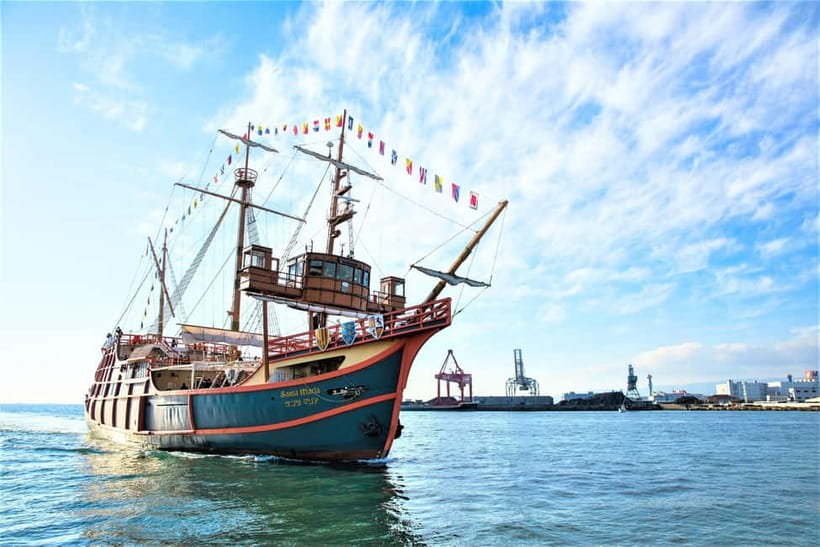
The northern route includes Osaka Water Bus Aqua Liner and cruise options like Cruise Ship Santa Maria Day Cruise and Twilight Cruise, plus WONDER CRUISE. This is a nice break from temples and towers because it changes the pace. You will also get a chance to view the city from the water, which can make your day feel less like a checklist.
Temples and World Heritage: Gangoji Temple and museum breaks
The route continues into Nara with World Heritage Site Gangoji Temple. It’s a great anchor stop because it gives your day a clear cultural center. After that, you can shift into museums and calmer indoor time:
- ISUIEN Garden NEIRAKU Museum of Art
- Irie Taikichi Memorial Nara City Museum of Photography
- Nara National Museum
- Nara City Museum of calligraphy in honour of Kason Sugioka
If you like variety, this mix works well. You can go from outdoor temple atmosphere to quiet galleries without changing the overall theme of your day.
Animal-themed stops: reptiles and goldfish
The northern route also includes NARA REPTILE MUSEUM and NARA GOLDFISH MUSEUM. I like these because they add a playful twist when temples and towers start to blur together. They can also be a good way to break up your schedule if you need indoor time between bigger landmarks.
Shopping and local feel: Salon Naramachi Store
Rounding out the northern list is Salon Naramachi Store. This is the kind of stop that can help you leave Nara with something tangible without turning it into a long detour.
Southern Route: hot springs, caves, and why a rental car changes everything
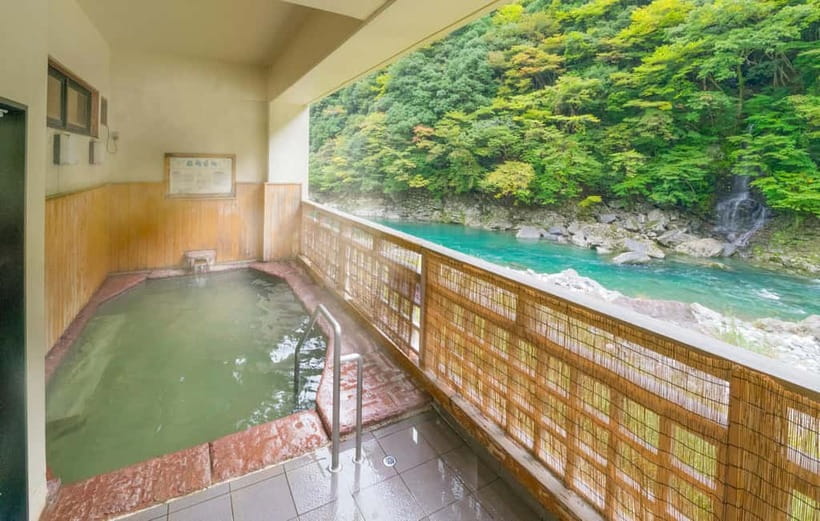
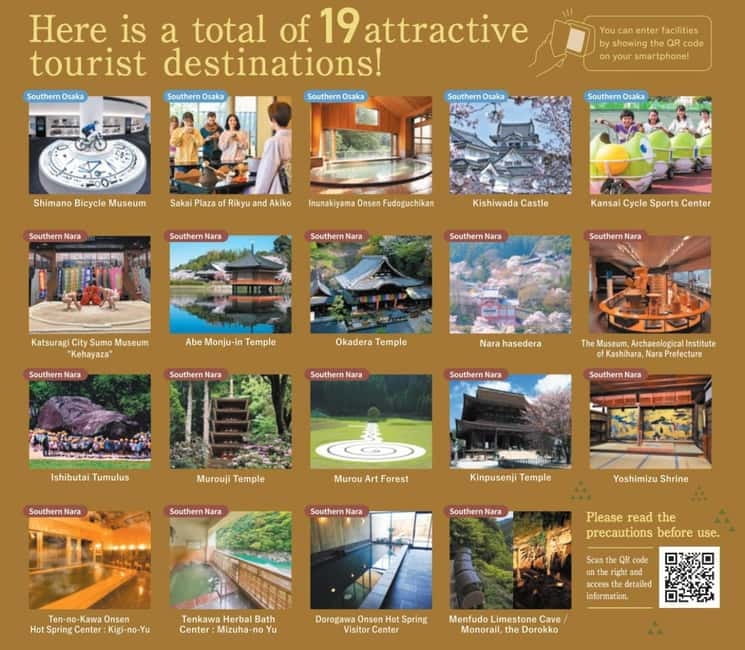
The southern route offers admission to 19 attractions, but with one big catch: if you choose this route, you need to book a rental car separately from your ticket. That changes the nature of the experience.
This route feels more spread out and more rural. Instead of bouncing between Osaka neighborhoods and Nara city sights, you’re building a day around hot spring centers, shrines, and specialty attractions. That can be great if you want variety and you already planned to rent a car, but it is not a low-effort day.
Cycle and local heritage stops
Early items on the southern list include:
- Shimano Bicycle Museum
- Sakai Plaza of Rikyu and Akiko
- Inunakiyama Onsen Fudoguchikan
- Kishiwada Castle
- Kansai Cycle Sports Center
- Katsuragi City Sumo Museum Kehayaza
I like that this route isn’t only temples. It brings in niche interests like cycling and sumo museum culture, so the day can feel more like exploring specialties than just ticking big-name sights.
Temples and Nara classics
You also get a strong set of temple and shrine names:
- Abe Monju-in Temple
- Okadera Temple
- Nara Hasedera
- Kinpusenji Temple
- Murouji Temple
- Yoshimizu Shrine
These are the places where you can slow down, step into a calmer rhythm, and make the driving day feel worth it.
Archaeology and outdoor attractions
The southern route includes:
- The Museum, Archaeological Institute of Kashihara, Nara Prefecture
- Ishibutai Tumulus
- Murou Art Forest
This is a nice blend if you like mixing indoor learning with outdoor walking. I would plan extra time here if you want photos and calm pacing, but keep in mind the pass itself has those strict timing rules between facilities.
Hot springs as a full route theme
Southern route hot spring centers include:
- Ten-no-Kawa Onsen Hot Spring Center: Kigi-no-Yu
- Tenkawa Herbal Bath Center: Mizuha-no-Yu
- Dorogawa Onsen Hot Spring Visitor Center
If you are planning to use these stops, the rental car makes sense because you are likely moving between areas that do not feel like a quick train connection.
Cave and monorail: Menfudo Limestone Cave
The southern route finishes with Menfudo Limestone Cave / Monorail, the Dorokko. This is a very specific kind of attraction, and it can be the highlight if you want something unusual compared to the classic tower and temple combo.
Timing rules that can trip you up (and how to plan around them)
This is where the pass either feels easy or frustrating. The official rules include several constraints, and you should treat them as part of the experience design.
First, free entry is allowed once per facility within the two-day period, limited to the day of use. Also, re-entry to the same facility is not allowed. That means if you think, I’ll pop in twice for photos and later again for something else, the pass will not cooperate.
Second, after visiting one facility, you must wait at least 30 minutes before entering another. This is an odd rule if you are used to sprinting between stops. The practical fix is simple: build your schedule with short buffer time instead of packing facilities back-to-back.
Third, the pass is not valid for a full 48 hours from the start time. It is valid from the facility’s opening time to the final entry time on the day of use, and the following day. In other words, your first day start time matters because the validity is tied to each facility’s hours.
Fourth, Floating Garden Observatory has a strict cutoff for free admission before 5:00 PM only. If you want to use Umeda Sky Building as your anchor, schedule it early enough that you can feel unhurried.
Finally, the pass is a digital ticket system. The notice says to disable dark mode. It also says to check each facility’s website for precautions, opening hours, and holidays, since details can change without notice.
How I’d schedule it for a smooth day
Here’s a practical way to use this pass without fighting it.
For the northern route, front-load the time-sensitive stop
Start your afternoon with Umeda Sky Building, aiming before 5:00 PM to stay inside the free entry window for Floating Garden Observatory. Then move into HEP FIVE and Tsutenkaku area stops and save cruises or the more flexible museum stops for later. This sequencing reduces the risk of late timing turning into paid tickets.
Use Nara as your calmer chunk
Once you reach the Nara side, plan your temple and museum rhythm. Gangoji Temple is a good anchor, and you can follow it with indoor museum stops like photography, calligraphy, and art museum options. If you add NARA REPTILE MUSEUM or NARA GOLDFISH MUSEUM, treat them as a break, not a sprint.
For the southern route, plan like you have a base itinerary
Because a rental car is required, you should treat the southern route as a day built around drive times. Cluster nearby stops where possible, and include short recovery time between facilities to follow the 30-minute rule. If hot springs are in your plan, place them where you can still enjoy the rest of your day without racing.
Who this pass is best for, and who should think twice
I think the Osaka-Nara Discovery Pass is a good fit if you:
- Want one QR code to cover many admissions over two days
- Like a structured itinerary where you decide the order up front
- Are okay checking facility opening hours so you do not miss cutoff times
- Plan to focus on the northern route’s Osaka plus Nara combo, or you already plan to rent a car for the southern route
You might think twice if you:
- Hate time windows and strict rules about entry timing
- Expect to use the same facility multiple times
- Are traveling on Thursday, August 7, and really want HEP FIVE Ferris Wheel functioning
- Are relying on public transit tickets being included, because transportation costs are not covered in the price
Also, note the rule that all participants are required to use the facilities collectively, and individual use is not allowed. If your travel style is independent and self-paced, that can be a deal-breaker depending on how your group is handled.
Booking verdict: should you buy the Osaka-Nara Discovery Pass?
If your plan is to pack multiple paid admissions into two days, this pass can be a strong value at $24. The best part is the convenience, one ticket mindset across many well-known stops, with a practical home base in HEP FIVE Mall.
But the pass is not forgiving. The 5:00 PM cutoff for Floating Garden Observatory and the no re-entry rule are real constraints, and the mixed rating hints that timing misunderstandings can cost money. If you book, I’d treat the pass as a schedule tool. Check each facility’s hours, start Umeda early, and build your day with buffers so you never feel rushed into a rule boundary.
If that sounds like your style, book it. If you want flexibility first and rules last, you might be happier paying for admissions one at a time.
FAQ
How much is the Osaka-Nara Discovery Pass?
It costs $24 per person.
What is included in the pass price?
You get one free entry per facility, using a digital special ticket system with a QR code. Some combos can also include transit passes like an Osaka Metro and Osaka City Bus 1-day ticket, and a Kintetsu Rail Pass between Osaka-Namba and Kintetsu-Nara, but those are only included if you choose the specific railway ticket combo.
Are train and bus fares included?
No. Public transportation costs, including trains and buses, are not covered in the price.
Is the pass valid for a full 48 hours?
No. It is valid from the facility’s opening time to the final entry time on the day of use, and the following day. It is not valid for a full 48 hours from the start time.
Can I use the pass for Umeda Sky Building after 5:00 PM?
Free admission for the Floating Garden Observatory is valid only before 5:00 PM.
If I choose the southern route, do I need anything extra?
Yes. If you choose the southern route, you need to book a rental car separately from your ticket.
More 2-Day Experiences in Osaka
More Tour Reviews in Osaka

More Mornings with the Deer
Latest out of Osaka


Nara Deer Park Excursions from Osaka, side by side.
 ★ 4.5Ancient Capital Tour: Kyoto and Nara Highlights from Kyoto/OsakaFrom $90332 reviews
 ★ 4.0Kyoto and Nara Day Trip from OsakaFrom $198175 reviews
 ★ 3.5From Osaka or Kyoto: Kyoto and Nara 1-Day Bus TourFrom $64141 reviews
 ★ 5.0Discover Himeji, Kobe and Nara from OsakaFrom $91101 reviews
 ★ 4.5Kyoto & Nara Private customized tour with English speaking GuideFrom $54999 reviews
 ★ 4.5From Osaka/Kyoto: Kyoto & Nara Day Trip with Optional LunchFrom $6879 reviews
 ★ 4.5Kyoto and Nara UNESCO Highlights Full-day Tour From OsakaFrom $6250 reviews
 ★ 5.0From Osaka: Nara Private Tour with Meet-Up at Your HotelFrom $14049 reviews
Also worth a look in