
REVIEW · MUSEUMS
Osaka: Koji Kinutani Tenku Art Museum Entry Ticket
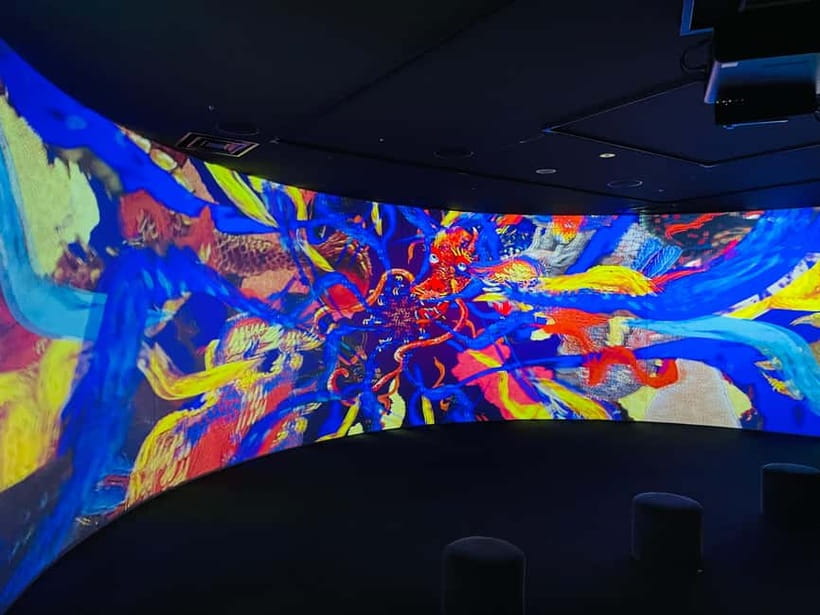
Music and art swirl in one round screen. Koji Kinutani Tenku Art Museum puts you in front of a 3m x 14m round screen, with a theme-park feel and paintings that start behaving like scenes.
I especially like the VR experience with Koji Kinutani himself, which brings you closer to how he thinks, not just what he made. If you grab the combo ticket, I also like that you can pair it with a trip to the Umeda Sky Building for a high, 360-degree Osaka view.
One caution: this place leans heavy on shows and tech, so if you prefer quiet, traditional gallery time, you may feel a bit “on schedule.”
What you will remember most
- A 3m x 14m round screen that turns art into huge 3-D visuals
- Two exhibition zones, blue and red, tied to Italy and traditional Japan
- VR with Koji Kinutani, including a museum tour and a rare Tokyo studio talk
- Tenku Gallery photo spots and a view down toward the Yodogawa River
- Optional combo with Umeda Sky Building, including an open-air skywalk 170 m up
- Hands-on fresco and painting programs, but workshops require reservations
Entering Umeda Sky Building, and getting your bearings
The museum’s home is the Umeda Sky Building Tower West, on the 27th floor. That means you’re already in Osaka’s action before the art starts. If you like starting with a simple landmark, this is a good one.
Getting there is straightforward. It is about a 9-minute walk from JR Osaka Station, Osaka Metro Umeda Station, or Hankyu Osaka Umeda Station, and around 13 minutes from Hanshin Osaka Umeda Station. If you’re also doing other Umeda stops, this one fits neatly into the area.
A practical tip: your ticket voucher is exchanged at the museum reception desk. So when you arrive, don’t hunt for a gate or turnstile first. Go straight to the desk, then settle in.
Set this against a few other Osaka bookings:
Price and value: what $8 is really buying you
The museum admission ticket is listed at $8 per person. For that price, you are not just paying for static paintings. You’re paying for a full experience built around scale and motion: the 3-D screen show, exhibition rooms, the VR segment, and photo-friendly viewpoints.
That matters because the value is in the format. You spend time watching art transform, then you back it up with context in two themed exhibition zones. In other words, it is a “do and see” museum, not a “slow and study” museum.
If you choose the combo ticket (museum plus Floating Garden Observatory at Umeda Sky Building), you add a second major draw: a dynamic 360-degree view of Osaka from the observatory. The open-air skywalk is 170 meters above ground, and that turns your day into more than just an indoor art stop.
The main show: paintings and music on a 3-D round screen
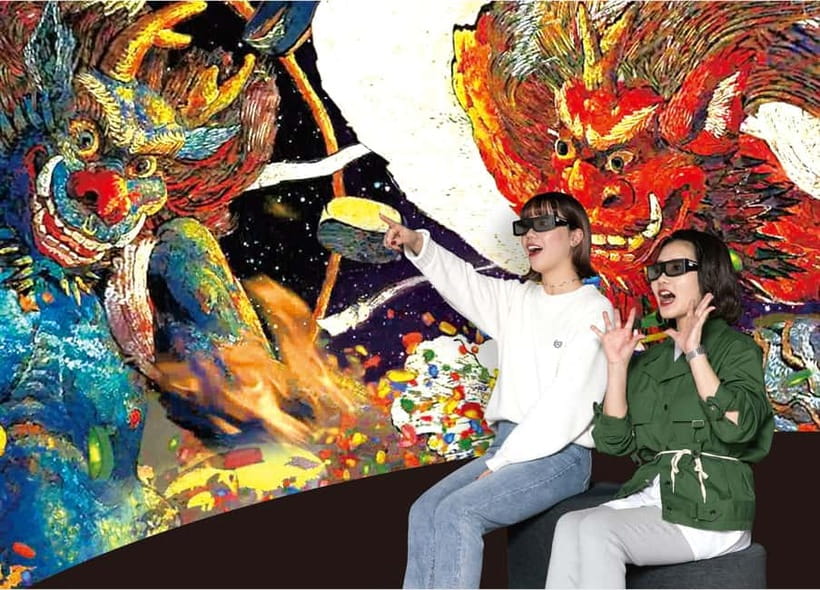
The headline is the screen itself: a 3m x 14m round display that can feel like it wraps around your attention. This is where the museum’s concept clicks. Instead of looking at art from a distance, you watch it become something you experience in motion.
Expect overwhelming 3-D images that come alive before your eyes. The museum’s setup is designed to create a theme-park atmosphere, so even if you’re not a hardcore art fan, the show language makes it easier to follow. Music and paintings work together, and that combo is what makes the experience feel more like a guided sensory event than a typical exhibition.
If you are sensitive to bright lights or fast visual effects, take it easy with pacing. You can always step out briefly and come back when your eyes feel ready again.
Exhibition halls: the blue and red zones (Italy to traditional Japan)
After the screen, you move into the exhibition hall, which is split into two zones.
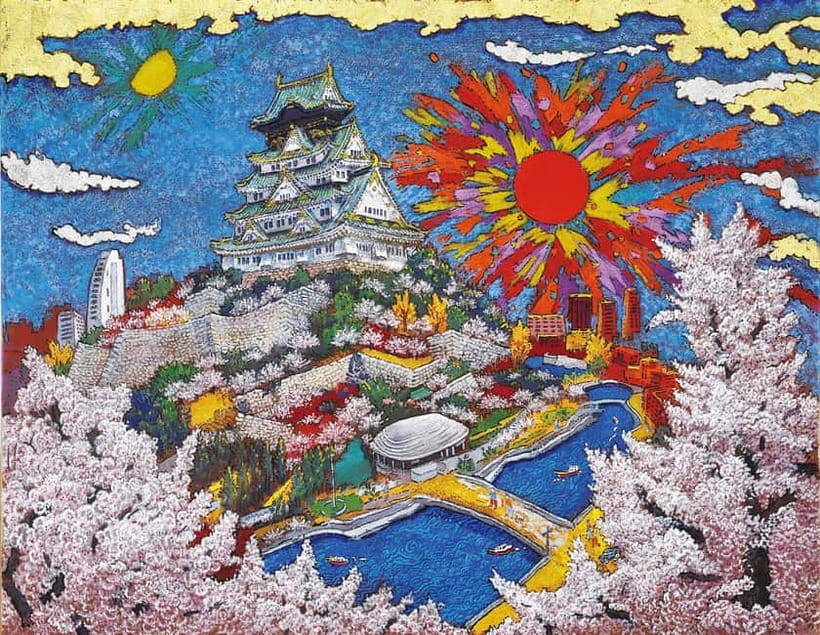
The blue exhibition zone is meant to evoke the blueness of the skies of Italy, connected to where Mr. Koji Kinutani studied abroad. This is not just color for color’s sake. It is a mood-setting room that helps you understand where his visual ideas and influences might have formed.
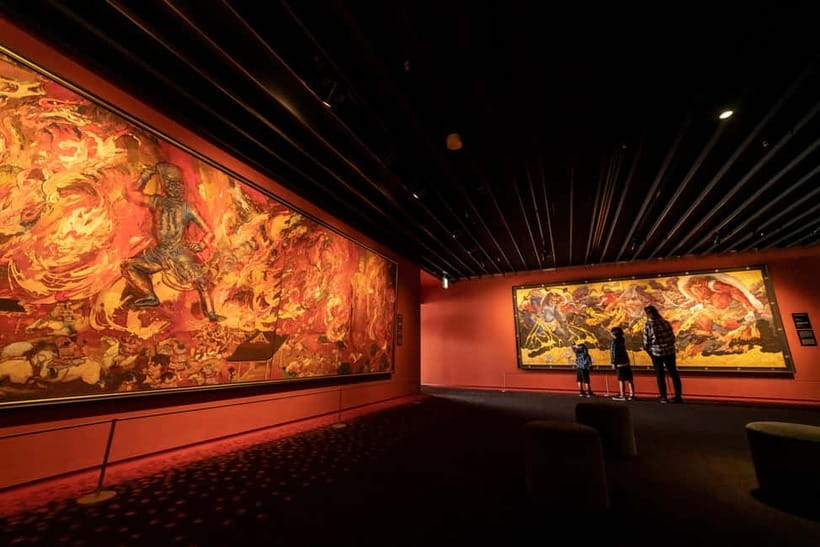
Then there is the red exhibition zone, focused on the spirit of traditional Japan. The red walls and lattice details give you a sense of structure and craft. If you like seeing how a museum uses design to steer your emotions, this is where you’ll notice it.
Timing note: the museum also runs special exhibitions twice a year. The works on the walls change with the prevailing themes of those show periods. So if you come during a special exhibition cycle, your walls may feel different than what a friend saw on a different trip.
Frescos and context: seeing the roots of Kinutani’s art
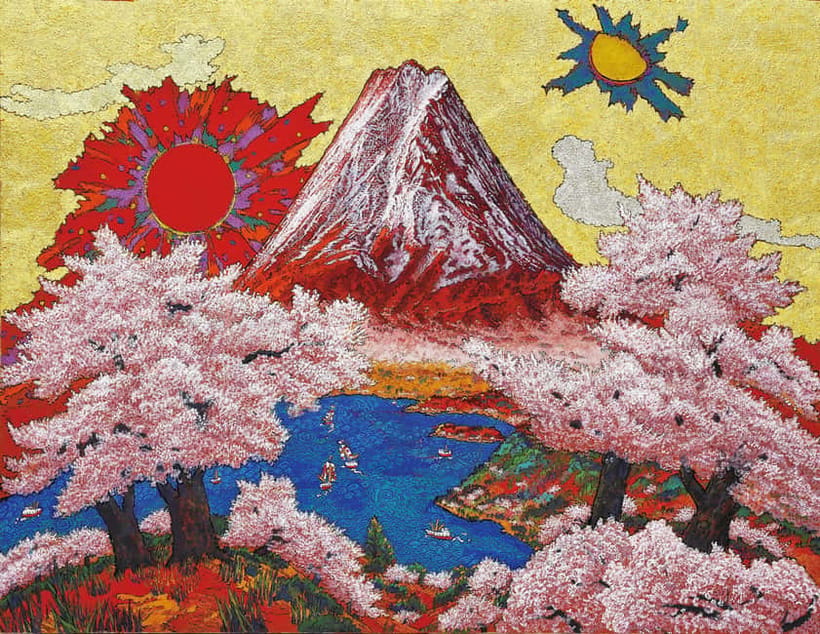
One of the most interesting things you can look for in the exhibitions is the presence of frescos, described as classic mural paintings. The museum frames these works as roots of Kinutani’s art, which means they are not an afterthought.
You’ll likely have a better time if you treat the frescos as a guide to what matters to him. Instead of thinking of everything as separate “paintings,” this museum nudges you toward understanding how technique and tradition can feed modern expression.
For photography, this part of the visit can be hit or miss, depending on room lighting and any specific photo rules inside the gallery. The museum is set up for images overall, but indoor art spaces can vary.
More indoor hours worth queueing for
Tenku Gallery photos and the Yodogawa River view
There is a section called the Tenku Gallery, and it is explicitly designed as a photo moment. If you like commemorative shots, this is the place to stop, reset your phone, and get something more interesting than the standard museum selfie.
It is also an out-of-the-way spot for views. You look down on the Yodogawa River as it flows through Osaka’s cityscape. Even if you have seen Osaka from other viewpoints, this perspective feels different because it is tied to the museum’s “sky” theme.
My advice: if the day is clear, you will get more from the view. If the weather is rainy or gray, the scene can still work, but you may get more mood than detail. Either way, it is worth a pause before you move into the VR portion.
VR with Koji Kinutani: getting closer to the artist
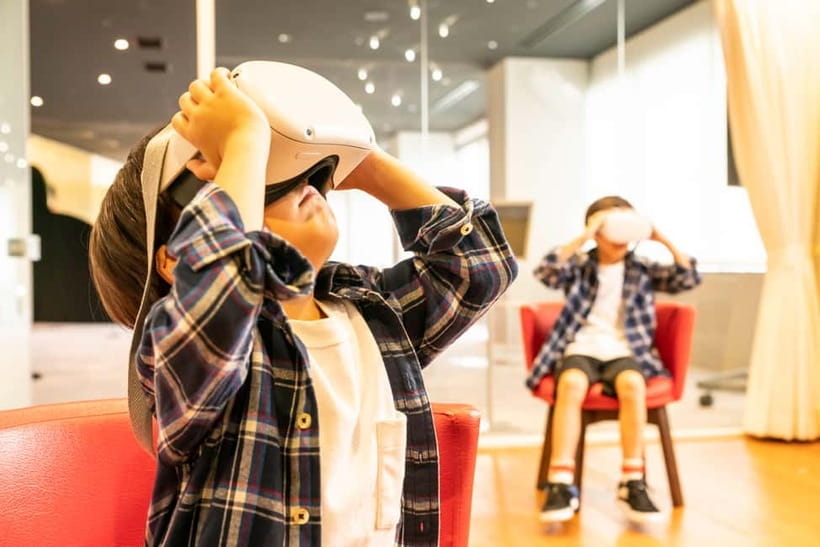
VR is where the museum shifts from “art object” to “artist process.”
The experience is described as powerful, and it brings you closer to Koji Kinutani. It includes a tour of the museum by Koji Kinutani himself. That alone is a big deal because it is not a generic narrator situation.
There is also a rare talk connected to his Tokyo studio, described as normally closed to visitors. In a museum, it’s easy to feel like you only see the final product. This VR portion helps you feel the human behind it, and that is usually what makes people remember a museum after they’ve moved on to the next stop.
One practical consideration: VR can be a time sink if you replay or stay too long in one segment. If you want to also do the cafe and shop, keep an eye on your pace.
Workshops and classes: hands-on art, but plan ahead
If you like doing instead of only watching, the museum offers programs for all ages. These include hands-on fresco painting and painting classes that feature lectures by Koji Kinutani himself.
The big rule here is simple: reservations are required for workshop participation. So if hands-on time is your priority, you should decide early and not treat it as a spontaneous add-on.
Also keep your expectations realistic. Workshop materials are not included with the admission ticket. So bring extra budget for materials, or accept that this portion is more like a structured activity day than a casual gallery walk.
Tenku Cafe and the museum shop: a nice finish to your visit
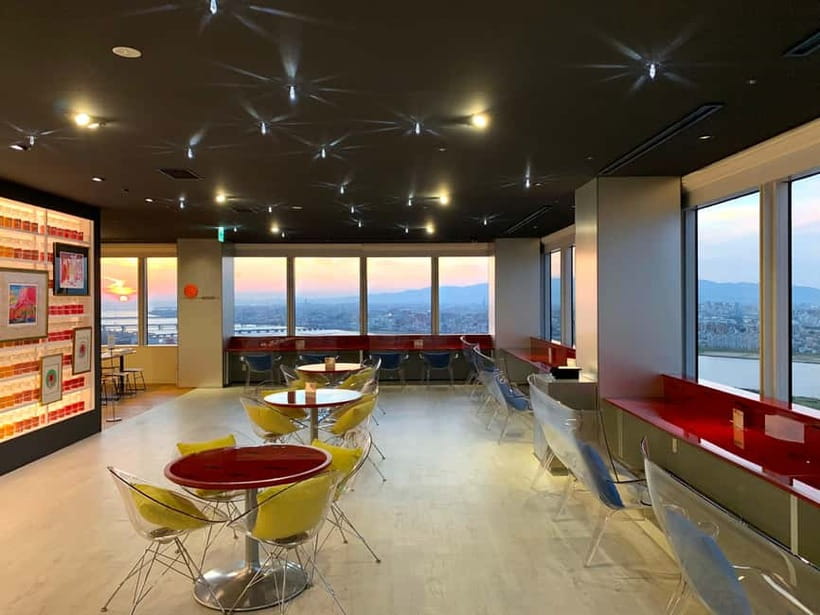
Once you’ve gone through the main rooms, the Tenku Cafe is a good place to slow down. The cafe is described as having a rich, colorful, artistic atmosphere. If you’re the type who likes to “stay in the theme” even when you’re taking a break, you’ll probably appreciate it.
The rows of colorful pigment bottles used for al fresco painting are part of the look. That detail matters because it connects the cafe back to the art process, not just back to the building.
Food and drinks at the cafe are not included in admission. So treat it as a bonus, not a budget guarantee. It’s still a smart stop because it gives you a reset after VR and the screen show.
Then there is the museum shop. It is described as well stocked with goods featuring motifs from the works, original postcards, and more. If you like buying small, art-themed souvenirs, this is one of the better places to do it. You can grab gifts that feel tied to what you actually saw.
A smart way to plan your visit in Umeda
Because this is in one building and designed as a sequence, you can plan it like a loop.
Start with the big visual moment, the 3-D round screen experience. Then move into the exhibition hall: blue zone, then red zone, looking for frescos and context clues. After that, go to the Tenku Gallery for photos and the Yodogawa River view.
Next, schedule VR. If you do VR too early, you might not have the exhibition context yet. If you do it too late, you may feel tired right when the experience asks you to focus. Middle of the visit tends to work best in general.
If you have time, finish with the Tenku Cafe and museum shop. If you are doing the combo ticket, leave enough time for the Floating Garden Observatory at Umeda Sky Building, especially for the open-air skywalk when visibility is best.
Combo day: adding Umeda Sky Building’s 170 m open-air skywalk
If you want the “Osaka from up high” payoff, the combo ticket is the obvious pairing. With the combo, you can head to the Floating Garden Observatory of the Umeda Sky Building.
This observatory offers a dynamic 360-degree view of Osaka. It is located 170 meters above ground, and it includes an open-air skywalk. Day and night are both mentioned as spectacular, so you can choose based on your itinerary.
If you hate lines and want the easiest route, consider going earlier in your day or timing it around your strongest light. But the key value is that you get two types of perspective: one artistic, one citywide.
Who this experience is for (and who should skip it)
You will probably enjoy Koji Kinutani Tenku Art Museum most if you like:
- art presented with technology and big scale visuals
- VR experiences that connect you to an artist
- photo-friendly viewpoints in a themed setting
It may be less satisfying if you prefer long, quiet examination of traditional galleries. The museum format is structured. It guides you through rooms and show segments.
Also, it’s especially nice if you are already in Umeda, because the location is easy to plug into your day.
Should you book this ticket?
If your goal is a compact, high-impact art experience, I think this is a strong booking. The $8 museum price is an easy risk to take, and the blend of screen, themed rooms, and VR gives you multiple angles on the same creative vision. Add the combo if you also want a major city viewpoint in the same day.
Skip or rethink if you dislike show-based museums and want only traditional galleries. Also, if you want workshops, plan ahead because reservations are required and materials are not included.
FAQ
Where is the Koji Kinutani Tenku Art Museum located?
It is in the Umeda Sky Building Tower West, 27F, at 1-1-30 Oyodonaka, Kita-ku, Osaka 531-0076, Japan.
How do I get there by train?
It is about a 9-minute walk from JR Osaka Station, Osaka Metro Umeda Station, and Hankyu Osaka Umeda Station. From Hanshin Osaka Umeda Station, it is about a 13-minute walk.
What are the opening hours?
Mondays, Wednesdays, Thursdays, and Sundays are 10:00 to 18:00. Fridays, Saturdays, and the day before national holidays are 10:00 to 20:00. Admission is until 30 minutes before closing.
When is the museum closed?
The museum is closed on Tuesdays, with the exception that if Tuesday is a national holiday it will be open on Tuesday and closed on the following weekday. It is also closed from December 30 to January 3, and during exhibition change periods.
Is admission to the museum included in the ticket?
Yes. Admission to the Koji Kinutani Tenku Art Museum is included.
Does the ticket include Umeda Sky Building Observatory admission?
It depends on which ticket you choose. A combo ticket can include admission to the Floating Garden Observatory at Umeda Sky Building.
Do I need to exchange my voucher?
Yes. The ticket exchange has to be done at the museum reception desk.
What is included besides the museum rooms?
The experience includes a powerful VR experience that brings you closer to the artist, and it also includes a 3-D viewing experience on a 3m x 14m round screen.
Can I eat or bring food and drinks into the museum?
No. Food and drinks are not allowed.
Are workshops available, and do I need reservations?
Workshops and painting programs are available, but reservations are required for workshop participation. Workshop materials are not included.
Indoors Done Well
Skip the Window: More Osaka Tickets


More Tour Reviews in Osaka



Latest out of Osaka


Museums, side by side.
 ★ 4.5Osaka Castle: Museum and Tower Entry TicketFrom $72,380 reviews
 ★ 4.8Osaka: Osaka Castle & Historical Museum Guided TourFrom $4128 reviews
 ★ 4.8(Ticket Included) Explore Osaka Castle & Museum of HistoryFrom $2221 reviews
 ★ 4.5Cup Noodles Museum Guided Tour in OsakaFrom $574 reviews
Also worth a look in