
One road, many Osaka moods. This harbor ride strings together real neighborhoods, river paths, and skyline moments, with mini ferry rides and a tough-but-rewarding Namihaya Bridge climb. I like how the route mixes classic sights with everyday Osaka streets, and I love that you get bike access to places that feel slower on foot. The main drawback to plan for is the cycling effort, including a big climb and about 42 km of road riding.
If you want variety packed into a 4.5-hour outing, this is a strong pick. You’ll follow the Oo River and Yodo River cycle paths, cross bridges for wide views, and connect the dots between Umeda, Nishinari and Shinsekai, then wrap up at Shitennoji and Osaka Castle. Just be sure you can ride comfortably before you book, because this is meant for intermediate cyclists.
Key highlights you’ll feel fast
- 42 km of road cycling with river paths that help you ride without heavy traffic stress
- Island hopping by mini ferry to change the scenery and break up the route
- Namihaya Bridge for a 360-degree harbor and city view after a serious climb
- Umeda skyline angles from the north side of the Yodo River, including the Umeda Sky building
- Shinsekai and Tsutenkaku through gritty streets, arcades, and that post-war Osaka vibe
- Osaka Castle grounds by bike, then glide back along the Oo River to finish
Why cycling Osaka’s waterways feels like a local shortcut
Osaka can look like two different cities depending on where you point your feet. On this tour, you get the in-between version, where the river system stitches daily life to big-city landmarks. You’ll ride past neighborhoods instead of only viewing them from train windows.
What makes it special is the format. You’re on a road bike with a helmet and a guide, and you’re mostly on riverside cycle paths that let you build rhythm without dodging traffic nonstop. Then the route keeps switching gears with bridges and two short ferry hops, so your eyes never get bored.
For me, the best payoff is contrast. You cycle from modern commercial areas toward older, grittier street life, then end at Osaka Castle grounds where the scenery turns dramatic again. You’ll also hear plenty of context from the guide as you pass bridges, parks, and temples, which makes the route feel like a story instead of a checklist.
The trip is also short enough to stay realistic. At 270 minutes, it’s long enough to feel like you did something, but not so long that you’re wrecked for dinner.
More days made easy by a guide
The ride plan: Kema Sakuranomiya Park to the Yodo River lock gates
You start in a pleasant spot outside RBRJ at Kema Sakuranomiya Park, on the Oo River. The meeting point is 1 minute north of Sakuranomiya Station (West Exit), and you’re asked to arrive 15 minutes early so you have time for bike and gear setup.
That first stretch matters. It’s where you settle in on a road bike, learn how the group rides, and get used to the pace before the city scenery starts stacking up. The route uses riverside cycle paths that help you focus on steering, cadence, and not worrying about sudden traffic.
From there, you follow the ride up toward the Kema lock gate on the Yodo River. This is one of those Osaka details that you don’t really notice from ground level unless you slow down and look. Seeing a lock gate up close gives the river system real meaning, like it’s doing more than just scenery. It’s part of how the city functions.
One practical note: the tour is designed for intermediate riders. If you’re comfortable riding steadily but you hate climbing, you should know there is a meaningful climb later. Still, this early section is a good warm-up, and it helps you judge your legs before the hardest part.
Umeda from the north side: Sugihara Johoku Bridge to skyline views
After a 5 km run along the Yodo River, you cross over to the north side. This is where the ride starts showing you that Osaka is not just streets, it’s also scale. From the Sugihara Johoku Bridge, you get big views of the river and the city, and it helps you understand why people always point out the contrast between river life and commercial Osaka.
Then you head back along the north side of the Yodo River, with panoramic city angles opening up. The standout moment here is the view toward Umeda, and especially the Umeda Sky building. Seeing these buildings while you’re moving at bike speed changes how they land. The views feel broader and less like a framed photo.
A cool detail is how connected the route is. The Yodo River cycle paths can lead cyclists all the way up toward Kyoto and beyond. You’re not doing that here, but knowing that this is part of a larger network makes your ride feel like a window into more than just one neighborhood loop.
One small consideration from the experience style: not every meter is pure postcard. Some sections lean more industrial, and if you’re the type who wants only scenic backdrops, you might feel that certain stretches have less to look at. The upside is that the bridges and skyline views refill your camera battery quickly.
Mini ferries and the harbor circuit: Tempozan, Universal area views, 9 Borden break
Leaving the Yodo River route, the tour weaves across toward Universal Studios and introduces the first of two mini ferry rides. Before boarding, you get a clear view of the Tempozan Ferris wheel and Osaka Aquarium. There’s also mention of Mount Tenpo, and yes, the name is part of the joke, since it’s described as Japan’s most miniature mountain. Even if you’re not into trivia, it’s a fun way to see how playful Osaka can be while still being practical.
Then comes a quick coffee and cookie break at 9 Borden. It’s a smart pacing moment. You’re not stopping for long, but the break gives your legs a reset and gives you a breath before the day’s toughest section.
After that, the route heads for the hardest climb: over the Namihaya Bridge. And the tour’s structure keeps building tension. You’ve got harbor views and big landmarks first, then you earn a major viewpoint after you work for it.
The ferry segments also do something important for your mood. They interrupt the physical rhythm of pedaling, which helps on a ride that has 42 km total distance. You arrive at later viewpoints with more energy than if the route was only land-based.
Namihaya Bridge 360 view, Chitose Bridge walk, and Kitamura Minami Park art
The climb over Namihaya Bridge is the day’s big moment. It’s tough, and you feel it in your legs, but the reward is described as a wonderful 360-degree view over Osaka and the harbor. This is the kind of climb that turns the route from exercise into memory. You’re not just moving through scenery, you’re arriving at a viewpoint that explains the city’s geography.
After the bridge climb, there’s a walk up the Chitose Bridge, followed by a roll down into Kitamura Minami Park. That shift from riding to walking matters because it changes how you breathe and lets the group regroup. It’s also a small change of pace, so you don’t feel like you’re fighting the bike the whole time.
In the park, there’s a detail that makes it feel local rather than tour-bot generated: kids’ artwork along the way. It’s the kind of thing you might miss if you were rushing to the next famous photo spot. Here, it adds heart to a day that’s otherwise full of city scale.
One consideration: if you’re not used to longer road-bike stretches, the combination of a climb plus riding afterward can feel like a lot. The good news is that the route uses the geography to spread effort out, and you’re still moving toward engaging sights the whole time.
Kizu River crossing, Nishinari arcades, and Tsutenkaku in Shinsekai
The tour weaves over to the second mini ferry ride to cross the Kizu River. Like the first crossing, this helps you island-hop without making the whole day feel like one long grind.
Once you land, the route starts making its way toward Tsutenkaku Tower through the Nishinari area. This is where you see a different Osaka mood. You’ll be moving through gritty streets and shopping arcades, which is a real contrast from the earlier business-zone skyline.
Then you reach Tsutenkaku, where the tour frames it as a glimpse of the post-war economic boom. The tower is surrounded by Shinsekai, and that name is tied to older, more local Osaka. On this ride, you don’t just stand in one spot and stare. You pass through the area on foot-bike rhythm, which makes the vibe feel thicker and more lived-in.
From a planning perspective, this part of the route is often where people feel the most difference. If you came to Osaka hoping to understand everyday street life beyond the famous landmarks, Shinsekai is where you feel it first.
Shitennoji turtles and the Osaka Castle cycling finish
From Shinsekai, it’s time for a temple stop: Shitennoji. The tour specifically points out the five-story pagoda and turtle-filled ponds, which is a memorable combination. Pagodas are easy to recognize on a skyline, but ponds with turtles give you an actual moment of stillness during an active day.
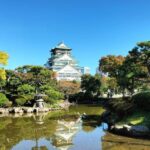
Then the road leads north to Osaka Castle. Cycling through the castle grounds is a big part of why this tour earns its sightseeing label. The walls and moats create strong boundaries, and moving through the area by bike helps you cover space efficiently while still feeling like you’re touring somewhere historic.
The tour ends with a final ride along the Oo River back toward the HQ area. That finishing loop matters because you go from major set-piece sights back to the calmer river ride again. It gives your legs something familiar to do after temples and castle scenes that feel more structured and stop-and-look.
If you like the idea of seeing multiple “Osaka faces” in one half-day, this ending sequence does the job. You start with river neighborhoods, then hit skyline, harbor views, older street life, temple calm, and finally the castle.
Road-bike basics, pacing, and what to wear
This is not a casual stroll-and-snack day. You’ll ride about 42 km (26 miles) on road bikes, and you should be comfortable sustaining effort. The tour calls it suitable for intermediate cyclists, so you don’t need to be a racer, but you should not plan to ride like it’s a slow city sightseeing walk.
What to bring is simple: comfortable clothes. You don’t need to worry about bringing a helmet or bike, since those are included. Your biggest “gear” need is mental. Think climb stamina, steady pedaling, and staying focused during river and bridge sections.
The guide also plays a big role in pacing. A small group helps here. With a maximum of 6 participants, you’re not fighting for space constantly, and the ride can stay cohesive when everyone hits the climb or slows for photos.
One small practical tip: arrive on time for setup. The 15-minute early arrival is there for a reason, because being fitted correctly and settling your bike position makes the difference between a smooth warm-up and an annoying first stretch.
Price and value: what $77 buys for 42 km plus landmarks
At $77 per person for a 270-minute tour, you’re paying for more than “someone walking you around.” You get a local guide, pre-ride coffee, and use of a road bike and helmet. When you factor in that kind of bike rental plus guided route support, the cost becomes more reasonable than it looks at first glance.
You also get real riding distance: 42 km total. That’s not a short loop where you only touch the edges of Osaka. It’s a legitimate workout, which many city tours skip because they’re trying to move slowly.
One value tradeoff is also clear: there’s no hotel pickup and drop-off. You’ll need to get yourself to the meeting point at Sakuranomiya Station area. If you’re staying close, this is fine. If you’re far, build in transit time so you can show up relaxed, not stressed.
Group size is limited to 6 participants, which tends to keep the experience from feeling crowded. For a cycling day, that matters. A bigger group can lead to waiting around at photo stops and bridges, and that can ruin your momentum.
Who should book this Osaka harbor cycling tour
This tour is ideal if you want Osaka in motion. If you love local neighborhoods, enjoy river paths, and don’t mind that you’re doing a serious stretch of cycling, you’ll likely feel satisfied. The route covers Umeda, harbor viewpoints, Shinsekai, Shitennoji, and Osaka Castle, so it’s built for variety in a half-day format.
You should also consider this if you like photos but hate standing in one place all day. Bridges, water views, and skyline angles give you better chances to capture scenes while still progressing.
On the other hand, skip it if climbing and sustained riding make you anxious. Even though parts of the route are on riverside paths, the day includes a key climb over Namihaya Bridge that you’ll feel.
And it’s not a fit for everyone. The tour isn’t suitable for pregnant women, people with heart problems, or anyone who can’t ride a bike. If any of those apply, it’s worth choosing a walking or gentler cycling alternative.
Should you book this tour, or choose a lighter Osaka day?
Book it if you want one itinerary that touches Osaka’s major contrasts without making you plan multiple separate outings. This ride is especially strong for people who like practical sightseeing: move, look, learn, and keep going. The combination of river cycling, ferry hops, and the earned 360-degree harbor view is the kind of mix that’s hard to assemble on your own in a single day.
Don’t book it if you want low-effort sightseeing. You’re signing up for about 42 km of road cycling, including hills and bridge work. If your legs are more “museum pace” than “bike pace,” you’ll probably count down to the finish.
If you’re on the fence, here’s the quick decision rule: if you can handle a hard climb once and you’re excited by neighborhoods plus major landmarks, this tour is a good match. If you’re hoping for mostly flat routes with light stops, look for a gentler option.
FAQ
Where is the meeting point for the Osaka Harbor Cycling tour?
You meet 1 minute north of Sakuranomiya Station (West Exit). Arrive 15 minutes early to allow time for bike and gear setup.
How early should I arrive?
Please arrive 15 minutes before the activity start so there’s time to set up your bike and gear.
How long is the tour?
The tour duration is 270 minutes.
What is the price per person?
The price is $77 per person.
What’s included in the tour price?
The tour includes pre-ride coffee, use of a road bike and helmet, and a local guide.
Is hotel pickup or drop-off included?
No, hotel pickup and drop-off are not included.
How many people are in the group?
The group is small, limited to 6 participants.
What cycling fitness level is required?
It features 26 miles (42 km) of road cycling and is suitable for intermediate cyclists.
What languages are the guide(s) speaking?
The tour has a live guide in English and Japanese.
Are there restrictions on what I can bring or do?
Alcohol and drugs are not allowed. The tour is also not suitable for pregnant women, people with heart problems, or anyone who cannot ride a bike. You should bring comfortable clothes.
Easier with a Guide


More Tour Reviews in Osaka


Latest out of Osaka


Guided, side by side.
 ★ 4.5From Kyoto/Osaka: Kyoto Top Highlights 1-Day Guided Bus TourFrom $51714 reviews
 ★ 4.9Osaka: Main Sights and Hidden Spots Guided Walking TourFrom $59702 reviews
 ★ 5.0Osaka: Guided Food Tour with 12 Dishes at 4 Local EateriesFrom $83533 reviews
 ★ 4.9Osaka: Namba Pub Bar Crawl with a Local GuideFrom $30424 reviews
 ★ 4.9Osaka: Izakaya Bars Guided Walking TourFrom $19385 reviews
 ★ 5.0Osaka 4hr Private Tour with Government-Licensed GuideFrom $109359 reviews
 ★ 4.7Osaka Castle Guided TourFrom $43249 reviews
 ★ 4.7Osaka: Guided Go Karting Tour in a Funny CostumeFrom $45247 reviews