
REVIEW · NARA DEER PARK EXCURSIONS FROM OSAKA
Nara 8hr Private Tour – Osaka DEP. with Licensed Guide
Deer steal the first five minutes, then it gets bigger. This private Nara walk from Osaka is built around having a guide take point, so you can focus on the temples, shrines, gardens, and museum stops that make Nara UNESCO-listed and genuinely different from Osaka.
I especially like the customizable plan. You pick 3 to 4 sights from a solid menu, and the pace stays human instead of sprinting from one photo spot to the next. I also like that you get an English-speaking guide, which means you can actually understand what you are seeing, not just follow the crowd.
One possible drawback to plan for: entrance tickets and food are not included, and 8 hours only allows a short stop at each selected site. So if your goal is to spend half a day inside one major temple, this style might feel a bit tight.
Key highlights worth your attention
- English-first guidance: You get a government licensed guide who leads the way and helps you make sense of the sights.
- Choose 3 to 4 stops: Your route can lean temple-heavy, garden-focused, or museum-oriented.
- Skip the navigation headache: Pickup is offered and you meet your guide in the Osaka area, so you spend less time guessing.
- Temples plus calm breaks: The mix includes iconic shrines and quieter gardens for downtime.
- Small moments that stick: In past tours, guides like Noriko and Hiro added thoughtful touches such as sake and mochi, or a tea ceremony.
- Good hands if things go wrong: One guide, Momoyo, helped recover a left-behind phone.
Why this Nara tour feels easier than doing it solo
Nara can look simple on a map, then get annoying fast. Trains, walking routes, and shrine rules all stack up. With a licensed guide leading the way, you get the best part of independent travel, less friction. You still get to move at your own pace, but you do not waste time translating signage or figuring out the tightest route between stops.
I also like the way this tour keeps the day flexible. You do not have one rigid script that forces you through every major stop whether it interests you or not. Instead, you choose from a list of high-value sites, which makes the 8 hours feel like your day, not a boxed itinerary.
If you are the kind of person who wants to ask questions, this format works. A guide can explain why Todaiji or Kasuga matters, not just point at it. And the English support means you can actually follow the story as you walk.
More days handed over to a local
Price and value: what $198.72 gets you, realistically
At $198.72 per person for an about 8-hour private tour, this is not a budget bargain. But it is also not trying to be. The value comes from four things you cannot easily buy on your own: time saved, English interpretation, route planning, and private pacing.
Here is the practical side. Many of the best Nara stops are spread out in a way that feels manageable until you hit lines, closures, or you end up backtracking. Paying for a private guide turns the day into forward momentum. You also avoid the stress of coordinating the right order to minimize walking and maximize seeing.
Two costs sit outside the listed price. Admissions are not included for many stops, and food and drink for yourself are not included. If you build in a modest budget for entry fees and a meal, the overall spend starts to make sense for a day that would otherwise be a lot of logistics.
Picking your 3 to 4 sights from the Nara menu
This is where you can win big. The tour is designed for 3 to 4 selected sights, each with about 30 minutes allocated. That structure is ideal for first-time Nara visits, or for returning visits when you want a smarter selection instead of trying to do everything.
Think of your choices in three styles:
- Big icon temples and shrines (Todaiji, Kasuga, Kofuku-ji)
- Old Buddhism and temple architecture (Horyu-ji, Yakushi-ji, Shin-Yakushiji, Toshodai-ji)
- Atmosphere stops (Naramachi, Isuien Garden, Yoshikien, plus museums if you want indoor time)
If you pick too many temples with paid admission, your pocket adds up quickly. If you pick too many free outdoor stops, the day might feel short on variety. A mix is usually the sweet spot: one major temple, one shrine, one quieter cultural stop, and optionally one museum if you like context.
Todai-ji Temple: the Great Eastern Temple payoff
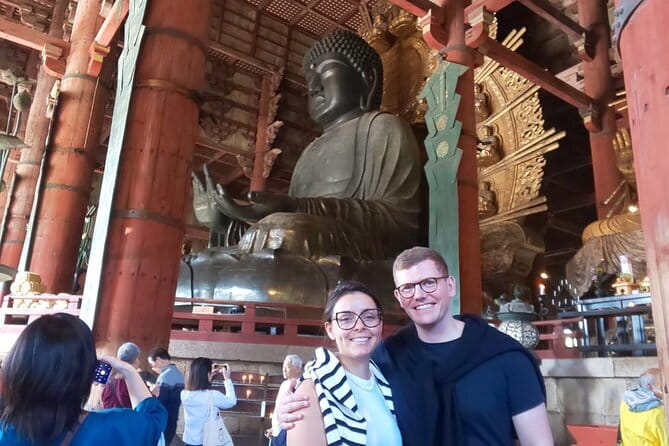
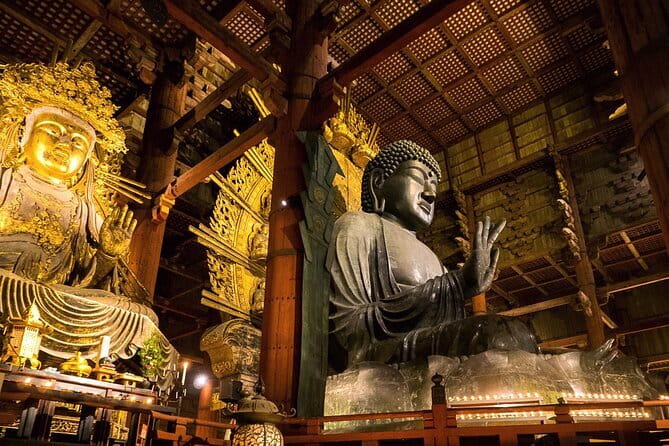
Todai-ji is Nara’s most famous name for a reason. It dates to 752 and served as the head temple for provincial Buddhism, which helps explain why this place became a national landmark. If you choose it, you are not just seeing a building, you are stepping into the era when Buddhism was taking root across Japan.
Practically, the stop is about 30 minutes, and the admission ticket is not included. That means you will want to move with a goal: scan the main features, take a slow look at the big focal point, and let the guide tell you what you are looking at.
What I like about Todai-ji in this kind of guided format is that it sets a baseline for the rest of the day. When you later visit Kasuga Taisha or other older temples, the religious and historical connections feel clearer.
Potential tradeoff: because it is a top-tier attraction, crowds are common at iconic times. With a private guide, you can still enjoy it, but your time is best spent smart, not lingering in the busiest lanes.
Nara Park and Kasuga Taisha: deer, shrine life, and city protection
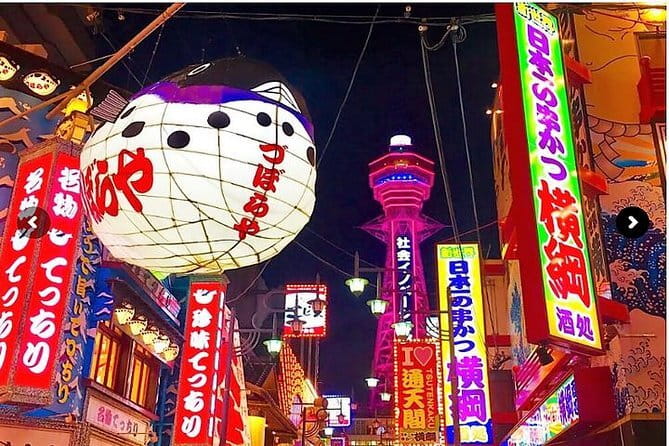
Nara Park is the center hub that links multiple major sites. It was established in 1880 and sits at the heart of Nara attractions including Todaiji, Kasuga Taisha, Kofuku-ji, and the Nara National Museum. So even if you only have one park stop on your route, it acts like a connector to everything else.
Nara Park is free for you to enjoy during the allotted time. That makes it a good choice when you want breathing room in the schedule. You get the classic Nara atmosphere without adding another entrance fee.
Then Kasuga Taisha enters as the spiritual counterpart. It is Nara’s most celebrated shrine and was established alongside the capital. The shrine is dedicated to a deity associated with protecting the city, which gives the whole area a living meaning beyond tourism.
The stop is also free, so you get a high-impact experience without extra admission cost. With a guide, you can understand why this shrine’s role mattered, not just that it exists.
How I would balance these two choices: if you pick both Nara Park and Kasuga Taisha, you are basically building the classic Nara triangle. In exchange, you might have to be more selective with temples that cost admission later in the day.
More runs out to the deer park
Mount Wakakusayama: the view and the calm reset
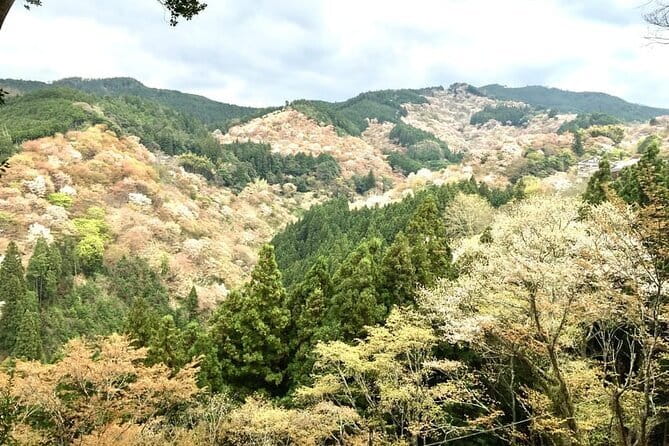
Mount Wakakusayama sits behind Nara Park, between Todaiji Temple and Kasuga Shrine. It is about 350 meters tall, and it is known for offering unobstructed views over Nara.
This stop is 30 minutes, and the admission ticket is not included. In other words, you are choosing Wakakusa mostly for the perspective. It is a good “pause and reset” choice after temples and before you switch into older temple architecture or museums.
The main consideration is simple: if the view is central to your wish list, pick this. If your priority is indoor art or detailed temple halls, you might skip Wakakusa to spend that time elsewhere.
Horyu-ji Temple: Prince Shotoku and early Buddhism
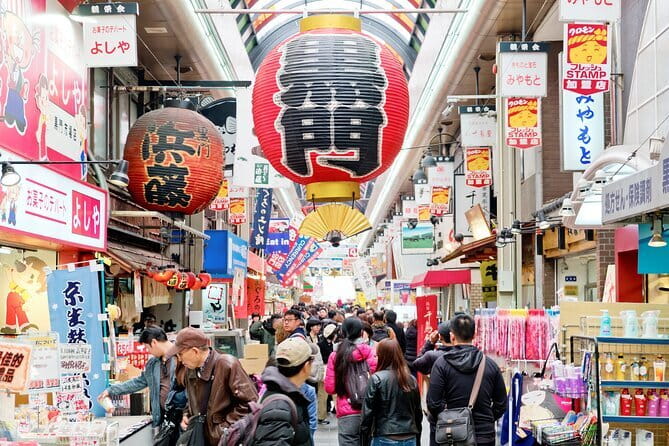
Horyu-ji is one of Japan’s oldest temple complexes. It was founded in 607 by Prince Shotoku, who is credited with early promotion of Buddhism in Japan. If your interests lean toward how Buddhism developed early on, this is the stop that gives you that time depth.
This stop is about 30 minutes and admission ticket is not included. So you want your guide to help you focus on what is unique here, rather than trying to absorb everything in a half hour.
I like Horyu-ji as part of a 3 to 4 stop plan because it changes the rhythm. Todai-ji and Kasuga carry major cultural weight in a later landmark style. Horyu-ji can feel more like a historical anchor.
Kofuku-ji and the Fujiwara connection
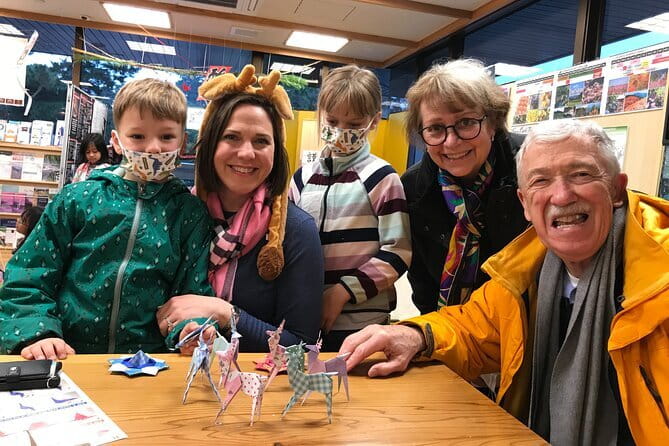
Kofuku-ji is tied to one of Japan’s most powerful aristocratic clans, the Fujiwara. It functioned as the family temple of the Fujiwara, who held major influence during the Nara and Heian periods. That clan connection helps explain why this temple mattered politically as well as spiritually.
In a short guided stop, the value is in making the links. You are not just looking at stone and wood, you are learning how power, religion, and city life intersected.
The admission ticket is not included, so include it in your budget plan if you select Kofuku-ji. If you are also picking Todai-ji or Kasuga, adding Kofuku-ji helps round out the story of Nara as a whole city system, not a set of isolated landmarks.
Yakushi-ji and Shin-Yakushiji: symmetry and medicine-linked devotion
Yakushi-ji was constructed by Emperor Tenmu in the late 7th century for the recovery of the emperor’s sick wife. The layout is strictly symmetric, which means the architecture itself becomes part of the experience.
Shin-Yakushiji, founded in the Nara Period (710 to 794) by an empress for ailing emperor, is devoted to Yakushi Buddha, the patron of medicine in Japanese Buddhism. That medicine connection gives the day a theme you can carry between stops.
Both stops are about 30 minutes and admission tickets are not included. With limited time, I recommend you use the guide’s explanation to pick one or two details to focus on, like the layout concept at Yakushi-ji, or the medicine devotion link at Shin-Yakushiji.
This is a strong choice for you if you like religious history explained in plain language, with the meaning connected to the people behind the buildings.
Toshodai-ji: Ganjin and Buddhist training
Toshodai-ji was founded in 759 by Ganjin, a Chinese priest invited by the emperor to train priests and improve Japanese Buddhism. That origin story is compelling because it positions Japan’s Buddhism not only as local development, but also as learning and exchange from abroad.
Like many temple options here, the stop is about 30 minutes with admission tickets not included. The payoff comes from the “why” behind the place.
If your group enjoys historical context, this is the kind of stop that makes the entire day feel more connected. You start seeing Nara as a learning hub, not just a sightseeing district.
Naramachi: traditional merchant town atmosphere
Naramachi is Nara’s former merchant district. Traditional residential buildings and warehouses have been preserved and opened to the public. This is where the trip shifts from temple grandeur to everyday city texture.
You are in this stop for about 30 minutes and it is free. That makes it a great option when you want a break from paying entry fees and you still want a Nara-specific experience that does not revolve around deer.
I also like Naramachi in a private tour because the guide can help you slow down. Instead of rushing through storefronts, you can focus on what makes the old merchant layout distinct.
Gardens: Isuien and Yoshikien for a calmer Nara
If you want your day to have breathing room, pick one garden stop. Isuien is designed to use Todaiji Temple’s Nandaimon Gate and Mount Wakakusayama as borrowed scenery. That means the garden is partly a stage for Nara’s landmarks.
Yoshikien is another pleasant garden in central Nara, named after the Yoshikigawa River. It is also built on the site of Kofuku-ji Temple’s former priest residence area, tying the garden to the temple world in a softer, quieter way.
Both are about 30 minutes and admission tickets are not included. Gardens are one of the easiest places to overestimate time needs, because they are meant to be walked slowly. A guide helps you enjoy the idea of the place even with limited time.
One review highlight that stuck in my mind: Kaeko’s route emphasized the gardens around the Silver Pavilion, and the serenity from meandering there was a welcome break from a more hectic day. If your mind tends to get tired from crowds, a garden stop is a smart way to balance.
Museums for context: Nara National Museum and Heijo Palace Museum
If you want more than the visual sweep, Nara has museum options that add meaning. The Nara National Museum focuses primarily on Japanese Buddhist art and was established in 1889. It sits in the Nara Park area, so it can slot into the same region without forcing big relocation.
Heijo Palace Museum offers another angle. During most of the Nara Period, Nara served as Japan’s capital, known as Heijo-kyo. The palace complex extended about one kilometer wide and one kilometer long, so even understanding the scale changes how you picture the era.
These museum stops are about 30 minutes and admission tickets are not included. That time limit can be perfect if you treat it like orientation. If you are an art-history or archaeology fan, you might want to plan one museum only, not two, to avoid feeling rushed.
What 8 hours feels like with a private licensed guide
Because you select 3 to 4 sights, the day structure tends to feel like this: one big anchor site, one or two connected stops, and one atmosphere or context option. That is how the tour avoids the all-day grind.
It also matters that this is a private experience. Only your group participates, so you are not stuck timing your questions to a large tour group. I find that keeps the pace both efficient and calmer, especially at temples and shrines where you want to understand a bit more than what fits in a quick glance.
In real-world terms, the guide quality can make the day. Noriko was described as punctual and organized, and she also pointed out good extra places beyond the usual big-tour focus. Hiro was noted for strong English and adding a tea ceremony, which is the kind of cultural bonus that can turn a temple day into something more personal. Momoyo’s help with recovering a phone left behind is also a reminder that you are not just buying sightseeing, you are getting support.
Who this tour fits best
This tour is best for you if:
- You are in Japan for the first time or you want less navigating stress.
- You care about meaning, not just landmarks, and you like learning while you walk.
- You want a day that can be tailored to your interests, without spending hours planning routes.
- Your group values a calm pace, with enough time to look closely.
It may not fit if:
- You want to spend long hours at one site, such as only doing one temple and returning later.
- You prefer self-guided travel where you do not need the interpretive layer.
- Your budget is tight after entry fees and a meal plan.
Should you book this Osaka departure Nara private tour?
Yes, I think it is a smart booking if you want Nara to feel coherent and explained. With a licensed guide, English support, and a structure built for 3 to 4 stops, you get the benefits of guided history without the feeling of being herded.
Book it if your ideal day is a mix of iconic sites and quieter stops, and if you are okay with paying for admissions where needed and handling your own food. Skip it if your priority is going deep at fewer locations, or if you hate walking. In that case, you might prefer a slower, single-area plan.
FAQ
How many sights can I choose during the tour?
You can customize a private route of 3 to 4 sights of your choice.
How long is the Nara private tour?
The tour lasts about 8 hours.
Will I have an English-speaking licensed guide?
Yes. The experience includes a government licensed guide, and the tour is described as having an English-speaking guide.
Is pickup available from Osaka?
Pickup is offered, and you meet your guide on foot within a designated area of Osaka.
Are admission tickets included for temples and museums?
No. Admission tickets are not included for the listed temple and museum stops.
Is food and drink included?
No. Food and drink for yourself are not included.
Is this tour private?
Yes. It is a private tour, so only your group will participate.
Can I cancel for a full refund, and are service animals allowed?
You can cancel for a full refund if you cancel up to 24 hours in advance. Service animals are allowed.
More Tour Reviews in Osaka




More Mornings with the Deer
Hand the Day to a Local



Latest out of Osaka


Nara Deer Park Excursions from Osaka, side by side.
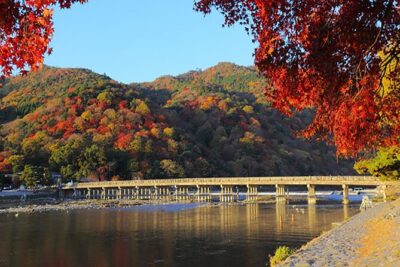 ★ 4.5Ancient Capital Tour: Kyoto and Nara Highlights from Kyoto/OsakaFrom $90332 reviews
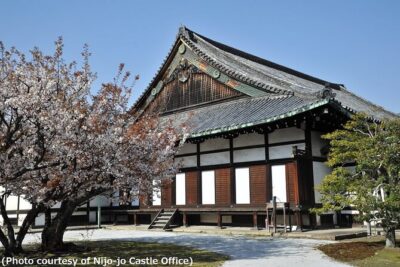 ★ 4.0Kyoto and Nara Day Trip from OsakaFrom $198175 reviews
 ★ 3.5From Osaka or Kyoto: Kyoto and Nara 1-Day Bus TourFrom $64141 reviews
 ★ 5.0Discover Himeji, Kobe and Nara from OsakaFrom $91101 reviews
 ★ 4.5Kyoto & Nara Private customized tour with English speaking GuideFrom $54999 reviews
 ★ 4.5From Osaka/Kyoto: Kyoto & Nara Day Trip with Optional LunchFrom $6879 reviews
 ★ 4.5Kyoto and Nara UNESCO Highlights Full-day Tour From OsakaFrom $6250 reviews
 ★ 5.0From Osaka: Nara Private Tour with Meet-Up at Your HotelFrom $14049 reviews
Also worth a look in