
REVIEW · MINOH FALLS & KATSUO-JI NATURE TRIPS
Mt. Inunaki Trekking and Hot Springs in Izumisano, Osaka
Autumn walks, then hot spring calm. This half-day-plus day trip turns Mt. Inunaki into a seasonal photo quest, then swaps the trail for real Japanese comfort at Fudoguchikan hot springs. I especially like the order of the day, trek first, then relax, and the fact that lunch is a private kaiseki-style room meal, not a cafeteria shuffle. The one thing to weigh is that the hike needs moderate fitness and the whole experience is weather-dependent.
You’ll meet at Izumisano Station at 8:45 am, ride a public bus to the mountain entrance, hike to Shipporyuji Temple, and return to the inn for onsen time and seasonal cuisine. Reviews also highlight warm, helpful guiding, with names like Yoshimoto, Masa, and Ken showing up as the kind of people who make short stops feel meaningful. If rain hits, you may still enjoy the walk, but come prepared and expect the day to be a bit slower on wet footing.
Key things that make this Mt. Inunaki day special
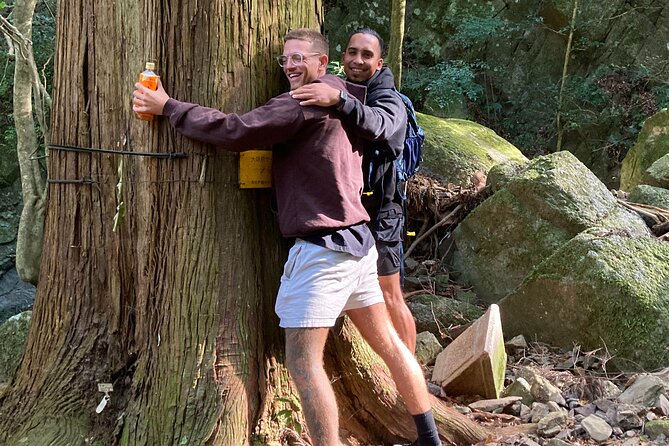
- Autumn timing (mid-November start) for red and yellow mountain colors and leaf-covered trails
- Shugendo connection on Mt. Inunaki, linked to training traditions connected with yamabushi
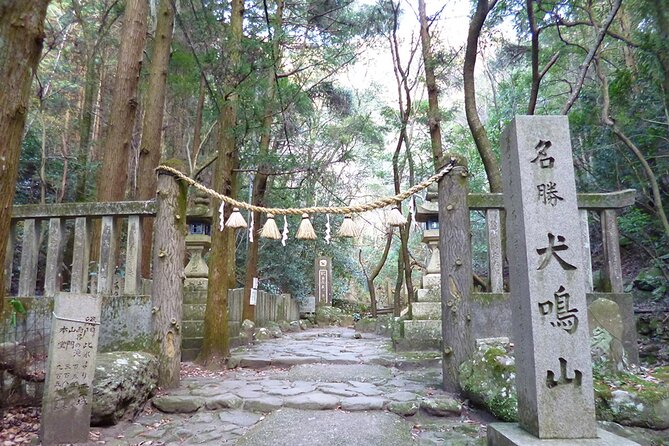
- Shipporyuji Temple details like the approach with stone pillars and red and black flags
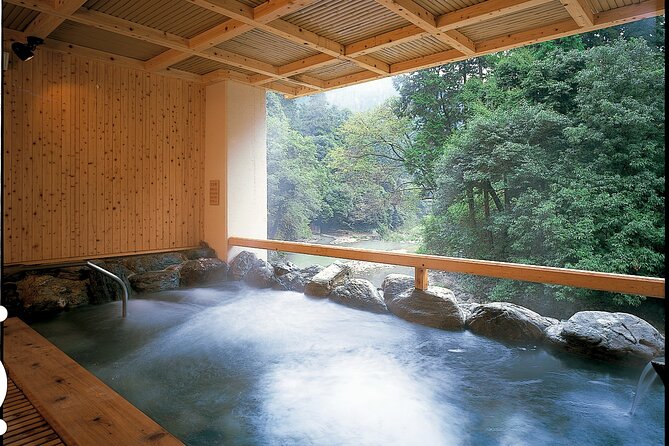
- Onsen options including an open-air bath facing a mountain stream, plus an additional pool style
- Private kaiseki in your own room, with one review calling out a long, multi-course meal
Mt. Inunaki in mid-November: what you’re really signing up for
Izumisano is not the first place most people think of for dramatic mountain trekking. That’s exactly why this works. When mid-November hits, Mt. Inunaki’s trails and slopes shift into autumn colors, so your hike feels like walking through a seasonal display instead of just going uphill.
The trekking itself is the main event. You’re not bouncing between a checklist of quick photos. The route leads you toward Shipporyuji Temple through an area described as a primeval forest linked to training traditions for yamabushi, Buddhist monastics connected to Shugendo. That gives the day more than scenery. It gives it a sense of place.
The other big reason to come in autumn is smell and feel. Crisp air plus fallen leaves on the trail can make the whole pace calmer, even when your legs start negotiating. It’s also a limited-time style of experience, so the season matters.
Trees and waterfalls, half an hour out
Getting from Izumisano Station to Mt. Inunaki without stress
Your day starts at Izumisano Station (3-chōme-11-41 Uemachi, Izumisano, Osaka 598-0007). You begin at 8:45 am, then take a public bus between Izumisano Station and Mt. Inunaki. This is one of those details that quietly makes the whole trip easier, because you’re not trying to solve local transit while also figuring out shoes and weather.
You’ll return to the same meeting point at the end. That matters because it keeps the day simple. You can plan your evening back in Osaka without wondering how to get yourself out of the mountains.
The 4-hour climb: what the trek feels like on the ground
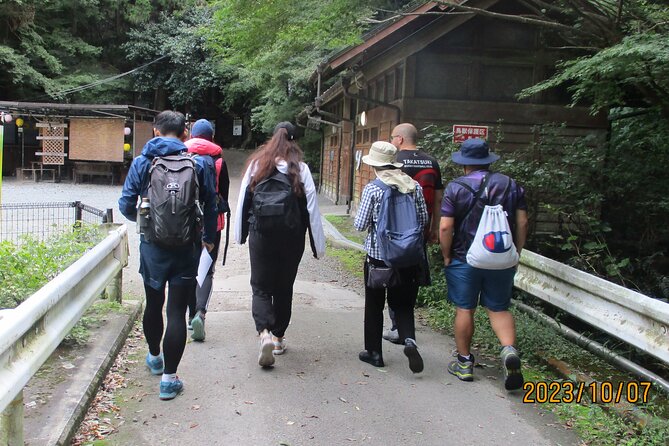
On paper, it’s straightforward: about 4 hours on Mt. Inunaki with your guide. In real life, it’s a forest hike with a temple at the end, which usually means gradual climbing and chances to slow down for views and stories.
The route is described as going through primeval forest. That tends to mean you’re walking in a more enclosed environment than open-sky hiking. In autumn, that works in your favor. Even if the view isn’t a constant panorama, the colors, light, and leaf cover keep the walk interesting.
This is also where your “moderate physical fitness” requirement shows up. The hike is not pitched as a marathon, but it’s not flat either. If you’re comfortable with an all-morning walk that includes uneven ground, you’ll be fine.
Practical tip: in rainy or damp conditions, the leaf cover can get slick. Bring grippy footwear and plan to move carefully. One review specifically mentions doing the tour on a rainy day and still enjoying the walk to the temple, which suggests the experience is designed to keep going rather than turning into a full washout every time the sky gets moody.
Shipporyuji Temple stop: the short pause that actually means something
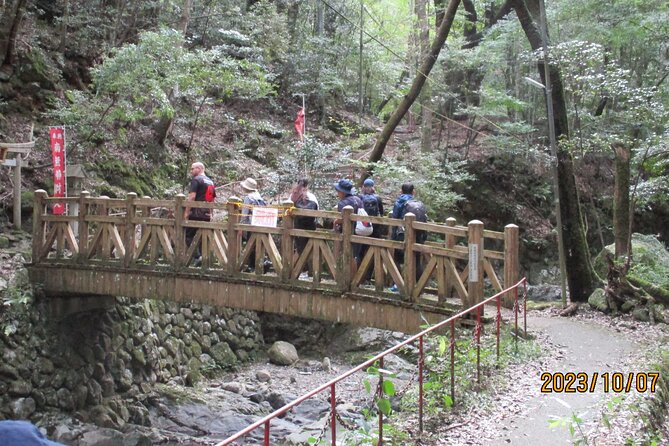
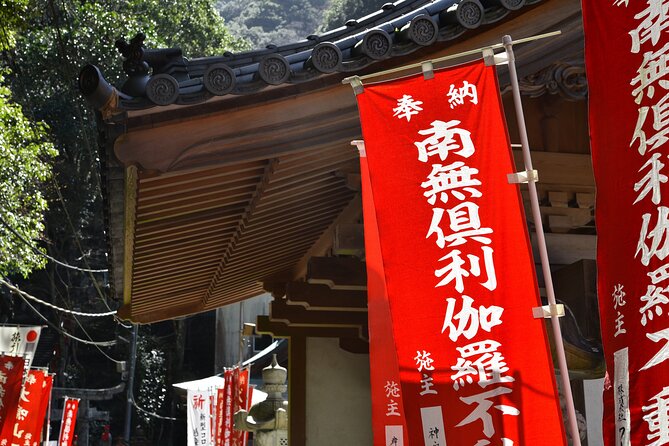
The Shipporyuji Temple portion is only about 30 minutes, but it’s not just a quick look-and-go. The approach is part of the experience. You’ll see stone pillars lined up on both sides, plus red and black flags erected along the way.
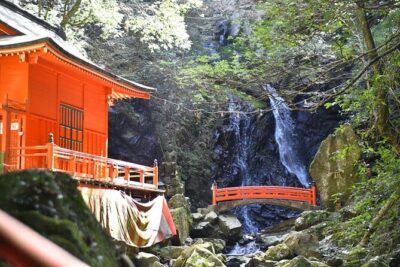
This temple is described as Shugendo-style, with multiple shrines and Buddhist statues. That matters because Shugendo is not a modern tourist theme. It’s a religious and cultural tradition tied to mountain worship and spiritual practice. When your guide shares local context during the stop, the temple becomes more than scenery.
Expect the guide to connect what you saw on the trail to what you’re seeing at the temple. That’s usually when the day clicks for people, because the walk stops feeling random. You’re moving through a living tradition.
Admission at Shipporyuji Temple is listed as free, so you’re not paying extra just to step inside and spend time.
Fudoguchikan hot springs: your reward with real choices
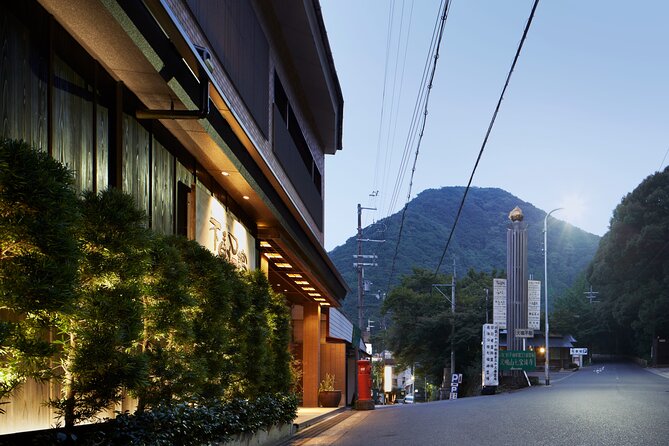
After the temple, the day shifts from footsteps to soaking. You go back to Fudoguchikan, described as a Japanese inn at the entrance of Mt. Inunaki, and you spend about 2 hours there.
Onsen time is one of the most highly praised parts, and with good reason. Reviews describe the hot springs as relaxing, serene, and very clean. One key detail is that you get two types of hot spring pools to choose from.
One is an open-air bath with a view of a mountain stream. That’s the kind of setup that makes you feel the day in your muscles soften. You’re not just warming up, you’re changing your pace to match the sounds around you.
The other pool option is described as a more comfort-style choice, which is helpful if you want a controlled environment rather than open-air. Either way, you’re getting natural hot spring bathing, and the onsen admission fee is included.
A practical note: hot springs days can be a little timing-sensitive, since you want to eat well and not rush the bath too late. The itinerary is built to give you real time to switch gears, not just a quick dip.


Kaiseki lunch in a private room: more courses than you’d expect
Lunch here is not an add-on. It’s a centerpiece. You enjoy seasonal kaiseki cuisine in a private Japanese-style room, and it’s described as only for you.
The wording matters because a private room changes the tone of the meal. You’re not sharing tables with strangers or getting a rushed service rhythm. You can take your time after the hike and let your body reset before the onsen.
One review called it an unexpected treat, mentioning a meal with more than 30 dishes and seasonal vegetables. Another review notes an 11-course meal, followed by private onsen time. Those two details can both be true depending on how the courses are structured, but the takeaway is consistent: expect a lot of food, built around seasons.
Value-wise, this is a big deal for the price. A tour that includes guided hiking plus onsen admission plus a serious multi-course Japanese lunch is using your money where it counts.
The guide: pacing, stories, and when their job ends
This tour includes a guide for the mountain portion, and your guide service is stated as terminated on arriving Fudoguchikan. In plain terms, that means you’ll get guided help when it matters most, on the trail and at the temple, then you’re on your own for bath and meal time.
That pacing is smart. On the hike, you want context and direction. Once you’re at the inn, you want downtime without someone talking over your soaking session.
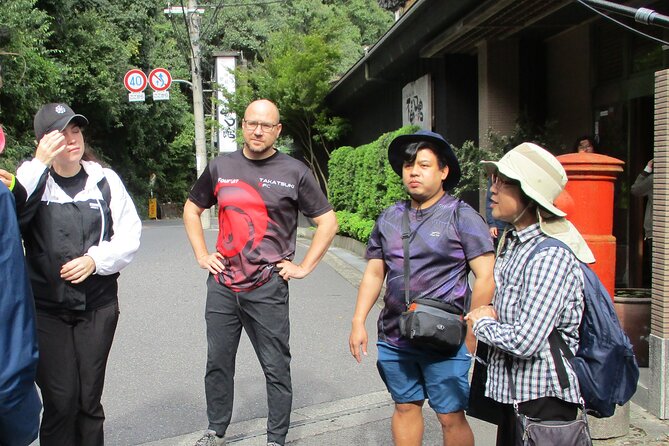
Reviews also highlight guide communication and warmth. Names like Yoshimoto, Masa, and Ken come up, and the comments focus on helpfulness plus local stories. That’s the kind of guidance that makes a short stop feel richer, especially at a place like Shipporyuji Temple where symbols and tradition are doing a lot of work.
Private tour setup: what it means for your day
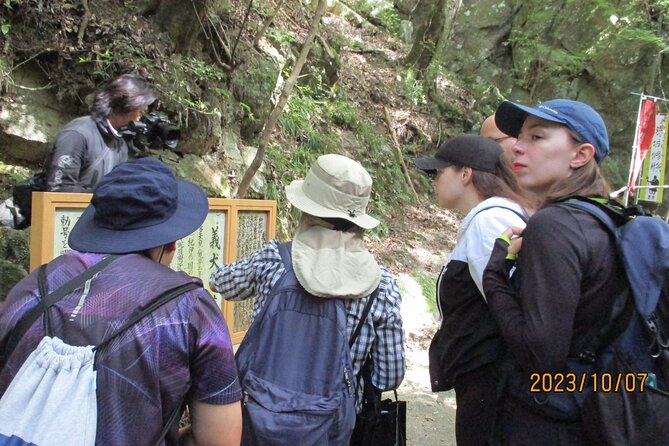
This is described as a private tour/activity, meaning only your group participates. That can be a big quality-of-life improvement on a walking day. You’re less likely to feel like you’re being pushed forward by a faster crowd or dragged behind by someone who’s unsure about steps.
You’ll also have group discounts listed as a feature. The exact discount structure isn’t spelled out here, but the key idea is simple: if you’re traveling with friends or family, the per-person cost can work better than a solo spot.
You’ll also get a mobile ticket, which tends to reduce stress at meeting time. And since everything returns to the same starting point, you can keep your schedule clean for the rest of the day.
Price and value: $143.07 and where the money goes
At $143.07 per person for about 7 hours total (approx.), this tour is best judged by what’s included, not just what it costs.
Included items:
- Public bus ticket between Izumisano Station and Mt. Inunaki
- Guide fee and guide service on the trek and temple portion
- Onsen admission at Fudoguchikan
- Lunch with seasonal kaiseki cuisine in a private room
Also, admission tickets for Mt. Inunaki and Shipporyuji Temple are listed as free. That means you’re not paying extra at each stop to get access.
So when you add it up, you’re paying for a guided day with transportation support, a serious meal, and paid hot springs. That’s a lot of “real spend” bundled into one price, and that’s why the value tends to feel strong.
One more detail that helps your decision: the experience is listed as starting in mid-November, so you’re also paying for timing. If you like the idea of autumn foliage and you want that specifically, the seasonal window is part of the value.
Weather and rain: how to plan so the day stays enjoyable
This experience is described as requiring good weather, and if it gets canceled due to poor weather, you’re offered a different date or a full refund. That tells you two things.
First, they do take weather seriously because the hike is the core activity. Second, they’re built around the reality that mountain days change quickly.
If you’re booking for mid-November, assume you’ll need some rain readiness. Even if it does rain, one review notes the day was rainy but the tour still worked out, including the walk to the temple, kaiseki lunch, and onsen soak. That’s encouraging because it suggests the inn portion stays solid and the day doesn’t evaporate completely.
Practical packing ideas, based on the fact it’s a hike plus onsen:
- Grippy shoes for slick leaves and damp ground
- A light layer for cool, crisp mountain air
- Something for warmth after the open-air bath option
Who should book this Mt. Inunaki trekking and hot springs day
This is a great fit if you want a true autumn mountain experience without heavy logistics. You’re guided to a sacred, Shugendo-linked area, you walk in seasonal colors, then you get a real recovery session in hot springs.
It also fits travelers who care about food. The private-room kaiseki meal is a major highlight, and the multi-course structure is not what you’d call a simple lunch box situation.
It’s less ideal if you dislike any uphill hiking or if you prefer to avoid weather risk. The tour calls for moderate physical fitness, and it’s weather-dependent.
If you like cultural context, the temple stop and guide stories make the day feel connected, not like you’re just collecting stamps.
If you’re a hot springs fan, the praised cleanliness plus the open-air view of a mountain stream can be the reason to come alone, even if the hike itself is shorter than you imagined.
Should you book this day trip to Mt. Inunaki and Fudoguchikan?
Yes, you should book if your ideal Osaka-area day includes three things: a mountain walk in mid-November autumn colors, a meaningful temple stop at a Shugendo-style site, and a long, relaxing soak followed by private kaiseki.
I’d skip it only if you’re not comfortable with a moderate hike or you know you won’t handle damp trail conditions well. The good news is that the day ends at an inn with a hot spring reset built in, so even if the hike is slower, you still land on a relaxing finish.
If you want an autumn experience that feels both spiritual and practical, this one hits the sweet spot: you get a guided path up, a guided moment at the temple, then you get to enjoy the inn at your own pace.
More Tour Reviews in Izumisano




Waterfalls Half an Hour Out
Latest out of Izumisano
Minoh Falls & Katsuo-ji Nature Trips, side by side.
 ★ 4.9Osaka: Minoh, Katsuoji Temple, & Minoh Falls Full-day TourFrom $135172 reviews
 ★ 4.0Katsuo-ji Temple, Arashiyama Forest, & Nara ParkFrom $9137 reviews
 ★ 5.0Minoh Waterfall and nature walk through the Minoh ParkFrom $13829 reviews
 ★ 4.7Osaka: Minoh Waterfall & Katsuo-ji Temple Half-Day TourFrom $4727 reviews
 ★ 5.0Osaka Half-day E-bike Adventure: Minoh Falls & Katsuoji TempleFrom $3425 reviews
 ★ 5.0Nature Walk at Minoo Park, the Best Nature and Waterfall in OsakaFrom $9124 reviews
 ★ 5.0Osaka: Mino Forest Walk and Giant Waterfall with Local LunchFrom $7922 reviews
 ★ 5.0Get to know Minoo from Osaka. Katsuoji Temple, Ryuanji Waterfall and Ryuanji TempleFrom $7616 reviews
Also worth a look in